Heads up: this guide contains an affiliate link. If you buy through it we earn a small commission at no extra cost to you.
The best wine for roasted vegetables is a fruity, low-tannin red served a little cool, with Grenache, Gamay and Tempranillo leading the pack. If the tray is mostly pumpkin and sweet potato, a dry or off-dry Riesling is the white to reach for. Big oaky reds and thin, sharp whites are the ones to leave on the shelf.
Roasting is a cheat code. It takes a bag of vegetables that would taste of not much and turns them sweet, smoky and a bit sticky at the edges. That is wonderful on the plate and slightly awkward for the wine, because sweetness and char change what a wine tastes like next to them. Get the wine wrong and it tastes sour and thin. Get it right and it tastes like someone finally cooked dinner properly.
Table of Contents
The Short Answer
- Grenache or a GSM blend. Ripe red fruit, soft tannin and a touch of spice that matches roasted carrot and onion. Serve slightly cool, about fifteen degrees.
- Gamay. The Beaujolais grape: juicy, light and cheerful, with almost no tannin to argue with beetroot or sprouts. Serve chilled, straight from a short stint in the fridge.
- Riesling, dry or just off-dry. For pumpkin, sweet potato and anything with honey or maple on it. The acid keeps things fresh and a hint of sugar matches the caramel. Serve cold.
What Roasting Does to Vegetables (and to Wine)
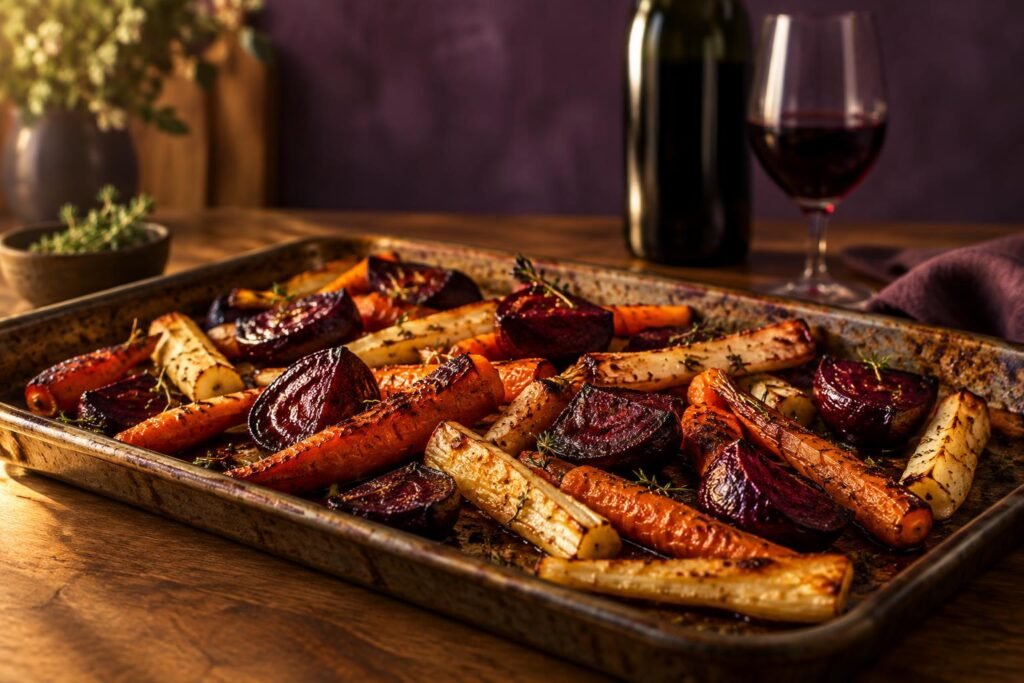
Put a tray of vegetables in a hot oven and two things happen. Water evaporates, and once the surface is dry the natural sugars start to break down and brown; that is caramelisation. At the same time the sugars react with amino acids to make hundreds of new savoury, nutty flavours; that is the Maillard reaction. Chowhound has a plain-English explainer, and the short version is that beetroot, carrot, parsnip and pumpkin have the most sugar, so they come out the sweetest.
- Sweetness is the big one. A dish that tastes sweeter than the wine makes the wine taste sour and hard. So the wine needs ripe fruit, or a little sugar of its own, to keep up.
- Char and smoke from the browned edges want a wine with some savoury depth, and they get on well with a gentle touch of oak.
- Bitterness from sprouts, broccoli and cauliflower makes tannin taste harsher. The wine needs to be soft.
- Umami from mushrooms, eggplant and roasted tomato does the same thing to tannin, and rewards wines with earthy flavours.
- Acid from tomatoes, capsicum and any lemon or vinegar you finish with means the wine needs decent acid too, or it tastes flat.
- Fat from the olive oil is modest, but there is usually enough to make a crisp, high-acid wine feel welcome.
Notice what is missing: there is no protein to soften tannin and no big hit of fat to soak up oak. That is why the classic steak reds fall over here.
Best Wines for Roasted Vegetables
Grenache and GSM blends
Grenache is the friendliest red in Australia. It is full of raspberry and plum, low in tannin, and carries a peppery, herby edge that tastes like rosemary went in the tray too. McLaren Vale and the Barossa make it from old bush vines at fair prices. A GSM (Grenache, Shiraz, Mataro) adds a bit more weight if the tray is heavy on pumpkin and potato.
Gamay
If your roast is mostly beetroot, carrot and onion, Gamay is the one. It is bright, light and almost tannin-free, with a cranberry-and-cherry flavour that matches red vegetables the way Pinot Noir matches duck. It is also the red that best survives a chill, which makes it perfect for a summer tray of roasted veg with salad on the side.
Tempranillo
Tempranillo brings a savoury, slightly dusty flavour of dried cherry and tobacco that suits smoky, charred edges. Younger Australian versions from the Adelaide Hills, the Barossa and Victoria are soft enough for vegetables, and they tend to be cheap for what they deliver. Skip the oak-heavy Reserva styles; they want lamb.
Pinot Noir
Pinot Noir is the earthy option. It loves mushrooms, beetroot and anything with thyme, and its acid handles roasted tomato. Pick a lighter, cheaper style from the Yarra Valley or Tasmania rather than a big, oaky one. It is the same logic we use for mushroom bourguignon.
Riesling
For a tray that leans orange, meaning pumpkin, sweet potato and carrot, Riesling is better than any red. The acid cuts through and the lime-and-honey flavour meets the caramel halfway. A dry Clare or Eden Valley style works; an off-dry one works even better if there is maple, honey or chilli on the vegetables.
What to Avoid
- Big, tannic reds such as young Cabernet or a heavy Barossa Shiraz. With no meat fat to soften them, the tannin clashes with bitter brassicas and turns hard against sweet roots.
- Lean, grassy Sauvignon Blanc with sweet vegetables. It tastes sour and thin next to caramelised pumpkin. It is fine with asparagus and green things, though.
- Heavily oaked whites. Oak on top of char on top of caramel is too much toast.
- Very dry, austere wines of any colour when the tray is sweet. Fruit is your friend here.
Drink One Tonight
Basket pressing is the gentle, old-fashioned way of getting juice from grapes, and it leaves a softer wine. This Adelaide Hills Tempranillo is exactly that: savoury, medium-bodied and priced like it was meant for a weeknight tray of vegetables.

Macaw Creek Basket Pressed Adelaide Hills Tempranillo 2022
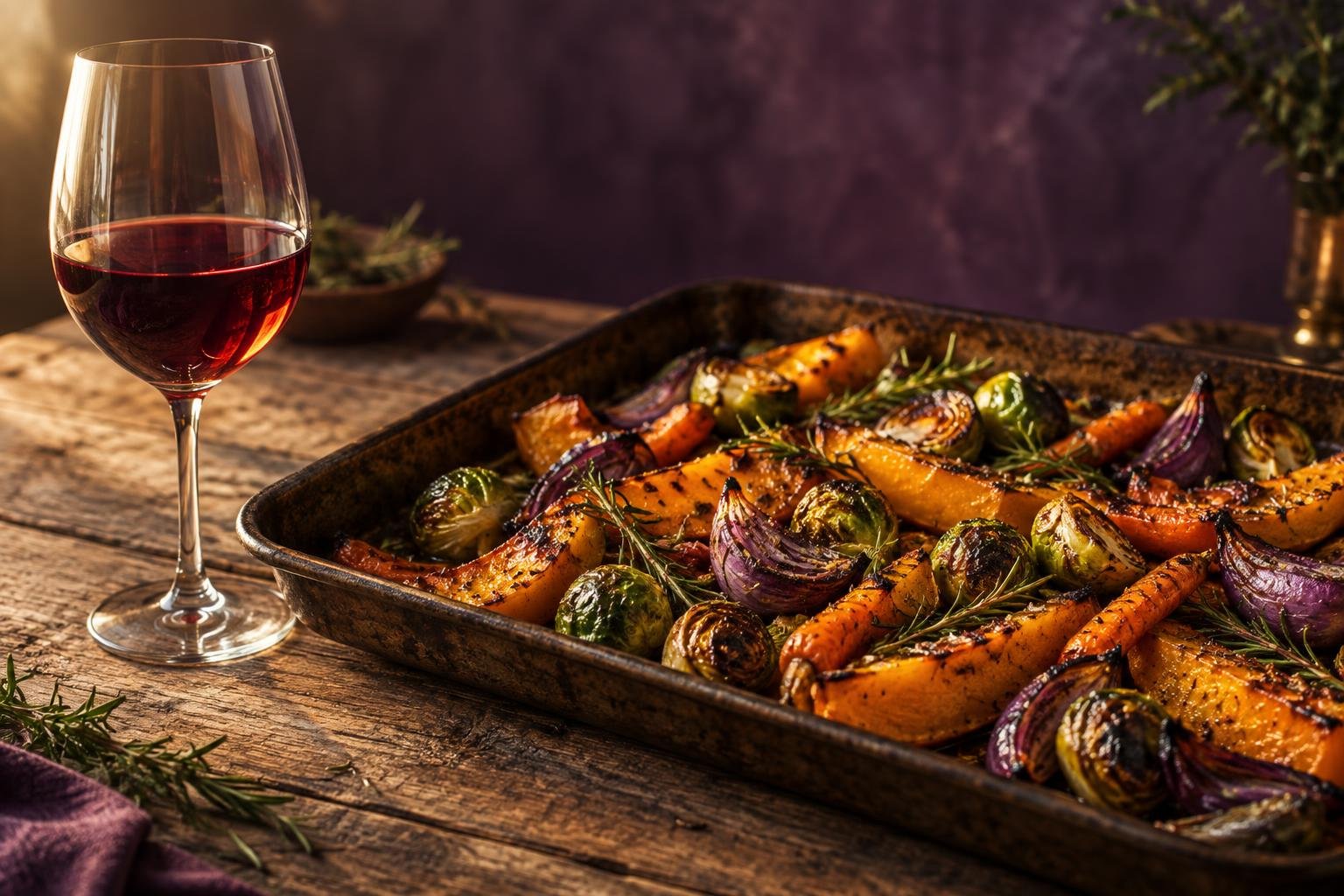
Serve it a little cool, about fifteen degrees, next to a tray of roasted carrots, red onion, pumpkin and sprouts with rosemary. The wine tastes like it was made for the smoky bits, and at this price you can open a second bottle without guilt.
- Soft tannin and dried cherry flavours that suit charred edges
- Basket pressed, so it is gentle rather than grippy
- Fourteen dollars at the time of writing, which is silly value
- Not a wine to keep; drink it this year
- Lighter than a Barossa style if you want more oomph
If You Are Cooking It
Turn the oven up. Roasting works best at 220 to 230 degrees on a flat tray with the vegetables in one layer and plenty of space, because crowding makes them steam instead of brown. Cut everything to a similar size, dry it well, and use enough olive oil to coat. Finish with a squeeze of lemon or a splash of vinegar off the heat; that acid brightens the plate and makes a fruity red taste even better. If the wine still feels sour, the vegetables are sweeter than you think, so move to an off-dry white. And if the meal is the star of a long evening, our calorie calculator tells you what those glasses add up to.
Roasted vegetables turn up in a lot of dishes we have already covered. Ratatouille and eggplant lasagne both lean on the same logic, and if the tray is sitting beside a bird, the roast chicken pairing takes over.
Frequently Asked Questions
What wine goes best with roasted vegetables?
A fruity, low-tannin red served slightly cool. Grenache, Gamay and Tempranillo are the safest bets. For sweet vegetables such as pumpkin and sweet potato, a dry or off-dry Riesling is better than most reds.
Which red wines go with roasted vegetables?
Soft, fruit-driven reds without much oak: Grenache, GSM blends, Gamay, Tempranillo and lighter Pinot Noir. Avoid young Cabernet and big Shiraz, which turn harsh without meat on the plate.
What white wine goes with roast vegetables and tomatoes?
Something with good acid and a little body. A dry Riesling, a Fiano or a lightly oaked Chardonnay all handle the tang of roasted tomato. Very light Pinot Grigio tends to disappear.
What wine goes with roasted root vegetables and potatoes?
Root vegetables are the sweetest of the lot, so choose a wine with ripe fruit. Grenache for red drinkers, off-dry Riesling for white. A lightly oaked Chardonnay suits potatoes and cauliflower in particular.
Does wine pair well with Brussels sprouts?
Yes, if you avoid tannin. Sprouts are slightly bitter, which makes tannic reds taste harsh. Gamay, a chilled Grenache or a dry Riesling all work, and a Sauvignon Blanc suits sprouts with bacon or lemon.
Should red wine be chilled with roasted vegetables?
A light chill helps. Twenty minutes in the fridge brings a Grenache or Gamay to around fifteen degrees, which lifts the fruit and makes the wine feel fresher against sweet, smoky vegetables.
This post contains affiliate links. If you buy through them we earn a small commission at no extra cost to you. It keeps the wine flowing and the reviews honest.