Heads up: this guide contains an affiliate link. If you buy through it we earn a small commission at no extra cost to you.
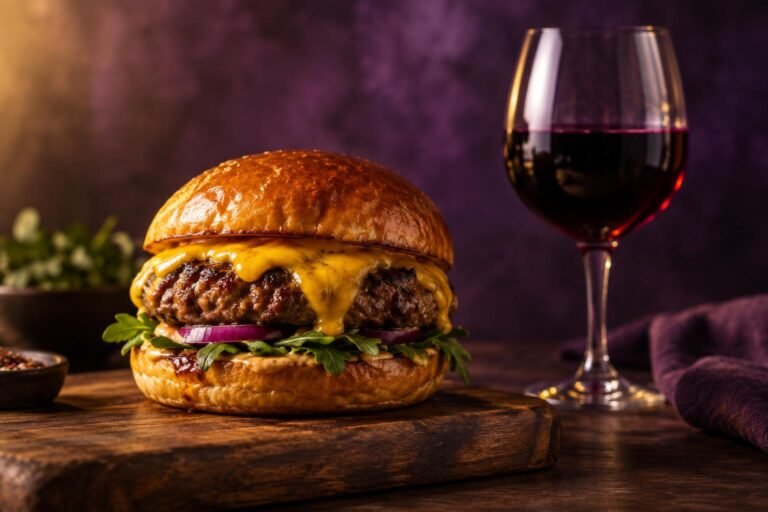
Lamb burgers want a red with juicy fruit, soft tannin and a little pepper. A Grenache blend, an Australian Shiraz or a Spanish Tempranillo all land it, served a touch cooler than room temperature.
Lamb mince is richer and more savoury than beef, and most lamb burgers arrive carrying mint, cumin, feta or a garlicky yoghurt sauce. That crowd of flavours trips up the big steak reds people reach for first. The happy part is that the wines which do work tend to cost less, so you can eat well and feel clever about it.
Table of Contents
The Short Answer
- GSM or Grenache blend. Red berry fruit, dried herbs, gentle grip. The most forgiving match on the table. Serve it at about sixteen degrees, so half an hour in the fridge door.
- Australian Shiraz. Dark fruit, black pepper and a smoky edge that meets the char on the patty. Best when the burger has barbecue sauce or smoked cheese.
- Tempranillo. Cherry, leather and bright acid. The pick when there is feta, olives or anything pickled in the bun.
If you only remember one thing: medium body, fruit forward, tannin you can chew through. Save the fifty dollar Cabernet for a plain steak.
What a Lamb Burger Does to Wine
Lamb mince is fattier than most beef mince, because it usually comes from the shoulder or the forequarter. Fat is a wine’s friend. It softens tannin and makes a firm red taste rounder, which is why lamb and red wine got along long before anyone wrote it down.
The rest of the burger is where it gets interesting. Lamb has a savoury, faintly gamey depth that fruit-forward wines cover up and earthy wines lean into. Both work, they just taste different, so pick the one you actually want.
Then come the extras. Mint, rosemary and cumin all point towards wines with their own herbal streak. Feta and olives add salt, and salt makes tannin taste harder, so a softer red copes better. Pickles, tomato sauce and mustard bring vinegar, and vinegar makes an oaky red taste flat and slightly metallic. Char from the grill likes smoke and pepper in the glass.
So the burger is not really one dish. It is meat, herbs, salt and acid, and the wine has to keep all four happy at once.
Best Wines for Lamb Burgers
1. Grenache or a GSM blend
Grenache tastes of raspberry and stewed strawberry with a dusty, herby finish, and its tannin is soft. Blend it with Shiraz and Mourvedre and you get the classic GSM: fruit up front, pepper in the middle, an earthy tail. It handles feta, mint sauce and a stray pickle without complaining. Read the Grenache guide if you want the long version. In Australia, look to the Barossa Valley and McLaren Vale.
2. Australian Shiraz
Shiraz brings blackberry and plum with black pepper and a whiff of smoke. It is the crowd pleaser, and it is very good when the burger has been near a barbecue. Cooler-climate examples keep more pepper and less jam, which suits lamb better than a big warm-climate blockbuster. Our Shiraz guide covers the styles.
3. Tempranillo
Spain’s star grape gives cherry, plum and a leathery, savoury note, with acid that cuts through fat like a good knife. It is the best answer when the bun contains feta, olives, roasted peppers or anything from a jar. See the Tempranillo guide for regions and styles.
4. Zinfandel or Primitivo
Same grape, two names, both jammy and spicy. Primitivo is usually the earthier and more peppery of the pair, which suits lamb nicely. Go for a younger, less oaky bottle if your burger is buried under sauce. The Zinfandel guide explains the split.
5. Cabernet Sauvignon, with one condition
Cabernet and lamb is a famous match, and Australian Cabernet often has a minty note that echoes mint sauce. The condition is age. A young, grippy Cabernet bosses a lamb burger about, especially a burger with salty toppings. A softer, riper bottle that is ready to drink works far better. Details in the Cabernet Sauvignon guide.
What to Avoid
- Young, tannic Cabernet or Nebbiolo. Too much grip. Salty feta and firm tannin together taste harsh and drying.
- Heavily oaked reds with vinegary toppings. Oak adds tannin, vinegar strips fruit, and the wine ends up tasting flat and metallic. If the burger is loaded with pickles and sauce, choose something unoaked and juicy.
- Delicate light reds. A featherweight Pinot Noir gets flattened by lamb fat and cumin. Not wrong, just wasted.
- Sweet or off-dry whites. Sweetness plus savoury lamb reads as odd, unless the burger is properly spicy, in which case see the FAQ below.
- Anything served too warm. A warm red tastes like alcohol and jam. Twenty minutes in the fridge fixes it.
Drink One Tonight

Kalleske Clarry’s Barossa Valley Organic GSM 2024
About twenty-three dollars, and it does the whole job. The Grenache brings red berry fruit that flatters the lamb, the Shiraz adds pepper for the grill marks, and the Mourvedre puts a savoury edge underneath so the wine does not taste like jam next to the meat. Serve it around sixteen degrees. Stock checked and available on the day this was written, though good Barossa GSM does not hang about.
- Grenache, Shiraz and Mourvedre, the exact blend lamb burgers ask for
- Certified organic fruit from a Barossa family farming the same ground since 1853
- Soft enough for feta and mint, spicy enough for the char
- Not a big, brooding red if that is what you were hoping for
If You Are Cooking Them
Two small things make a bigger difference than the wine. Do not overwork the mince, because squeezing it turns a juicy patty into a rubber puck, and rest the burgers for three or four minutes before they go in the bun so the fat settles instead of running out.
For the wine, chill it. Fifteen to twenty minutes in the fridge takes a Shiraz or a GSM from soupy to lively, and it makes the fruit taste fresher against the fat. If you want to be exact about it, the glass matters less than the temperature, though our glasses roundup has the shapes that help. Curious about what a couple of glasses adds up to alongside the burger? The wine calorie calculator will tell you.
Frequently Asked Questions
What red wine goes best with lamb burgers?
A GSM or Grenache blend is the safest and often the best answer. It has ripe red fruit, herby notes and soft tannin, so it copes with lamb fat, mint and feta all at once. Australian Shiraz is the close runner-up, especially with barbecue flavours.
Can you drink white wine with a lamb burger?
You can, and it works better than people expect if the burger leans Greek or Middle Eastern. A dry, textured white with some weight, such as an oaked Chardonnay or a Fiano, handles yoghurt sauce and herbs. A lean, zippy white will feel thin against the meat.
Does rosé work with lamb burgers?
A dry, full-flavoured rosé made from Grenache or Shiraz is a good summer answer, particularly with feta, tomato and mint. Serve it properly cold. Pale, delicate rosé is too light for the job.
What wine goes with a spicy lamb burger?
If there is real chilli heat, tannin and alcohol both make the burn worse. Switch to something with a touch of sweetness and lower alcohol, such as an off-dry Riesling, or a soft Grenache served cold. The same logic applies to spiced lamb wraps and shawarma.
Is lamb burger wine pairing different from lamb chops or a roast?
Slightly. As Decanter notes, the fullness of the cut should set the weight of the wine, and ground lamb that has been grilled is less gamey than a chop or a slow roast, and the bun and toppings soften everything further. That means you can go a step lighter and fruitier than you would with a leg of lamb. Our guide to wine with lamb covers the bigger cuts.
What temperature should the wine be?
Around sixteen degrees for reds with this dish. Most Australian homes sit warmer than that, so give the bottle fifteen to twenty minutes in the fridge before you pour.
This post contains affiliate links. If you buy through them we earn a small commission at no extra cost to you. It keeps the wine flowing and the reviews honest.