Heads up: this guide contains an affiliate link. If you buy through it we earn a small commission at no extra cost to you.
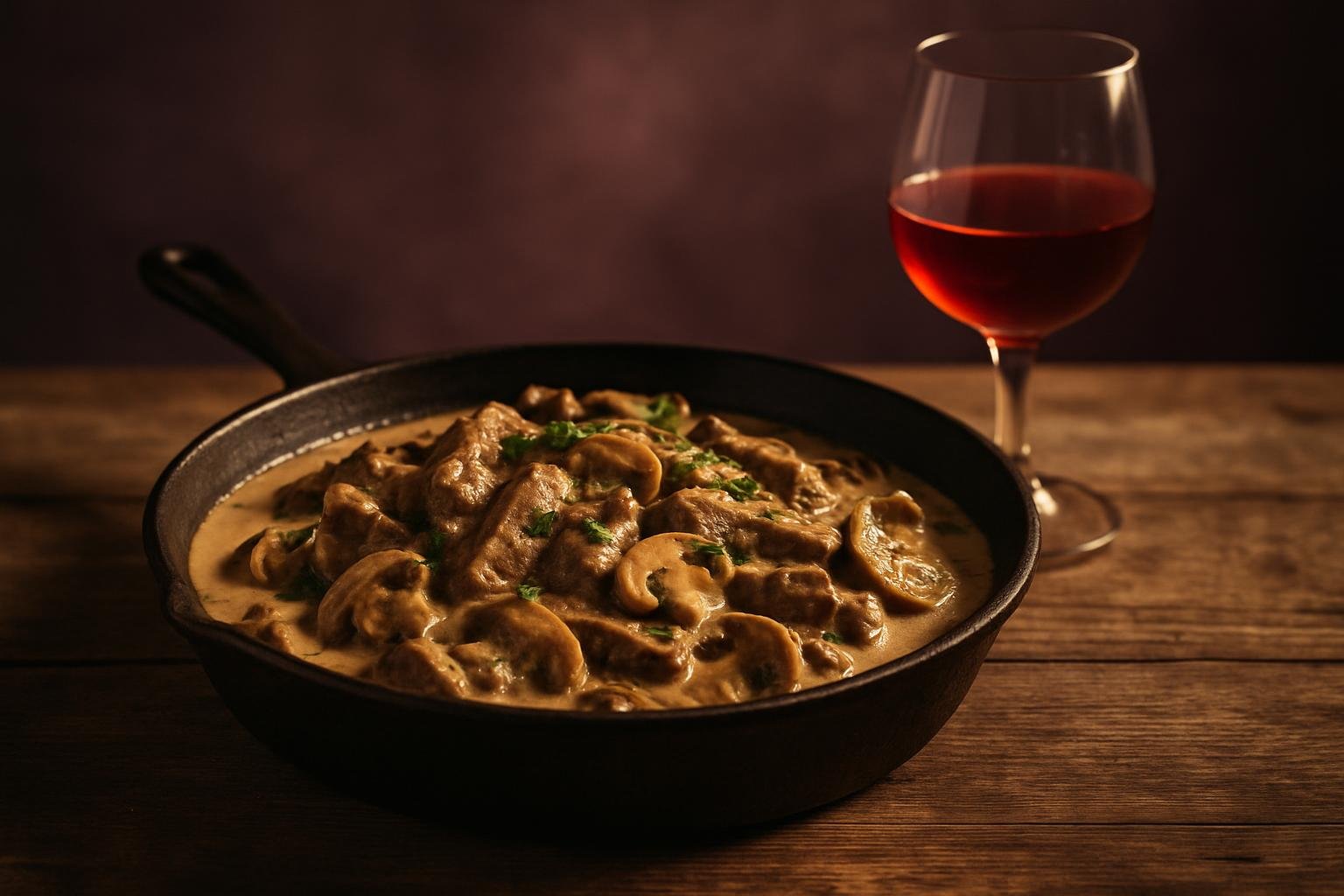
Pour a Pinot Noir. Earthy, light in tannin and high in acid, it is the one red that meets mushrooms on their own ground and does not curdle at the sight of sour cream. A Grenache or a chilled Barbera will also do it, and for the mushroom-only version an unoaked Chardonnay is a serious option.
Stroganoff looks like a big beefy dish that wants a big beefy red, and that instinct is exactly wrong. The sour cream and the mushrooms are running the show, not the meat, and both of them punish tannin. Here is what is actually going on in the pan.
Table of Contents
The Short Answer
- Pinot Noir. Forest floor, red cherry and soft tannin. The classic answer for anything with mushrooms in it. Serve cool, about 14 degrees.
- Grenache. Riper and rounder, with low tannin and enough weight for the beef version. Serve at 15 degrees.
- Barbera. High acid, almost no tannin, and the acid is what cuts the sour cream. Serve cool, about 14 degrees.
If you are eating the vegetarian mushroom version and would rather drink white, an unoaked Chardonnay with some texture is the pick, because it has the body to sit next to a cream sauce without being erased by it.
What Stroganoff Does to Wine
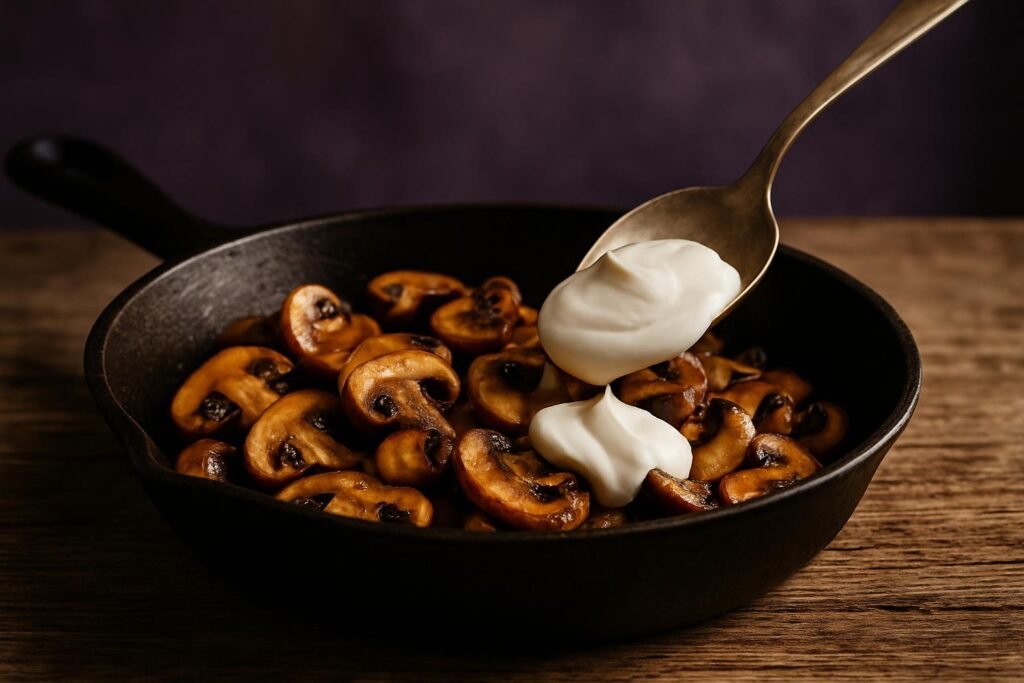
Sour cream. This is the ingredient that decides everything. It brings fat, which coats the palate and mutes a wine, and lactic acid, which makes a low-acid wine taste flat next to it. You need acidity to get through the fat and to match the tang.
Mushrooms. Mushrooms are loaded with umami, and umami makes tannin taste harder and more bitter than it is. A big Cabernet next to a plate of mushrooms turns dry and slightly metallic. Wines with earthy, savoury notes of their own go the other way and taste better than they do alone.
The beef. Protein and fat soften tannin, which is the only part of this dish arguing for a bigger red. It is outvoted by the cream and the mushrooms, which is why medium is the right answer rather than bold.
Mustard and paprika. Both bring pungency rather than real heat, and alcohol amplifies both. Stay under about 14 per cent and the dish stays comfortable.
Onion and the starch underneath. Sweet onion and a bed of pasta, rice or mashed potato both flatten a wine’s edges. Another vote for acidity.
Put those together and the brief writes itself: medium body, low to moderate tannin, high acid, savoury rather than jammy, and not too strong. That is a description of Pinot Noir.
A Short History, Because the Original Had No Mushrooms
The first published recipe is in Elena Molokhovets’s A Gift to Young Housewives in the 1870s, under a name that translates as Stroganoff-style beef with mustard. The sauce was butter, flour, beef stock, mustard, black pepper and sour cream. No mushrooms. No onions. The two ingredients everyone now considers compulsory were not in it at all.
Food historians Pavel and Olga Syutkin trace the most likely origin to Alexander Grigorievich Stroganov, a very rich Governor-General who kept an open table in Odesa, where anyone decently dressed could turn up for dinner. One of his cooks, not the count himself, worked out a dish of small fried pieces of beef served in its own sauce, which was easy to portion and hard to get wrong. The name reached print in France when a St Petersburg chef, Charles Briere, sent the recipe to L’Art Culinaire in 1891.
Why this matters for your glass: the dish was always built on sour cream and mustard, not on beef alone. The mushrooms arrived later and pushed it further towards Pinot Noir. Our guide to wine with mushrooms goes deeper on the umami side of it.
Best Wines for Stroganoff
Pinot Noir
Tastes like red cherry, beetroot and something like damp forest floor, with light tannin and bright acid. It works because the earthy notes and the mushrooms are speaking the same language, while the low tannin has nothing to react badly with. In Australia look to the Yarra Valley, Mornington Peninsula, Tasmania, Adelaide Hills and Orange. The Pinot Noir guide covers the regional differences.
Grenache
Tastes like raspberry, dried herbs and white pepper, generous and round with very soft tannin. It works for the beef version in particular, because it has more flesh than a Pinot without bringing grip. McLaren Vale and the Barossa make superb old-vine examples. Watch the alcohol, which can run to 15 per cent and start fighting the mustard. Our Grenache guide has more.
Barbera
Tastes like sour cherry and plum with startling acidity and almost no tannin at all. It works because acid is the exact tool for cutting sour cream, and Barbera has more of it than almost any other red. Piedmont is the homeland, and the King Valley in Victoria grows it well.
Unoaked Chardonnay
Tastes like white peach, lemon and something faintly nutty, with real body but no vanilla or toast. It works on the mushroom version especially, where there is no beef to argue with and the cream sauce wants weight plus acid. See the Chardonnay guide for why unoaked is the important word here.
Dry Rosé
Tastes like strawberry and citrus pith, served properly cold. It works as the safe middle option when half the table is eating the beef and half the mushroom, because it has acid, no tannin, and enough fruit to cope with paprika. Not exciting, but it never lets the dish down.
What to Avoid
- Cabernet Sauvignon and other firm, tannic reds. Mushroom umami makes tannin taste bitter and metallic. This is the single most common mistake with this dish.
- Heavily oaked reds and whites. Vanilla and toast sit oddly against sour cream, and the wood clashes with mushroom.
- Anything over about 14.5 per cent. Mustard and paprika turn hot and harsh next to high alcohol.
- Sweet or off-dry wines. The sauce is already rich and the onions already sweet. Sugar tips it over.
- Very light, delicate whites. A crisp Sauvignon Blanc simply vanishes under a cream sauce.
If you were reaching for a Shiraz because there is beef in it, this is the dish to break that habit on.
Drink One Tonight
One bottle handles both versions of the dish, which is the practical test when the table is split.

See Saw Orange Organic Pinot Noir 2025
Orange sits at altitude, which keeps the acid high and the alcohol sensible, and that is precisely the brief for a cream and mushroom sauce. Serve it cool rather than at room temperature and it will do the beef version and the vegetarian one equally well.
- Orange in New South Wales is high and cool, which is what Pinot needs
- Light tannin, so the mushrooms have nothing to turn bitter
- Savoury enough to meet the sour cream halfway
- Certified organic, and under twenty-five dollars
- A young Pinot, so it is more red cherry than forest floor for now
Honesty corner. If your stroganoff is heavy on the paprika, or you have added smoked paprika, drop to something even lighter and colder. Heat and alcohol are not friends, and a chilled Barbera or a dry rosé will cope better than any Pinot.
If You Are Cooking It
Three things make the pairing easier. Take the pan off the heat before the sour cream goes in, because boiled sour cream splits and a split sauce tastes greasy against wine. Brown the mushrooms properly in a hot dry pan before anything else joins them, since that is where the savoury depth comes from. And go gently on the paprika until the end, when you can taste and adjust.
Serve the red cool, around 14 degrees, which for most Australian houses means twenty minutes in the fridge before dinner. A room-temperature Pinot in an Australian spring is a warm Pinot, and warmth makes the alcohol jump forward. Our glasses roundup covers the bowl shape that suits lighter reds, and the calorie calculator is there if you want to know what the evening added up to.
Frequently Asked Questions
What is the best wine for beef stroganoff?
Pinot Noir. It has the earthy savour to match the mushrooms, the acidity to cut the sour cream, and light enough tannin that the umami cannot turn it bitter. Grenache and Barbera are the next best answers, and a dry rosé is the reliable compromise.
Can you drink Cabernet Sauvignon with stroganoff?
You can, but it is the wrong choice. Mushrooms are high in umami, which makes tannin taste harder and more bitter, and Cabernet has plenty of tannin. The sour cream then flattens what is left. The result is a dry, metallic mouthful that flatters neither.
Red or white with mushroom stroganoff?
Either works, and the vegetarian version leans slightly more towards white. Without beef in the pan there is less to argue with, so an unoaked Chardonnay with some body handles the cream sauce nicely. If you want red, Pinot Noir remains the answer.
Does the wine need to be dry?
Yes. The sauce already carries richness from the cream and sweetness from the onions, so residual sugar in the wine tips the whole plate into cloying territory. Dry, high in acid and moderate in alcohol is the brief.
What temperature should the wine be?
Cool for the reds, around 14 to 15 degrees, which is cooler than most rooms in Australia. Twenty minutes in the fridge does it. A white should be around 10 degrees, cold but not so cold that the texture disappears.
Did the original stroganoff have mushrooms in it?
No. The first published recipe, in Elena Molokhovets’s cookbook in the 1870s, was beef in a sauce of butter, flour, stock, mustard, pepper and sour cream. Mushrooms and onions were added by later cooks, and it is the mushrooms that pushed the dish towards Pinot Noir.
This post contains affiliate links. If you buy through them we earn a small commission at no extra cost to you. It keeps the wine flowing and the reviews honest.