Heads up: this guide contains an affiliate link. If you buy through it we earn a small commission at no extra cost to you.
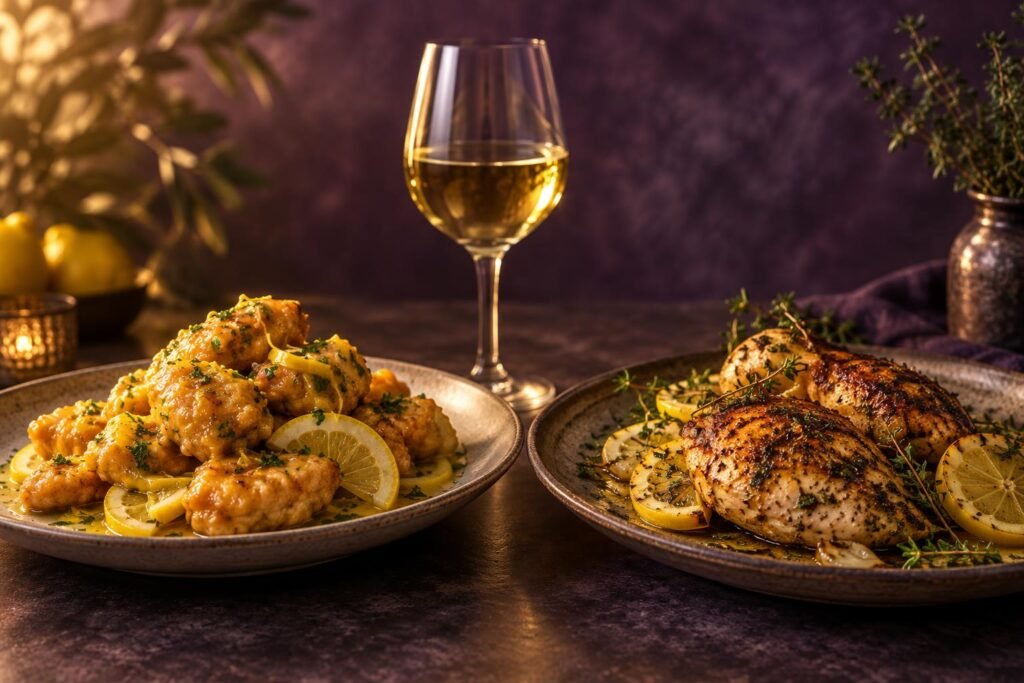
Before anyone pours anything, answer one question: is your lemon chicken battered and covered in a thick sweet sauce, or is it roasted with olive oil, garlic and oregano? Those are two different dishes wearing the same name, and they want two different wines. Battered takeaway lemon chicken wants an off-dry Riesling. Roast lemon chicken wants a bone-dry one.
Almost every pairing article online treats lemon chicken as a single dish, which is why the advice so often lands wrong. Get the dish right first and the bottle picks itself.
Table of Contents
The Short Answer
- Takeaway lemon chicken, battered and sweet. Off-dry Riesling or a Pinot Gris with a touch of sweetness. The wine has to be at least as sweet as the sauce or it tastes sour.
- Roast or grilled lemon chicken. Dry Riesling, Sauvignon Blanc or an unoaked white with real acidity. Nothing sweet, nothing oaky.
- Either way, serve it cold. About 8 degrees for the white. Warm white wine and lemon is a sad combination.
Why There Are Two Lemon Chickens
The takeaway version has been on Hong Kong menus since the 1960s and travelled with Chinese migrants to Australia, where it became a fixture in country-town restaurants. Look at what actually goes in the sauce and you can see the pairing problem straight away. A recipe from Gawler Palace in South Australia, published by Broadsheet, builds it from lemon juice, sugar, white vinegar, lemon essence and lemon cordial, thickened with cornflour, over chicken fried twice. That is a sweet and sour sauce, not a lemon sauce.
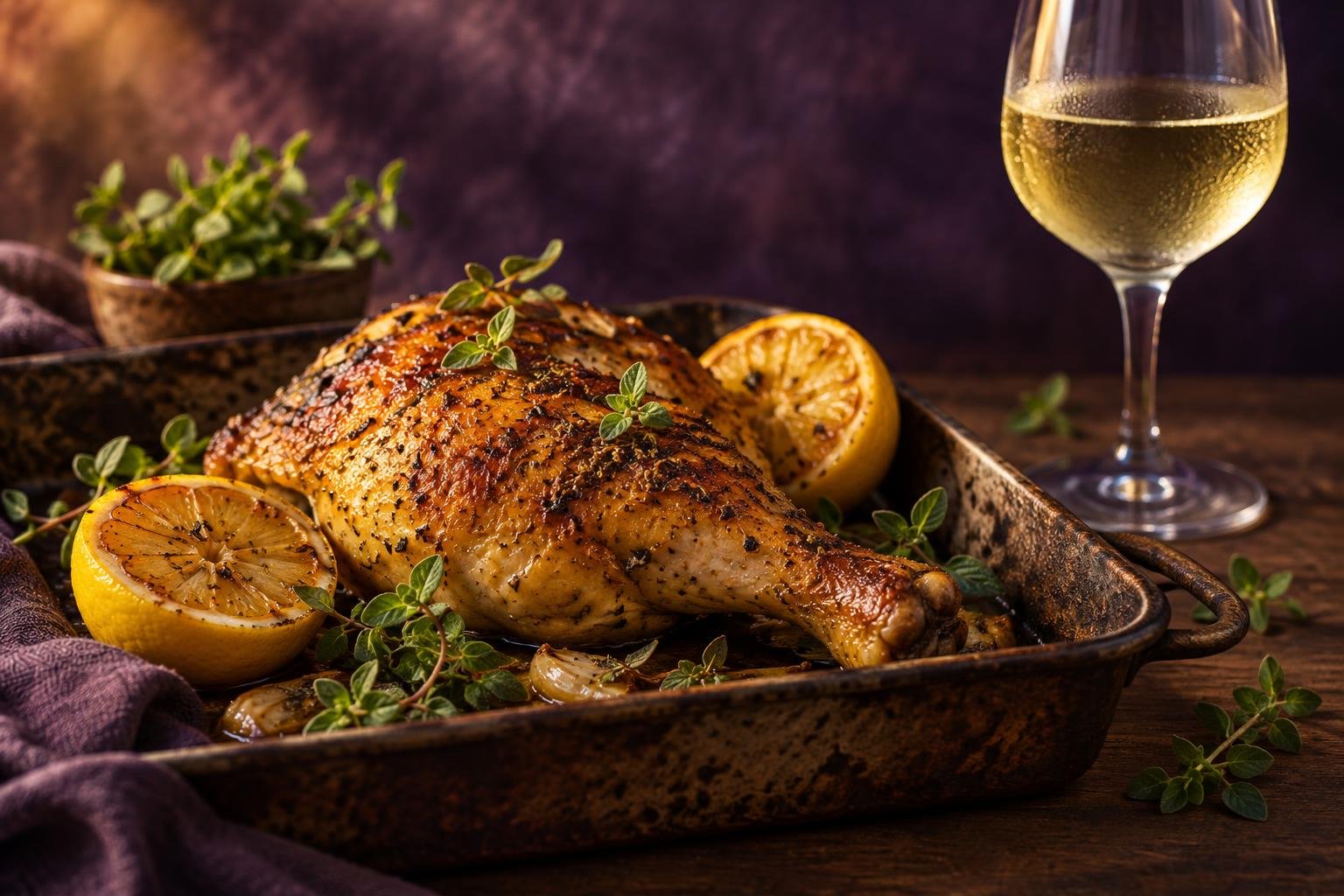
The Mediterranean version is the opposite. Chicken, olive oil, garlic, oregano and a serious amount of fresh lemon juice, roasted until the skin crisps. Nothing sweet anywhere. Lemon juice is one of the most acidic things in a home kitchen, with researchers measuring it at about 1.44 grams of citric acid per ounce, more than orange or grapefruit juice, so this dish arrives with a lot of acid and no sugar to soften it.
What Lemon Chicken Does to Wine
| On the plate | What it does | What the wine needs |
|---|---|---|
| Fresh lemon juice | Very high acidity, sharpens everything | Acidity of its own, or it tastes flat and flabby |
| Sugar in the sauce | Makes a dry wine taste sour and thin | A touch of residual sugar to match it |
| Vinegar in the sauce | Doubles down on the acid | High acid again, never a soft low-acid white |
| Deep-fried batter | Oil and salt coating the mouth | Crispness or bubbles to reset the palate |
| Garlic and oregano | Herbal and pungent | A herbal or citrus white, not a fruity tropical one |
| Chicken itself | Mild, lean, easily overwhelmed | Low oak, low alcohol, no heavy tannin |
Best Wines for Lemon Chicken
Off-dry Riesling, for the takeaway version
This is the single most useful bottle for sweet and sour anything. A Riesling with a few grams of sugar left in it matches the sauce instead of fighting it, and its acidity still handles the vinegar and the fried batter. The wine does not taste sweet next to that sauce, it tastes balanced. If the phrase off-dry is new to you, our off-dry explainer sorts it out in a minute. The same trick works across the rest of the menu, which our Chinese food pairing guide goes into.
Dry Riesling, for the roast version
Take away the sugar and the batter and you want the driest, most lime-scented white you can find. Australian and New Zealand dry Riesling is built for this: high acidity, citrus rather than tropical fruit, no oak, modest alcohol. It meets the lemon head on instead of lying down in front of it. The Riesling guide explains the difference between the dry and off-dry styles on the shelf.
Sauvignon Blanc, for the garlic and herbs
Roast lemon chicken usually comes with garlic, oregano or thyme, and Sauvignon Blanc has a green herbal streak that picks those up. Choose a leaner style from the Adelaide Hills or Marlborough rather than a super-tropical one. It also loves the roast potatoes underneath, which is half the reason anyone makes this dish.
Pinot Gris, the gentle option
If you find Riesling too sharp, an Australian Pinot Gris with a whisper of sweetness does a similar job with softer edges. Pear and apple rather than lime. It suits the takeaway version better than the roast, because it has body but not much acid to spare.
Sparkling, when the whole table is arguing
Bubbles work with both dishes and offend nobody. Go dry for the roast and look for a slightly softer style for the battered version. If there is deep-fried anything on the table, sparkling earns its place.
What to Avoid
- Oaked Chardonnay. Vanilla and butter next to sharp lemon is a clash you can taste from across the room.
- Red wine. Lemon strips the fruit out of a red and leaves the bitterness behind.
- Bone-dry wine with the sweet sauce. A dry wine next to a sugary sauce tastes sour and hollow. This is the mistake most people make.
- Soft low-acid whites. Anything described as smooth and easy will taste like water after one bite of lemon.
- Big alcohol. Over about thirteen and a half per cent starts to feel hot against citrus. The wine calorie calculator shows what the extra alcohol costs you as well.
Drink One Tonight
Central Otago is about as far south as grapes will ripen, which is why its Riesling keeps such fierce acidity. This one is dry, so it is the roast lemon chicken bottle. If you are having the battered takeaway version instead, look for the same grape with the word off-dry on the back label.

Amisfield Central Otago Organic Dry Riesling
A dry organic Riesling from one of the coolest wine regions on earth. Serve it at about 8 degrees with roast chicken, lemon and potatoes. Stock checked on the day this guide went live.
- Bone dry with lime and citrus, straight at the lemon
- Cool-climate acidity that survives garlic and oregano
- Certified organic fruit from Central Otago
- Too dry for the sweet battered takeaway version
- Sharp if you like soft easy whites
If You Are Cooking It
Two small things change the pairing more than the wine does. Finish the roast with fresh lemon juice off the heat rather than only roasting with it, because roasted lemon goes round and slightly bitter while fresh juice stays bright, and bright is what your wine is matching. And go easy on the sugar if you are making the sauce version at home; every gram you leave out is a gram your wine does not have to keep up with. A proper glass helps the aromatics too, and the glasses roundup has affordable ones.
Frequently Asked Questions
What wine goes with lemon chicken?
Riesling, but which kind depends on the dish. Off-dry Riesling for battered takeaway lemon chicken with a sweet sauce, dry Riesling for roast or grilled lemon chicken.
Can you drink red wine with lemon chicken?
It is a hard match. Lemon strips the fruit from most reds and leaves them tasting bitter. If you want red, chill a light low-tannin one and keep the lemon gentle.
Does lemon ruin wine?
Not if the wine has acidity of its own. Lemon juice is highly acidic, so a soft low-acid white next to it tastes flat. A crisp high-acid white tastes fine.
What wine goes with Greek lemon chicken?
Dry Riesling, Assyrtiko or a leaner Sauvignon Blanc. The garlic, oregano and olive oil want something herbal and dry rather than fruity.
Is Chardonnay good with lemon chicken?
Only if it is unoaked and crisp. Oaked Chardonnay brings vanilla and butter, which fight sharp lemon rather than helping it.
What temperature should the wine be?
About 8 degrees for whites and sparkling. Straight out of the fridge is usually a little too cold, so give the glass five minutes.
This post contains affiliate links. If you buy through them we earn a small commission at no extra cost to you. It keeps the wine flowing and the reviews honest.