Heads up: this guide contains an affiliate link. If you buy through it we earn a small commission at no extra cost to you.
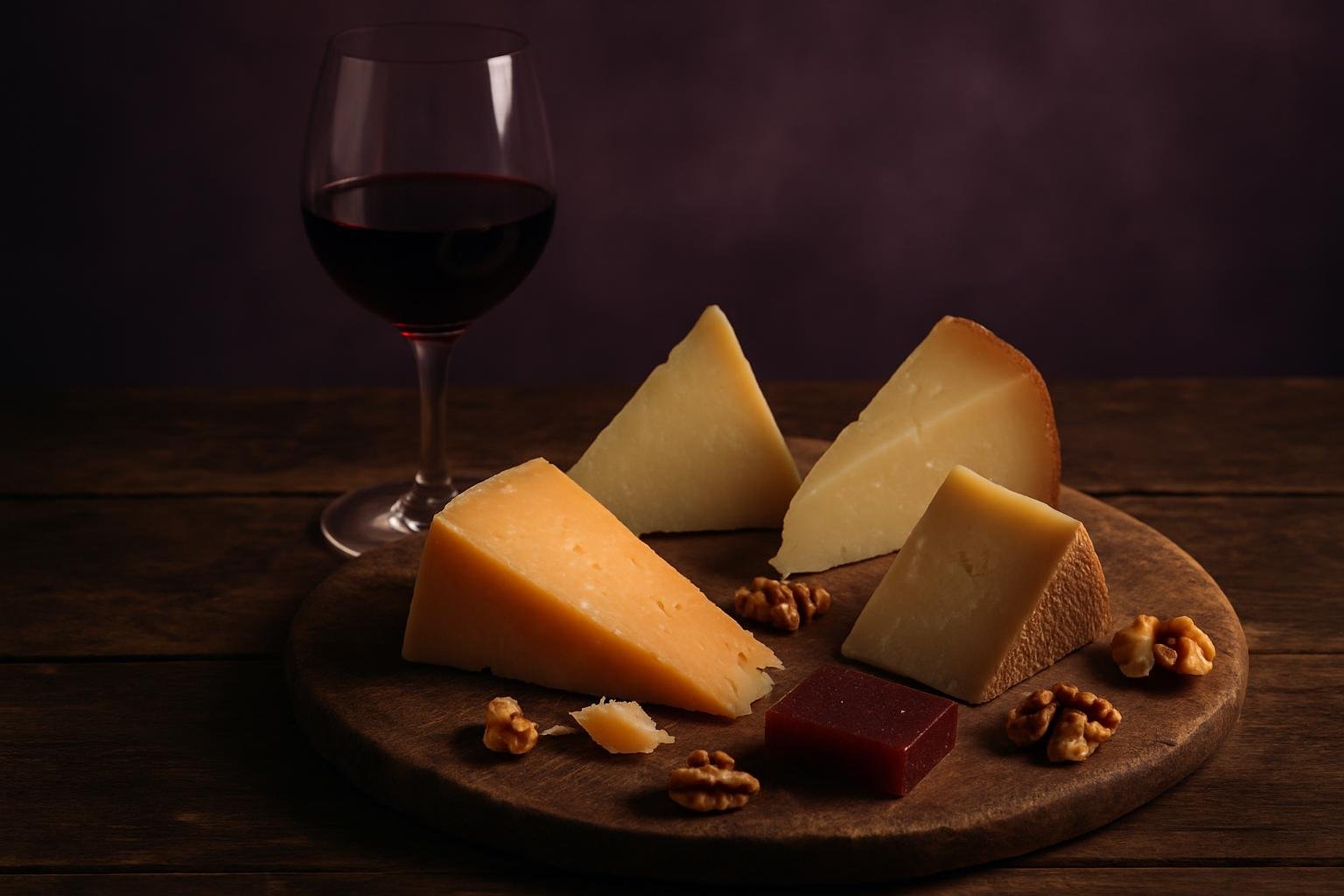
If you have already opened a red, reach for a hard aged cheese: cheddar, Parmigiano Reggiano, Manchego or a good Gouda. Salt and fat are what red wine wants, and those four have plenty of both. Soft, washed rind and blue cheeses are where red wine usually comes unstuck.
Red wine and cheese is one of those pairings everyone assumes is automatic. It is not. It works brilliantly about half the time and turns into a metallic argument the other half, and the difference is almost entirely down to tannin. Here is which cheese to buy for the bottle you have, and which red to buy for the cheese you already own.
Table of Contents
The Short Answer
- Big tannic reds such as Cabernet and Shiraz want hard, aged, salty cheese. Aged cheddar and Parmigiano Reggiano are the safest choices on the board.
- Light, high acid reds such as Pinot Noir and Sangiovese want softer, milder cheese. Gruyère, young Gouda, brie at a pinch.
- Sweet or fortified reds are the only reds that really handle blue cheese, and even then it is a close contest.
Serve the cheese at room temperature and the red slightly cool, around 16C. Both of those matter more than the specific bottle.
What Cheese Actually Does to Red Wine
Tannin is the drying, grippy feeling in a red wine. It happens because tannin molecules grab the proteins in your saliva and pull them out of suspension, which strips away the slippery film that normally coats your mouth. That is why a young Cabernet feels like felt.
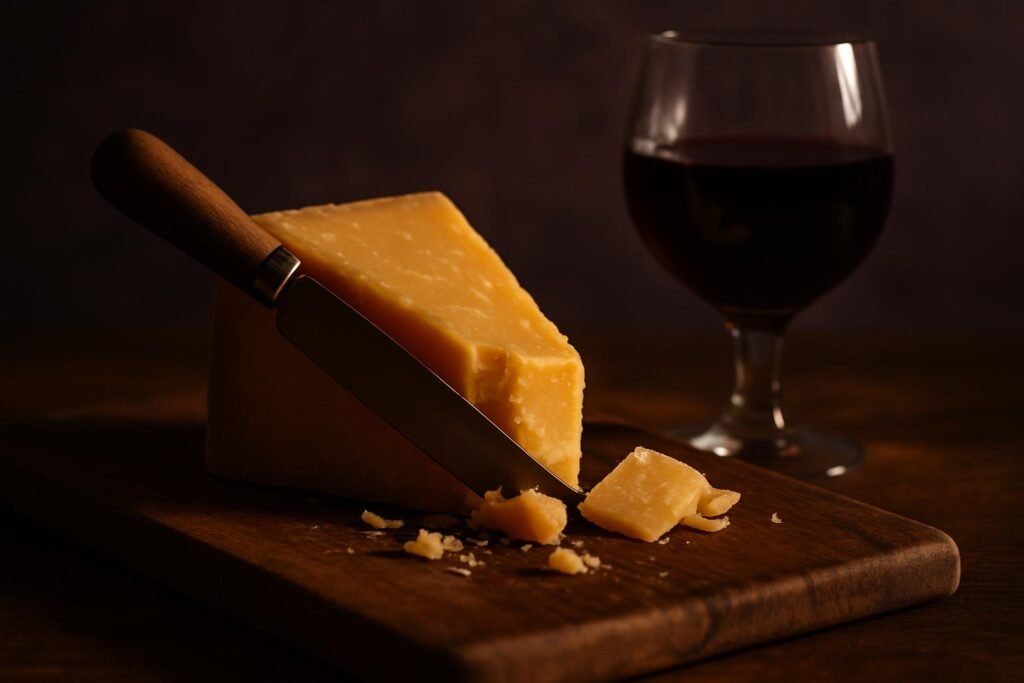
Fat gets in the way of that, in the nicest possible manner. A 2021 study by Julie Géan and colleagues in the Journal of Agricultural and Food Chemistry found that tannins latch onto fat droplets in the mouth, which leaves fewer of them free to bind with saliva proteins. Volunteers who had a spoonful of oil before tasting a tannin solution reported it as less astringent, and with olive oil the tannins read as fruity rather than drying. Cheese is doing the same job, with a nicer texture.
Salt helps too, by turning down bitterness. Between the fat and the salt, an aged hard cheese can make a tough young red taste five years older than it is. This is the single best party trick in wine.
The problems come from three directions. Ammonia in a ripe washed rind cheese clashes with almost anything red. The mould in blue cheese amplifies bitterness rather than covering it. And fresh, acidic cheeses such as goat curd and feta have nothing for tannin to grab, so the wine just tastes sour and thin. Those are white wine cheeses, which our general cheese and wine guide covers.
Best Cheese for Each Red Wine
| If you have opened | Buy this cheese | Why it works |
|---|---|---|
| Cabernet Sauvignon | Aged cheddar, 12 months or more | Salt and fat blunt the tannin, and the nuttiness meets the cassis |
| Shiraz | Smoked Gouda or aged Gouda | Caramel sweetness in the cheese answers the pepper and dark fruit |
| Pinot Noir | Gruyère or young Comté | Both are gentle, both are nutty, neither shouts |
| Merlot | Young Gouda or a mild cheddar | Soft tannin needs a cheese that will not overpower it |
| Grenache | Manchego | Sheep milk richness against sweet red fruit |
| Sangiovese or Chianti | Parmigiano Reggiano or pecorino | High acid wine plus very salty cheese, the oldest match in Italy |
| Tawny or sweet red | Stilton or Roquefort | Sugar is the only thing that beats blue mould |
Aged Cheddar and Cabernet
The safest pairing on this page. A cheddar aged a year or more has enough salt to flatten Cabernet’s tannin and enough savoury depth to stand up to blackcurrant and cedar. Our Cabernet Sauvignon guide covers what to expect from a Coonawarra or Margaret River bottle.
Parmigiano Reggiano and Sangiovese
Parmigiano Reggiano must be matured for at least twelve months under its PDO rules, and most of the good stuff goes far longer. Those crunchy white specks in a well aged wheel are tyrosine crystals, formed as the enzymes break the milk proteins down, and they are a sign of real age rather than a fault. All that salt and umami is why Italians have been drinking Sangiovese with it for centuries.
Gruyère and Pinot Noir
Pinot Noir has almost no tannin to protect, so it needs a cheese that will not bully it. Gruyère is nutty and firm without being aggressive, and a younger one is gentler still. Our Pinot Noir guide has more on why this grape is so easily bruised.
Manchego and Grenache
Sheep milk is richer and slightly gamey, which suits Grenache’s sweet strawberry fruit and higher alcohol. Barossa Grenache does this just as happily as the Spanish original. See the Grenache guide for the Australian angle.
Smoked Gouda and Shiraz
Shiraz brings pepper, dark fruit and often a little oak smoke of its own. A smoked or well aged Gouda has a caramel sweetness that meets all of that halfway. It is the most crowd-pleasing pair on an Australian cheeseboard, which the Shiraz guide will not be surprised to hear.
The Cheeses That Fight Red Wine
- Fresh goat cheese and feta. Sharp, lean and acidic. Tannin has nothing to hold and the wine turns sour. Sauvignon Blanc is the answer here.
- Ripe washed rind, such as Époisses or Taleggio. The ammonia and the funk overwhelm almost any red. Try a rich white or a beer.
- Blue cheese with a dry red. Blue mould makes tannin taste bitter and metallic. Blue needs sweetness, which is why Port and Stilton exist.
- Very fresh mozzarella or burrata. Milky and delicate. A red will simply flatten it.
- Anything straight from the fridge. Cold cheese is half a cheese. Take it out an hour before.
Building a Cheeseboard Around One Red
Most of us open one bottle, not five. If the board has to work with a single red, pick three cheeses that all sit in the safe zone rather than trying to cover the whole shop.
- A hard aged one for the tannin. Cheddar, Parmigiano Reggiano or Manchego.
- A firm middle one for texture. Gruyère, Comté or an aged Gouda.
- A soft mild one for contrast. A young brie, but only a young one, before it gets ammoniac.
Then add the things that do the real work: a handful of walnuts, some quince paste, a few dried figs and plain crackers. The nuts and the dried fruit bridge to red wine far better than most people expect, and they cost almost nothing.
Drink One Tonight

Minimum Central Victoria Organic Red Sangiovese Syrah 2022
This is a blend rather than a pure Sangiovese, and we would rather say so than let you find out at the table. What it gives you is the useful bit of Sangiovese, the bright acidity that loves salt, with enough Syrah to keep it comfortable. Serve it at about 16C, which usually means twenty minutes in the fridge, and it will handle every cheese on the board above.
- Sangiovese acidity is built for salty aged cheese
- A dash of Syrah adds weight without heavy tannin
- Certified organic, Central Victoria fruit
- Medium bodied, so it will not flatten the softer cheeses
- A blend rather than straight Sangiovese, so it is a shade rounder than a Chianti
If You Are Serving It
Take the cheese out of the fridge an hour before people arrive and leave the red somewhere cool rather than warm. Australian room temperature is not the room temperature the old rule was written for, so a big red served at 24C tastes of alcohol and little else. Twenty minutes in the fridge fixes it. If the bottle is young and tight, a decanter will do more than swirling, and the right glass will do more than either.
Frequently Asked Questions
What is the best cheese to eat with red wine?
Aged cheddar is the most reliable, because its salt and fat soften tannin while its savoury depth stands up to fruit. Parmigiano Reggiano and Manchego are close behind.
What is the best red wine for a cheese board?
Something medium bodied with good acidity and moderate tannin. Sangiovese, Grenache and lighter Shiraz all cover more of a board than a big Cabernet does.
What cheese goes with Cabernet Sauvignon?
Aged cheddar first, then Gouda or Manchego. Cabernet has firm tannin, so it needs a hard cheese with enough salt and fat to take the edge off.
Does red wine go with brie?
A young brie and a soft, low tannin red get along fine. A very ripe brie or a properly ripe washed rind cheese does not, since the ammonia notes clash with almost every red.
Why does blue cheese ruin red wine?
Blue mould makes tannin read as bitter and metallic, so a dry red turns harsh. Blue cheese needs sugar instead, which is why fortified and sweet wines are the traditional partners.
Should red wine be served cold with cheese?
Cool, not cold. Around 16C for a medium bodied red and 14C for a light one. Warm red wine tastes of alcohol and hides behind the cheese instead of matching it.
How much cheese and wine per person?
Roughly 100 grams of cheese each if it is a nibble before dinner, and about 150 grams if the board is dinner. On the wine side, our wine calorie calculator will tell you what the evening actually cost you.
Add cured meat to the board and the sums change, which is what our guide to wine with salami works through.
This post contains affiliate links. If you buy through them we earn a small commission at no extra cost to you. It keeps the wine flowing and the reviews honest.