Heads up: this guide contains an affiliate link. If you buy through it we earn a small commission at no extra cost to you.
The safest wine and cheese pairing is a dry sparkling wine or an unoaked Chardonnay: both have the acid to cut through fat and the manners not to bully a mild cheese. After that it depends on the cheese, because a fresh goat’s cheese and a crumbly blue want completely different bottles.
This guide gives you the one-line rule for each family of cheese, a table you can screenshot before the shops, the pairings that go wrong (big red with brie, mostly), one bottle to buy this week, and the answer to the question every host asks: what single wine can cover a whole cheese board.
Table of Contents
The Short Answer
- Dry sparkling wine: the all-rounder. Bubbles and acid scrub the fat off your tongue, and it flatters everything from brie to aged cheddar. Serve cold.
- Unoaked or lightly oaked Chardonnay: creamy enough for soft cheeses, fresh enough for hard ones. Serve cool, not icy.
- Off-dry Riesling: a touch of sugar and lots of acid, which handles salty, stinky and spicy cheeses that make dry wines taste sour.
What Cheese Does to Wine
Cheese is not one food. It is fat, salt, acid and, in the older and smellier ones, a lot of savoury funk. Each of those pushes on a wine in a different way, and knowing which one your cheese leads with tells you what to open.
- Fat coats your tongue and hides fruit. Wines with high acid (sparkling, Sauvignon Blanc, Riesling) or firm tannin (Cabernet, Shiraz) cut through it. Soft, creamy cheeses need acid; hard, dense ones can handle tannin.
- Salt makes dry wines taste harder and more bitter, and makes sweet wines taste better. That is why salty blue cheese and sweet wine is the oldest trick in the book.
- Acid in fresh cheeses (goat’s curd, feta, young cheddar) wants a wine with at least as much acid, or the wine turns flat and dull.
- Funk, the barnyard smell of washed rinds and ripe camembert, flattens delicate reds. Aromatic whites with a little sweetness, or a beer, cope far better.
- Age concentrates everything. Young cheeses are mild and milky and suit light wines; aged cheeses are salty, nutty and crystalline and can take big reds, fortifieds and oaked whites.
The one rule that covers most mistakes: soft cheese, softer wine; hard cheese, harder wine. Tannin and cream do not get along.
Best Wines for Each Type of Cheese
Fresh and young: goat’s cheese, feta, ricotta, mozzarella
Light, tangy and milky. They want a crisp, unoaked white with matching acid. Sauvignon Blanc with goat’s cheese is the classic, and the grassy, citrus notes make the cheese taste creamier. Feta likes the same thing, or a dry rosé. Fresh mozzarella and burrata are so mild that a Pinot Grigio, a Fiano or a dry sparkling is all you need. Keep reds away; even a light one tastes metallic here.
Soft and bloomy: brie, camembert, triple cream
Rich, buttery and mushroomy under that white rind. Dry sparkling wine is the best pairing on the board, because the bubbles do the job a knife does on butter. A creamy Chardonnay is the still-wine alternative and matches the texture. A ripe camembert with a bit of smell can take an off-dry Riesling or a light, fruity Pinot Noir served cool. Cabernet and Shiraz make brie taste chalky; skip them.
Semi-hard: cheddar, gouda, Comté, Gruyère, Manchego
Nutty, buttery and firmer, with more salt. This is where reds start to work. Medium to full reds with soft tannin suit young cheddar and gouda; an aged cheddar or a two-year Comté can handle Cabernet Sauvignon or a Barossa Shiraz. If you prefer white, an oaked Chardonnay is excellent with Comté and Gruyère. Manchego is Spanish and happiest with Tempranillo or a dry sherry.
Hard and aged: parmesan, pecorino, aged gouda, aged cheddar
Salty, crumbly, full of savoury crystals. These cheeses are as strong as the biggest wines, so let the wine be big. Italian reds are the natural fit for parmesan and pecorino: Sangiovese, Barbera or Nebbiolo. Aged gouda has caramel notes that love a tawny port or an aged Semillon. Parmesan with a dry sparkling is a surprise that works every time; the bubbles carry the salt away.
Washed rind and stinky: Taleggio, Époisses, Munster, raclette
Orange rind, big smell, gentler taste than the smell suggests. Dry reds fall over here. The winners are aromatic whites with a touch of sweetness: Gewürztraminer is the textbook match for Munster, and off-dry Riesling or Pinot Gris suits Taleggio. If you have a fruity Grenache or Gamay in the fridge for ten minutes, that works too. So does a good beer, and nobody at Giggly Grapes will judge you.
Blue: Stilton, Roquefort, gorgonzola, Australian blues
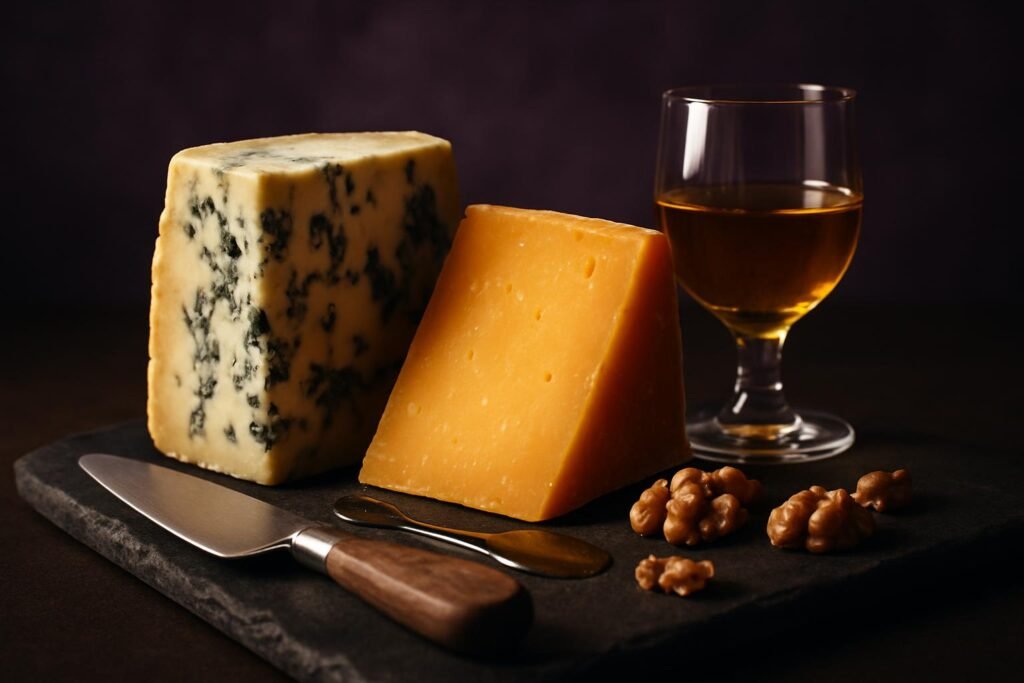
Salty, sharp and creamy all at once. The rule is simple: sweet wine. Port with Stilton, Sauternes with Roquefort, and in Australia a botrytis Semillon or a late-harvest white with almost any blue. The sugar tames the salt and the acid keeps it fresh. Gorgonzola dolce is mild enough for a Moscato d’Asti. If you must have a dry red, make it a ripe, fruity Shiraz and expect a fight.
The Cheat Sheet
| Cheese | Pour this | Why it works |
|---|---|---|
| Goat’s cheese, feta | Sauvignon Blanc, dry rosé | Acid meets acid; the cheese tastes creamier |
| Brie, camembert | Dry sparkling, Chardonnay | Bubbles and acid cut the butterfat |
| Cheddar, gouda | Cabernet Merlot, Shiraz, oaked Chardonnay | Fat softens tannin; nutty meets nutty |
| Parmesan, pecorino | Sangiovese, Nebbiolo, dry sparkling | Salt and savoury want a big, dry wine |
| Comté, Gruyère | Oaked Chardonnay, Pinot Noir | Nutty and buttery both ways |
| Washed rind | Gewürztraminer, off-dry Riesling | Aromatic sweetness handles the funk |
| Blue | Port, botrytis Semillon, late harvest | Sugar tames the salt |
| Mixed board | Dry sparkling or off-dry Riesling | Acid and a little sugar cover everything |
What to Avoid
- Big, tannic red with soft cheese. Cabernet and brie is the most common pairing at parties and one of the worst. The cream makes the tannin taste like chalk.
- Bone-dry wine with blue cheese. The salt makes the wine taste sour and thin. Go sweet or go home.
- Heavily oaked wine with fresh cheese. Toasty oak flattens goat’s cheese and mozzarella.
- Serving either one too cold. Fridge-cold cheese has no flavour and fridge-cold red has no fruit. Take both out 30 minutes before.
One Wine for the Whole Cheese Board
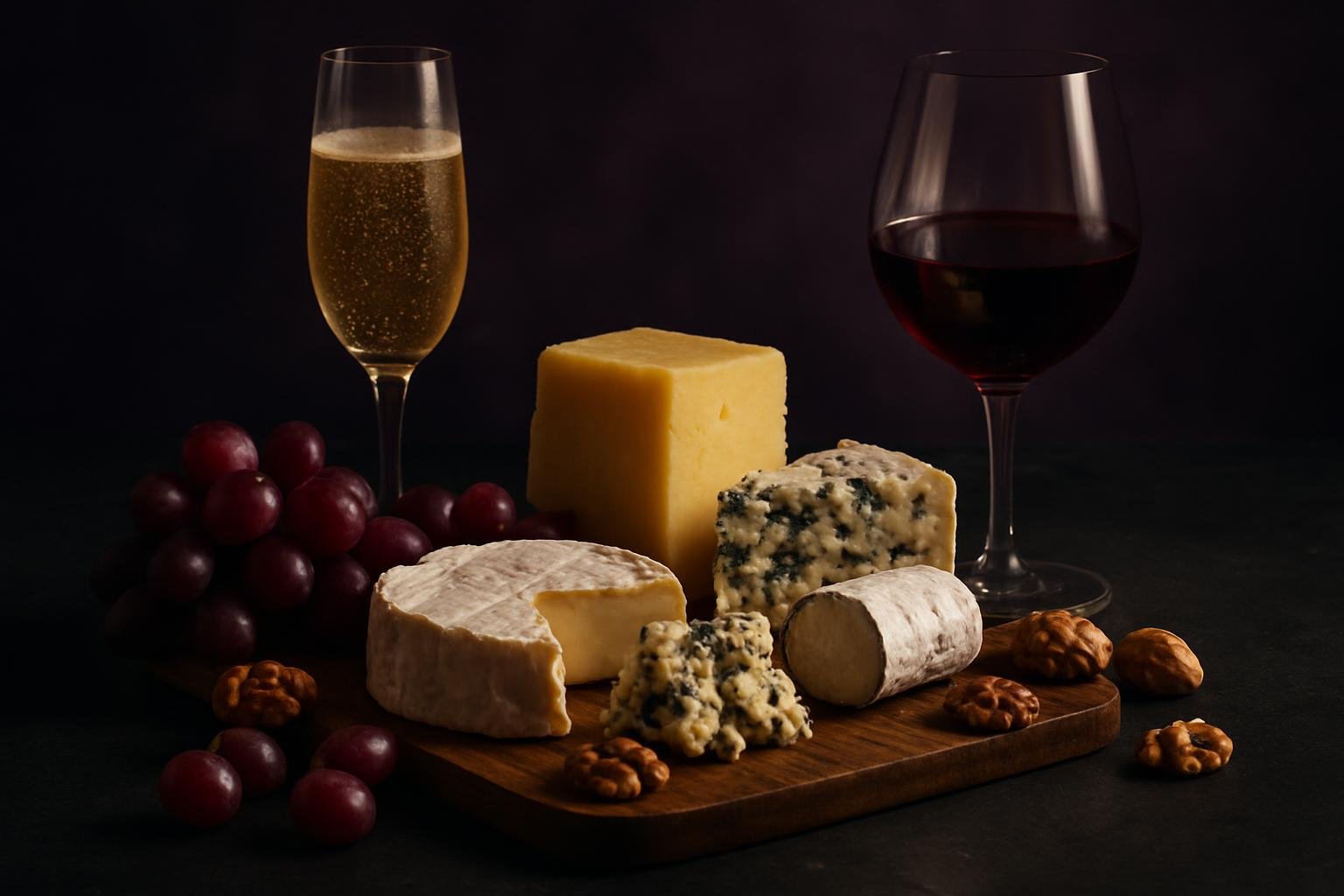
If you are pouring one bottle for a board with soft, hard and blue on it, pick a dry sparkling wine or an off-dry Riesling. Sparkling wins on a board that leans creamy; Riesling wins if there is anything salty or stinky. A Prosecco or Cava does the sparkling job for under twenty dollars. If you want a second bottle, make it something sweet for the blue: that is where our pick below comes in.
Drink One Tonight
This is the bottle we would put next to the blue cheese, and honestly next to the cheddar too. A cheap Barossa late-harvest Semillon with a bit of age: honey, apricot and enough acid to stop it being cloying. We checked it was in stock at Just Wines on 7 September 2026.

Schild Estate Lorraine Late Harvest Semillon 2013
The cheapest way to make a supermarket blue taste like a cheese-shop one.
- Sweet, honeyed and a proper match for blue cheese
- Enough acid to work with aged cheddar and parmesan as well
- Bottle age adds nutty, marmalade depth
- Fourteen dollars; stickies this good are usually three times that
- Sweet wine is not for everyone; keep a dry sparkling for the brie crowd
- A 2013 will not hang around, so buy it when you see it
Serving Tips
Take the cheese out of the fridge 30 to 60 minutes before serving so it softens and tastes of something. Serve whites and sparkling at 8 to 10 degrees, light reds at 14, big reds at 16 to 18. Pour small: a cheese board is a marathon, and a standard 150 ml glass of 13 percent wine is about 1.5 Australian standard drinks, which our wine calorie calculator will confirm if you want the sobering number. Taste mild cheeses first and finish with the blue, and give each wine a proper glass; our wine glasses guide has affordable options. Plain crackers, not flavoured ones, and a bit of quince paste or honey near the blue.
Frequently Asked Questions
What wine goes with cheese?
Dry sparkling wine and unoaked Chardonnay suit the widest range of cheeses. Beyond that, match by type: Sauvignon Blanc with goat’s cheese, Chardonnay or sparkling with brie, Cabernet or Shiraz with aged cheddar, and a sweet wine with blue.
Is red or white wine better with cheese?
White wine, most of the time. Its acid handles fat and salt better than red tannin does, and it does not clash with soft or creamy cheeses. Reds come into their own with aged, hard cheeses such as cheddar, parmesan and Comté.
What is the best wine for a cheese board?
A dry sparkling wine if the board is mostly soft and creamy, or an off-dry Riesling if it has salty and washed-rind cheeses. Add a small bottle of something sweet for the blue.
What cheese goes with red wine?
Aged cheddar, gouda, Comté, Manchego, parmesan and pecorino. The older and harder the cheese, the bigger the red it can take. Our guide to the best red wine with cheese goes into detail.
What wine goes with blue cheese?
Sweet wine: port with Stilton, Sauternes with Roquefort, botrytis or late-harvest Semillon with Australian blues. The sugar balances the salt.
Can you pair wine with cheese if you do not drink?
Yes. A dry alcohol-free sparkling does the same fat-cutting job with brie and cheddar, and a sweet alcohol-free white handles blue. Our alcohol-free wine guide lists the ones that actually taste like wine.
Building the rest of the platter? Our antipasto pairing guide covers the cured meats and olives, cheese for orange wine is for the adventurous, and the cheesecake pairing is for when the board is dessert. Drink responsibly: a cheese night goes late, so put the water jug on the table too.
If you are choosing a white for the board, it helps to know the difference between Pinot Gris and Pinot Grigio, because only one of them has the weight for a washed-rind cheese.
Mozzarella on a pizza is a different problem again, and we cover it in our guide to the best wine with pizza.
Melted Gruyere gets a whole bowl to itself in our guide to the best wine for French onion soup.
If the whole cheese board turns into a raclette night, our guide to the best wine with raclette covers what melted cheese does to a bottle.
If there is truffle anywhere near the cheese board, read our guide to what wine goes with truffle before you open anything big.
This post contains affiliate links. If you buy through them we earn a small commission at no extra cost to you. It keeps the wine flowing and the reviews honest.