Heads up: this guide contains an affiliate link. If you buy through it we earn a small commission at no extra cost to you.
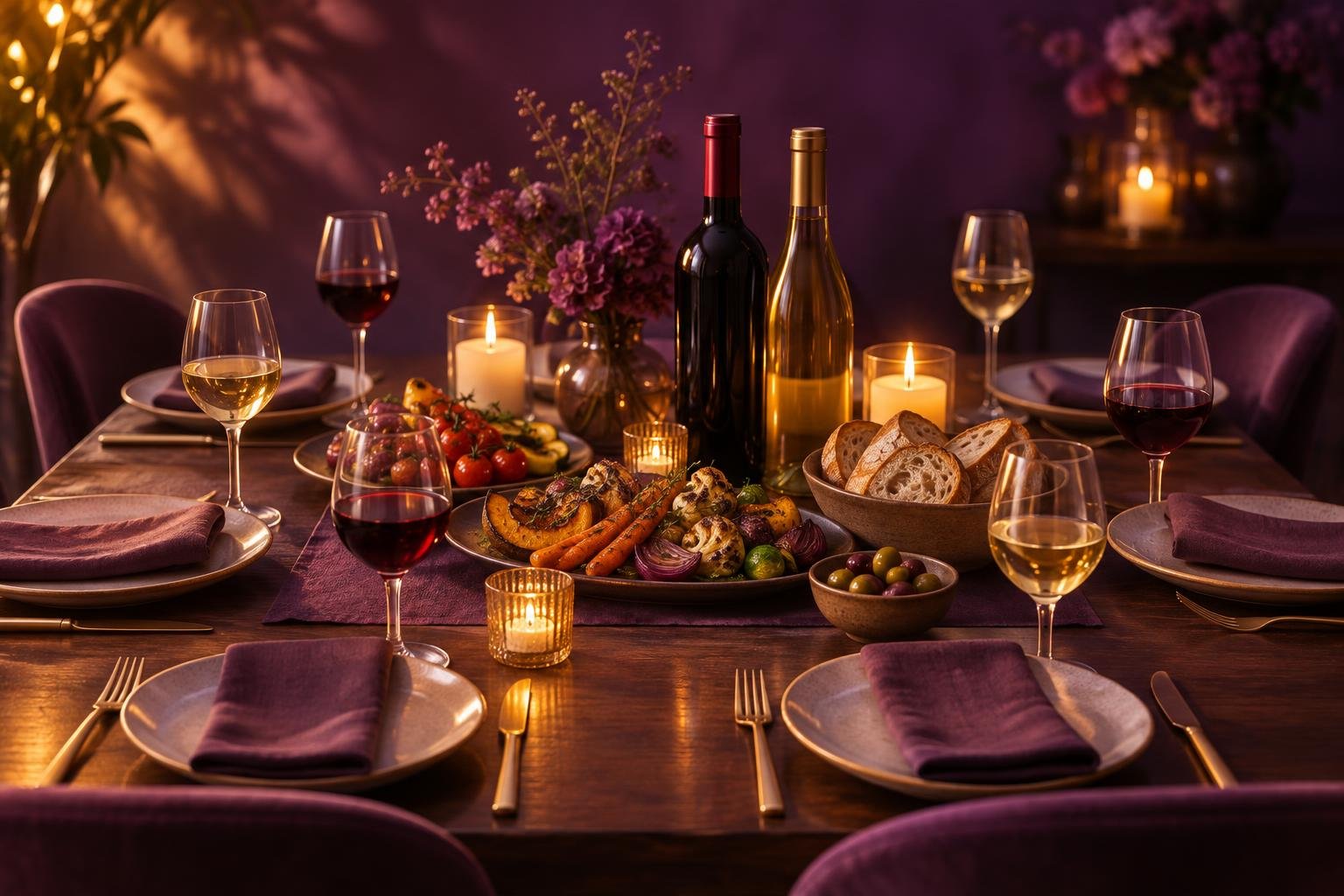
The easy way to choose wine for a dinner party: buy half a bottle per guest, split between one friendly red and one fresh white. Add a bottle of bubbles for the door. That is the whole plan.
Everything below is detail. Nobody at your table is scoring the wine out of 100. They came for the food, the gossip and a full glass, roughly in that order.
Table of Contents
How Much Wine to Buy
Start with the maths, because it is the bit that keeps hosts awake. Wine Spectator’s advice column suggests planning on two to three drinks per person, which works out to about half a bottle each when wine is the only drink.
A standard 750 mL bottle pours five 150 mL glasses, so six guests need three bottles as a base. Our guide to how many glasses are in a bottle has the full sums. Then add one spare red and one spare white. Running out at 9 pm is the only real dinner party sin.
| Guests | Base bottles | With two spares |
|---|---|---|
| 4 | 2 | 4 |
| 6 | 3 | 5 |
| 8 | 4 | 6 |
| 10 | 5 | 7 |
| 12 | 6 | 8 |
Split the base roughly half red, half white. Lean towards white in summer and red in winter. If your friends are known red drinkers, trust the evidence and not the table.
Leftover sealed bottles are not a problem. They are next Friday sorted, and our guide on how to store wine at home shows where to keep them.
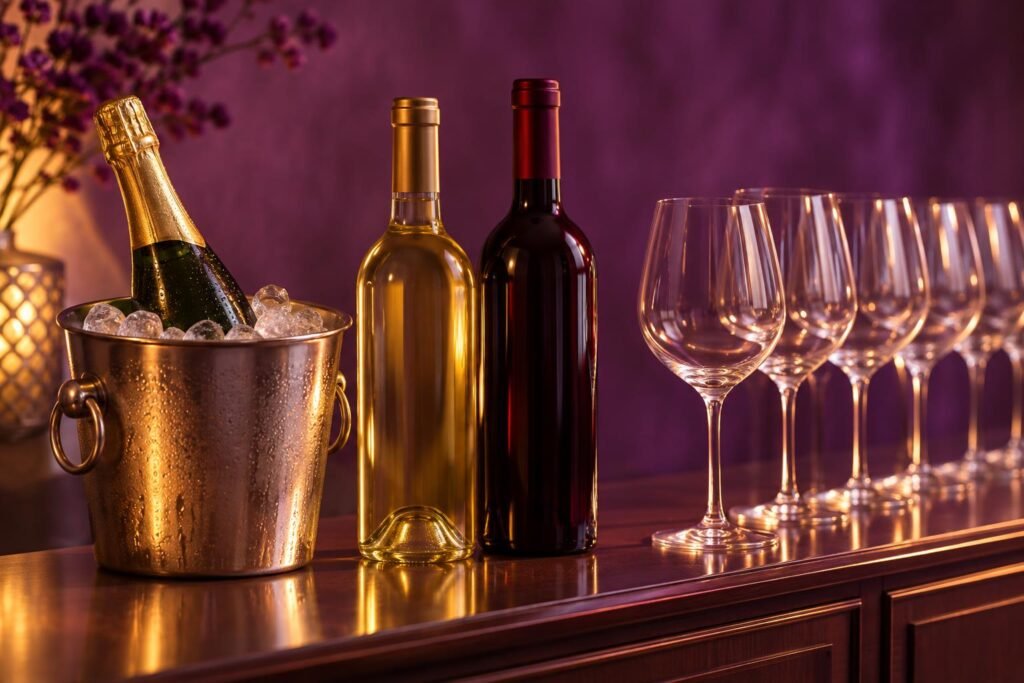
Pick a Red and a White That Get Along With Everyone
A crowd-pleaser is a wine with no sharp elbows. That means not too oaky, not too tannic and not too sweet. Save the weird orange wine for the friend who asks about it.
The Red: Medium-Bodied and Juicy
Big, grippy reds can bully lighter dishes and tire people out by the main course. A softer red works with far more food. Think Grenache, a Grenache Shiraz Mataro blend (GSM for short) or Pinot Noir.
Grenache is a safe bet from South Australia. Wine Australia describes McLaren Vale Grenache as lighter but flavourful and food-friendly, with notes of spice. That is exactly the brief for a table where one person ordered the lamb and another is picking at the salad. If your crowd loves a bigger red, a fruity Shiraz is the next step up.
The White: Fresh and Fruity
Go for a white that tastes of fruit, not of a timber yard. Pinot Gris is the peacemaker here, with soft pear flavours and enough weight to sit next to chicken, pork or creamy pasta.
Sauvignon Blanc is the zesty choice for seafood and salads. A dry Riesling is the pick if anything spicy is on the menu.
The Bubbles: One Bottle for the Door
A glass of fizz on arrival makes any Tuesday feel like an occasion. It does not need to be Champagne. Prosecco or an Australian sparkling does the job, and our explainer on the difference between Prosecco and Cava will help you choose.
Something for the Non-Drinkers
Someone is always driving, pregnant or just having a night off. Sparkling water is polite, but a proper alcohol-free bottle is kinder. We rounded up the good ones in our guide to the best non-alcoholic wines in Australia.
Match the Wine to the Menu, Loosely
You do not need a different wine for every course. Two rules cover most menus: match the weight of the wine to the weight of the food, and keep the wine at least as fresh as the dish.
- Light dishes (salads, seafood, chicken): lead with the white and keep the red in reserve.
- Rich dishes (roasts, stews, barbecue): lead with the red.
- Spicy dishes: pick fruity wines with low tannin, since heavy tannin and chilli make each other harsher.
- Cheese to finish: both bottles will find a friend on the board. Our guide to wine that pairs with cheese has the matches.
If the menu is a mixed bag, which most are, put both bottles on the table and let people choose. Guests are very good at this. They have been practising for years.
Try This Pair Tonight
Here is a red and a white that fit the brief. Both were in stock at Just Wines when we checked on 20 November 2026.

Cape Barren Native Goose McLaren Vale GSM 2024
A juicy South Australian blend that suits roasts, barbecue and pizza night alike. Serve it at cool room temperature.
- A Grenache, Shiraz and Mataro blend in a softer style
- From McLaren Vale, a region known for food-friendly Grenache
- Around $21 a bottle, so a spare will not hurt
- Too light for fans of big, heavy reds

Innocent Bystander Pinot Gris
A friendly white for a mixed menu. Chill it well and it will be the first bottle to empty.
- Pinot Gris is an easy match for chicken, pork and creamy pasta
- A well-known Australian label most guests will recognise
- No heavy oak to split the room
- About $25, so a little more than the red
How to Serve It Without Fuss
Pour in this order: bubbles first, then white, then red, with anything sweet last. Light before heavy means each wine still tastes of something after the one before it.
Chill the white and the fizz in the fridge for a few hours. Give the red 20 minutes in there as well if the kitchen is warm, because an Australian summer is not “room temperature”. Our wine serving temperature chart lists the numbers for every style.
One decent all-purpose glass per person is plenty, and our roundup of the best wine glasses in Australia covers the sturdy ones. Fill glasses a third of the way. It looks generous, it lets the wine breathe and it makes the bottle go round.
Keep an eye on the pours for your guests’ sake too. The Australian Government’s standard drinks guide counts a 150 mL glass of 13.5% red wine as 1.6 standard drinks, so two glasses is already more than three standard drinks. Put water jugs on the table and line up a ride home for anyone who needs one. Our wine calorie calculator shows standard drinks for any glass size.
What If a Guest Brings a Bottle?
Say thank you and decide later. A bottle brought to dinner is a gift, so you are free to open it or save it. If your friend clearly wants to share it, open it. If it clashes with dinner, tuck it away and tell them you are keeping it for a special night.
Frequently Asked Questions
How many bottles of wine do I need for a dinner party of 8?
Plan on four bottles as a base, which is half a bottle per guest. Add one spare red and one spare white to make six. A 750 mL bottle pours five 150 mL glasses.
Should I serve red or white wine at a dinner party?
Serve both. One medium-bodied red and one fresh, fruity white will cover almost any menu and almost any guest. Split the bottles roughly half and half, leaning white in hot weather.
What is a good crowd-pleasing red wine?
Look for a medium-bodied, juicy red with soft tannin. Grenache, a Grenache Shiraz Mataro blend, Pinot Noir or a fruity Shiraz are all safe choices.
What wine should be served first at dinner?
Start with sparkling wine, then white, then red, and finish with anything sweet. Lighter wines taste best before heavier ones.
Do I have to open the wine a guest brings?
No. It is a gift, so the choice is yours. Open it if the guest is keen to share it or it suits the meal. Otherwise thank them and save it.
How far ahead should I chill the wine?
Put white and sparkling wine in the fridge a few hours before guests arrive. Most reds are better with a short 20 minute chill on a warm day.
This post contains affiliate links. If you buy through them we earn a small commission at no extra cost to you. It keeps the wine flowing and the reviews honest.