
To store wine at home, keep it somewhere cool, dark and steady, lay cork-sealed bottles on their sides, and leave them alone. You do not need a cellar. A wardrobe or a cupboard under the stairs beats a hot kitchen every time.
Most of us treat wine storage like sock storage: wherever there is a gap. Wine is fussier than socks. It does not mind a little boredom, but it hates heat, sunshine and being jiggled about.
Table of Contents
The Short Answer
Aim for these four things and you are most of the way there.
- Cool. The Halliday Wine Companion suggests somewhere between 8 and 18 degrees Celsius, and says a steady temperature matters as much as a low one.
- Dark. Strong light can change the colour of a wine, so pick the darkest spot you have.
- Still. Busy spots like the top of the fridge or under a bed shake the bottles. Vibration can stir up sediment in reds.
- On their side. Cork-sealed bottles lie down so the cork stays damp. Screwcaps can stand up.
That is it. Everything below is just the detail, and a few places to avoid.
Temperature: Steady Beats Cold
Wine does not need to be icy. Wine writer Steven Spurrier says a classic cellar sits at about 12 degrees Celsius, and that anything from 8 to 15 degrees is fine, as long as it avoids big swings in temperature. The swings are the real villain. A bottle that warms up and cools down every day is having a rough time.
This is why the kitchen is a bad idea. Every time you cook, the room heats up. The same goes for the laundry, the garage and an uninsulated shed. In an Australian summer, those spots can get hot enough to spoil a wine before you ever pull the cork. Keep bottles away from exterior walls and heaters too.
Lying Down or Standing Up?
If the bottle has a cork, lay it on its side. Spurrier explains that the wine keeps the cork wet, and a wet cork stays snug. A dry cork can shrink and let air in. Humidity helps here too, since corks dry out in very dry air.
If the bottle has a screwcap, it can stand upright, because there is no cork to keep damp. Plenty of Aussie whites and everyday reds come this way, so you may not need a rack at all. Leave the bottle where it is once you have put it away. Moving it around only stirs up trouble.
Where to Store Wine Without a Cellar
Good news: the best spots are already in your house. Here is how the usual suspects score.
| Spot | Verdict | Why |
|---|---|---|
| Wardrobe | Great | Dark, quiet and usually steady. Pick one on an inside wall. |
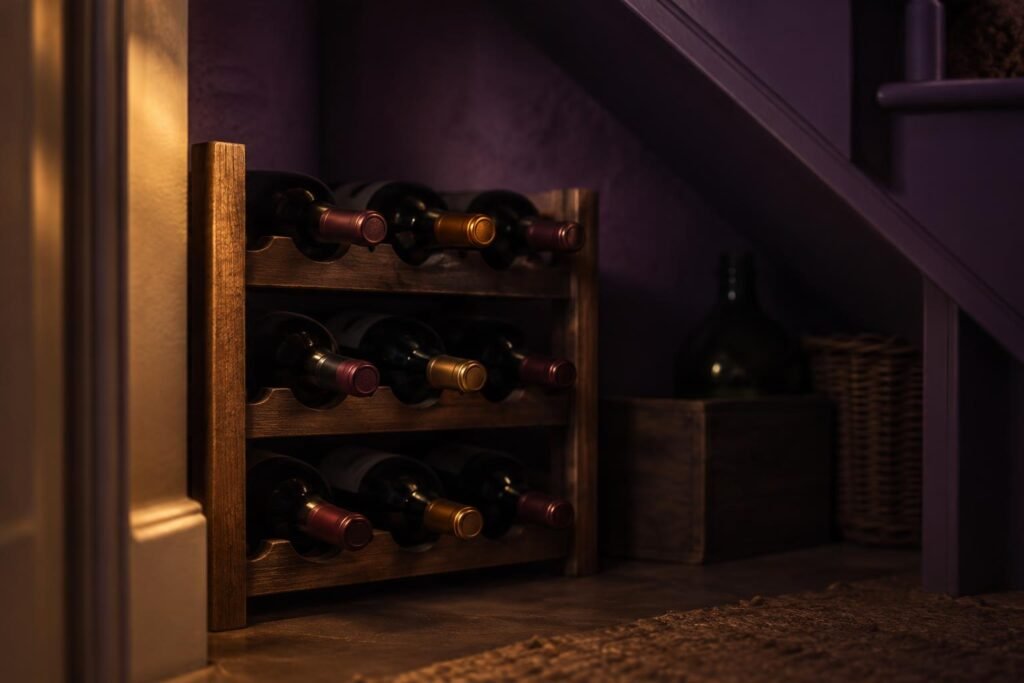
| Cupboard under the stairs | Great | Dark and out of the way. Spurrier suggests it by name. |
| Original wine box | Handy | The Halliday Wine Companion says the box helps soften temperature swings. |
| Kitchen | Avoid | Heat from cooking, plus too much traffic. |
| Laundry or garage | Avoid | Temperature swings, and the hottest room in summer. |
| Top of the fridge | Avoid | Warm and shaky from the motor. |
| Under the bed | Avoid | Halliday lists it as a high-traffic, vibration-prone spot. |
If you only have a bit of space, a small rack in the darkest, coolest cupboard is plenty for a handful of bottles. Think of it as sending the bottle on holiday to a better room.
Three Common Storage Mistakes
Most spoiled bottles come down to the same few slips. Check yourself against this list.
- The sunny shelf. A rack by a window looks lovely. It also gives the bottles light and heat all day. Move it somewhere dim.
- The hot spot. Garages and sheds feel handy, but they swing between hot and cool. Wine cannot cope with that, so keep it inside the house.
- The constant shuffle. Taking bottles out to admire them, then putting them back, is a hobby for people with spare time. Pick a spot and leave the bottles there.
Fix those three and your wine will taste the way the winemaker meant it to. That is all most of us need.
Do You Need a Wine Fridge?
Not for everyday drinking. If you buy a bottle on Friday and open it on Saturday, a cool cupboard is fine. A wine fridge starts to make sense when you collect wine to keep for years, or when your house runs warm and you have nowhere cool and steady.
The Halliday Wine Companion mentions underbench units that hold 20 to 50 bottles, with bigger ones holding over 300. If you are tempted, think about how many bottles you really keep. Most of us drink the stock down faster than we plan to.
For help with serving once the wine is out of storage, our wine serving temperature chart shows how long to chill each style. And if you are new to all this, the beginner’s wine guide covers the basics.
What About Bottles You Have Opened?
Storage rules change once the cork is out. Air is now the problem, and the fridge is your friend, even for reds. Our guide on how long wine lasts after opening covers each style. If you pour a lot of reds, a good decanter is a handy tool, though it is for serving, not storing.
Frequently Asked Questions
What is the best temperature to store wine at home?
Somewhere between 8 and 18 degrees Celsius is a fair range, and a steady temperature matters as much as a low one. Around 12 degrees is the classic cellar figure.
Can I store wine in the kitchen?
It is best to avoid it. Cooking heats the room, and wine hates temperature swings. A wardrobe or a cupboard under the stairs is a better home.
Should wine be stored on its side?
Yes, if it has a cork. Lying the bottle down keeps the cork moist. Screwcap bottles can stand upright with no trouble.
Do I need a wine fridge?
Not unless you are keeping wine for years or your home runs hot. For bottles you plan to drink within weeks, a cool, dark cupboard does the job.
Is it okay to keep wine in a cardboard box?
Yes. The original box can help buffer temperature swings, and it keeps the light off. Just keep the box somewhere cool.
Does light really hurt wine?
Strong light can change the colour of a wine, so keep bottles in the dark. A closed cupboard does this for free.