Reds around 14 to 18°C, whites around 7 to 13°C, rosé around 8 to 10°C, sparkling around 6 to 10°C: that is the whole chart in one sentence. Get the temperature right and a five dollar bottle tastes better than it has any right to. Get it wrong and a fifty dollar bottle tastes flat, boozy or like nothing at all.
This guide gives you the exact ranges for every style, explains why a splash of science backs up your nan’s rule about not serving red wine straight off the rack next to the oven, and gives you three ways to hit the right temperature without owning a wine fridge.
Table of Contents
The Wine Serving Temperature Chart
| Wine style | Serve at | Fridge time from room temp |
|---|---|---|
| Sparkling wine | 6 to 10°C | 2.5 to 3 hours, or 20 minutes in an ice bucket |
| Light whites (Riesling, Sauvignon Blanc) | 7 to 10°C | 2.5 hours, or 20 minutes in an ice bucket |
| Full whites (oaked Chardonnay) | 10 to 13°C | 1.5 hours, or 15 minutes in an ice bucket |
| Rosé | 8 to 10°C | 2 hours, or 20 minutes in an ice bucket |
| Light reds (Pinot Noir, Gamay) | 10 to 13°C | 45 minutes in the fridge |
| Medium reds (Grenache, Sangiovese) | 14 to 16°C | 25 minutes in the fridge |
| Full reds (Shiraz, Cabernet Sauvignon) | 16 to 18°C | 15 minutes in the fridge |
Those fridge times assume the bottle starts at a typical Australian living room in summer, around 22 to 24°C. Start colder and you need less time.

Why Temperature Changes How Wine Tastes
This is not just fussiness. Wine Spectator’s advice column explains that serving wine on the warmer side amplifies how strongly you notice acidity and alcohol, while serving it too cold mutes the aromas and flavour. The sweet spot for each style is the temperature where you get the fruit and the freshness without either the burn or the blank.
There is also a myth to bust. “Serve red at room temperature” is genuinely old advice, and rooms used to be colder. Decanter’s serving guide points out that the average UK living room in 1966 sat around 12°C, which is close to today’s recommended range for a light red. A modern heated room at 20°C or more will cook a red wine’s fruit and leave only the alcohol burn.
Red Wine: 10 to 18°C
Red is not one temperature. A light, juicy red like Pinot Noir or Gamay wants a proper chill, 10 to 13°C, cold enough that you would call it fridge-cool. A medium red such as Grenache or Sangiovese sits at 14 to 16°C. A big, tannic red like Shiraz or Cabernet Sauvignon can take the top of the range, 16 to 18°C, because the tannin and body carry the warmth without turning jammy.
Fifteen minutes in the fridge before you pour is enough for most reds stored at Australian room temperature. Longer than that and you risk chilling a full red past its best.
White Wine: 7 to 13°C
Light, zippy whites, think Riesling, Sauvignon Blanc, Pinot Grigio, are best cold, 7 to 10°C, so the citrus and acidity stay bright. A fuller, oaked white like Chardonnay is happier a little warmer, 10 to 13°C, so the texture and oak spice can show through instead of hiding behind the chill.
Rosé: 8 to 10°C
Dry rosé sits between the light whites and the sparklers, 8 to 10°C. Too cold and you lose the red-berry fruit; at room temperature it turns flabby and a bit sweet-tasting even when it is bone dry.
Sparkling Wine: 6 to 10°C
Sparkling wants the coldest serve of the lot, 6 to 10°C. Cold keeps the bubbles fine and controlled rather than an eruption the moment you pour, and it stops the wwine tastingsweeter and flabbier than it is.
How to Hit the Right Temperature Without a Wine Fridge
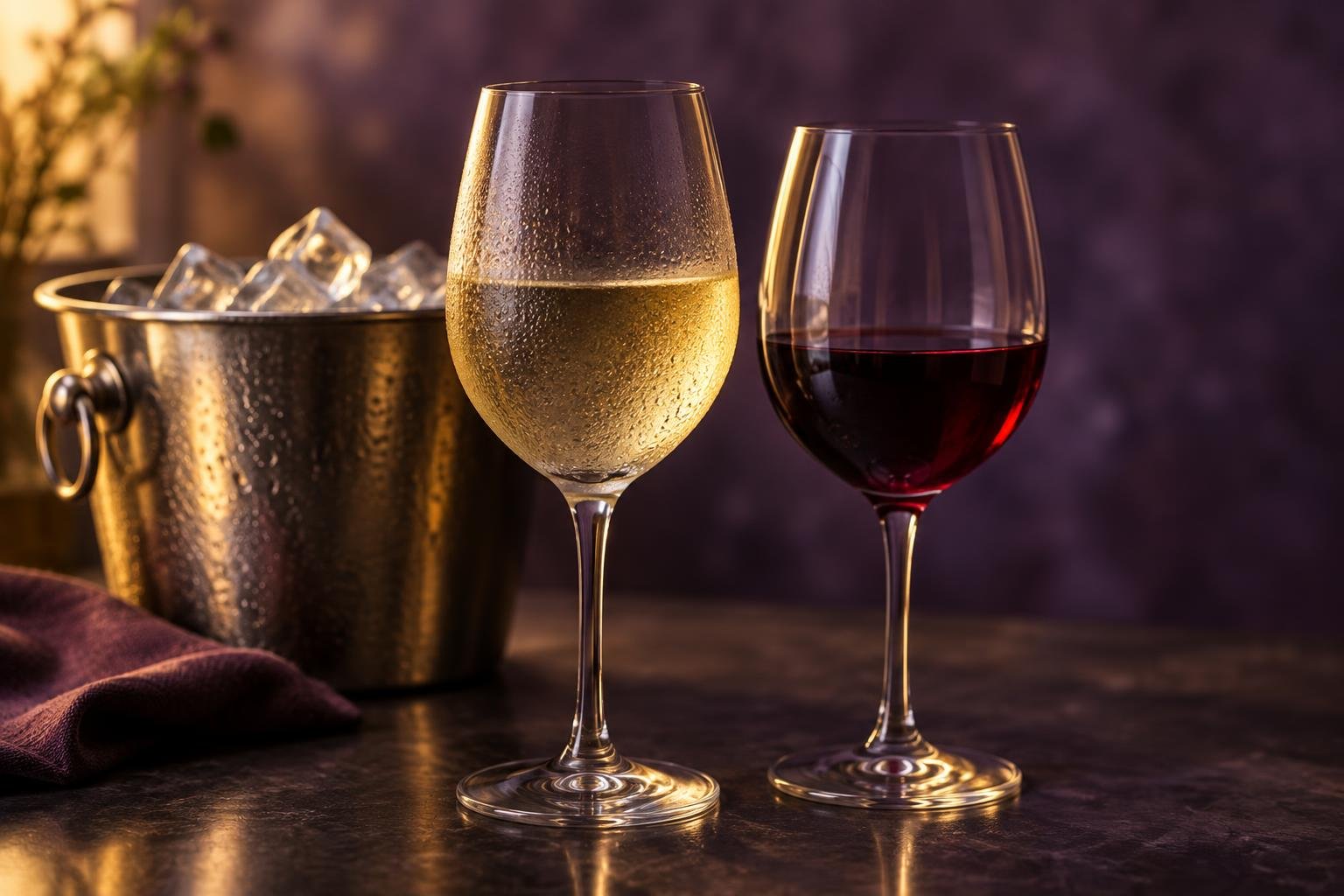
- Ice bucket, half ice and half water, is the fastest way to chill anything. Fifteen to twenty minutes gets a warm bottle down to serving temperature, faster than a fridge because the water touches every part of the glass.
- Freezer for whites and sparkling in a hurry works, but set a timer. Ten minutes is usually enough and forgetting the bottle for an hour risks a cracked bottle or a cork that pops on its own.
- For reds, the fridge for fifteen to twenty-five minutes beats leaving the bottle on the counter, especially in an Australian summer where room temperature can sit well above the ideal range.
- The right glass also matters here. A narrow glass holds the cold in longer, and a wide bowl warms the wine faster in your hand, worth knowing if you like your white lingering cold or your red opening up as you drink it.
- If a red needs to breathe as well as warm up, a decanter does both jobs at once.
Remember: The Glass Warms the Wine Back Up
Whatever temperature you start at, the wine in your glass warms up fast. Body heat from your hand, a warm room and a wide glass bowl can push a white wine up several degrees within ten minutes of pouring. That is a feature, not a bug, for a complex white or a big red that needs to open up. It is a problem for a delicate sparkling or a light white, which is why restaurants keep the bottle in an ice bucket beside the table instead of leaving it to warm on its own.
The fix is simple: pour smaller glasses more often rather than one large glass that sits and warms, and keep the bottle in the bucket or fridge between pours. Your third glass should taste as close as possible to your first.
Frequently Asked Questions
Is it true you should serve red wine at room temperature?
Not modern room temperature. The phrase dates from a time when houses were much cooler, closer to 12 to 15°C. In a heated Australian home, serve red slightly cool, 14 to 18°C depending on the style, rather than leaving it on the counter.
Can I put wine in the freezer to chill it fast?
Yes, for ten minutes at a time, then check it. Whites and sparkling chill fastest this way. Set a timer, because a forgotten bottle can freeze, expand and crack, or push its own cork out.
Does serving temperature actually change the taste, or is it just tradition?
It changes the taste. Warmer wine reads as more alcoholic and less fresh, while very cold wine mutes its aroma and flavour. The ranges in this chart are the point where each style shows its fruit without either fault.
What temperature should sparkling wine be for a toast?
Cold, 6 to 10°C, straight from an ice bucket if you have twenty minutes to spare. Cold sparkling holds its bubbles better and pours with less mess.
Should I chill wine in the door of the fridge or the main compartment?
The main compartment. Fridge doors open often and swing in temperature more than the rest of the fridge, which is fine for milk but not ideal for wine you plan to serve at a precise temperature.