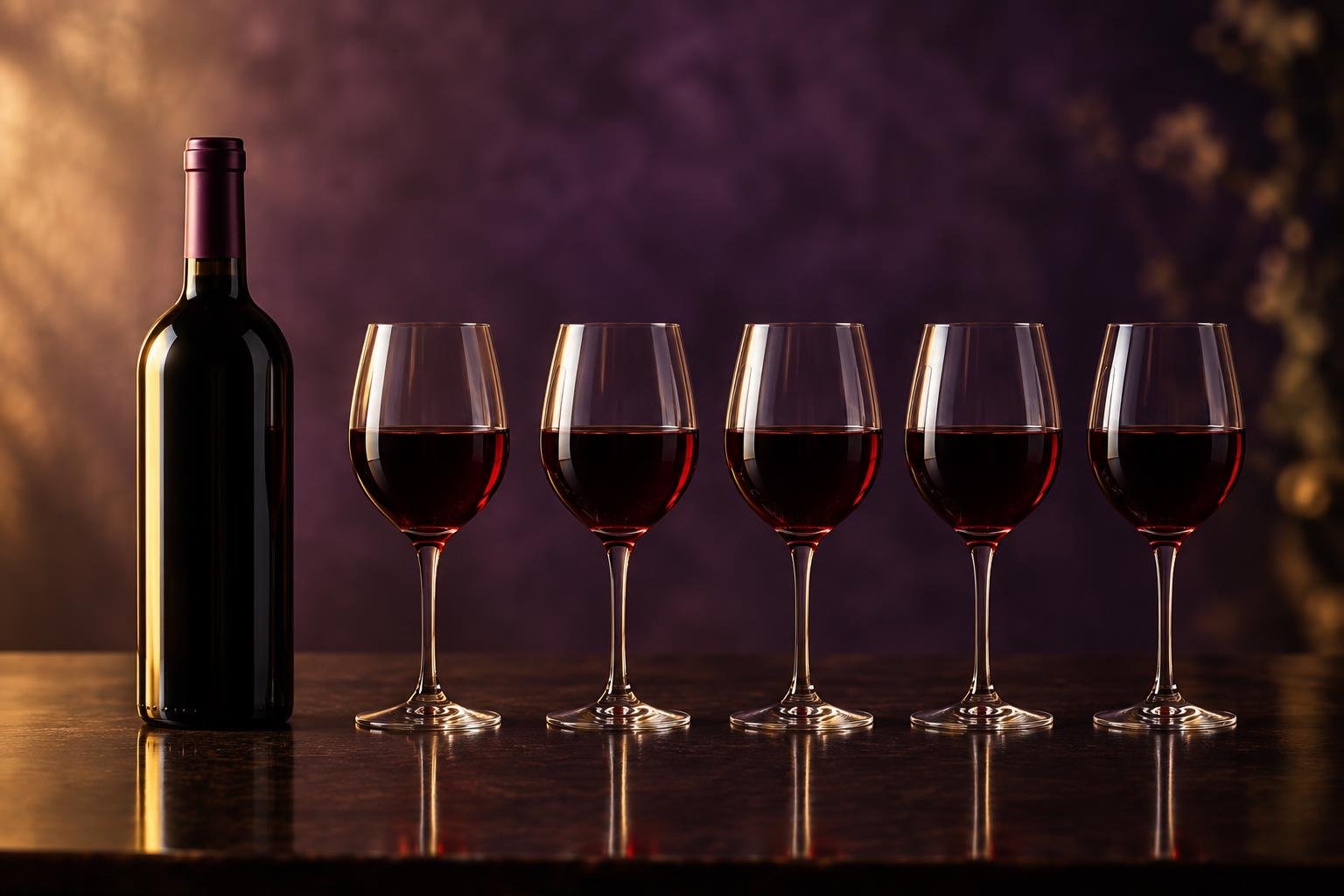
A standard 750ml bottle of wine gives you five glasses at a 150ml pour, or six glasses at 125ml. That is the short answer, and for most nights in it is the only number you need.
The rest is where it gets interesting. A glass of wine is not the same as a standard drink, a big bowled glass makes a fair pour look mean, and nobody has ever brought a measuring jug to a dinner party. So here is the maths, the Australian standard drink numbers, and a quick way to work out how much to buy.
Table of Contents
The Short Answer: 750ml Divided by Your Pour
Take the 750ml in the bottle and divide it by the size of your pour. A restaurant serve is usually 150ml. A dinner or event pour is closer to 125ml. A tasting pour is much smaller again.
| Pour size | Glasses from a 750ml bottle | When you would use it |
|---|---|---|
| 150ml | 5 | Restaurant serve, generous pour at home |
| 125ml | 6 | Dinner service, parties and events |
| 100ml | 7.5 | Smaller serve over a long lunch |
| 75ml | 10 | Casual tasting, or a toast |
| 50ml | 15 | Structured tasting with several wines |
Five is the number worth remembering. Everything else on that list is a variation on it.
Why the Glass in Your Hand Is Probably Bigger Than 150ml
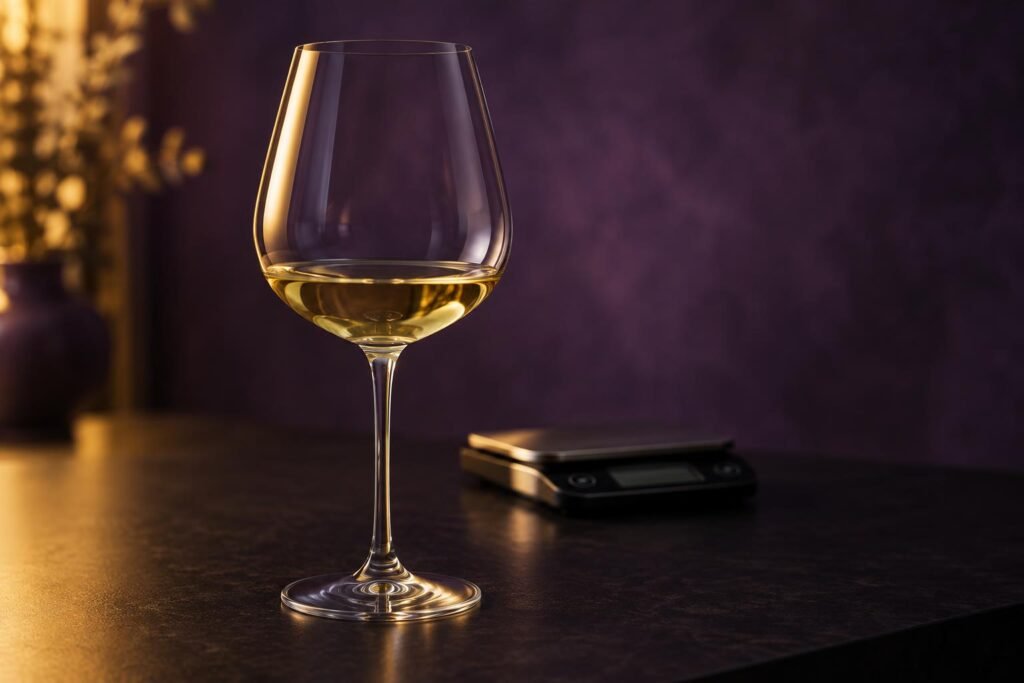
Modern wine glasses are generous. Plenty hold 500ml or 600ml, and a few hold more than that. The extra space is there so the wine can be swirled and smelled properly, not so the glass can be filled.
That is exactly why home pours creep upwards. A correct 150ml serve sits low in a big bowl and looks stingy, so the hand keeps going. At 190ml a bottle is finished in four glasses instead of five, and the maths quietly stops working.
Try this once. Pour 150ml of water into your usual glass, using kitchen scales if you have them, because 150ml of water weighs 150g. Look at where the water sits and remember that line. It is usually lower than expected. If you want a glass that flatters a proper pour rather than swallowing it, our guide to the best wine glasses in Australia covers the shapes that work.
A Glass of Wine Is Not a Standard Drink
This is the part most people get caught out by. In Australia, one standard drink contains 10 grams of pure alcohol, whatever the drink is. Wine at normal strength carries more than that in a normal glass.
The Australian Government Department of Health publishes the figures, and they are worth knowing: the standard drinks guide.
| What you pour | Standard drinks |
|---|---|
| 100ml of red at 13.5% | 1.0 |
| 150ml of red at 13.5% | 1.6 |
| 150ml of white at 11.5% | 1.4 |
| A 750ml bottle of red at 13.5% | 8 |
| A 750ml bottle of white at 11.5% | 6.8 |
| A 750ml bottle of champagne at 12% | 7.1 |
So a bottle of red can hold five glasses and eight standard drinks at the same time. The two numbers measure different things: one is how much liquid, the other is how much alcohol. Every bottle sold in Australia has to print the standard drinks on the label, so the honest answer is always there if you turn the bottle around.
If you want the numbers for the bottle actually in front of you, including the kilojoules, our wine calorie and standard drinks calculator does the sums for you.
Other Bottle Sizes and What They Pour
Not every bottle is 750ml. Here is what the common sizes give you at a 150ml pour.
| Bottle | Volume | Glasses at 150ml |
|---|---|---|
| Piccolo or split | 187ml | About 1 |
| Half bottle | 375ml | 2 to 3 |
| Standard bottle | 750ml | 5 |
| Magnum | 1.5 litres | 10 |
| Double magnum | 3 litres | 20 |
| Two litre cask | 2 litres | 13 |
A magnum is the useful one. It is two bottles in a single vessel, it ages more slowly because there is less air per litre of wine, and it makes a table look like an occasion.
How Much Wine to Buy for a Dinner Party
Once you know how many glasses are in a bottle, the shopping list writes itself. Multiply your guests by the number of serves each, then divide by the glasses per bottle.
Say ten people are coming and you want three 125ml serves each. That is 30 glasses. At six glasses per bottle, you need five bottles.
Then adjust for the night itself:
- A long dinner needs more than a quick one.
- Sparkling on arrival uses up most of a bottle for every six or seven guests.
- Beer, spirits and good non-alcoholic options all reduce the wine count.
- Guests who are driving will have one glass, not three.
- Several wines across several courses means more bottles opened, not more wine drunk.
Round up by a bottle or two. An unopened bottle keeps happily until next time, and running out at nine o’clock does not.
Frequently Asked Questions
How many glasses are in a bottle of red wine?
The same as any other still wine. A 750ml bottle of red gives five glasses at 150ml, or six at 125ml. Red is often poured a little more generously, which is usually why a bottle of red seems to disappear faster.
Is a glass of wine 125ml or 150ml?
Both are normal. Australian restaurants usually pour 150ml for a standard glass, while 125ml is common at dinners and events where the wine needs to stretch. The Australian standard drink measure uses 100ml, which is smaller than either.
How many standard drinks are in a bottle of wine?
About 8 for a red at 13.5% alcohol, and about 6.8 for a white at 11.5%. Stronger wine means more standard drinks in the same bottle. The exact number is printed on the label, because Australian law requires it.
How many glasses are in a magnum?
A magnum holds 1.5 litres, so it pours about 10 glasses at 150ml, or 12 at 125ml. It is the easiest way to serve a table of eight or ten without opening and pouring twice.
Does a bigger glass mean fewer glasses per bottle?
Not by itself. The capacity of the glass is not the serving size, so a 600ml glass with a 150ml pour still gives five glasses from the bottle. It only changes the answer if the bigger glass tempts you into a bigger pour, which it often does.
How long does an open bottle last?
Three to five days with a stopper in the fridge for most wines, and a day or two for sparkling. We go through it properly in our guide to how long wine lasts after opening.