Heads up: this guide contains an affiliate link. If you buy through it we earn a small commission at no extra cost to you.
A Cabernet Sauvignon is the safe answer for steak, and a Shiraz or a Malbec will not let you down either. But the thing that really decides which one works is not the name of the cut. It is how much fat is on the plate.
That sounds fussy. It is not. Fat is the one thing on a steak that changes how a red wine feels in your mouth, and the average Australian steak carries less of it than the old steakhouse advice assumes. Get that part right and the choice gets easy. Get it wrong and a good bottle tastes like a mouthful of wet tea bags.
Table of Contents
The Short Answer
Three styles cover almost every steak night.
- Cabernet Sauvignon. Firm tannin and blackcurrant fruit. Best with a fatty, well marbled steak that can soften it. Serve at 16 to 18 degrees.
- Shiraz. Rounder, riper and a little peppery. The one for a barbecue, a charred crust or a peppercorn sauce. Serve at 16 to 18 degrees.
- Malbec. Softer tannin, dark plum, easy to like. The safest pick for a lean steak or a table full of people. Serve at 16 degrees.
Cellar temperature in an Australian house means twenty minutes in the fridge, not the cupboard next to the oven. A red served at room temperature in February tastes of warm alcohol and very little else.
What Steak Actually Does to Wine
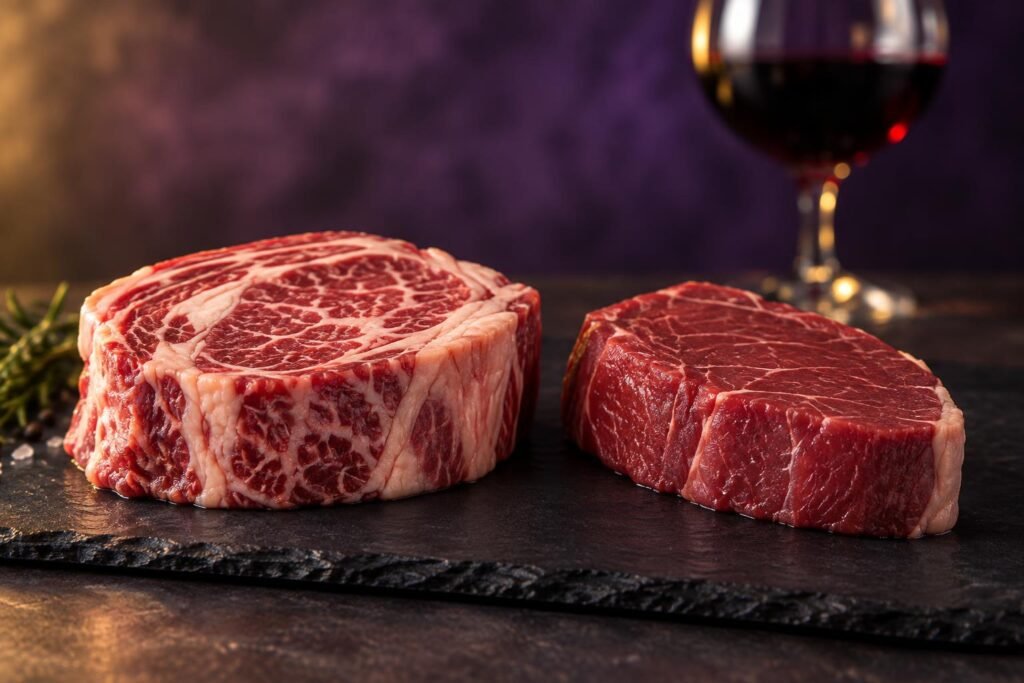
Every steak and wine article starts with the cut. Here is the problem with that. Meat and Livestock Australia reviewed the nutrient content of Australian red meat and found the lean meat of a rump sits at about 2.7 grams of fat per 100 grams, a rib eye at 4.1 and a fillet at 4.7. The review says plainly that the cut is not a major driver of what is in the lean meat.
What does move is the fat you leave on. The same review puts an average untrimmed cut at 8.7 grams per 100 grams and the fattiest at 11.3. The fat on your plate can triple depending on what the butcher trims and what you push to the side. That, not the name on the label, is what your wine has to deal with. Marbling, the fine flecks inside the muscle that no knife can remove, needs roughly 150 to 200 days of grain feeding to show up, and Australian cattle average 80 to 100 days, so there is usually less of it here than the steakhouse pictures suggest.
Why does fat matter so much? Because fat is what tames tannin. In a 2021 study in the American Chemical Society journal of agricultural and food chemistry, volunteers swallowed a spoonful of oil before tasting a tannin solution. The tannins stopped tasting dry and started tasting fruity, and olive oil had the strongest effect. Tannins latch onto fat droplets in the mouth, which leaves fewer of them free to grab the proteins in your saliva. That grabbing is what dryness actually is.
| On the plate | What it does to the wine | What the wine needs back |
|---|---|---|
| Fat and marbling | Soaks up tannin before it can grip | Tannin, and plenty of it |
| Lean muscle | Softens tannin a little, far less than fat does | Softer tannin, more fruit |
| Salt | Makes tannin sharper, fruit sweeter | Ripe fruit, moderate tannin |
| Char from the grill | Adds bitterness on top of tannin | Oak or ripeness, not more tannin |
| Pepper and mustard | Sharpens the finish, lifts the alcohol | Lower alcohol, softer finish |
| Creamy or mushroom sauce | Adds fat but no acid at all | Fresh acidity, less tannin |
Best Wines for Steak
Cabernet Sauvignon, when the steak has fat on it
Cabernet Sauvignon tastes of blackcurrant, cedar and a firm grip at the back. That grip is the point. Give it a marbled steak or one with the fat cap left on and the tannin melts into the meat. Give it a trimmed fillet and the same wine turns hard, because there is nothing on the plate to soften it. Coonawarra and Margaret River are the Australian regions to look for, and Margaret River is the gentler of the two.
Shiraz, for char and pepper
Shiraz brings riper fruit and a warm, spicy edge, which is what a barbecue crust wants. Char is bitter, and bitter plus tannin is a rough combination, so a fruitier wine lands better than a stern one. Cool climate Shiraz from Heathcote or the Grampians even has its own pepper note, which is a neat trick next to a peppercorn sauce.
Malbec, the soft landing
Malbec is the one to open when you are not sure. Dark plum fruit, round tannin, nothing sharp. It suits a mid range steak, a mixed table, and anyone who says red wine makes their mouth feel furry.
Grenache or a GSM, for a lean steak
This is the pick nobody suggests and it is often the right one. A trimmed rump has almost no fat to soften a big red, so a juicier wine works better. Grenache blends give ripe red fruit and gentle tannin, and they take a small chill nicely on a hot night. McLaren Vale and the Barossa are full of them.
The white that actually works
A barrel fermented Chardonnay is a real match for a lean fillet in a mushroom or creamy sauce. No tannin to fight the meat, oak that echoes the pan, and acidity that cuts the cream in a way no red manages. It will not survive a fatty rib eye off the barbecue, so pick your moment.
What to Avoid
- A young, very tannic red with a lean steak. No fat, no rescue. The wine tastes bitter and the meat tastes dry.
- Sweet or off dry whites. Sugar next to salt and char goes sticky in a hurry.
- High alcohol reds with a peppery sauce. Pepper makes alcohol feel hotter. Our wine calorie calculator shows how fast the strength adds up.
- Anything served warm. A red at 24 degrees tastes flabby no matter how good the bottle was.
Drink One Tonight
One bottle, stock checked this morning, chosen to match the way most Australians actually eat steak: good meat, sensibly trimmed, cooked at home.

Voyager Coastal Margaret River Organic Cabernet Sauvignon 2024
Margaret River sits on the gentler end of Australian Cabernet, with ripe blackcurrant fruit and tannin that grips without scraping. That makes it the right shape for a trimmed sirloin or rump, which is what most of us are actually cooking. Serve it at 16 to 18 degrees and let it open up while the steak rests.
- Margaret River Cabernet has finer, friendlier tannin than the big Coonawarra style
- Certified organic fruit from a serious Margaret River producer
- Blackcurrant and a little cedar, which is the classic steak flavour match
- Around twenty six dollars, so it is a weeknight bottle rather than a special occasion one
- Not the wine for a heavily marbled rib eye, which can take something firmer
- A young vintage, so give it twenty minutes in a decanter
If You Are Cooking It
Salt the steak at least forty minutes before it hits the pan, or right before. Anywhere in between and the salt has pulled moisture out without having time to draw it back in, which gives you a grey, steamed crust instead of a brown one. A browner crust means more flavour, and more flavour gives the wine something to hold onto.
Then make one decision on purpose: trim the fat, or leave it. Leave it on and eat it, and you can open the most tannic red in the house. Trim it off and drop down a level to Malbec or Grenache. Rest the meat five minutes and pour while you wait; a young Cabernet will thank you for twenty minutes in a decanter.
Frequently Asked Questions
What is the best wine with steak if I only want one bottle?
A medium bodied Cabernet Sauvignon. It handles a fatty steak, it does not fall over next to a lean one, and it suits nearly every sauce. If half your table dislikes firm tannin, buy a Malbec instead.
Does the sauce matter more than the steak?
Often, yes. Pepper sauce wants lower alcohol, a creamy mushroom sauce wants acidity, and chimichurri wants fresh fruit rather than heavy oak.
Can you drink white wine with steak?
You can. With a lean fillet in a creamy or mushroom sauce, a barrel fermented Chardonnay beats most reds. With a fatty barbecued steak it is outgunned.
Should I decant a red before steak?
If it is young and tannic, twenty to thirty minutes helps. If it is more than about ten years old, pour it straight and drink it, because air can flatten an older wine quickly.
Does a rare steak need a different wine to a well done one?
A bit. Rare meat is juicier and softer, so it flatters a lighter red. A well done steak is drier with a heavier crust, so it wants riper fruit and softer tannin, which is Shiraz or Malbec territory.
Wrapping the steak in bacon, or serving it with a rasher on top? Our guide to wine pairing with bacon covers what the smoke and salt do to the glass.
This post contains affiliate links. If you buy through them we earn a small commission at no extra cost to you. It keeps the wine flowing and the reviews honest.