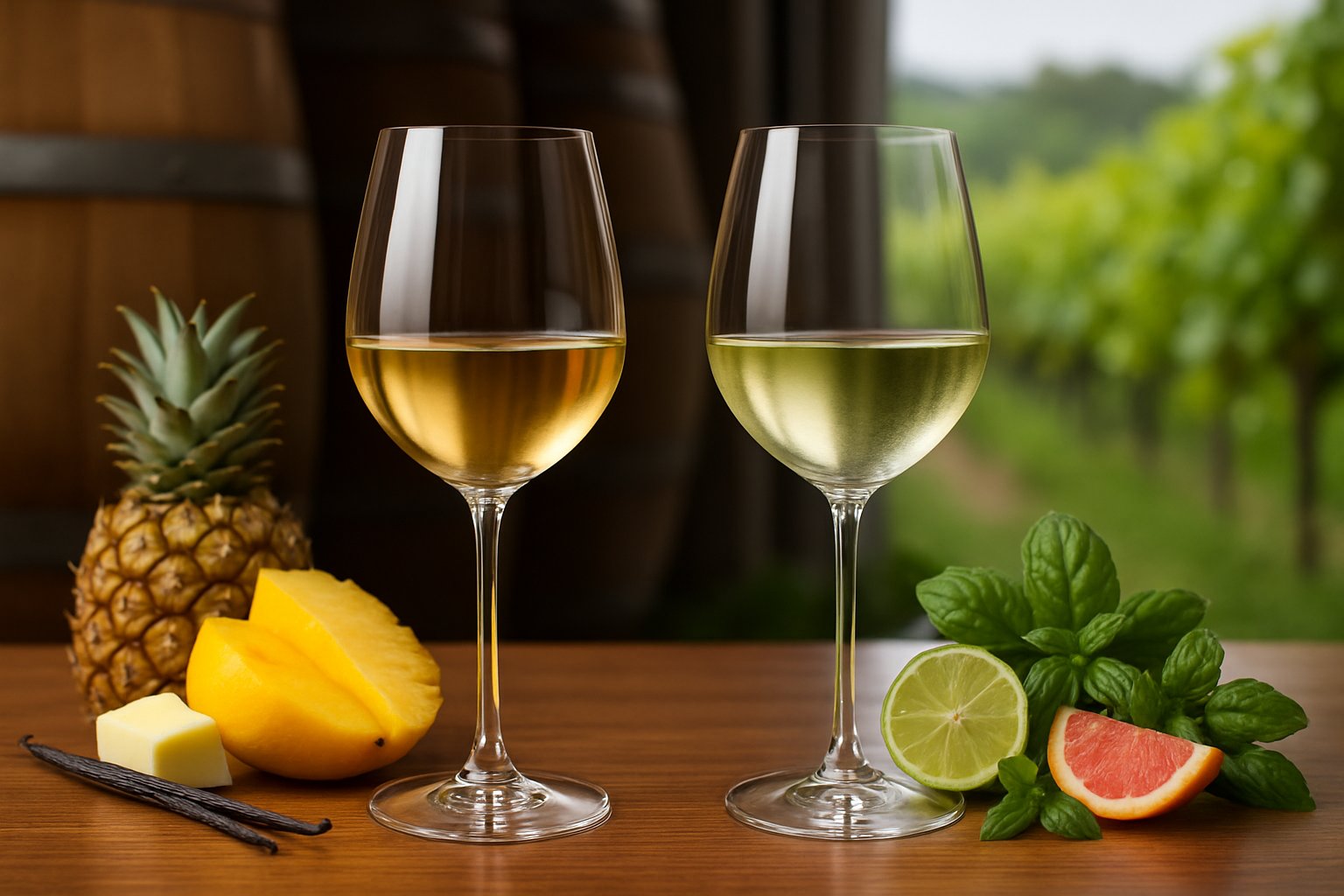
Chardonnay and Sauvignon Blanc are the two white wines everybody has heard of, and they are opposites in one important way. Sauvignon Blanc tastes the same wherever it grows: green, zesty, loud. Chardonnay tastes like whatever the winemaker wants, from lean and stony to rich and buttery. That is why people say they hate Chardonnay and then love one, and why Sauvignon Blanc fans rarely change their mind. Here is the difference, and which one to buy for what.
Table of Contents
The short version
| Chardonnay | Sauvignon Blanc | |
|---|---|---|
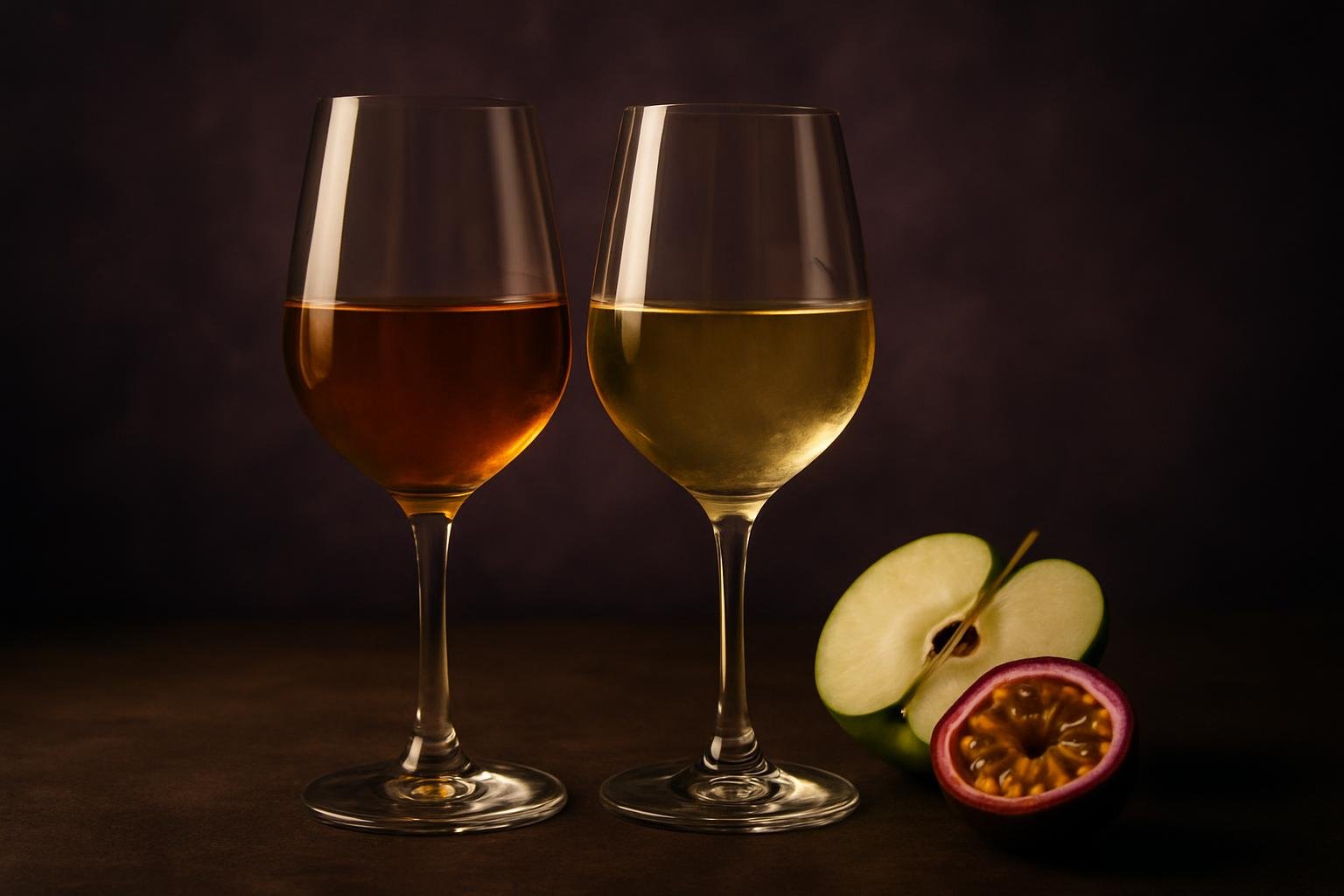
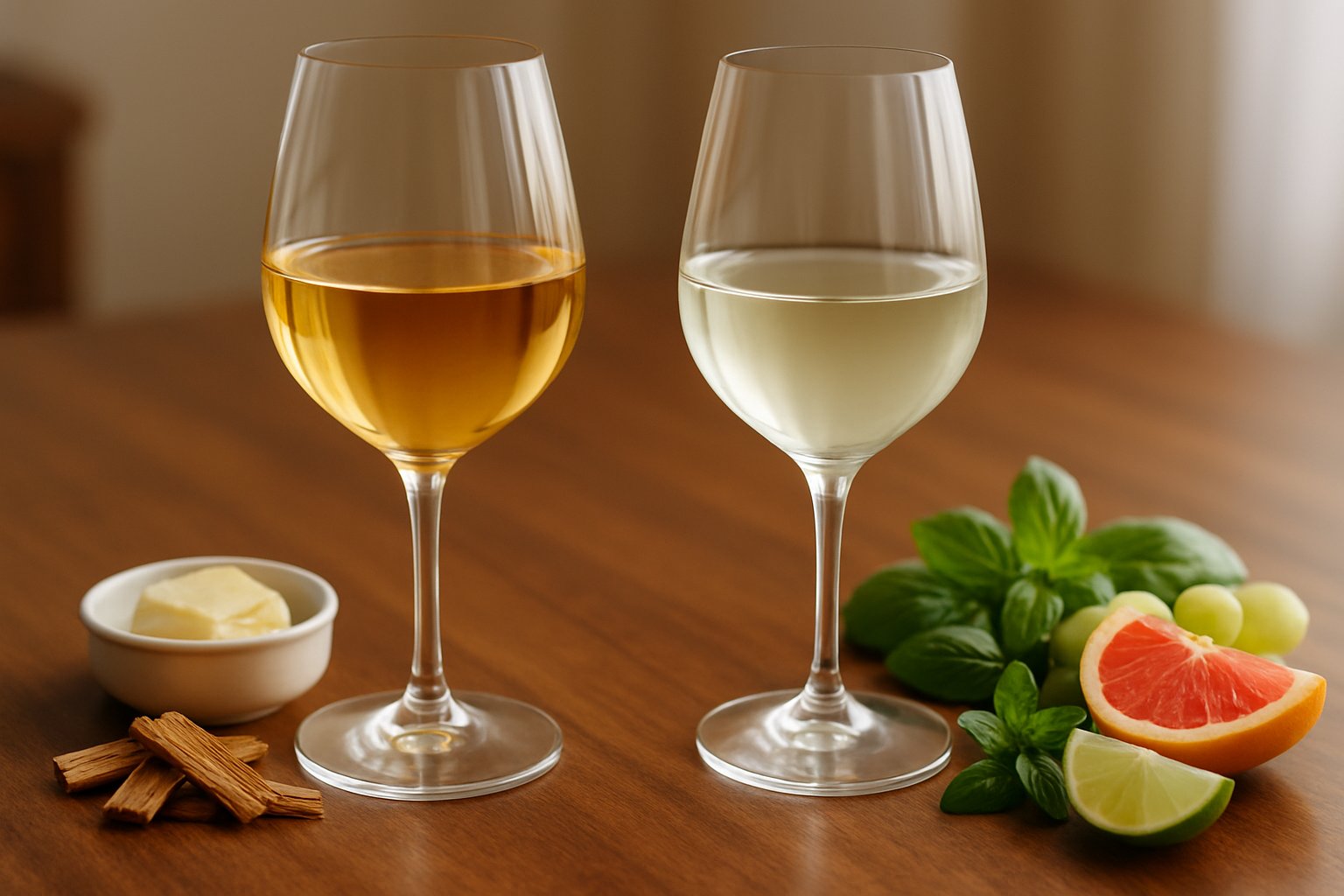
| Smells of | Apple, pear, citrus, stone fruit; with oak, butter, toast, nuts | Passionfruit, gooseberry, cut grass, capsicum, lime |
| Feel in the mouth | Medium to full, round, sometimes creamy | Light, sharp, zingy |
| Acidity | Medium to high | High |
| Oak | Often, and it changes everything | Rarely |
| Style range | Enormous | Narrow |
| Home ground | Burgundy (Chablis, Meursault, Champagne) | Loire (Sancerre) and Bordeaux |
| New World star | Australia (Margaret River, Yarra, Adelaide Hills) | New Zealand (Marlborough) |
| Best Australian regions | Margaret River, Yarra Valley, Adelaide Hills, Tasmania, Mornington | Adelaide Hills, Margaret River (blended with Semillon), Tasmania |
| Ages? | Good ones, five to fifteen years | Drink within two years |
| Serve at | 10 to 12°C; not ice cold | 6 to 8°C; cold |
Why Chardonnay changes and Sauvignon Blanc does not
Chardonnay is a fairly neutral grape. Left alone, it tastes of apple and citrus and not much else, which sounds like a weakness and is actually its strength: it takes on whatever you do to it. Ferment it in oak barrels and it picks up toast and vanilla. Let the second, softening fermentation happen (winemakers call it malolactic) and the sharp apple acid turns into a creamy, buttery one. Stir the dead yeast through it and it gets richer and nuttier. Skip all that, grow it somewhere cold and put it in steel, and you get Chablis, which is lean, stony and tastes nothing like the buttery Chardonnay of the 1990s. Same grape.
Sauvignon Blanc, by contrast, has a strong personality that comes from the grape itself. Compounds in the skins (the same family that gives capsicum its smell) produce the green, grassy, passionfruit notes, and they show up whether the wine is made in the Loire, Marlborough or the Adelaide Hills. Oak mostly gets in the way, so almost nobody uses it. The result is a wine that is reliably fresh, sharp and aromatic, and that is what its fans want: no surprises.
The Australian angle
Chardonnay is the country’s biggest white grape and the one Australia does best. The rich, oaky style of the 1990s gave it a bad name (“anything but Chardonnay”), and the industry answered by making it leaner, fresher and more like white Burgundy. Margaret River, the Yarra Valley and the Adelaide Hills now make Chardonnay that competes with anything from France at a third of the price, and Tasmania and the Mornington Peninsula are close behind. Tyrrell’s in the Hunter released the first commercial Australian Chardonnay in 1971, which started the whole thing.
Sauvignon Blanc in Australia lives in the shadow of Marlborough across the Tasman, which sells more of it here than every Australian region combined. The Adelaide Hills makes the best local version, a little softer and less pungent than Marlborough, and Margaret River blends it with Semillon into the crisp, grassy SSB that is Western Australia’s summer wine. The Adelaide Hills gets its own section in our South Australian regions guide.
What to buy
Prices are Dan Murphy’s shelf prices on 9 September 2026 and will move about; BWS stocks many of the same names.
| Wine | Price band | Why |
|---|---|---|
| Nepenthe Altitude Sauvignon Blanc | About $15 to $19 | Adelaide Hills; passionfruit and lime, the Australian answer to Marlborough |
| Taylors Estate Sauvignon Blanc | About $17 | Clare Valley; softer, a good all-rounder |
| Cape Mentelle Marri or Xanadu Fusion Chardonnay | About $17 to $22 | Margaret River at an entry price; the modern lean style |
| Bird in Hand Sauvignon Blanc | About $26 | The Adelaide Hills style at its most polished |
| Vasse Felix Filius Chardonnay | About $27 | The wine that shows why Margaret River Chardonnay is famous |
| Yering Station Yarra Chardonnay | About $25 to $30 | Cool-climate Yarra; grapefruit, white peach, gentle oak |
| Shaw and Smith Sauvignon Blanc | About $36 | The benchmark Australian Sauvignon Blanc |
| Shaw and Smith M3 or Cape Mentelle Chardonnay | About $45 to $55 | Serious Chardonnay that ages; the ones to compare with Burgundy |
Our Chardonnay guide and Sauvignon Blanc guide cover each grape in full.
Heads up: the boxes below link to Just Wines, our partner shop. If you buy through them we earn a small commission at no extra cost to you. Prices were checked when this was written and move about.
The two grapes from the partner shop:

Voyager Coastal Margaret River Organic Chardonnay 2025
- Margaret River Chardonnay from Voyager Estate, family-owned and certified organic
- The modern Australian style: fresh, textured, gently oaked
- About twenty-five dollars
- The estate Chardonnay is the famous one; this is its younger sibling

Wynns The Siding Coonawarra Chardonnay 2025
- Cool-climate Coonawarra Chardonnay from Wynns
- Fresh and textured rather than buttery
- About seventeen dollars
- If you want the rich old style, this is not it

Kim Crawford Sauvignon Blanc
- Marlborough Sauvignon Blanc from Kim Crawford: passionfruit, guava, grapefruit
- The style that made the grape famous
- About nineteen dollars
- New Zealand, not Australia; the Adelaide Hills version is softer
Which one for dinner
Sauvignon Blanc is the wine for anything green, sharp or from the sea: goat’s cheese, asparagus, a salad with vinaigrette, oysters, prawns, Thai and Vietnamese food, fish and chips. Its acid cuts through and its green notes echo the herbs. Chardonnay is the wine for richer food: roast chicken, pork, creamy pasta, lobster, salmon, mushroom risotto, a soft cheese. A lean, unoaked Chardonnay can do most of Sauvignon Blanc’s jobs; a rich, oaked one wants butter and cream on the plate. Our guide to wine with pasta puts both to work.
Frequently asked questions
Which is sweeter, Chardonnay or Sauvignon Blanc?
Neither; both are dry. Oaked Chardonnay tastes richer and rounder, which some people read as sweet. Sauvignon Blanc tastes sharper and fruitier.
Which is drier?
They are equally dry in sugar terms, but Sauvignon Blanc feels drier and crisper because of its higher acid and lack of oak.
Which is lighter or lower in calories?
Sauvignon Blanc, slightly. It is usually 12 to 13 per cent alcohol against 13 to 14 for Chardonnay, and alcohol is where the calories are. The gap is small.
Is Chardonnay always oaky and buttery?
No. That was the 1990s style. Most Australian Chardonnay now is fresher and leaner, and Chablis has never been buttery. Look for “unoaked” on the label if you want the lean style.
Are Chardonnay and Sauvignon Blanc related?
Not to each other. Sauvignon Blanc is a parent of Cabernet Sauvignon. Chardonnay is a cross of Pinot Noir and an old grape called Gouais Blanc.
Which one should a beginner start with?
Sauvignon Blanc, because it is simple, fresh and consistent. Then try a Margaret River Chardonnay around $20 to see what the fuss is about.