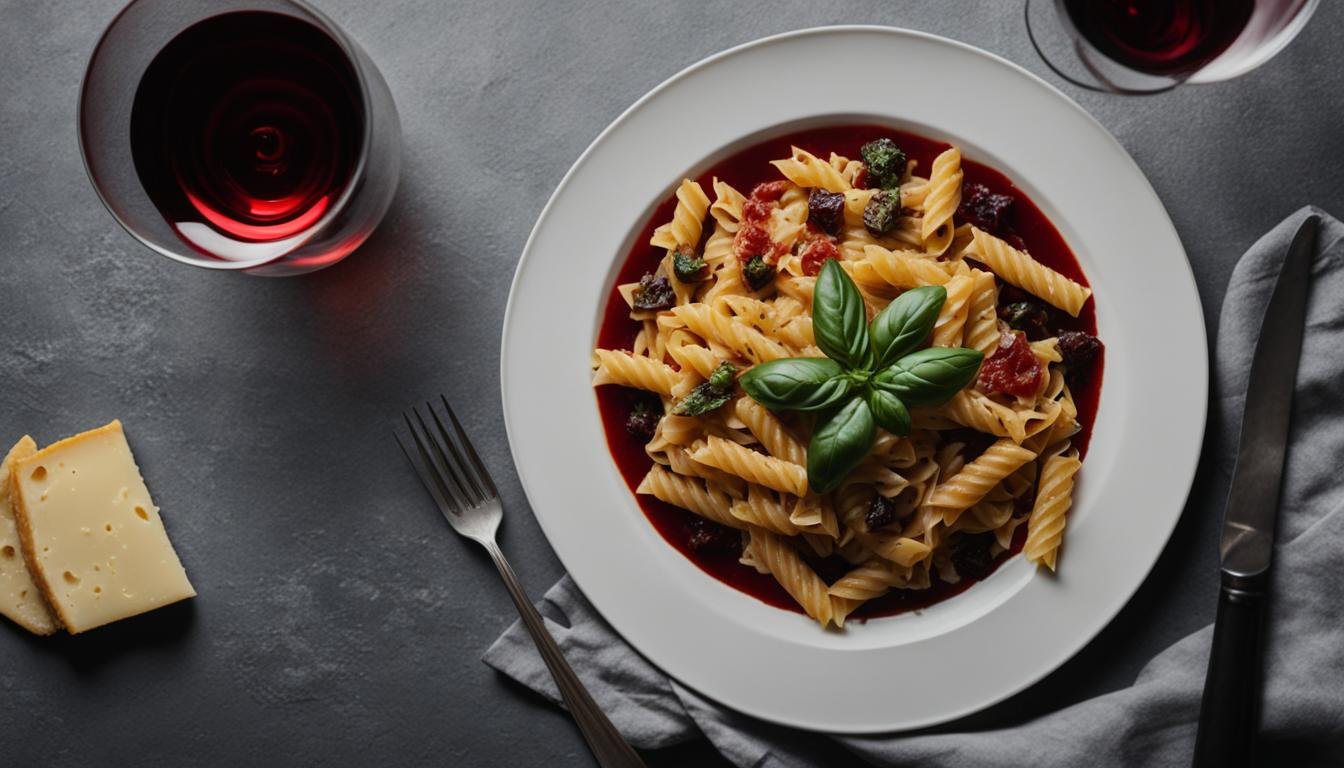
Which wine pairs with pasta depends on the sauce, not the pasta. Spaghetti, penne and pappardelle taste of flour and water; it is the tomato, the cream, the seafood or the meat on top that the wine has to get along with. Get that right and the shape does not matter.
Here is the whole thing in one table, then the reasoning and an Australian bottle for each.
| Sauce | Italian classic | Australian pick | Avoid |
|---|---|---|---|
| Tomato (napoletana, arrabbiata, puttanesca) | Chianti, Barbera, Montepulciano d’Abruzzo | Sangiovese from the King Valley or McLaren Vale | Oaky Chardonnay, big Cabernet |
| Meat ragù (bolognese, lasagne) | Chianti Classico, Valpolicella Ripasso | Barossa Grenache or a mid-weight Shiraz | Delicate whites |
| Cream and cheese (alfredo, carbonara, four cheese) | Soave, Gavi, Franciacorta | Unoaked or lightly oaked Chardonnay, Adelaide Hills | Tannic reds |
| Seafood (marinara, prawn linguine, vongole) | Vermentino, Verdicchio, Pinot Grigio | Vermentino from the Riverland, Hunter Semillon | Any red with tannin |
| Pesto | Vermentino, Pigato | Adelaide Hills Sauvignon Blanc | Oaky whites |
| Oil, garlic and chilli (aglio e olio) | Fiano, Falanghina, Prosecco | Fiano from McLaren Vale, or a dry Tasmanian sparkling | Sweet whites |
| Mushroom or truffle | Nebbiolo, Barbera | Yarra Valley Pinot Noir | Sauvignon Blanc |
| Baked and rich (cannelloni, stuffed shells) | Montepulciano d’Abruzzo, Primitivo | McLaren Vale Shiraz Grenache blend | Light rosé |
Table of Contents
The rule behind the table
Three things decide it. Acidity: tomato is acidic, so the wine needs acid to match or it tastes flat. Fat: cream and cheese coat your mouth, so you want either acid or bubbles to cut through. Tannin: it clashes with delicate seafood and with chilli, and it loves meat. Once you know those three, you can pair any pasta you like without a table.

Tomato sauces
Tomato is the hardest sauce for wine because it is both acidic and slightly sweet. The Italians solved it centuries ago: drink a red with high acid and modest tannin. Sangiovese (the Chianti grape) is the classic, Barbera is the cheaper and juicier cousin, and Montepulciano d’Abruzzo is the everyday option. All three have the sour-cherry acidity that makes tomato taste riper.
In Australia, Sangiovese from the King Valley in Victoria or from McLaren Vale does the same job, and Barbera is starting to appear from the same regions. Our Sangiovese profile and Barbera profile go deeper. A soft Merlot works if that is what is in the house; a big oaky Cabernet or a buttery Chardonnay does not.
Meat ragù, bolognese and lasagne
Now you have meat, tomato and fat together, so the wine can carry more tannin and more body. Chianti Classico is the textbook match. Valpolicella Ripasso brings a bit of dried-fruit richness that suits a slow-cooked ragù.

Locally, a Barossa Grenache is perfect: enough fruit and warmth for the meat, not so much tannin that it fights the tomato. A medium-weight Shiraz from the Hunter or Canberra works too. Keep the huge Barossa Shiraz for a steak. For a full breakdown of a baked one, see our guide to wine with eggplant lasagne.
Cream and cheese sauces
Alfredo, carbonara, four-cheese, anything with a lot of parmesan and butter. The fat is the issue, and the answer is acid or bubbles. Soave and Gavi are the Italian whites built for this: dry, lemony, a little nutty. Franciacorta, Italy’s answer to Champagne, is even better because the bubbles scrub your palate clean between mouthfuls.
Australia’s best option is a Chardonnay with little or no oak from the Adelaide Hills or Tasmania. A lightly oaked Margaret River Chardonnay works with the richest sauces. Skip the big buttery style; you would be adding fat to fat. Red with cream is tricky; if you must, a light Pinot Noir, and never anything tannic.
Seafood pasta
Prawn linguine, spaghetti vongole, marinara, anything with fish. Tannin plus seafood tastes metallic, so this is white wine territory. Vermentino is the Italian coastal grape made for it, Verdicchio is the Adriatic version, and Pinot Grigio is the safe bet.
Vermentino is now grown all over the Riverland and it is cheap and good. A young Hunter Valley Semillon is the other local hero: bone dry, low alcohol, lemony. If the seafood pasta has a tomato base, a dry rosé bridges the gap.
Pesto
Basil, garlic, pine nuts, parmesan and oil. It needs a white with herbal notes and no oak. In Liguria, where pesto comes from, they drink Vermentino and Pigato. Here, an Adelaide Hills Sauvignon Blanc is the obvious match; the grassy edge sits right alongside the basil.
Oil, garlic and chilli
Aglio e olio and its relatives are light, so the wine should be too, and chilli argues with tannin. Fiano and Falanghina from southern Italy are the classics. McLaren Vale now makes very good Fiano. A dry sparkling is the other answer; Prosecco if you want fruit, a Tasmanian sparkling if you want crispness. We have a whole post on wine with pasta aglio e olio.
Mushroom and truffle
Earthy sauces want earthy wines. Nebbiolo is the king here, especially with truffle, and Barbera is the budget version. A Yarra Valley or Mornington Pinot Noir has the same forest-floor character and is easier to find. Avoid Sauvignon Blanc; the grassiness fights the mushroom.
Regional pairings, if you want to show off
| Dish | Region | Wine |
|---|---|---|
| Agnolotti del plin | Piedmont | Barbera d’Alba, or Barolo for a big night |
| Pappardelle al cinghiale (wild boar) | Tuscany | Vino Nobile di Montepulciano |
| Bigoli in salsa (onion and anchovy) | Veneto | Soave Classico |
| Pasta alla Norma (eggplant, ricotta salata) | Sicily | Etna Rosso |
| Malloreddus alla campidanese (sausage and saffron) | Sardinia | Cannonau di Sardegna |
| Orecchiette with sausage and turnip greens | Puglia | Primitivo di Manduria |
The pattern is worth noticing: in every case the local wine grew up next to the local dish. When in doubt, drink what the region drinks. Our world regions guide covers Puglia and Etna in more detail.
Frequently asked questions
What is the one wine that works with most pasta?
A Sangiovese or Chianti. High acid, medium body, gentle tannin: it handles tomato, meat and mushroom, and it does not wreck a cream sauce. If you only keep one red for pasta night, that is it.
Can I drink white wine with red-sauce pasta?
Yes, if it has enough acid. A Vermentino or a dry Riesling will cope with a simple tomato sauce. It struggles once meat is involved.
Does sparkling wine go with pasta?
Very well, especially with cream, cheese, fried or oily dishes. The bubbles do what acid does, only more so. Prosecco with a light sauce, a dry traditional-method sparkling with a rich one.
What about pasta with chilli?
Keep tannin away and keep the alcohol moderate. A Fiano, a Pinot Grigio, an off-dry Riesling or a Prosecco. Chilli makes tannic reds taste bitter and high alcohol taste hot.
What should I bring to a dinner where I do not know the sauce?
One Chianti or local Sangiovese and one Vermentino. Between them they cover every sauce on this page.