Heads up: this guide contains an affiliate link. If you buy through it we earn a small commission at no extra cost to you.
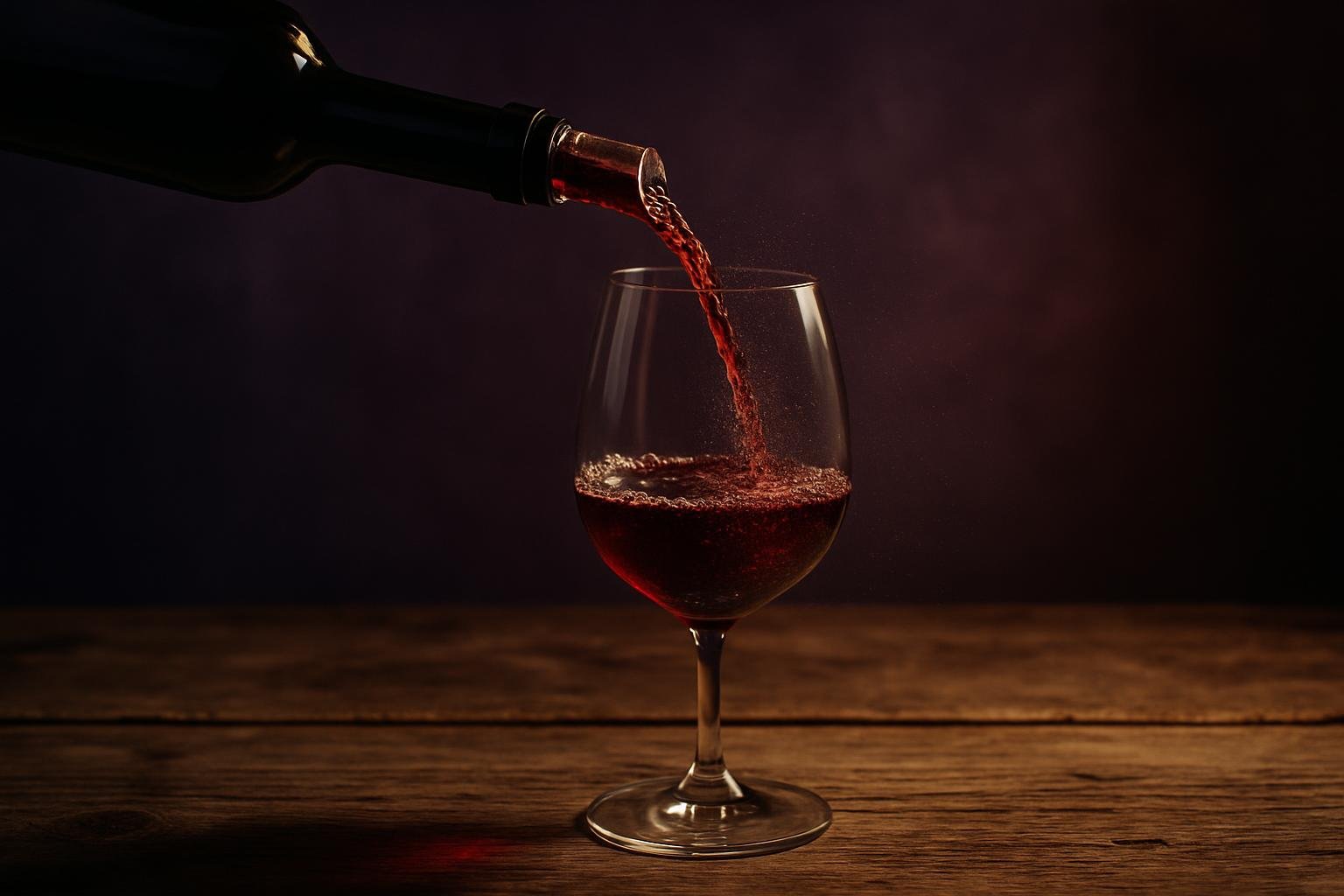
A pour-through wine aerator is a small plastic and acrylic funnel that sits in the neck of the bottle and sprays the wine into your glass through a set of little holes. The Luxury 2018 aerator wine pourer is one of the cheapest on the Australian market, at around twenty-two dollars at the time of writing.
The honest question is not whether it works. It is whether the thing it does is the thing you actually wanted. Those turn out to be two different questions, and the answer is more interesting than the marketing.
Table of Contents
What It Is
The Luxury 2018 comes as a two-piece set: the aerator itself, plus a rubber stopper. The aerator pushes into the bottle neck and stays there, so you pour straight from the bottle rather than into a separate gadget held over the glass. There is no filter, no battery and nothing to assemble.
Wine enters the top, hits a narrow chamber, and is pushed out through small side vents that draw in air as the liquid passes. The whole trip takes roughly a second. Hold that number in your head, because it is the key to the entire review.

What an Aerator Can and Cannot Do
Two separate things happen when wine meets air, and they run on completely different clocks. Getting this straight explains every aerator review you have ever read, including the contradictory ones.
Evaporation is instant. The moment wine is sprayed into a thin, agitated stream, the lightest smelly compounds leave. That includes hydrogen sulfide, which smells of rotten eggs, free sulfur dioxide, which smells of struck matches, and some of the mercaptans that give canned-vegetable and onion notes. These are the reductive smells that make a freshly opened bottle seem closed or slightly off. An aerator is very good at this, because spraying the wine is exactly the right technique.
Oxidation is slow. Oxygen reacting with tannins and other compounds takes hours or even days, not seconds. Maurizio Ugliano, a professor of enology at the University of Verona who studies oxygen in wine, puts it plainly: oxygen reacts with wine slowly, so it is not obvious that aroma-changing reactions will happen during a short decant at all.
So when a box promises that its gadget will soften a young, tannic red in one second, that is not chemistry, that is copywriting. What the gadget genuinely does is blow off the stink. If your wine smells shut down or slightly eggy on opening, an aerator will fix it in the time it takes to fill a glass. If your wine is simply young and firm, only time in a decanter will help.
There is a third effect worth knowing. A 2016 study in the Journal of Agricultural and Food Chemistry found wine in an open glass with continuous airflow lost about one percent alcohol by volume over two hours, and up to 3.2 percent over six. Less alcohol reads as less heat and a softer texture, which is part of why long decanting feels like it mellows a wine. One second in a pourer does none of that.
How We Tested It
Two bottles, each split into two glasses: one poured normally, one poured through the aerator, tasted side by side straight away and again after twenty minutes. We used a young Australian Shiraz that smelled tight on opening, and a three-year-old Cabernet blend that did not.
This is a kitchen bench test, not a blind panel, and we say so plainly. The difference it found was consistent enough to be worth reporting anyway.
What We Liked
- It fixes a shut-down wine in one pour. On the young Shiraz the difference was obvious. The slightly struck-match note on the normal pour was simply gone in the aerated glass, and the fruit came forward.
- The noise and the theatre. It hisses. Guests enjoy it. This is not nothing.
- It stays in the bottle. No holding a funnel over the glass with one hand while pouring with the other, which is the main irritation with the hand-held style.
- It costs about the same as one decent glass of wine. The risk of disappointment is small.
What We Did Not
- It did nothing measurable for the older Cabernet. That bottle was not reductive, so there was nothing to blow off, and tannin needs hours the gadget cannot give it.
- It pours fast and splashy. Expect a few drops on the bench until you learn the angle, and pour over the sink the first time.
- Cleaning is fiddly. Rinse it immediately or red wine dries inside the narrow chamber, where no brush reaches comfortably.
- The name promises more than the physics allows. Nothing that touches your wine for one second is a substitute for a decanter.
Alternatives
The Vintorio aerator pourer is the better-made version of the same idea and costs roughly thirty-eight dollars, so getting on for double. It has a tidier pour and a proper stand. If you know you will use one often, it is the one to buy.
If what you actually want is a softer, rounder red, buy a decanter instead and give the wine an hour. If you want to compare the whole category first, our roundup of wine aerators covers the hand-held and electric styles as well.
What to Pour Through It

Barry Brothers Shiraz Cabernet
An aerator only earns its keep on a young red that smells a bit closed when you open it, and this is exactly that wine. Pour one glass straight and one through the pourer, then smell them next to each other. If you cannot tell them apart, you have learned something useful about your own bottle for the price of a taste test.
- Young and firm, so there is something to open up
- Classic Australian Shiraz Cabernet blend
- Sits comfortably in the weeknight price bracket
- Good with roast lamb and anything off the barbecue
- Give it a year or two and you will not need the aerator at all
The Verdict
Worth buying, as long as you buy it for the right reason. As a device for stripping reductive smells out of a young red the moment you open it, the Luxury 2018 does the job well and costs very little. As a substitute for a decanter, it is not one, and no pour-through gadget is.
If you mostly drink young, inexpensive reds that smell tight on opening, this will improve a lot of your evenings. If you drink older bottles, or delicate ones, leave it in the drawer: aeration can strip the fruit from a fragile wine as easily as it lifts a closed one.
Frequently Asked Questions
Do wine aerators actually work?
Yes, at one specific job. Spraying the wine makes light sulfur compounds evaporate immediately, which removes the closed or eggy smell some young reds have on opening. It cannot soften tannin, because that needs hours of oxygen contact rather than a second.
Is a wine aerator the same as a decanter?
No. A decanter gives a large surface area and long contact time, which lets slow oxidation and evaporation happen. An aerator gives a big splash and no time at all. They solve different problems.
Which wines should I not aerate?
Old reds, delicate Pinot Noir, and aromatic whites. Aromas in older wine are fragile, and some fruity compounds break down quickly with oxygen. Pour those gently and drink them.
Does an aerator work on white wine?
Rarely worth it. Most whites are made to be fresh, and the aromas you would blow off are usually the ones you paid for. The exception is a white that smells struck or reductive on opening.
How do I clean a wine aerator?
Rinse it under hot water straight after use, before the wine dries inside. Leave it to drain upside down. Red wine left overnight in the chamber stains and is hard to shift.
Is the Luxury 2018 better than the Vintorio?
The Vintorio is better made and pours more neatly, and it costs roughly double. Both do the same chemistry. Buy the cheaper one to find out whether you will use it.
If you would rather press a button than tilt a bottle, our JOQINEER electric wine aerator review covers what a pump can and cannot do.
This post contains affiliate links. If you buy through them we earn a small commission at no extra cost to you. It keeps the wine flowing and the reviews honest.