Heads up: this guide contains an affiliate link. If you buy through it we earn a small commission at no extra cost to you.
Off-dry means a wine with a little sugar left in it, roughly 4 to 12 grams a litre. That is enough to round off the edges and take the bite out of acidity, and nowhere near enough to taste like pudding. Most drinkers would just say it is not quite dry.
The frustrating part is that almost no bottle tells you. Sugar is optional information on a still wine label, so producers use words instead, and the words are slippery. Here is the scale in actual numbers, what changes as you move up it, and why a wine with sugar in it can still taste bone dry.
Table of Contents
The Short Answer
- Dry is up to 4 grams of sugar a litre. You will not notice it.
- Off-dry, also labelled medium dry, is 4 to 12 grams. You might notice it, depending on the acidity.
- Medium sweet is 12 to 45 grams. You will notice it.
- Sweet starts at 45 grams and goes a very long way up from there.
The Sweetness Scale, in Grams
These are the actual legal thresholds for still wine under EU labelling rules, which is where most of the vocabulary on Australian shelves comes from. The numbers are grams of sugar per litre.
| What the label says | Sugar per litre | What it tastes like |
|---|---|---|
| Dry, sec, trocken | Up to 4 g | No sweetness at all |
| Off-dry, medium dry, demi-sec | 4 to 12 g | A soft edge, easy to miss |
| Medium, medium sweet, moelleux | 12 to 45 g | Clearly sweet but still a drink |
| Sweet, doux | 45 g and up | Dessert territory |
There is one wrinkle worth knowing. A wine can be called dry at up to 9 grams of sugar if it also has high enough acidity to balance it, which is why some perfectly crisp Rieslings are legally dry and still taste faintly fruity. The rules live in Annex III of Commission Delegated Regulation (EU) 2019/33. For more on the number itself, we have a full guide to residual sugar in wine.
Why Off-Dry Wine Often Does Not Taste Sweet
Sugar does not work alone. Four things fight it, and any one of them can hide it completely.
- Acidity. This is the big one. A high acid grape such as Riesling can carry 10 grams of sugar and read as crisp, while a low acid grape with the same sugar tastes syrupy.
- Alcohol. Alcohol itself tastes faintly sweet, so a 14.5 per cent bone dry red can seem rounder than a 10 per cent wine with real sugar in it.
- Ripe fruit. A big Shiraz smells of jam and your brain fills in the sweetness that is not there. This is why so many people insist their favourite dry red is sweet.
- Temperature. Cold suppresses sweetness. The same bottle tastes drier at 8C than at 14C, which is a free lever you can pull at home.
Dry Versus Off-Dry: What Actually Changes
The difference is smaller than the labels make it sound. Between a dry wine at 3 grams and an off-dry one at 9 grams there are about six grams of sugar in a whole litre, which is roughly a teaspoon and a half spread across a bottle and a third.
What you notice is texture rather than sweetness. Off-dry wines feel slightly rounder in the mouth, the finish lingers a touch longer, and sharp acidity stops feeling sharp. That is why off-dry works so well with chilli and salt, where a bone dry wine can feel thin and aggressive.
Extra Dry Is Not Extra Dry
Sparkling wine has its own scale, and it is the single most misleading set of words in the whole shop. A bottle labelled Extra Dry is sweeter than one labelled Brut. Not a little sweeter. Properly sweeter.
| Sparkling label | Sugar per litre | Where it sits |
|---|---|---|
| Brut Nature, Brut Zero | 0 to 3 g | Bone dry, nothing added |
| Extra Brut | 0 to 6 g | Very dry |
| Brut | Under 12 g | The standard, and genuinely dry |
| Extra Dry, Extra Sec | 12 to 17 g | Off-dry, despite the name |
| Sec, Dry | 17 to 32 g | Noticeably sweet |
| Demi-Sec | 32 to 50 g | Dessert bubbles |
| Doux | Over 50 g | Very sweet indeed |
So if you have ever bought a bottle of Extra Dry Prosecco expecting something austere and found it tasted of pears and honey, the label was doing exactly what it says, in a language nobody speaks any more. Our Prosecco and Cava comparison goes further into the label traps.
Which Wines Are Usually Off-Dry
- Riesling. German Kabinett and Spätlese, plus plenty of Australian ones from the Clare and Eden valleys. Riesling carries sugar better than any grape because the acidity is enormous.
- Pinot Gris. When a label says Gris rather than Grigio, the producer is usually signalling a richer, slightly sweeter Alsace style. Our Pinot Grigio guide explains the split.
- Chenin Blanc. Vouvray in particular runs the whole range from bone dry to very sweet with almost no help from the label.
- Gewürztraminer. Almost always has a touch of sugar, and always smells like a lychee that went to finishing school.
- Rosé. Provence style rosé is dry, but plenty of supermarket pink sits comfortably in the off-dry band.
- Moscato. Usually past off-dry and into medium sweet, but it is where most people start.
What to Eat With It
Off-dry wine is the most useful bottle in the fridge for difficult food. Sugar cools chilli heat, balances salt and stands up to sweet sauces, all of which flatten a dry white.
Try it with Thai and Vietnamese food, with a hot curry, with salty ham or Chinese barbecue pork, with sweet and sour anything, and with strong blue cheese. It also handles the awkward middle of a meal, the bits with mango or sweet chilli in them, where nothing dry works properly.
How Cold to Serve It
Colder than you think. Around 7C to 9C for a still off-dry white, and about 6C for sparkling. Too warm and the sugar sits there being obvious. Too cold and you lose the aroma along with it, so pull it out of the fridge about five minutes before you pour. The glass you use matters here too, since a narrower bowl keeps it cold longer.
Try One
Honesty corner: almost no Australian label prints its sugar figure, so nobody can promise you an exact number on a shelf bottle. Pinot Gris is the style where the off-dry end of the scale turns up most often here, and this one is a good place to test your own palate.

Tamburlaine Central Ranges Organic Pinot Gris 2025
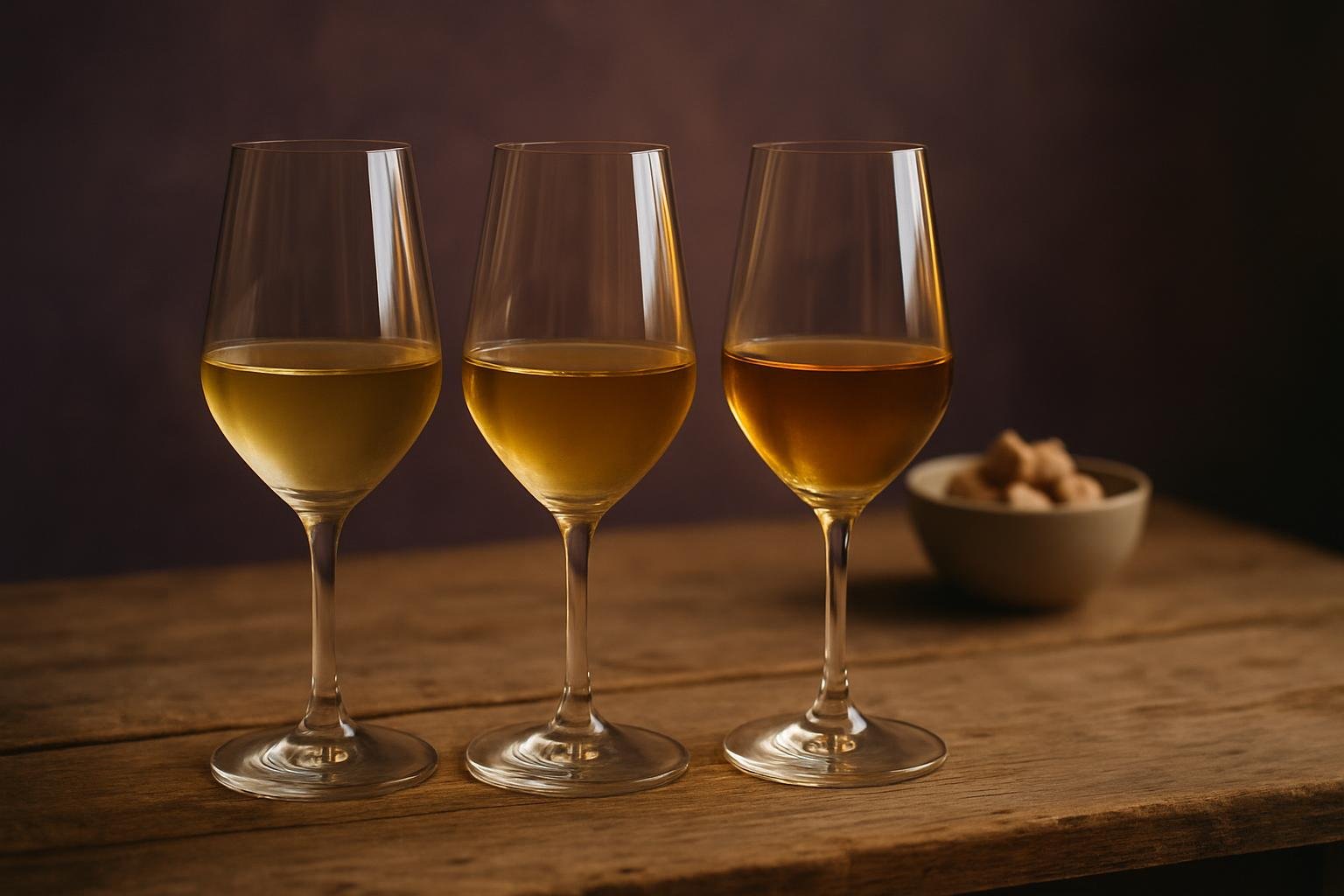
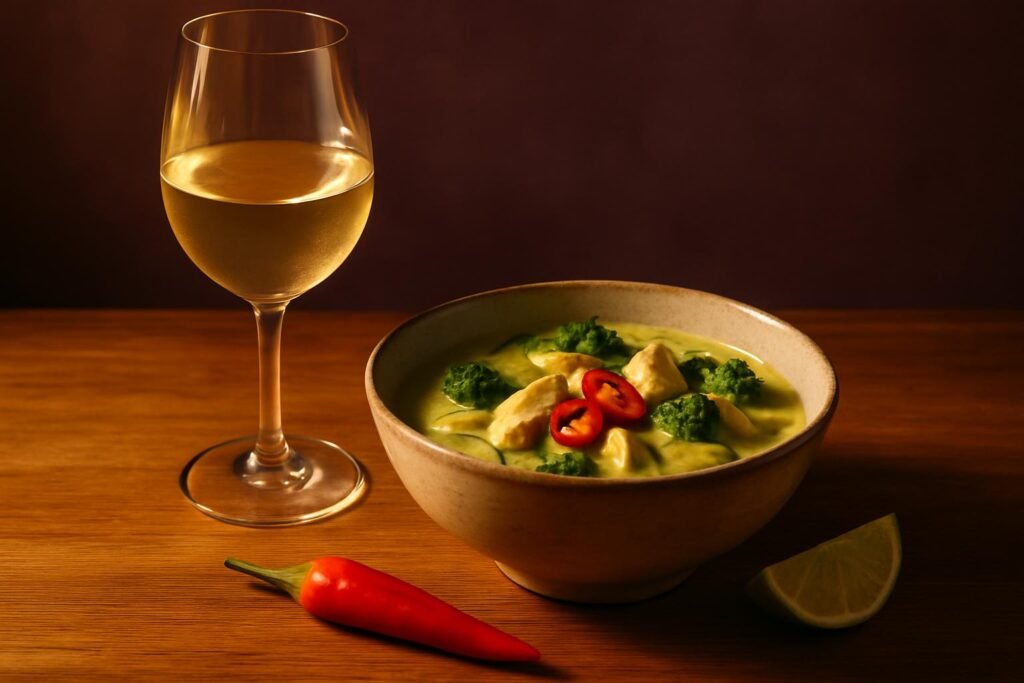
The quickest way to learn where off-dry sits is to pour this next to a bone dry white and swap between them. Serve both at about 8C, give it two minutes, and the rounder finish on the Gris becomes obvious. It is also a very good bottle with a takeaway Thai green curry, which is the whole argument for off-dry in one dish.
- Gris rather than Grigio, so it leans to the richer style
- Certified organic from one of Australia’s biggest organic producers
- Pear and nashi fruit with a soft, rounded finish
- Cheap enough to open beside a dry white and compare
- You will now start noticing sugar in wines you used to call dry
Frequently Asked Questions
Is off-dry wine sweet?
Slightly, and often not noticeably. At 4 to 12 grams of sugar a litre it reads as soft rather than sweet, especially if the wine has high acidity to balance it.
What is the difference between dry and off-dry wine?
About six grams of sugar a litre, which is less than two teaspoons across a whole bottle and a third. The practical difference is texture, since off-dry feels rounder and less sharp on the finish.
Is medium dry the same as off-dry?
Yes. Medium dry is the formal label term and off-dry is what the wine trade actually says. Both mean 4 to 12 grams of sugar a litre.
Why is Extra Dry sparkling wine sweeter than Brut?
Because the sparkling scale was written before anyone drank truly dry fizz, and the names never caught up. Extra Dry sits at 12 to 17 grams, while Brut sits under 12.
Is off-dry wine higher in calories?
A little, but not much. Alcohol carries far more energy than sugar does, so a strong dry red usually beats an off-dry white. Our wine calorie calculator will do the sums on your bottle.
How can I tell if a wine is off-dry before I buy it?
Look for the words medium dry or demi-sec, check the alcohol, since a white under about 11.5 per cent often has sugar left, and read the back label for words like rounded, soft or fruity. Failing all that, ask the shop.
Where does off-dry end and dessert wine begin?
At 45 grams a litre the label can say sweet, and real dessert wines usually sit far higher again. Our guide to icewine covers the extreme end, and tiramisu pairing shows what that sweetness is for.
If you want a routine for working all of this out in the glass, our guide to the five S’s of wine tasting walks through each step and what it actually tells you.
If vinegar keeps wrecking your wine at dinner, our guide to what verjus is explains the gentler acid that leaves the glass alone.
Off-dry wine earns its keep with spicy food, which is why it leads our guide to the best wine with Chinese food.
Sweetness is not a grape monopoly either: our guide to mango wine looks at what happens when you ferment fruit that is not a grape.
Planning a barbecue night with sweet marinades and chilli? See our guide to wine with Korean BBQ for chilled reds and crisp whites that cope.
This post contains affiliate links. If you buy through them we earn a small commission at no extra cost to you. It keeps the wine flowing and the reviews honest.