Heads up: this guide contains an affiliate link. If you buy through it we earn a small commission at no extra cost to you.
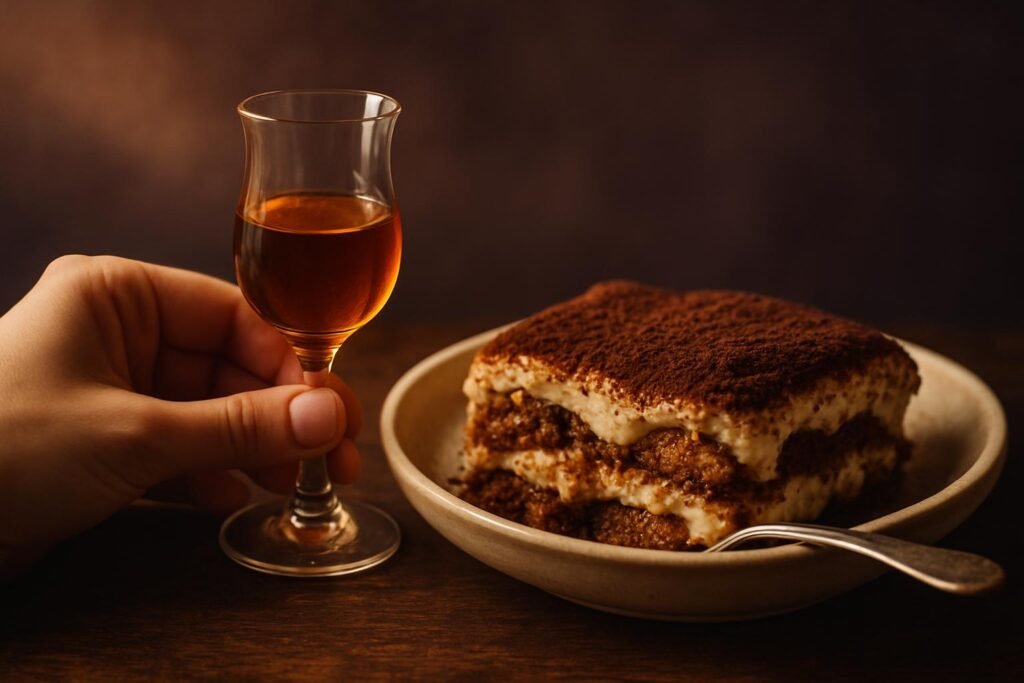
The wine for tiramisu has to be sweeter than the tiramisu. A late harvest Semillon, a Tuscan Vin Santo or a properly cold Moscato d’Asti will all manage it. A dry wine, however good, will not.
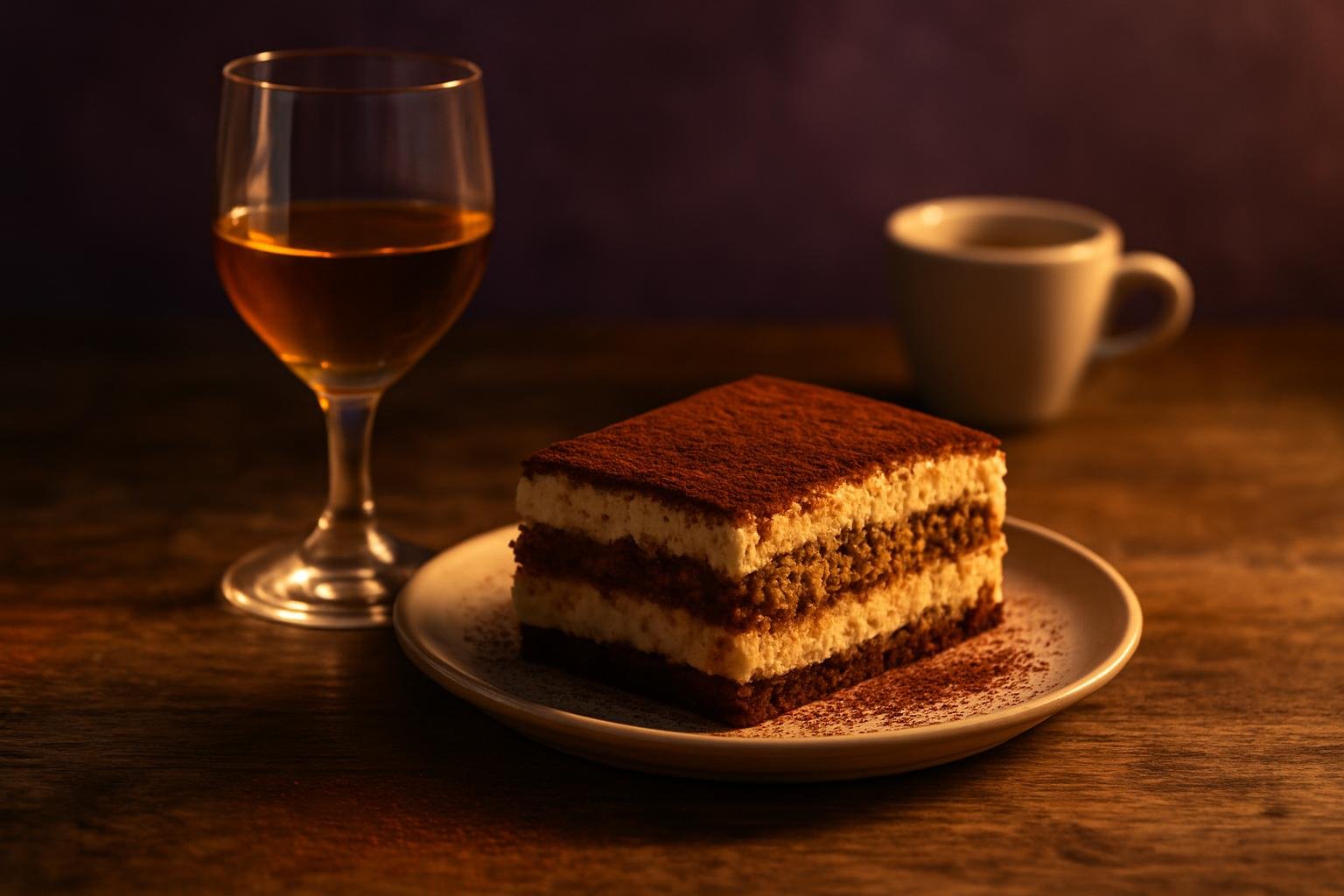
Tiramisu looks gentle and behaves like a bruiser. There is espresso in it, bitter cocoa on top, a slab of mascarpone in the middle and enough sugar to make most wines taste sour by comparison. Get the match right and the coffee turns almost caramel. Get it wrong and your nice bottle tastes of lemon juice.
Table of Contents
The Short Answer
- Late harvest Semillon or Riesling. Honeyed and marmalade-ish, with the acidity to cut mascarpone. Serve it properly cold, around 8C.
- Vin Santo. Tuscany’s dried grape wine, all dried apricot and toasted nuts. The traditional Italian answer. Serve around 12C.
- Moscato d’Asti. Light, gently fizzy and only about 5.5 per cent alcohol, so nobody falls asleep in the pudding. Serve very cold, around 6C.
Pour small. Sixty to ninety millilitres is a dessert wine serve, not the tumbler you use for Sunday shiraz.
What Tiramisu Does to Wine
Sugar. This is the one that decides everything. If the pudding is sweeter than the wine, it strips the fruit out of the glass and leaves the acid and the alcohol standing there with nothing to hide behind. Our guide to residual sugar in wine explains how the numbers work, but the short version is simple: outsweeten the dessert or do not bother.
Fat. Mascarpone is somewhere near 40 per cent fat, which coats your tongue and flattens anything soft. Acidity is what cuts through it, so a sweet wine with a sharp streak beats a sweet wine that is only sweet.
Bitterness. Espresso and unsweetened cocoa are the two most bitter things most of us eat all week. Bitterness makes tannin taste harder and drier, which is exactly why a big red goes metallic here.
Cold and creamy texture. Tiramisu comes out of the fridge, so a room temperature wine feels heavy and syrupy beside it. Chill the bottle further than feels sensible.
Alcohol. Sugar and high alcohol together read as heat on the finish. A 15 per cent sticky needs a very small pour. A 5.5 per cent Moscato needs no self control at all, which is part of its charm.
Best Wines for Tiramisu
Late Harvest Semillon
Australia’s quiet answer to the whole question. Grapes left on the vine until they shrivel, giving honey, dried apricot and candied citrus, with the searing acidity Semillon never loses. That acid is the trick: it slices through mascarpone instead of sitting on top of it. The Barossa, the Riverina and the Hunter all make good ones, and they are usually cheap because nobody buys sweet wine any more.
Vin Santo
The traditional Italian pour, made in Tuscany from Trebbiano and Malvasia grapes dried on mats before pressing, then aged for years in small barrels. It tastes of dried apricot, walnut and toffee. It is also the wine Italians dunk biscuits in, which makes it a natural next to savoiardi that have already been dunked in coffee.
Moscato d’Asti
Piedmont’s answer to a hot afternoon. Grapey, floral, lightly fizzy and only around 5.5 per cent alcohol. It does not have the weight to stand up to a rich tiramisu on its own terms, so instead it does the opposite job: it refreshes between bites. Australia makes plenty of Moscato too, much of it in the King Valley, and the sweetness labelling rules are worth a glance if you buy by the label.
Marsala Dolce
Sicily’s fortified wine, first shipped in 1773 by an English merchant who added brandy so it would survive the trip home. Sweet Marsala tastes of raisin, brown sugar and a little woodsmoke, and it echoes the coffee in the dessert rather than fighting it. Buy the drinking kind, not the salty cooking bottle from the supermarket shelf.
Rutherglen Muscat
If you want the most Australian answer possible, this is it. Rutherglen in north east Victoria makes a fortified Muscat that tastes like raisins, toffee and Christmas, and it is one of the few wine styles where Australia is simply the best in the world. Pour 40 millilitres, no more, and let it sit beside the coffee like an old friend.
What to Avoid
- Big dry reds. Cabernet, Shiraz and anything tannic turns metallic against cocoa. The bitterness in the pudding and the tannin in the glass make each other worse.
- Brut sparkling. A dry Prosecco or Brut Champagne next to a sweet dessert tastes like someone squeezed a lemon into it. If you want bubbles, they need to be sweet bubbles.
- Oaky dry whites. A big oaked Chardonnay beside espresso and cocoa goes flat and papery in about two sips.
- Coffee liqueur. There is already coffee in the dessert. Adding more is not a pairing, it is a dare.
- Anything served warm. Even the right wine will taste syrupy if it has been sitting on the bench. Ten minutes in ice water fixes it.
Drink One Tonight

Schild Estate Lorraine Late Harvest Barossa Valley Semillon 2013
Late harvest Semillon is Australia’s best kept dessert secret, and a 2013 has had long enough in the bottle to turn from sweet lemon into honey and marmalade. Chill it hard, pour about 60 millilitres each, and serve it in a small glass so nobody treats it like a tumbler of white. The right glass matters more here than people think.
- Sweet enough to beat the pudding, which is the whole job
- Semillon acidity cuts straight through mascarpone
- Already has bottle age, so it tastes of marmalade and honey
- Barossa fruit at a price that feels like a mistake
- A sticky this good makes the tiramisu look like the support act
If You Are Making It
The original recipe from Le Beccherie in Treviso, the restaurant credited with inventing the dish in 1972 and whose recipe is registered with the Italian Academy of Cuisine, has six ingredients and no alcohol at all: egg yolks, mascarpone, savoiardi, espresso, sugar and bitter cocoa. So if someone tells you real tiramisu must have Marsala in it, they are describing a variation, not the original. Le Beccherie tells the story itself.
If you do add booze, add the same wine you plan to pour. A splash of the Semillon in the coffee, then the rest of the bottle in the glasses, and the whole table suddenly tastes deliberate. Then give it at least six hours in the fridge so the biscuits soften properly, and dust the cocoa on at the last minute so it does not go damp.
Frequently Asked Questions
What wine goes best with tiramisu?
A sweet wine with high acidity. Late harvest Semillon, Vin Santo and sweet Marsala are the three that work most reliably, because each one is sweeter than the dessert and still has enough acid to handle the mascarpone.
Can you drink red wine with tiramisu?
Only a sweet one. A dry red goes bitter and metallic against cocoa. Sweet reds such as Recioto della Valpolicella or Brachetto d’Acqui are the exception, since their sugar keeps the tannin in line.
Is Prosecco good with tiramisu?
Standard Brut Prosecco is not, because it is drier than the dessert and ends up tasting sour. A Prosecco labelled Dry or Demi Sec is sweeter than it sounds and does a much better job.
Does tiramisu have alcohol in it?
Not in the original Treviso recipe, which uses no liqueur at all. Many home and restaurant versions add Marsala, rum or brandy, so it is worth asking before serving it to children or anyone avoiding alcohol.
What is the rule for pairing wine with dessert?
The wine should be at least as sweet as the food, and ideally a touch sweeter. If you are unsure where a bottle sits, our guide to off-dry wine covers how the labels translate.
How much dessert wine should I pour?
Sixty to ninety millilitres for a table wine strength sticky, and about forty for a fortified one. Dessert wines are rich and often stronger than they taste, so our wine calorie calculator is worth a look if you are counting.
What if I want something similar to tiramisu?
The same logic covers most creamy desserts. Our guide to wine with cheesecake runs through the sweeter end, and icewine is the version of this rule taken to its extreme.
This post contains affiliate links. If you buy through them we earn a small commission at no extra cost to you. It keeps the wine flowing and the reviews honest.