Heads up: this guide contains an affiliate link. If you buy through it we earn a small commission at no extra cost to you.
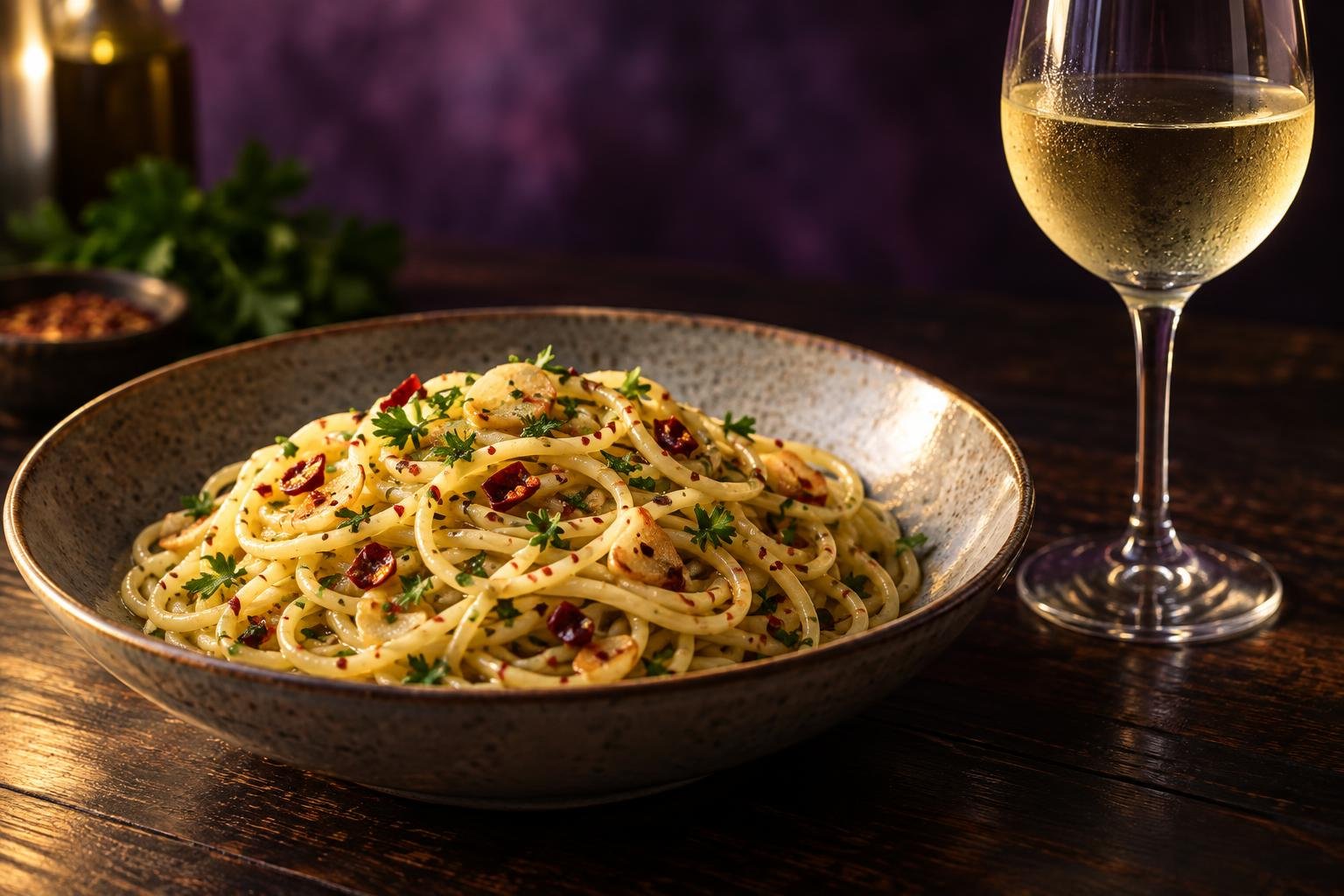
Aglio e olio wants a crisp dry white with real acidity and modest alcohol. Pinot Grigio, Vermentino or a dry Riesling, served properly cold. A brut sparkling works just as well.
Here is the thing nobody says out loud about this dish. There is no acid in it. No tomato, no lemon, no wine, no cream. Just pasta, garlic, olive oil, chilli, parsley and salt. Every other pasta sauce brings something sharp to balance the fat. This one brings none, so your wine has to supply all of it.
Table of Contents
The Short Answer
- Pinot Grigio or Vermentino. Lean, dry and citrusy, with enough acid to cut an oil based sauce. Serve at 8 to 10 degrees.
- Dry Riesling. The sharpest option, and the best one if your chilli hand is heavy. Lime, green apple and a long dry finish.
- Brut sparkling. The bubbles scrub the oil off your tongue between forkfuls. Keep it brut, not extra dry, which is sweeter.
What Aglio e Olio Does to Wine
The sauce is not really a sauce. It is olive oil and starchy pasta water beaten into an emulsion, which coats everything it touches, including your tongue.
| In the bowl | What it does | What the wine needs |
|---|---|---|
| Olive oil emulsion | Coats the palate and dulls anything soft | Sharp acidity to cut back through |
| Slow toasted garlic | Turns sweet and nutty, but still strips fruit out of a red | Low tannin and plenty of fresh fruit |
| Chilli heat | Builds as you eat and is not washed away by wine | Modest alcohol and no oak |
| Salted pasta water | Makes acidity taste rounder and softer | Lean into crisp rather than away from it |
| Parsley | Green and fresh, easily buried | Herbal lift, not vanilla |
| No acid and no sugar at all | Leaves the fat and salt with nothing to push against | The wine brings 100 per cent of the balance |
That last row is the whole article. With a tomato sauce the dish arrives with its own acidity, so a rounder wine can get away with it. Here the wine is the only sharp thing on the table. A soft warm climate white tastes like nothing at all next to a bowl of this.
Best Wines for Aglio e Olio
Pinot Grigio
The obvious answer, and for once the obvious answer is right. Good Pinot Grigio is dry, lightly citrusy and deliberately understated, which leaves room for the garlic and parsley. Its acidity is the working part. Our Pinot Grigio guide covers the styles. In Australia, look to the King Valley, the Adelaide Hills or Mornington Peninsula.
Vermentino and Fiano
These two Italian whites have quietly taken to Australian soil, particularly in the Riverland and McLaren Vale. Vermentino gives you lemon, green almond and a salty finish. Fiano is rounder, with pear and a slightly waxy texture that stands up to the oil without going soft. Both are dry, both are cheap, and both make you look like you know something.
Dry Riesling
If your version has real chilli in it, this is the bottle. Australian Riesling is bone dry with searing lime acidity, and that acidity is the only thing in the glass doing useful work against hot oil. The Riesling guide has the full picture. Clare Valley and Eden Valley are the classics, Great Southern in Western Australia the value pick.
Brut sparkling
Bubbles plus acid is the most reliable answer to any fried or oily dish, and this one is essentially pasta cooked in oil. Choose brut. If the label says extra dry it is sweeter than brut, which is the least helpful naming convention in wine, and the Prosecco and Cava comparison untangles the rest of it.
If you want red, chill it
A light Grenache at 13 degrees can work, especially with a heavy parsley hand. It needs to be soft, low in tannin and young. See the Grenache guide. Anything firmer meets the garlic and turns bitter, and no amount of good intentions will fix it.
What to Avoid
- Oaked Chardonnay. Vanilla and butter on top of olive oil and garlic is too much soft on soft. The Chardonnay guide explains which styles escape this, and unoaked ones do.
- Big reds. Shiraz and Cabernet bring tannin that garlic strips bare, leaving bitterness with nothing to hide behind.
- High alcohol anything. Past about 14 per cent the heat in the chilli feels sharper, not softer. The wine calorie calculator shows what that does to a glass as well.
- Sweet wine. There is no sweetness anywhere in this dish, so sugar in the glass just sits there looking out of place.
Drink One Tonight

Angove Organic South Australia Pinot Grigio 2025
A clean, dry Pinot Grigio with pear, lemon and a chalky finish. It brings the acidity that aglio e olio does not have, which is exactly the job. Stock checked live on the day this was written.
- Dry and crisp, with the acidity this dish needs and no oak in the way
- Certified organic fruit, and Angove have been doing it for a long time
- Around fifteen dollars, which matches a five ingredient pasta nicely
- Light in body, so it will not carry a heavy anchovy version
- Needs to be properly cold or it falls flat
If You Are Cooking It
The dish first turns up in print in Cavalcanti’s 1837 Neapolitan cookbook Cucina Teorico Pratica, under a dialect name that translates roughly as vermicelli with garlic and oil. It was the version people cooked when they could not afford the clams for linguine alle vongole, which you can read about in this history of the recipe. Poverty food, then, and better than most of the rich stuff. If you are serving something before it, the bruschetta wine pairing guide covers the starter.
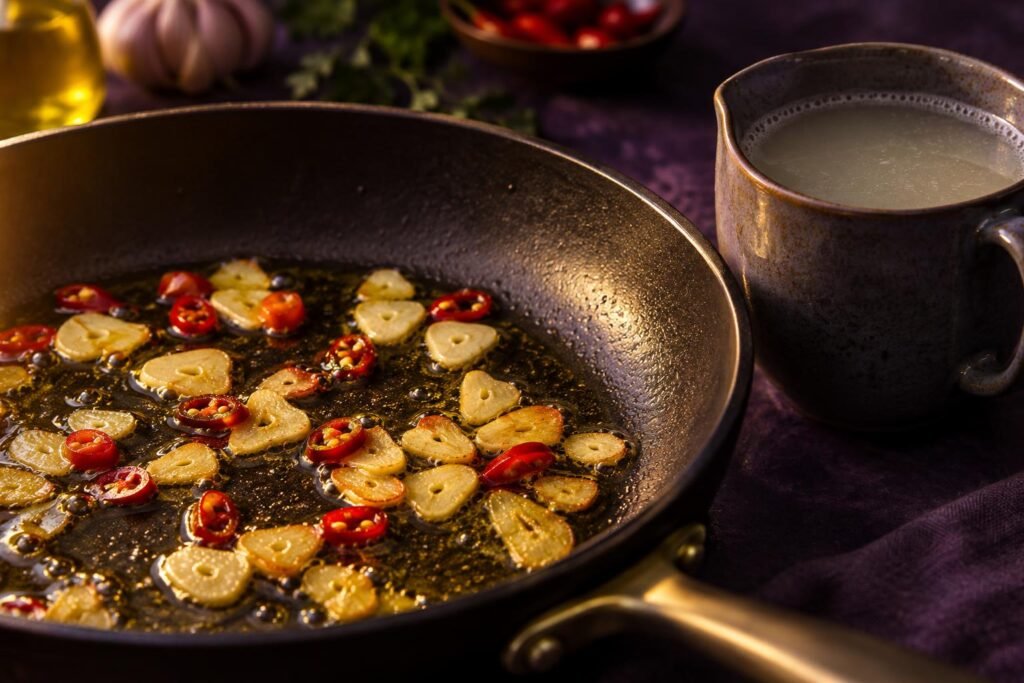
- Take the garlic to pale gold and no further. Brown garlic is bitter garlic, and bitterness is the one thing your wine cannot fix.
- Keep a mug of the salty pasta water. Beating it into the oil is what turns a greasy pan into a sauce that clings.
- Chilli goes in early, with the garlic, so the heat spreads through the oil instead of sitting in hot spots.
- Parsley goes in off the heat, at the last second, or it turns dull and grassy.
- No cheese. Traditionally there is none, and the dish is better for it.
Frequently Asked Questions
What wine goes best with aglio e olio?
A crisp dry white with strong acidity and moderate alcohol. Pinot Grigio, Vermentino or dry Riesling, all served cold. Brut sparkling is equally good, because the bubbles clear the oil between mouthfuls.
Can you drink red wine with aglio e olio?
Only a light one, and only chilled. Young Grenache works. Tannic reds do not, because garlic strips the fruit out of them and leaves the bitterness exposed.
Will a cold glass of wine cool the chilli down?
Not really, and this is worth knowing. Capsaicin, the compound behind chilli heat, hates water and barely dissolves in it, so a wine that is mostly water cannot wash it away. Dairy does the job instead, because milk fat and a protein called casein wrap the capsaicin up and carry it off, as this explainer from The Conversation sets out. Your wine is there for the garlic and the oil, not the fire.
Is Chardonnay a bad match?
Oaked Chardonnay is. Unoaked or lightly handled Chardonnay with real acidity can work, especially a cool climate one from Tasmania or the Adelaide Hills. It is the vanilla and butter you are avoiding, not the grape.
How cold should the wine be?
Whites and sparkling at 8 to 10 degrees, straight from the fridge. If you are going red, twenty minutes in the fridge first, so about 13 degrees.
Does aglio e olio really have no cheese?
Not traditionally. It is a Neapolitan dish built on five cheap ingredients, and it is naturally vegan. Add Parmesan if you like it, but the savoury hit you gain will make a tannic red taste harsher, so keep the wine light either way.
This post contains affiliate links. If you buy through them we earn a small commission at no extra cost to you. It keeps the wine flowing and the reviews honest.