Heads up: this guide contains an affiliate link. If you buy through it we earn a small commission at no extra cost to you.
Salad has a reputation as the hardest thing on the table to match with wine. The leaves are not the problem. The dressing is, and once you know that, the whole puzzle shrinks to something you can solve in about ten seconds at the fridge door.
Most salads want a white with high acidity and no oak. That is the useful half of the answer. The other half involves a small piece of arithmetic that almost no pairing guide mentions, and it changes what you should actually do about a sharp dressing.
Table of Contents
The Short Answer
Three styles cover almost every salad you are likely to make.
- Sauvignon Blanc for anything green, herby or dressed with lemon. It has the acidity to stand up and the grassy note sits right on top of the leaves.
- Dry Riesling for salads with fruit, chilli, or a dressing with honey or sweet chilli in it. A touch of ripeness in the wine handles the sweetness.
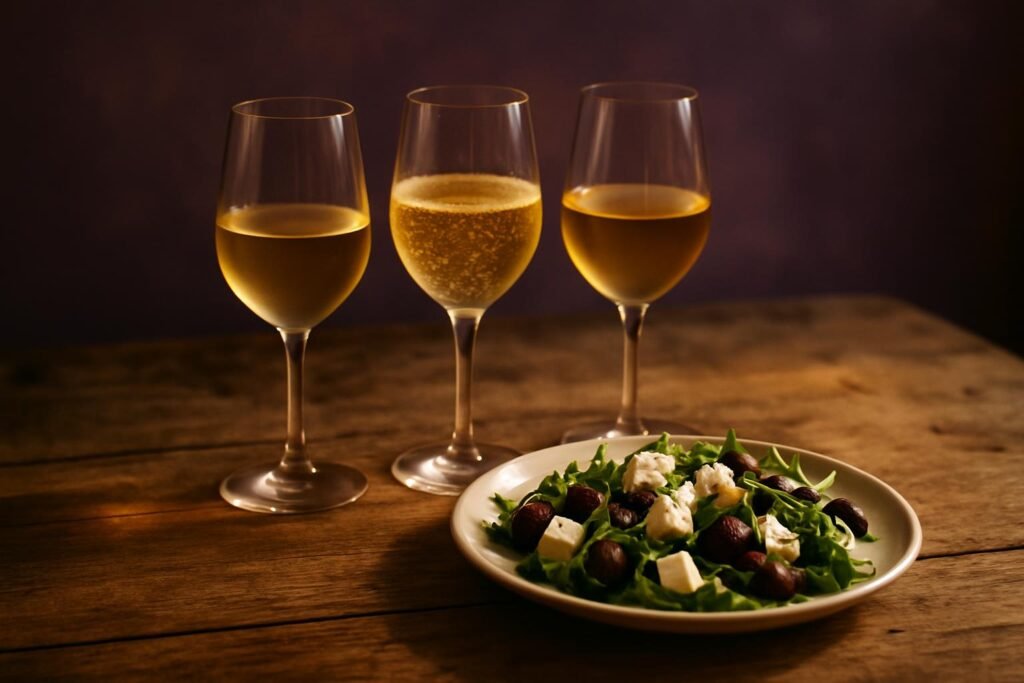
- Dry sparkling for creamy dressings, croutons, and anything crumbed or fried sitting on top. The bubbles scrub the fat off your tongue.
Serve all three properly cold, between six and ten degrees, in a glass with a decent bowl. A standard white wine glass is plenty; you do not need anything clever.
What Salad Does to Wine
A salad is not one flavour. It is four or five things pulling in different directions, and each one asks something different of the glass.
Acid is the loud one. Vinegar and lemon reset your palate, so a soft wine tasted straight afterwards seems flat and slightly sweet. Bitterness from rocket, radicchio or witlof clashes with tannin, which is most of the reason red wine struggles here.
Fat from olive oil, avocado, feta or a creamy dressing coats your tongue and needs acidity or bubbles to cut through it. Salt, from olives, anchovies or cheese, actually helps: it softens the edges of a sharp white and makes it taste rounder.
Sweetness is the quiet trap. Candied nuts, dried cranberries, roasted pumpkin and most bottled dressings carry more sugar than people expect. A bone dry wine tasted next to them turns sour and thin.
Why You Cannot Out-Acid a Vinaigrette
Every guide gives the same advice: match the acid in the dressing with a wine that has even more acid. It sounds sensible. The numbers say it is not possible.
Under the Australian food standards, anything sold as vinegar must contain at least 40 grams of acetic acid per kilogram. That is the legal floor, and plenty of vinegars sit well above it. Wine is nowhere near that. The Australian Wine Research Institute measured the organic acids in 277 wines and found tartaric acid averaged 2.7 grams per litre, making up roughly a third to a half of the total acidity, which puts a typical wine somewhere around six to eight grams per litre.
So a legally weak vinegar is about five times sharper than a very crisp wine. No bottle on the shelf is going to win that fight. What a high-acid white actually does is survive it, which is a different and more modest job.
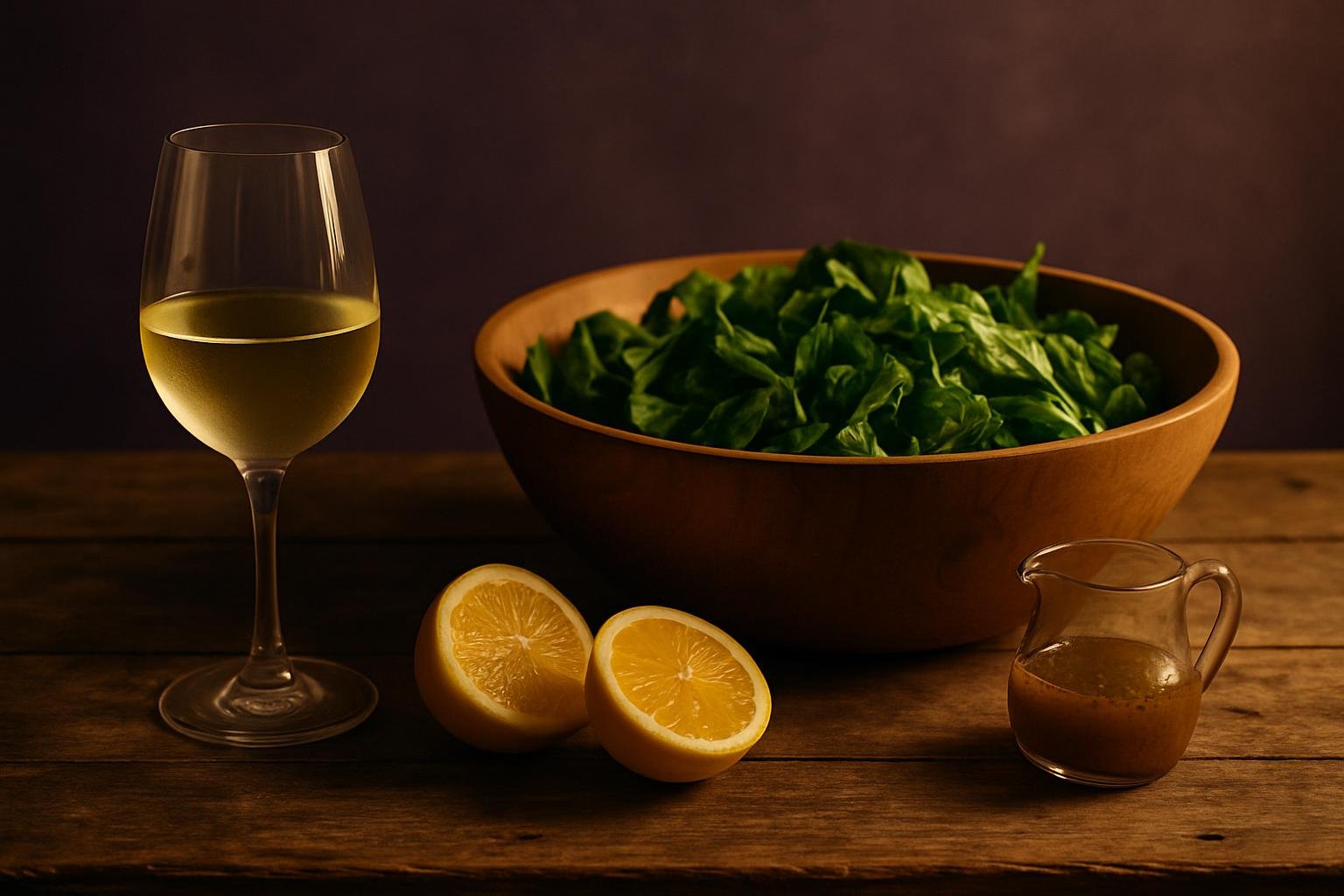
The real lever is the dressing. Loosen the ratio to five parts oil to one part vinegar, or swap half the vinegar for lemon juice, which reads as gentler even at similar strength. Better still, use a spoonful of the wine you are drinking in place of some of the vinegar. Suddenly the two things on the table agree with each other.
Best Wines for Salad
Sauvignon Blanc
Green capsicum, cut grass, passionfruit and a hard line of acidity. It is the default for a reason: the herbal note in the wine matches the herbal note in the leaves, so nothing has to compromise. Marlborough is the loudest style, the Adelaide Hills a little softer. Read the Sauvignon Blanc guide if you want to know why it smells like that.
Dry Riesling
Lime, green apple and a chalky finish. Riesling is the pick when there is sweetness or chilli in the bowl, because a few grams of residual sugar meet the dressing halfway. Clare and Eden Valley do the dry style beautifully. If the label says off-dry, that is not a fault here, it is the feature. More in the Riesling guide.
Dry Sparkling
Bubbles are the most forgiving thing you can pour with food. They handle creamy dressings, fried chicken on top of the leaves, and halloumi. Look for a dry Australian traditional-method sparkling or a decent Prosecco; the difference between Prosecco and Cava is worth two minutes if you are choosing between them.
Light Reds, Served Cold
Salad and red wine are not enemies, they are just badly introduced. The trick is low tannin and a chill. A Gamay, a light Pinot Noir or a Barbera at about 13 degrees works with roasted vegetables, mushrooms, lentils or steak on top. Serve one of those at room temperature and it will taste like a mistake.
What to Avoid
- Oaky Chardonnay. Butter and vanilla against cold raw leaves is a strange meeting. Unoaked styles are fine, and the Chardonnay guide explains the difference.
- Big tannic reds. Cabernet and Shiraz meet the bitterness in the leaves and both get harsher. Save them for the main course.
- Anything warm. A crisp white at fridge-door temperature is a crisp white. The same wine at room temperature is a flabby one.
- Sweet dressings with bone dry wine. Honey mustard against a bone dry white makes the wine taste sour. Move to something off-dry instead.
If You Are Making It
Dress the salad lightly and at the last moment. Oil left sitting on leaves goes heavy, and a soaked salad drags the wine down with it. Taste the dressing on a leaf rather than off a spoon; on its own it will always seem too sharp.
If the bowl has feta, olives or anchovies in it, lean into the salt rather than apologising for it. Salt makes a sharp white taste rounder, which is free help. Our feta and tomato pairing goes further on that, and asparagus has its own set of problems worth knowing about.
Drink One Tonight

Huia Vineyards Marlborough Organic Sauvignon Blanc 2025
This is the safest bottle you can open next to a bowl of leaves. It has the acidity to hold its shape against lemon or vinegar, and the green herbal note sits alongside rocket and parsley instead of fighting them. Serve it properly cold and pour small, so the last mouthful is as sharp as the first.
- High acidity that survives a vinaigrette
- Certified organic fruit from Marlborough
- Herbal edge that matches green leaves
- Cold from the fridge, no decanting, no fuss
- If you dislike the grassy Marlborough style, this will not convert you
Frequently Asked Questions
What wine goes with Caesar salad?
A dry sparkling or an unoaked Chardonnay. Caesar is a fat and salt dish more than a green one, with egg, oil, parmesan and anchovy in the dressing. Bubbles cut the richness, and the salt in the anchovy makes the wine taste rounder.
What wine goes with a green salad and vinaigrette?
Sauvignon Blanc first, dry Riesling second. Both have enough acidity to survive the dressing. If the vinaigrette tastes very sharp on its own, loosen it with more oil or a squeeze of lemon before you blame the wine.
Can you drink red wine with salad?
Yes, if it is low in tannin and served cold. Gamay, light Pinot Noir and Barbera all work, especially with roasted vegetables, mushrooms, lentils or meat on top. Tannic reds clash with bitter leaves.
Why does my wine taste flat after eating salad?
Because the dressing is sharper than the wine. Acid resets your palate, so anything softer tasted straight afterwards seems dull and slightly sweet. Sip water between the bite and the glass and it improves.
Does salad ruin an expensive bottle?
It can waste one. A complex, oaked or aged wine has detail that a sharp dressing simply flattens. Keep the good bottle for the main course and pour something young and crisp with the leaves.
How cold should the wine be?
Between six and ten degrees for whites and sparkling, and about 13 degrees for a light red. That is roughly 20 minutes in the freezer or two hours in the fridge for a white.
Sour and salty food turns up all over the region, and our guide to wine pairing with Filipino food shows how to match the souring agent rather than the meat.
This post contains affiliate links. If you buy through them we earn a small commission at no extra cost to you. It keeps the wine flowing and the reviews honest.