Heads up: this guide contains an affiliate link. If you buy through it we earn a small commission at no extra cost to you.
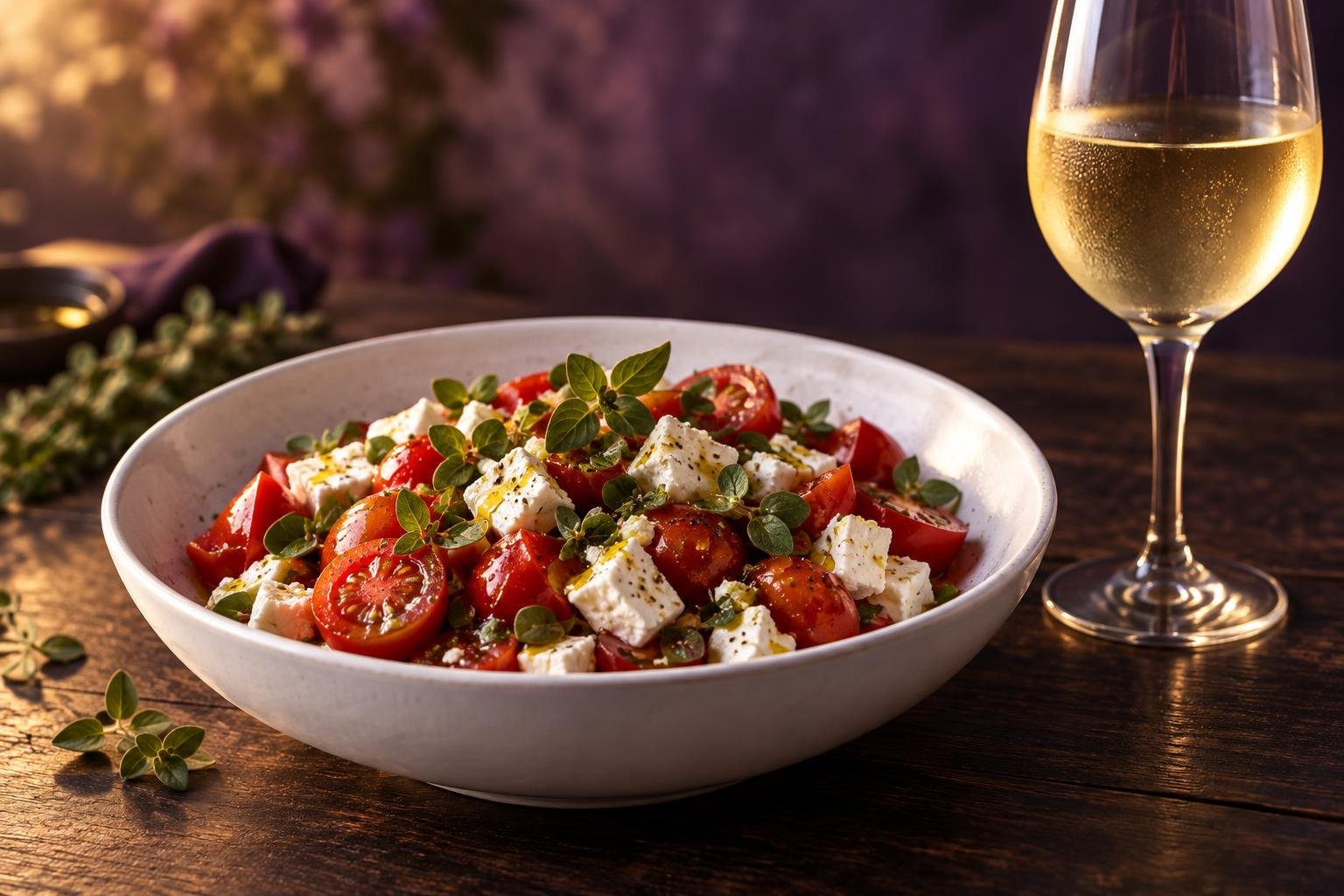
Feta and tomatoes need a wine with sharp acid and no oak. Sauvignon blanc, dry riesling and a crisp dry rosé are the three that work, and a Greek assyrtiko is the expert answer if you can find one.
This looks like the easiest plate in the world and it quietly breaks wine. Tomatoes are far more acidic than most people realise, and feta is salty enough to strip the fruit out of a soft bottle. The fix is simple: the wine has to be at least as sharp as the salad.
Table of Contents
The Short Answer
- Sauvignon blanc. Citrus, cut grass and high acid. The herbal note lines up with the basil or oregano. Serve at 8 degrees.
- Dry riesling. Lime and a chalky, mineral finish that makes salty feta taste cleaner. Serve at 8 to 10 degrees.
- Dry rosé. Enough fruit for ripe summer tomatoes, dry enough for the cheese. Serve properly cold.
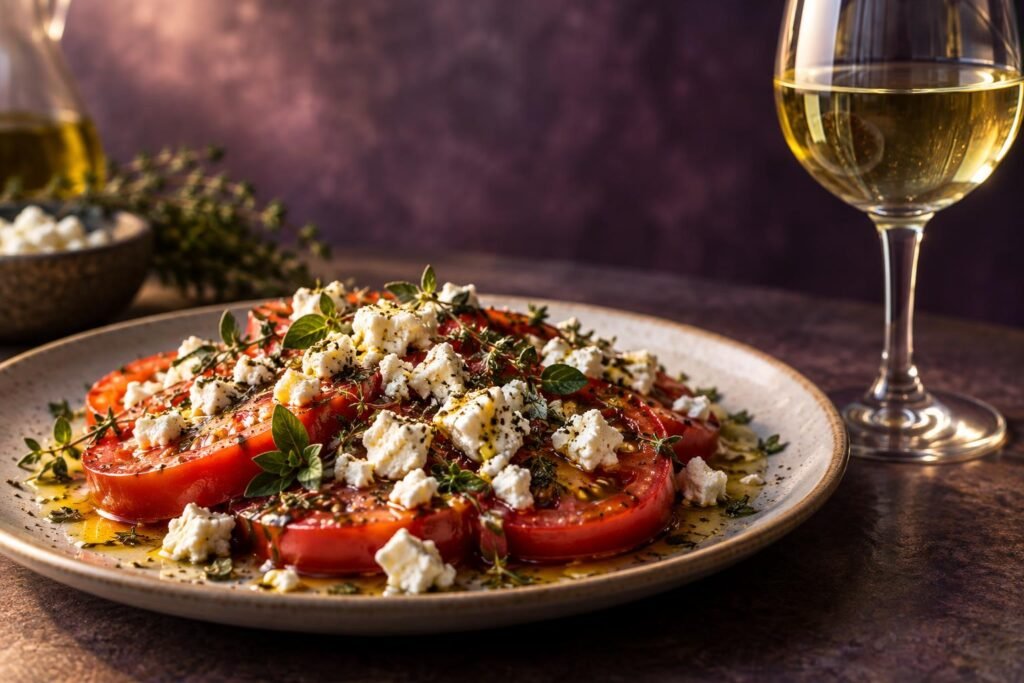
What Feta and Tomatoes Do to Wine
Tomato acid. Ripe tomatoes are tart, and a wine with less acidity than the food tastes dull and slightly sweet beside it. This is the reason a soft, low acid white falls apart on a summer salad.
Salt and brine. Feta is stored in brine and carries a lot of salt. Salt tames the feel of acid in wine, which is why a bracing white suddenly seems rounder and friendlier with a forkful of salad.
Fresh herbs. Basil, oregano, mint and dill are green and aromatic. A wine with its own herbal streak meets them; a rich, buttery wine just talks over them.
Olive oil. Good oil coats the mouth and adds a peppery bite. Acid lifts it, so the salad stays fresh to the last forkful.
Sweetness. If there is watermelon, roasted tomato or a drizzle of honey involved, the salad is sweeter than it looks. A rosé or an off-dry riesling copes better than a bone-dry white.
Best Wines for Feta and Tomatoes
Sauvignon Blanc
The safest bottle on the list. Grapefruit, passionfruit and a green herbal edge, with acid to spare. Marlborough is the loud version, Adelaide Hills and the Orange region are a little more restrained, and both suit the salad.
Dry Riesling
Lime, green apple and a dry, mineral finish. Riesling has some of the highest natural acidity of any white grape, which is exactly what tomato demands. Clare Valley and Eden Valley are the Australian benchmarks.
Assyrtiko
The Greek answer, grown on the volcanic island of Santorini. Searing acid, lemon and a salty, stony finish. Greek salad and assyrtiko grew up in the same place and it shows. Worth hunting down at an independent bottle shop.
Dry Rosé
Provence styles and dry Australian rosé both work, especially when the tomatoes are very ripe. Strawberry and citrus fruit, dry finish, no tannin to quarrel with the brine.
Vermentino and Other Mediterranean Whites
Vermentino, picpoul and albariño are all built for salty food and olive oil. They bring citrus, a herbal note and a slightly saline finish. Australian vermentino from the Riverland is good value.
What to Avoid
- Oaked chardonnay. Butter and vanilla against tomato acid is the classic mismatch. The wine tastes heavy and the salad tastes sour.
- Big red wine. Tannin and brine turn metallic. If you want a red, chill a very light one and keep it simple.
- Sweet white wine. Sugar next to salt and acid just muddles everything.
- Warm white wine. At room temperature the acid reads as sharp rather than refreshing. Keep it properly cold and use a smaller glass so it stays that way.
Drink One Tonight

Sons of Eden Freya Eden Valley Riesling
Eden Valley riesling with lime, green apple and a dry, chalky finish. It is one of the few whites sharp enough to make a tomato salad taste better rather than flatter. Straight from the fridge into the glass. Stock checked on 17 September 2026.
- Lime and mineral finish that suits salty feta
- High natural acid for tart tomatoes
- Australian, and under $30
- Bone dry, so not ideal with a sweet dressing
- Needs to be properly cold
If You Are Making It
Salt the tomatoes ten minutes before serving and let them sit. It draws out juice and concentrates the flavour, and it means you need less dressing. Go easy on the vinegar, because vinegar is harder on wine than lemon juice is. A squeeze of lemon instead keeps the salad bright and leaves the wine standing.
Serve the feta at room temperature rather than fridge cold, since cold cheese tastes mostly of salt. If the plate grows into a full spread with olives and cured meat, our guide to wine pairing with antipasto takes over from here.
Frequently Asked Questions
What wine goes best with feta cheese?
A high acid dry white. Sauvignon blanc, dry riesling and assyrtiko are the three strongest options, because feta is salty and needs a wine with freshness rather than richness.
What wine goes with a Greek salad?
Assyrtiko is the traditional match, since it comes from the same part of the world. Sauvignon blanc or dry riesling do the same job and are easier to find in Australia.
Can you drink red wine with tomatoes?
Yes, if it is light and high in acid. Tomato acidity clashes with tannin, so a chilled light red works and a big cabernet does not.
Why does wine taste flat with tomato salad?
Because the food is more acidic than the wine. When that happens the wine loses its freshness and tastes soft and sweetish. Pick a sharper bottle and the problem goes away.
Does rosé go with feta and tomatoes?
Very well, especially in summer and especially with ripe tomatoes. Choose a dry style rather than a sweet one.
What if there is watermelon in the salad?
Move to a dry rosé or an off-dry riesling. The extra sweetness on the plate needs a little fruit in the glass to match it.
This post contains affiliate links. If you buy through them we earn a small commission at no extra cost to you. It keeps the wine flowing and the reviews honest.