Heads up: this guide contains an affiliate link. If you buy through it we earn a small commission at no extra cost to you.
Sangiovese is the answer, and Chianti Classico is the easiest way to buy it. Barbera and Lambrusco are the other two that never let you down. If the salami is very spicy, swap to a chilled dry rosé and thank us later.
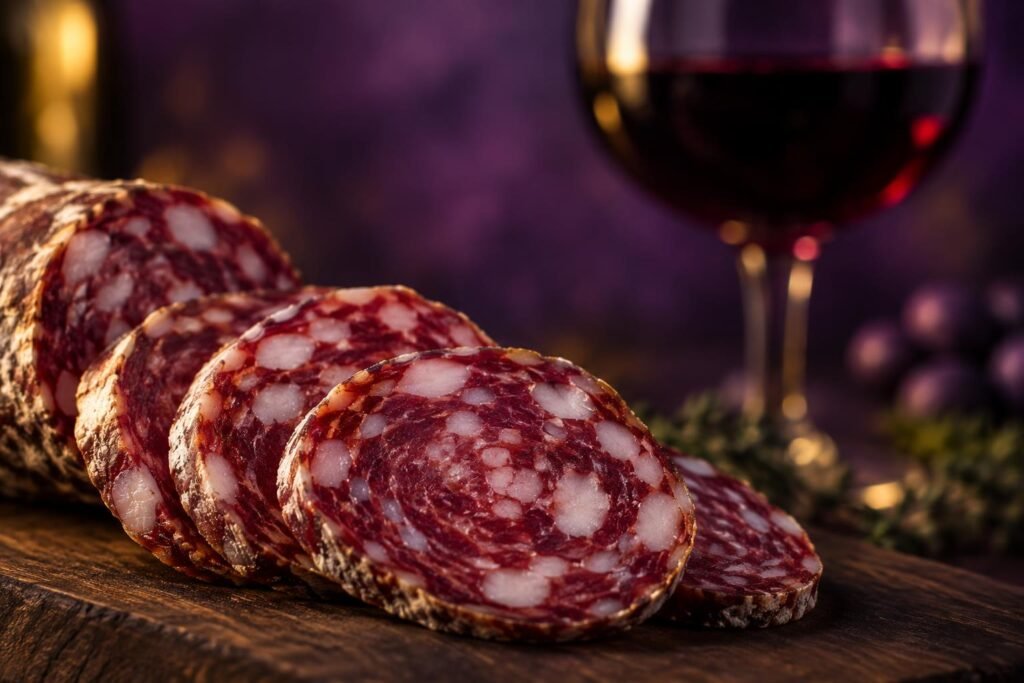
Salami gets called cured meat, which is only half true and hides the useful bit. Salami is fermented. Bacteria eat the sugar in the mince and turn it into lactic acid, the pH drops, and that is where the tang in every slice comes from. Once you know salami is acidic in its own right, the wine choice stops being about red meat and starts being about matching acid with acid.
Table of Contents
The Short Answer
- Sangiovese. High acidity, savoury rather than sweet, medium tannin. Chianti Classico is the reliable shelf version. Serve at about 16 degrees.
- Barbera. Even more acidity and almost no tannin, so it works with the salty ones. Serve slightly cool.
- Dry Lambrusco or a dry rosé. Chilled, bright and refreshing. The right call for fennel salami, hot sopressa or a hot afternoon.
What Salami Does to Wine
Two numbers explain the whole pairing. The first is acidity. The FAO manual on small-scale sausage production puts the final pH of dry sausages at roughly 5.0 to 5.5, and semidry ones lower still, described as explicitly acid at 4.8 to 5.2. The second is fat. Traditional dry salami formulations in that same manual run 25 to 35 per cent pork backfat by weight. So every slice is sharp and rich at the same time, which is exactly why a soft fruity red falls over and an Italian red does not.
| In the slice | What it does | What the wine needs |
|---|---|---|
| Lactic tang from fermenting | Brings its own acidity to the plate | Acidity to match, or the wine tastes flat and sweet |
| Pork fat, a quarter to a third by weight | Coats the mouth, softens tannin | Enough tannin and acid to cut through it |
| Salt | Sharpens tannin into bitterness | Medium tannin at most, never a big young Cabernet |
| Black pepper and garlic | Pungent and warming | A savoury red, not a jammy fruit bomb |
| Fennel seed | Sweet aniseed note | A wine with a herbal or floral edge, or bubbles |
| Chilli in hot salami | Amplifies alcohol and heat | Low alcohol, cool serve, a touch of sweetness helps |
Best Wines for Salami
Sangiovese, the one you already know
Sangiovese tastes of sour cherry, dried herbs and tea leaf, and it has the acidity to walk straight through pork fat. It is also faintly savoury rather than sweet, which keeps it on the same page as the meat. Chianti Classico is Sangiovese dominant by law, at least eighty per cent, with no white grapes allowed in the blend. Our Sangiovese guide covers the Australian versions too, and Heathcote does a good one.
Barbera, for the salty ones
Barbera has huge acidity and hardly any tannin, which makes it the safest red on a salty board. Nothing turns bitter, nothing grips, and the acid keeps cutting slice after slice. Piedmont is home, but the King Valley grows it well. The Barbera guide has the details.
Dry Lambrusco, the one people laugh at
Dry Lambrusco is a chilled, lightly sparkling red and it is the traditional partner for salumi in Emilia-Romagna, the same part of Italy that makes most of the salami. The bubbles do the same job they do with fried food, which is lift fat off the tongue. Ignore the sweet version from the 1980s. Ask for secco.
Dry rosé, for fennel and chilli
Fennel salami and hot sopressa both defeat a lot of reds. A dry rosé with real acidity handles the aniseed and does not amplify the chilli the way a warm high-alcohol red does. Serve it properly cold. This is also the bottle to open if half the board is cheese, which our cheese pairing guide goes into properly.
Sparkling, if the board keeps growing
A dry traditional-method sparkling is the safest single bottle for a mixed platter of salami, cheese, olives and bread. It suits everything without being the best match for anything, which on a grazing table is the right trade. Our Prosecco and Cava explainer covers which style to reach for.
What to Avoid
- Big young Cabernet Sauvignon. Salt plus high tannin tastes bitter and metallic. It is the most common mistake on a charcuterie board.
- Soft low-acid reds. Next to the lactic tang of salami they taste sweet and flabby within a slice.
- Oaked Chardonnay. Butter and vanilla against pork fat is simply too much richness.
- High alcohol reds with hot salami. Alcohol makes chilli burn harder. Fifteen per cent and hot sopressa is a bad evening.
- Anything served warm. Cool the red to about 16 degrees. Warm red wine with fatty meat feels heavy fast.
Drink One Tonight
If you buy one bottle for a salami board, buy a Chianti Classico. It is Sangiovese by law, it comes with the black rooster seal on the neck, and it has been drunk alongside Italian cured meat for longer than Australia has grown grapes.

Antinori Peppoli Chianti Classico
A Chianti Classico from one of Tuscany’s oldest wine families, made mainly from Sangiovese. Serve at about 16 degrees with a board of salami, bread and olives. Stock checked on the day this guide went live.
- Sangiovese acidity that cuts straight through pork fat
- Savoury cherry and herb, not sweet jammy fruit
- Medium tannin, so salt does not turn it bitter
- Pricier than the everyday Italian reds on the shelf
- Still a bit firm for very spicy salami
If You Are Building the Board
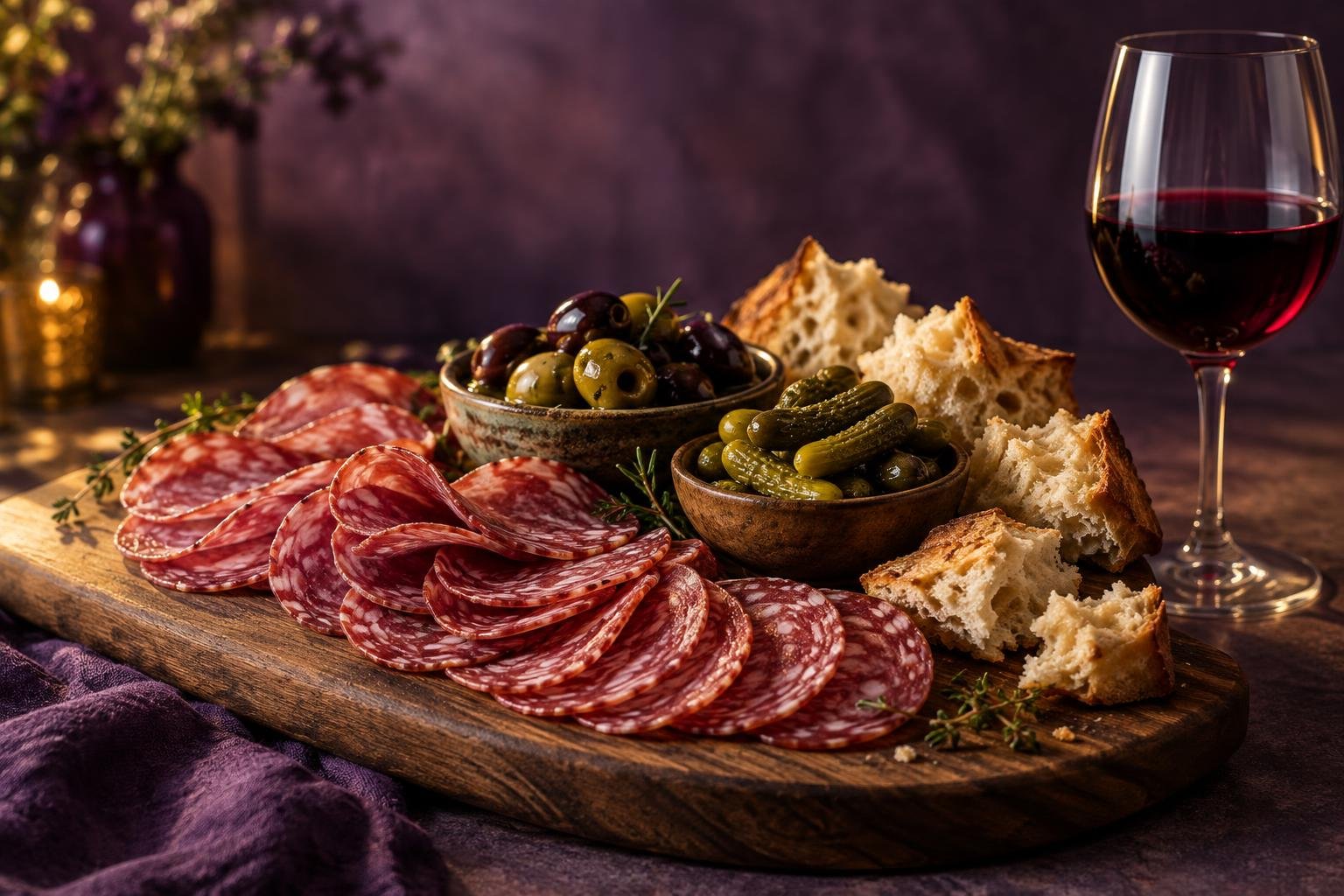
Slice it thin and take it out of the fridge twenty minutes early. Cold fat tastes waxy and mutes the aroma, and a slice at room temperature releases far more of the pepper and fennel you are pairing to. Put something acidic on the board as well, pickles, cornichons or a few olives, because they reset your palate between slices and they make the wine taste younger and fresher than it is. And if there is hard cheese on there too, our red wine and cheese guide covers where the two boards overlap. Decent glassware helps, and the glasses roundup has cheap ones that do the job.
Frequently Asked Questions
What is the best wine with salami?
Sangiovese, usually as Chianti Classico. It has the acidity to cut pork fat and enough savoury character to sit beside the pepper and garlic without fighting them.
Why does salami taste tangy?
Because it is fermented. Bacteria turn sugar in the mince into lactic acid, which drops the pH and creates the sourness. That acidity is exactly why a high-acid wine suits it.
Can you drink white wine with salami?
Yes. A dry, high-acid white like Vermentino or Riesling works, and sparkling works even better. Avoid anything oaked or soft.
What wine goes with spicy salami?
Something low in alcohol and served cold. A dry rosé, a chilled light red or an off-dry white. High alcohol makes chilli burn harder.
Should red wine be chilled for salami?
Cool it a little, to about 16 degrees. Twenty minutes in the fridge is usually enough and it makes the wine taste fresher against the fat.
What about salami and cheese together?
Pick the wine for the harder job, which is usually the cheese. A medium-bodied Italian red or a dry sparkling covers both without much compromise.
Putting together a whole board? The rules shift the moment raw tomato turns up, and we pull that apart in the bruschetta wine pairing guide.
This post contains affiliate links. If you buy through them we earn a small commission at no extra cost to you. It keeps the wine flowing and the reviews honest.