Heads up: this guide contains an affiliate link. If you buy through it we earn a small commission at no extra cost to you.
Lentils want a soft, low tannin red served cool. Grenache and Pinot Noir are the two to reach for. A dry rosé works when there is cumin and ghee involved, and a big tannic red is the one thing that genuinely does not work.
Lentils have a reputation as a blank canvas that takes on whatever you cook them with. That is half true, and the half that is wrong is the half that ruins wine.
Table of Contents
The Short Answer
- Grenache. Soft, red fruited and light on tannin, with enough savoury weight to sit beside something earthy. Twenty minutes in the fridge first.
- Pinot Noir. The classic French answer, and the more elegant one. Works especially well when there is bacon or sausage in the pot.
- Dry rosé. The pick for dal or anything built on cumin, turmeric and ghee, where a red starts to feel heavy.
What Lentils Do to Wine
Here is the part that gets left out of every other article on this. Lentils are not neutral. They carry their own astringency, the drying, puckering feeling you usually blame on tannin in wine.
A 2023 review in the journal Molecules by Karolkowski and colleagues at the taste science centre in Dijon went through the non-volatile compounds behind bitterness and astringency in pulses. Their description of how astringency works will sound familiar to anyone who drinks red wine: astringent molecules bind to proteins in your saliva and make them drop out, which dries and roughens the surfaces of your mouth.
Two findings matter at the dinner table. When a trained panel ranked phenolic extracts from six pulses for astringency, lentils came third, behind red beans and adzuki beans but ahead of peas and broad beans. And almost all of it lives in the skin. In their figures the lentil hull carried about 46 milligrams of tannin per gram against 0.4 in the inner seed, which is over thirty times as much.
| In the pot | What it does | What the wine needs |
|---|---|---|
| Whole lentils, skins on | Bring a drying astringency of their own | Low tannin, so you are not stacking grip on grip |
| Almost no fat | Leaves nothing to soften a firm wine | Soft texture and fresh acidity |
| Earthy, savoury flavour | Quietly flattened by a loud wine | A savoury wine that knows when to stop talking |
| Bacon, sausage or smoked pork | Adds the fat and salt the lentils lack | Room for a fuller red, finally |
| Cumin, turmeric and ghee | Warm aromatics that a big red buries | Aromatic white or dry rosé |
| Vinaigrette on a lentil salad | Sharp vinegar, the real wine breaker here | Very high acidity, or skip the wine |
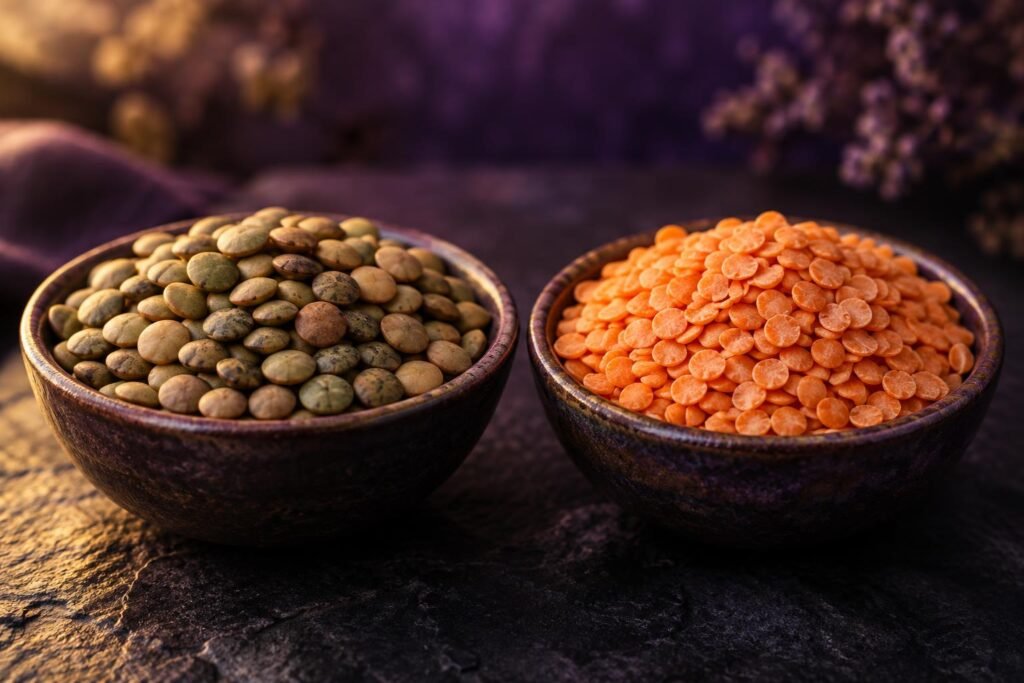
So the honest rule is this. Whole green, brown and black lentils keep their skins and taste noticeably drier and more peppery. Red lentils are sold split and skinned, which is why dal turns soft and almost sweet. They are not the same pairing problem, and the tannins explainer covers the wine half of it.
It Depends What Is in the Pot
French lentils with bacon or sausage
The classic, and the easiest to match. The pork brings the fat and salt that lentils lack, which finally gives a red something to lean on. Pinot Noir is the traditional answer and still the best one. See the Pinot Noir guide, and look to the Yarra Valley, Mornington Peninsula or Tasmania.
The lentils in question are usually Lentille Verte du Puy from the Haute-Loire in central France, which in 1996 became the first vegetable anywhere to be granted an Appellation d’Origine Contrôlée. The rules ban irrigation and fertilisers outright. Not bad for a pulse.
Dal and other spiced red lentils
Skinned, soft and lightly sweet, with cumin, turmeric and a spoon of ghee poured over at the end. A red gets in the way here. Dry rosé is the move, or an aromatic white with a bit of texture. The same thinking sits behind our chicken tikka masala pairing.
Lentil soup
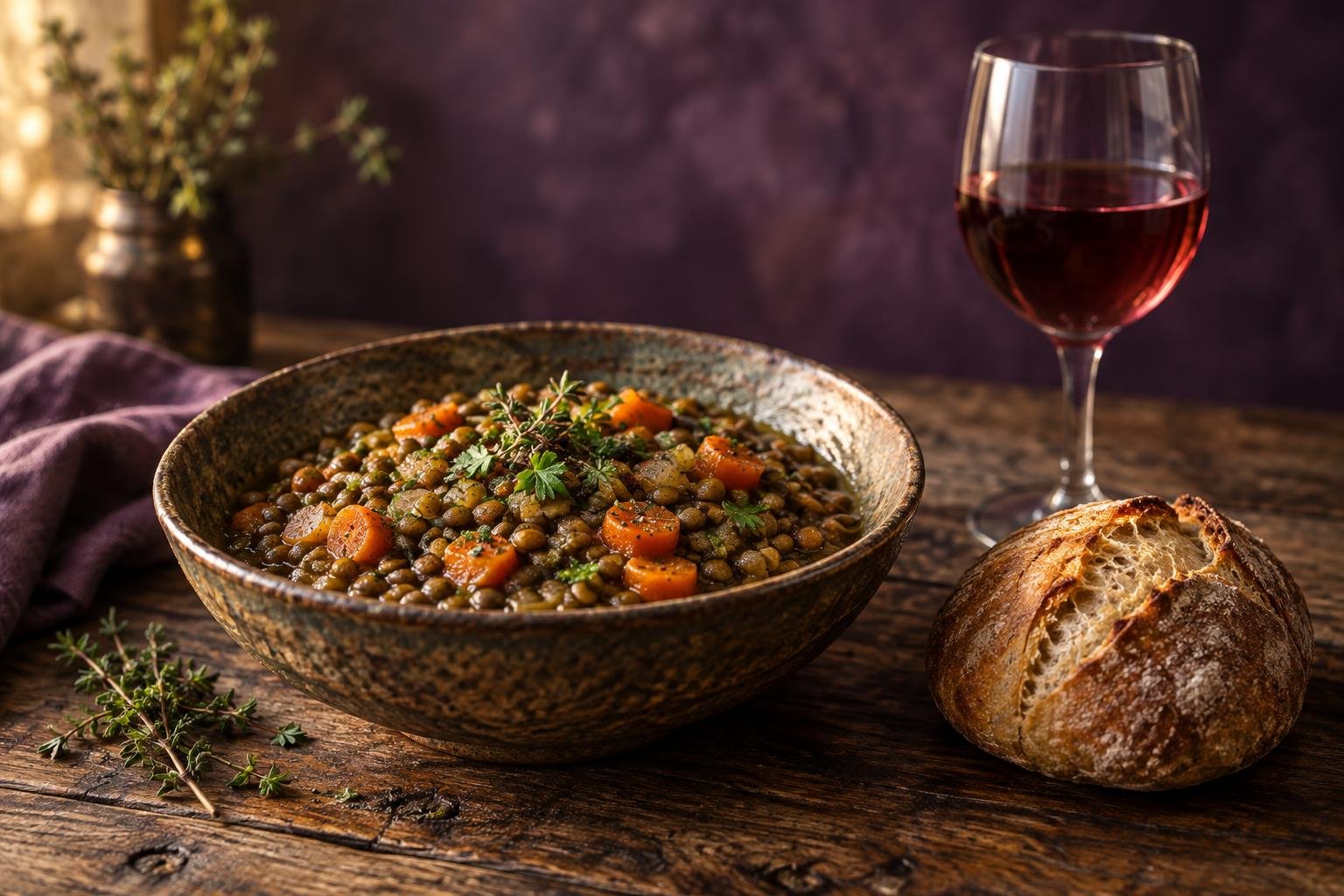
Usually tomato, carrot, onion and cumin, which means acidity in the bowl. That rules out anything tannic, because tomato and tannin turn metallic together. A chilled Grenache handles it, and so does a dry rosé if the soup is a light one.
Lentil salad
This is the hardest of the four, and the lentils are innocent. The vinaigrette is the problem. Vinegar makes almost any wine taste thin and sour, so you need something with more acidity than the dressing has. A very dry, high acid white, or go easy on the vinegar in the first place. We went through this properly in the guide to pairing wine with salad.
What to Avoid
- Tannic reds. Cabernet, young Shiraz and firm Italian reds stack their grip on top of the lentils’ own, and there is no fat in the dish to soften either. The result feels harsh and chalky.
- Heavy oak. Vanilla and toast bury a quiet, earthy dish completely.
- High alcohol. A 15 per cent red next to a bowl of lentils is a mismatch of volume, not just flavour.
- Room temperature reds. Even the right grape goes soft and dull warm. Cool it.
Drink One Tonight

Sherrah South Australia Preservative Free Grenache 2025
A juicy, savoury Grenache with raspberry and dried herb and very little tannin. Twenty minutes in the fridge and it does exactly what a lentil dish needs, which is add fruit and freshness without adding grip. Stock checked live on the day this was written.
- Soft and low in tannin, so it does not fight the lentils' own drying edge
- Savoury red fruit that sits beside earthy food instead of shouting over it
- Just as good chilled, which is how it should be served here
- Preservative free wines want a cold fridge and a quick turnaround once open
- Not the bottle for a lentil salad with a sharp dressing
Grenache often creeps above 14 per cent, so check the label if you are counting. The wine calorie calculator works that out for you, and the glasses roundup covers what to serve it in.
If You Are Cooking Them
- Cook them properly soft. Heat breaks down some of the compounds behind bitterness in pulses, so an underdone lentil is a harsher one.
- Salt at the end. Salting early can leave the skins tough, and it is the skins doing the drying.
- Put fat in the pot. Olive oil, butter, bacon or ghee all soften the astringency and give the wine something to work against.
- Finish with acid, not vinegar. A squeeze of lemon lifts the dish without flattening the wine the way a vinaigrette does.
- If you want the gentlest version, use split red lentils. No skins, no grip, no argument.
Frequently Asked Questions
What wine goes best with lentils?
A soft, low tannin red served cool. Grenache or Pinot Noir are the two safest choices. If the dish is spiced, like a dal, a dry rosé does better than either.
What wine goes with lentil soup?
A chilled Grenache. Most lentil soups are built on tomato and cumin, so there is acidity in the bowl already and tannin will turn metallic against it. A dry rosé suits a lighter soup.
Can you drink white wine with lentils?
Yes, especially with red lentil dishes and anything spiced. Choose a dry white with texture rather than a light crisp one, which can disappear against the earthiness.
Why do lentils and big red wines taste harsh together?
Because lentils have their own astringency, mostly in the skins, and there is almost no fat in the dish to soften it. Adding a tannic wine stacks one drying sensation on another.
Are red lentils and green lentils different for pairing?
Very. Red lentils are split and skinned, so they cook down soft and mild. Green, brown and black lentils keep their skins and taste drier and more peppery, which pushes you further towards a low tannin wine.
Should lentil dishes be served with the wine chilled?
For reds, yes. Twenty minutes in the fridge, about 13 degrees. Warm red wine goes soft and loses the freshness that makes it work with earthy food.
This post contains affiliate links. If you buy through them we earn a small commission at no extra cost to you. It keeps the wine flowing and the reviews honest.