Heads up: this guide contains an affiliate link. If you buy through it we earn a small commission at no extra cost to you.
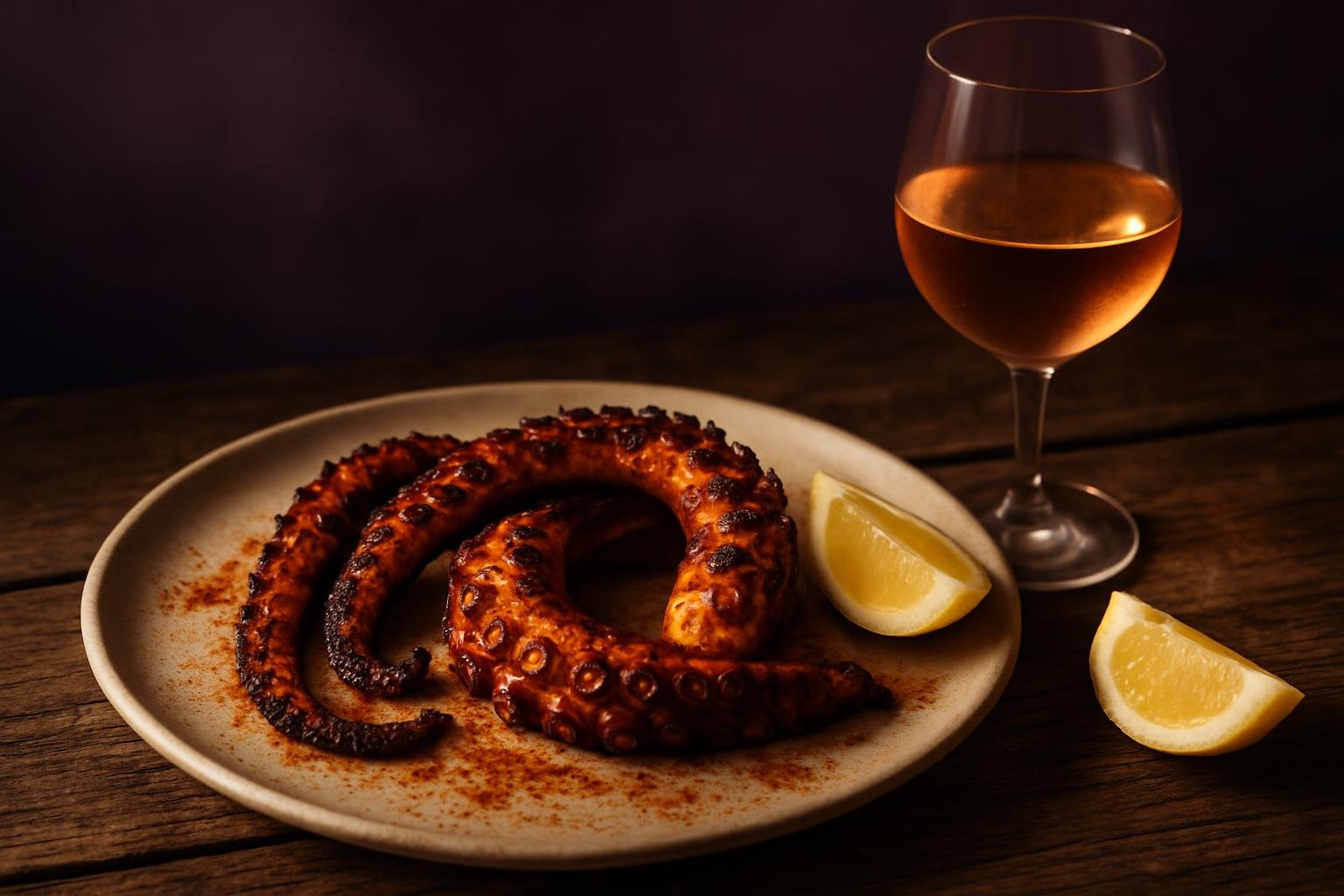
Grilled octopus is one of those dishes that looks intimidating and pairs easily. It is lean, faintly sweet, salty from the sea and smoky from the grill, with a good squeeze of lemon over the top. That combination points at one thing: a crisp, dry white with real acidity.
The mistake is reaching for a red because octopus is dark and chewy and feels like it should be. It is not steak. Like salmon, it is seafood that eats richer than it looks, and it is a delicate creature that happens to have been over a fire.
Table of Contents
The Short Answer
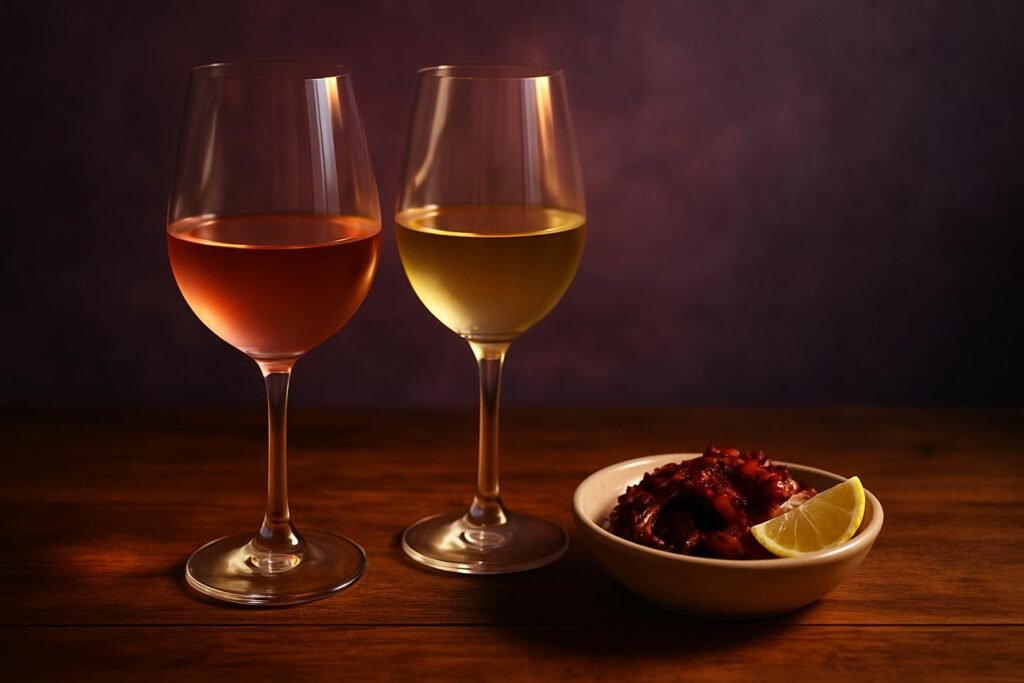
- A dry, mineral white. Vermentino, Albarino, Assyrtiko or a crisp unoaked Chardonnay. Serve at 8 to 10 degrees.
- A dry rose. The best all-rounder when the octopus has char and paprika on it.
- Dry sparkling. Bubbles and salt are a classic combination, and the acid handles the olive oil.
If you really want a red, keep it pale and chill it. A light Grenache or Gamay served cool can work with a charred, paprika-heavy version. A tannic red cannot.
What Octopus Does to Wine
Salt and brine. Octopus is a saltwater animal cooked in salted water, so it arrives seasoned. Salt makes wine taste fruitier and softens the edges of acidity, which is why sharp whites feel rounder next to seafood than they do on their own.
Fat, but the good kind. The octopus itself is very lean. Almost all the richness comes from the olive oil poured over it. Oil coats the mouth and needs acid to cut through, not more weight.
Char. The grill adds bitter, smoky edges. Wines with a mineral or saline character meet that far better than wines built on soft tropical fruit.
Lemon. Almost every version arrives with a wedge. Acid on the plate makes any wine with less acid taste dull and flat, so the wine has to be at least as sharp as the lemon.
Iodine and tannin do not mix. This is the important one. Firm tannin against shellfish gives a metallic, tinny taste that ruins both. It is the single reason a good Cabernet is a bad idea here.
Best Wines for Octopus
Dry Rose
The most reliable answer, and the one most people overlook. A pale, properly dry rose has the red-fruit character to meet the char and the acid to handle the oil, without any tannin worth speaking of. Provence sets the style. Australia does it well from the Adelaide Hills, McLaren Vale and Tasmania.
Vermentino and Other Coastal Whites
Vermentino grows along the Mediterranean coast where people have been eating octopus for a very long time. It is dry, faintly bitter on the finish and has a saline edge that suits grilled seafood perfectly. Albarino from Galicia, the home of pulpo a la gallega, does the same job. Assyrtiko from Santorini is the fiercest and best of the three if you can find it.
Dry Sparkling
Bubbles scrub the palate between bites, which is exactly what a plate of oily, charred octopus wants. A dry Prosecco is fine and cheap. A traditional method sparkling has more bready depth to meet the smoke. The Prosecco and Cava explainer covers which does what.
Unoaked Chardonnay or Sauvignon Blanc
Both work, for different reasons. Unoaked Chardonnay brings texture that suits the meaty bite of octopus. Sauvignon Blanc brings sharp citrus that behaves like an extra squeeze of lemon. Avoid heavily oaked whites, because vanilla and char together taste like a bonfire in a bakery.
A Chilled Light Red, If You Insist
Grenache or Gamay, pale in colour, low in tannin, served at 12 to 14 degrees. This only works with the smoky, paprika-heavy Spanish style. With a plain lemon-and-oil octopus, stick to white.
What to Avoid
- Tannic reds. Cabernet, Shiraz, Nebbiolo. Tannin and shellfish produce a metallic taste that neither the wine nor the octopus recovers from.
- Heavily oaked whites. Oak brings vanilla and toast, which pile onto the char instead of balancing it.
- Anything sweet. Sugar against salt and lemon is a losing combination here.
Drink One Tonight

Devils Corner Pinot Noir Rose 2025
East coast Tasmania makes rose that tastes crisp rather than cordial. It is the safest thing to open when you do not know whether the octopus will arrive charred, oiled, dusted with paprika or all three.
- Properly dry rather than sweet, which is the whole point
- Tasmanian fruit, so the acid is genuinely bright
- Pale Pinot Noir rose with red fruit but no tannin to speak of
- Handles both the plain lemon version and the smoky paprika one
- It disappears fast, so one bottle between three is optimistic
If You Are Cooking It
Tenderness comes first and everything else is decoration. As the American chef and writer Hank Shaw sets out in his pulpo a la gallega recipe, you simmer or braise the octopus gently for an hour and a half to three hours until a knife slides into the thickest part of a tentacle without resistance. Only then does it go near the grill, and only for a few minutes a side to pick up colour.
Pat it dry before it hits the heat. Wet octopus steams instead of charring, and the char is what you are pairing the wine to. Finish with good olive oil, sweet paprika and lemon, in that order.
One more thing that helps the wine: go slightly lighter on the lemon than you think. Too much and even a sharp white will taste flat beside it. If you want the numbers on what you are drinking, the calorie calculator will tell you, and the glasses roundup covers what to pour it into.
Frequently Asked Questions
What wine goes with grilled octopus?
A dry rose or a crisp mineral white such as Vermentino, Albarino or Assyrtiko. Dry sparkling is also excellent. All of them have the acid to cut the olive oil and none has tannin to clash with the shellfish.
Can you drink red wine with octopus?
Only a pale, low-tannin one served cool, such as Grenache or Gamay, and really only with the smoky paprika style. Tannic reds taste metallic against shellfish.
Does octopus go with Sauvignon Blanc?
Yes. Its sharp citrus acts like an extra squeeze of lemon, which suits a simple grilled preparation. Choose a restrained style rather than an aggressively tropical one.
What do they drink with octopus in Spain?
In Galicia, home of pulpo a la gallega, the usual partners are Albarino from Rias Baixas and the local white Godello, sometimes a light red Mencia. Crisp and coastal is the theme.
Should the wine be very cold?
Cold, but not freezing. Around 8 to 10 degrees for whites and rose. Colder than that and you lose the aromas that make the pairing interesting.
What about octopus in a tomato stew?
That changes things. Tomato brings sharp acid and the dish gets heavier, so a light Italian red such as Barbera or a Sangiovese now makes sense. The rules above are for grilled octopus.
This post contains affiliate links. If you buy through them we earn a small commission at no extra cost to you. It keeps the wine flowing and the reviews honest.