Heads up: this guide contains an affiliate link. If you buy through it we earn a small commission at no extra cost to you.
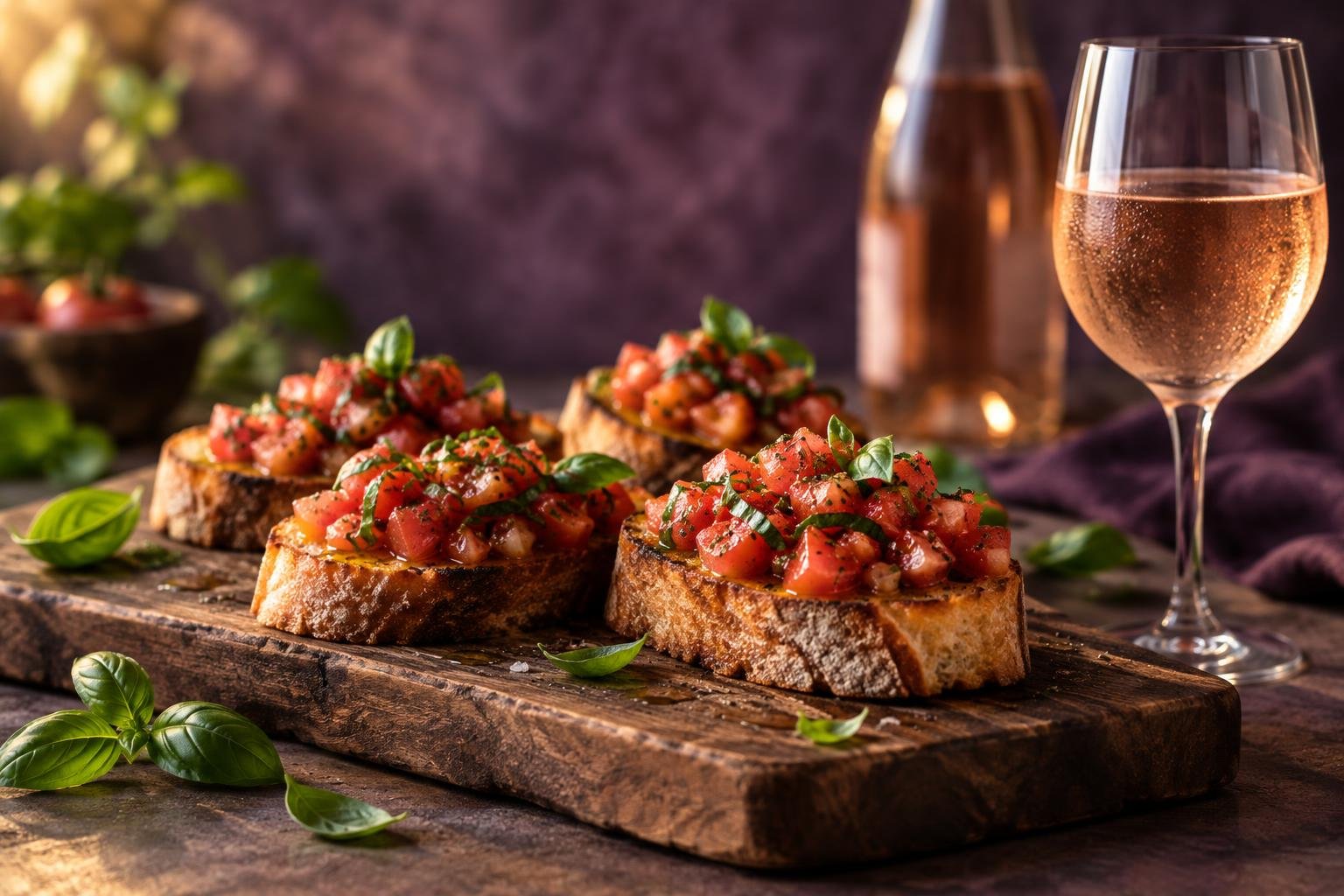
Bruschetta looks like the simplest thing on the table, and it quietly ruins more wine than almost anything else at a party. The three that work are a dry rosé, a crisp dry white such as Pinot Grigio, or a light red served properly cold.
Here is the catch. Almost everything on a bruschetta is raw. Raw oil, raw garlic, raw tomato. Cooking would soften all three, and nobody cooks a bruschetta topping. So the wine meets them at full strength, which is why the big red you were saving goes metallic on the first bite.
Table of Contents
The Short Answer
Three styles, and they all have one thing in common. They are served cold and they carry very little tannin.
- Dry rosé. Cold, crisp and tannin free, so there is nothing for the tomato to fight with. The safest bottle you can open. Serve it at 8 to 10 degrees.
- A crisp dry white. Pinot Grigio, Vermentino or any lean Italian style white. The acid cuts the olive oil and there is no oak in the way. Same temperature.
- A light red, chilled. Young Grenache or a young Sangiovese, twenty minutes in the fridge before you pour. Around 13 degrees, not room temperature.
What Bruschetta Does to Wine
Most pairing articles tell you to pick something Italian and move on. Bruschetta is doing six separate things to your glass at once.
| On the bruschetta | What it does | What the wine needs |
|---|---|---|
| Raw olive oil | Coats your tongue and rounds everything off | Fresh acidity to cut back through it |
| Raw garlic | Strips the fruit out of a red and leaves the bitterness standing alone | Low tannin and plenty of fruit |
| Ripe raw tomato | Brings sharp acid and a big hit of savoury glutamate | Matching acidity and almost no tannin |
| Salt | Softens tannin slightly and makes acidity taste rounder | Works in your favour, so lean into crisp |
| Toasted bread | Dries the mouth and adds a touch of bitter char | Cold serving and juicy fruit |
| Basil or oregano | Green and aromatic, easily buried | Herbal lift, not heavy oak |
The tomato deserves a closer look. Ripe tomatoes are loaded with glutamate, the compound behind the savoury taste called umami, which the Japanese chemist Kikunae Ikeda first identified back in 1908. Umami lifts the bitterness and grip in a tannic wine and pushes its fruit down at the same time.
That is the metallic edge people notice and blame on tomato acid. The acid is only half of it. If you want the full picture of what tannin is doing in your mouth, we pulled it apart in the guide to tannins in wine.
Best Wines for Bruschetta
Dry rosé, the one that never lets you down
Pale dry Australian rosé tastes of strawberry, red apple skin and a little herb, with sharp acidity and no tannin at all. That last part is the whole trick. There is nothing for the tomato to turn bitter, and the acid handles the oil. Look to McLaren Vale, the Central Ranges or the Adelaide Hills, and serve it cold enough to fog the glass.
Pinot Grigio and other lean whites
Good Pinot Grigio is quiet on purpose. Pear, lemon pith, a chalky finish and little else, which leaves room for the basil and the oil. Our Pinot Grigio guide walks through the styles. King Valley and the Adelaide Hills both do the crisp version well. Vermentino is the same idea with a salty twist.
Grenache, served cold
Grenache is the light red that handles savoury food best. Soft, red fruited and low in tannin, which is exactly what garlic and tomato ask for. Twenty minutes in the fridge turns it from warm and jammy into something fresh. The Grenache guide has the detail. McLaren Vale is the Australian home of it.
Young Sangiovese
Sangiovese is built for tomato, and that is no accident, since the two grew up in the same kitchens. It brings sour cherry, dried herbs and bright acid that meets the tomato head on. Choose a young unoaked one. See the Sangiovese guide, and look for Heathcote, the King Valley or McLaren Vale.
Prosecco and dry sparkling
The fizz scrubs olive oil off your tongue between bites. Keep it dry, so brut rather than anything labelled extra dry, which is confusingly sweeter. If you are unsure which fizz to grab, the Prosecco and Cava comparison sorts it out. Serve it in a proper glass, not a flute, and the glasses roundup explains why.
What to Avoid
- Big tannic reds. Young Cabernet Sauvignon and full bodied Shiraz turn hard and metallic against raw tomato. The tannin has nowhere to go.
- Oaky Chardonnay. Vanilla and butter next to raw garlic is a strange meeting. The oak flattens the basil too.
- Anything sweet. Sweetness makes the tomato taste sourer than it is, and the salt on top sharpens it further.
- Room temperature reds. Even the right grape goes flabby when it is warm. Cold is not optional here.
Drink One Tonight

Tamburlaine Central Ranges Organic Rose 2025
A pale dry rosé with red apple and strawberry fruit and a clean, dry finish. It has the acidity to cut through raw olive oil and nothing in it for the tomato to turn bitter. Stock checked live on the day this was written.
- Dry, pale and free of tannin, which is exactly what raw tomato asks for
- Certified organic fruit from the Central Ranges in New South Wales
- Sits comfortably under twenty dollars, so a second bottle is not a crisis
- Built to drink young and cold, not to keep
- Less convincing on the mushroom or bean versions, where a light red wins
Most dry rosé sits between 12 and 13 per cent alcohol, so a generous glass is more than one standard drink. The wine calorie calculator will do the sums if you are keeping track.
If You Are Making It
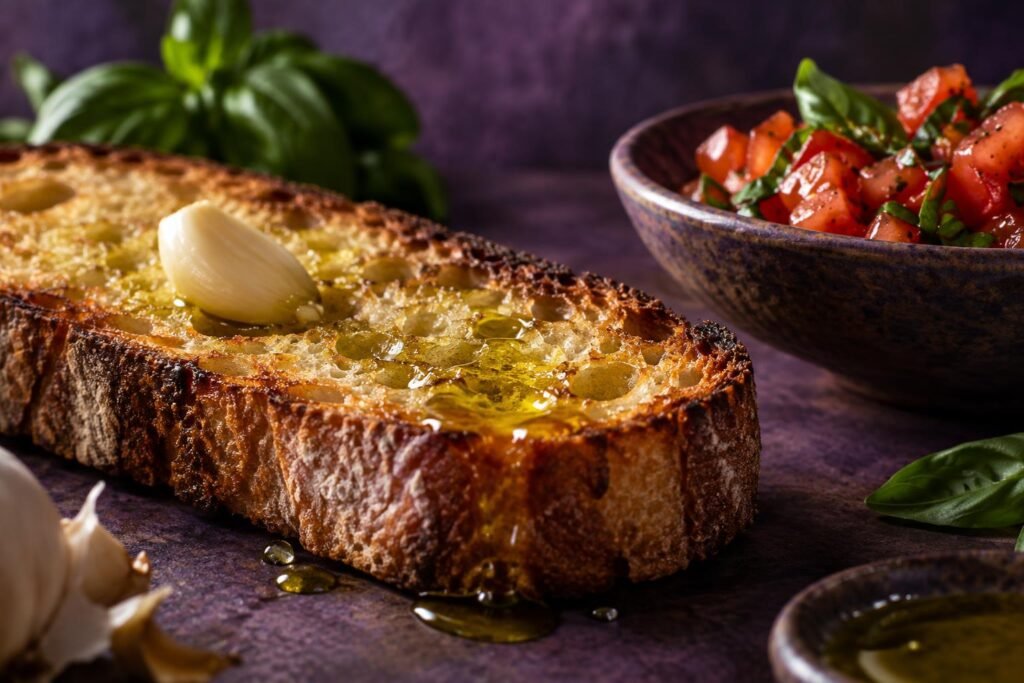
Bruschetta began as a way to taste olive oil, not tomato. After the harvest, millers in central Italy would pour the new season oil straight onto toasted bread rubbed with garlic to judge how good it was, a habit described in this history of the dish from a Sicilian olive mill. The tomato arrived centuries later.
- Cut the bread thick, about a centimetre and a half, so it holds the topping instead of collapsing under it.
- Rub the raw garlic clove over the bread while it is still hot. The warmth carries the scent without leaving a raw sting.
- Salt at the very last second, not while the tomatoes are sitting.
- Drain the chopped tomato. The water it gives up is what turns good toast into a soggy letdown.
- Use oil you would happily taste on a spoon, because you are effectively about to.
Frequently Asked Questions
What is the best wine with tomato bruschetta?
A dry rosé served cold. It has the acidity to handle the oil and no tannin for the tomato to turn bitter. If you would rather have white, choose a lean unoaked one such as Pinot Grigio or Vermentino.
Can you drink red wine with bruschetta?
Yes, as long as it is light and properly chilled. Grenache and young Sangiovese both work. Skip the tannic reds, because the savoury glutamate in a ripe tomato lifts bitterness and grip in a tannic wine while pushing its fruit down, an effect explained well in this piece on umami in wine and food.
Does Prosecco go with bruschetta?
It does, and it is one of the better answers. The bubbles clear the olive oil between bites. Choose a brut, since anything labelled extra dry is actually sweeter.
How cold should the wine be?
White and rosé at 8 to 10 degrees, which is straight from the fridge. Light reds at about 13 degrees, so twenty minutes in the fridge before you pour.
Is bruschetta pronounced brusketta?
Yes. The ch is hard, like the k in school. The word comes from the Roman dialect verb bruscare, meaning to toast or char over coals, which tells you the bread mattered long before the topping.
What wine suits mushroom or bean bruschetta?
Those versions drop the tomato acid and gain earthiness, so a light red wins outright. Grenache or Pinot Noir, still cool. We go deeper on the fungal end of things in the stuffed mushrooms pairing guide.
Serving pasta after the board? The aglio e olio wine pairing guide explains why a garlic and oil pasta needs even more acid than this does.
This post contains affiliate links. If you buy through them we earn a small commission at no extra cost to you. It keeps the wine flowing and the reviews honest.