Heads up: this guide contains an affiliate link. If you buy through it we earn a small commission at no extra cost to you.
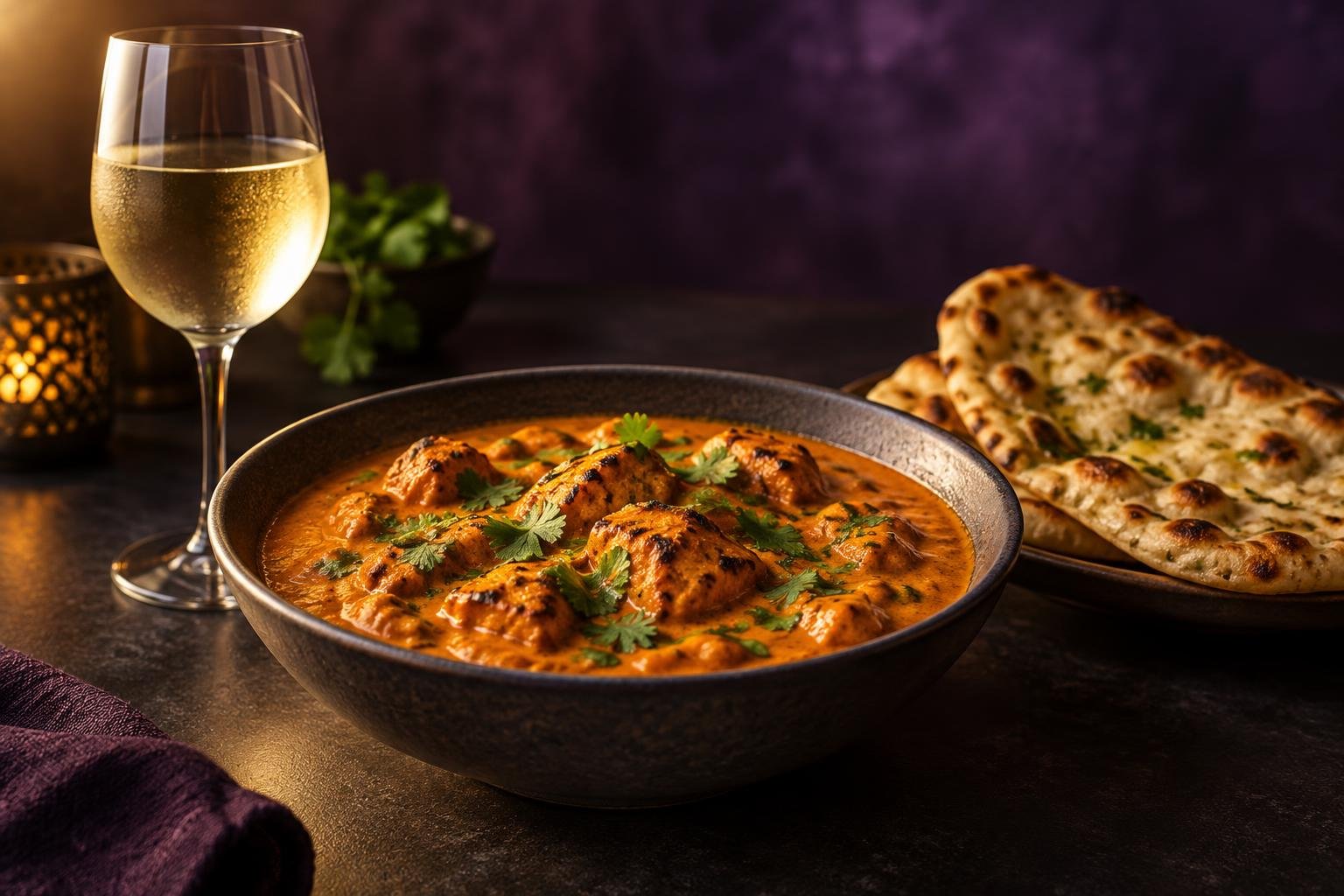
Chicken tikka masala wants a dry Australian Riesling with plenty of lime and a hard edge of acidity. A dry rosé runs a close second, and a chilled Grenache is the red answer. Off-dry only if your version is genuinely hot.
Most pairing advice for this dish starts from the wrong place. It assumes curry means heat, so it reaches for sugar in the glass to put out a fire that is not burning. Tikka masala is the mildest thing on the menu. It was built that way on purpose.
Table of Contents
The Short Answer
- Dry Riesling. Lime, green apple and searing acid, which is what cuts cream. The default choice and the one we would pour. Serve at 8 degrees.
- Dry rosé. A little more fruit weight, no tannin, and it handles the smoky char on the chicken nicely.
- Grenache, chilled. If someone at the table wants red, this is it. Soft, low tannin, twenty minutes in the fridge.
What Chicken Tikka Masala Does to Wine
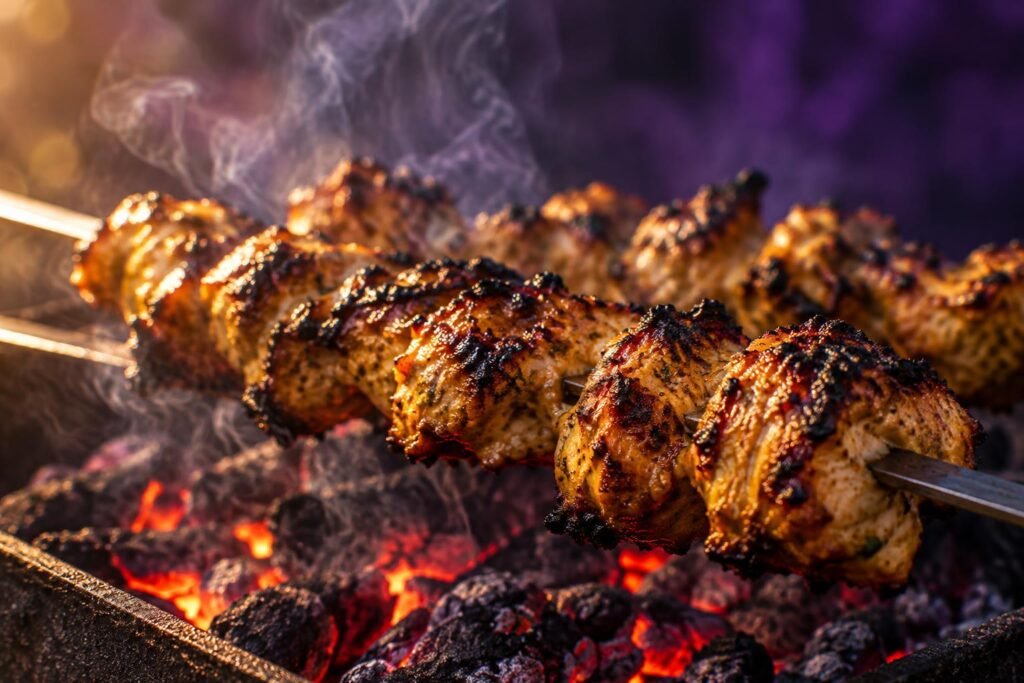
There are two dishes in the bowl, cooked two different ways. The chicken is marinated in yoghurt and chilli powder, then blackened in a tandoor, a clay oven, which leaves it smoky and dry at the edges. The sauce is the opposite: wet, rich and slightly sweet. Your wine has to answer both.
| In the bowl | What it does | What the wine needs |
|---|---|---|
| Charred tandoori chicken | Brings smoke and a touch of bitterness from the grill | Fresh fruit, and no smoky oak piled on top |
| Cream and butter | Coats the palate and rounds everything off | Sharp acidity to cut straight through |
| Tomato base | Acid plus savoury glutamate, which makes tannin taste metallic | Low tannin, matching acidity |
| Warm spices | Cumin, coriander, paprika and garam masala, aromatic but easily buried | An aromatic white, not an oaky one |
| Mild chilli | A slow background warmth rather than real heat | Moderate alcohol, around 12 per cent |
| A little sweetness | Makes a bone-dry wine taste sharper than it is | Ripe fruit in the wine, not necessarily sugar |
Look at that list and the usual advice starts to look lazy. Four of the six are solved by acidity. The one everybody writes about, the chilli, barely registers here.
Why This Dish Is Mild in the First Place
The best known origin story belongs to Ali Ahmed Aslam, who ran the Shish Mahal in Glasgow from 1964 until his death in 2022. In his telling, a customer in the 1970s sent back a plate of chicken tikka for being too dry, so he combined spices, cream and a tin of condensed tomato soup. Aslam also said plainly that his customers did not want hot curry, which is why he used yoghurt and cream.
Others dispute it. A 2009 bid to name Glasgow the official home of the dish was rejected once restaurants across the United Kingdom lodged rival claims, and the Moti Mahal group says its founder served something very similar to Indian heads of state in 1947. NPR went through the competing versions after Aslam died. Robin Cook, then the British foreign secretary, had already called it “a true British national dish” in a 2001 speech.
The argument matters for one reason. Every version ends with cream and tomato added to fix dry, charred chicken. That is the dish you are pairing with, not a fiery one.
Best Wines for Chicken Tikka Masala
Dry Riesling, the one to pour
Australian Riesling is bone dry, with lime, lemon pith and acidity that arrives like a slap. That acid is the working part, because cream needs cutting and tomato needs matching. The Riesling guide has the full picture. Clare Valley and Eden Valley are the benchmarks, Great Southern the value play. Serve it properly cold.
Off-dry Riesling, but only if it is hot
If your local makes a tikka masala with real chilli in it, a touch of sugar in the glass genuinely helps. Look for something around 8 to 12 grams of residual sugar, which still tastes dry when the acidity is high. Our guides to off-dry wine and residual sugar explain how to read that off a label.
Dry rosé
Rosé sits between the two camps. More fruit weight than Riesling, no tannin, and enough freshness for the smoke off the tandoor. Grenache based rosé from McLaren Vale is the obvious route.
Aromatic whites
Gewürztraminer, textured Pinot Gris and dry Muscat all have the perfumed lift that sits beside cumin and coriander rather than fighting it. Keep them cold or they go flabby. The same logic drives our Chinese food pairings.
Grenache, served cool
The red that works. Soft, red fruited and light on tannin, which matters because tomato and tannin do not get along. See the Grenache guide, and put the bottle in the fridge for twenty minutes first.
What to Avoid
- Tannic reds. Shiraz, Cabernet and young Italian reds all turn hard and metallic against a tomato base. The tannins explainer covers why that happens.
- Heavily oaked whites. The dish already has smoke on it from the tandoor. Oak smoke on top of grill smoke is one note too many.
- High alcohol anything. Past about 14 per cent the chilli warmth turns sharp and the cream stops tasting like cream.
- Properly sweet wine. Dessert wine next to a savoury sauce is a long evening. Off-dry is as far as you need to go.
Drink One Tonight

Sons of Eden Freya Riesling
A dry Australian Riesling with lime and lemon pith and a long, hard, dry finish. The acidity does the heavy lifting against the cream, and there is no oak to argue with the tandoor smoke. Stock checked live on the day this was written.
- Dry and high in acid, which is exactly what cream and tomato need
- Whole bunch pressed and left four months on lees, so it has texture as well as bite
- Works just as well with the poppadoms before and the leftovers tomorrow
- Bone dry, so if your tikka masala is properly hot you want an off-dry bottle instead
- Needs to be cold, and it is wasted at room temperature
Riesling like this usually sits near 12 per cent alcohol, which is the right end of the scale for a spiced dish. The wine calorie calculator will tell you what that means for the glass, and the glasses roundup explains why a proper bowl matters more than the stem.
If You Are Cooking It
- Marinate the chicken in yoghurt for at least four hours. The acid does the tenderising, which is the whole reason it is there.
- Get real colour on the chicken before it meets the sauce. That char is half the flavour, and a very hot pan will do.
- Go easy on the sugar. A pinch balances the tomato, a spoonful turns dinner into pudding and wrecks the wine.
- Add the cream at the end and off the heat, so it stays silky instead of splitting.
- Put the wine in the fridge before you start cooking, not after you sit down.
Frequently Asked Questions
What is the best wine with chicken tikka masala?
A dry Australian Riesling, served cold. The acidity cuts the cream and matches the tomato, and there is no oak to clash with the smoke off the grilled chicken. Dry rosé is the next best thing.
Should the wine be sweet because it is a curry?
Usually not. Tikka masala is the mildest thing on most Indian menus and already carries sweetness of its own. Save the off-dry bottle for a vindaloo.
Can you drink red wine with chicken tikka masala?
Yes, if it is light and chilled. Grenache is the safest pick. Tannic reds are the ones to skip, because the tomato in the sauce makes tannin taste bitter and metallic.
Does Chardonnay work with tikka masala?
An unoaked or lightly oaked one can, especially a cool climate example with real acidity. Heavily oaked Chardonnay does not, because the dish already has smoke and butter and does not need more of either.
What if my tikka masala is actually spicy?
Then step to an off-dry Riesling with 8 to 12 grams of residual sugar and keep the alcohol near 12 per cent. Wine will not put the fire out, so the aim is to avoid making it worse.
Is chicken tikka masala Indian or British?
Both, depending on who you ask. The Glasgow restaurateur Ali Ahmed Aslam said he improvised it in the 1970s with cream, spices and tinned tomato soup, while restaurants in India trace something very similar to the 1940s.
If green curry has you thinking about other curries too, our Thai green curry wine pairing guide covers the same coconut-and-chilli logic from a different angle.
This post contains affiliate links. If you buy through them we earn a small commission at no extra cost to you. It keeps the wine flowing and the reviews honest.