Heads up: this guide contains an affiliate link. If you buy through it we earn a small commission at no extra cost to you.
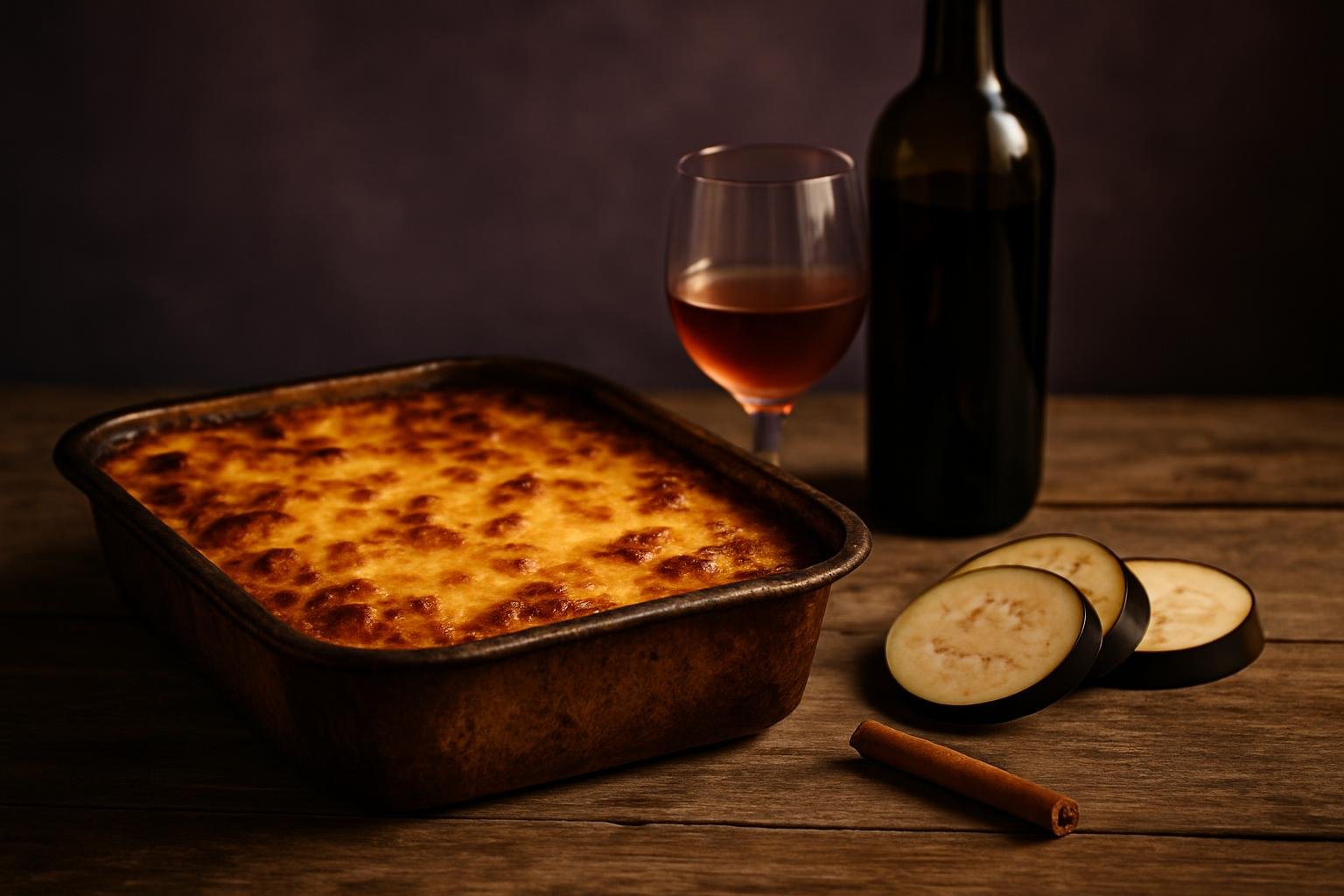
Moussaka wants a medium-bodied red with bright acidity and soft, fine tannin. Xinomavro from northern Greece is the best answer of the lot, with Sangiovese and Grenache just behind it. The dish looks like a job for the biggest red on the shelf, and that is exactly the trap.
The white blanket on top is not an ancient Greek touch at all. Béchamel arrived in the 1920s, when a chef called Nikolaos Tselementes decided Greek cooking needed a French tidy-up, and it never left. That layer is why pairing instincts misfire here, because it turns a spiced lamb bake into something far richer and much milder than it looks.
Table of Contents
The Short Answer
- Xinomavro (Naoussa, Greece). High acid, firm but fine tannin. It cuts the béchamel and meets the tomato head on.
- Sangiovese (Chianti Classico, or King Valley and Heathcote at home). Savoury and sour-cherry fresh, built for tomato sauce.
- Grenache (McLaren Vale or the Barossa). Softer and warmly spiced, which suits the cinnamon in the meat.
Serve any of them at about 16 degrees, which means twenty minutes in the fridge during an Australian summer. None of them needs decanting, though an hour in the open glass does the Xinomavro a favour.
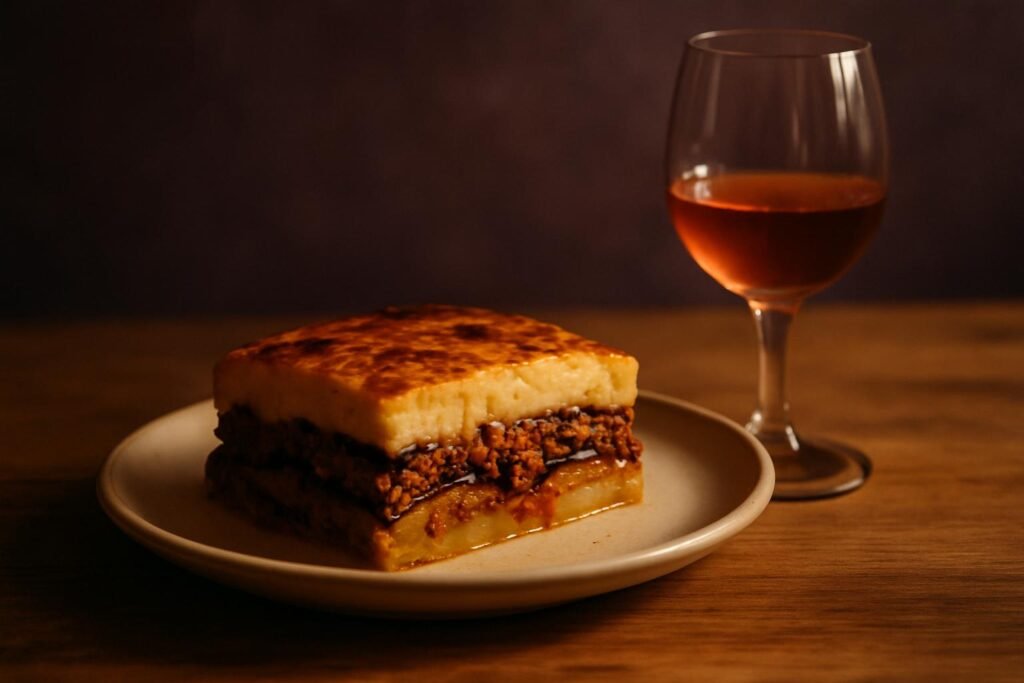
What Moussaka Does to Wine
Moussaka is really two dishes stacked on top of each other, and they pull a wine in different directions. Here is what each layer asks for.
- Fat, and plenty of it. A family tray uses roughly 1.5 litres of milk and 150 grams of butter in the béchamel alone, before you count the fried aubergine and the lamb. Fat needs acidity to cut through it.
- Acid from the tomato. The meat sauce is tomato-based, so a soft, low-acid red tastes flat and slightly stewed beside it.
- Sweet spice. Cinnamon and bay go into the meat, nutmeg into the white sauce. Wines carrying heavy vanilla oak double up on that and start tasting like pudding.
- Salt. Kefalotyri or pecorino is grated over the top. Salt softens tannin a little, but it also makes high alcohol taste hotter.
- Softness. Nothing in a moussaka crunches. The wine has to bring all the freshness, because the plate is bringing none.
- A whisper of bitterness from the aubergine skins. Big grippy tannin adds to that rather than balancing it.
If that list sounds familiar, it is the same puzzle as eggplant lasagna, minus the pasta and plus a good deal more dairy.
Best Wines for Moussaka
Xinomavro, the local answer
Pale in the glass and sharp in the mouth. Expect sour cherry, tomato leaf, olive and dried herbs, with high acidity and tannin that grips without feeling chunky. The name translates as sour black, which is refreshingly honest labelling.
It works because it joins the dish instead of fighting it. The acid handles the tomato, the tannin is fine enough to slip past the aubergine, and the savoury herbal edge lands right on the oregano. Naoussa, the appellation that made the grape famous, has required 100 per cent Xinomavro since 1971, and good bottles get compared to Barolo often enough that the comparison has stopped being flattery. Nobody grows it in Australia in any quantity, so this one is an import.
Sangiovese, the tomato wine
Sangiovese has naturally high acidity and flavours that run savoury rather than sweet, so it reads as part of the meal rather than a guest at it. Chianti Classico is the classic route, and the King Valley and Heathcote both make a very good Australian version for less money. The Sangiovese guide has the full profile.
Grenache, for the sweeter, spicier version
Grenache is the pick when your moussaka leans cinnamon-heavy, which plenty of home versions do. It is soft, red-fruited and warmly spiced, with low tannin that leaves the aubergine alone. McLaren Vale and the Barossa make some of the world’s best from old vines. Try to stay under about 14.5 per cent, because the bigger bottles start to sting against the salty cheese. More in the Grenache guide.
Tempranillo, the quiet all-rounder
A young Rioja or an Australian Tempranillo brings savoury red fruit, a touch of leather and moderate tannin, which suits spiced lamb neatly. Skip the heavily oaked Gran Reserva end of the range, where the vanilla piles straight onto the cinnamon. The Barossa and the Riverland both grow it well here.
What to Avoid
- Big, oaky Shiraz or Cabernet at 15 per cent. The vanilla meets the cinnamon, the whole thing turns sweet, and the alcohol burns against the salty top.
- Young, very tannic reds. Tannin, aubergine skin and a dulling layer of milk fat make a joyless trio.
- Oaked Chardonnay. There is already a litre and a half of milk on the plate. It does not need help.
- Off-dry whites. The sweetness in moussaka is aroma, not sugar, so real sugar tips the plate into dessert.
- Anything straight from a cold fridge. Cold makes tannin taste harder, and this is a warm, soft dish.
Drink One Tonight

Thymiopoulos Young Vines Organic Naoussa Xinomavro 2024
This is the bottle the dish grew up next to, and the match is not a coincidence. Greek reds evolved alongside tomato, olive oil, lamb and hard salty cheese, which is why the acidity lands where the béchamel needs it.
- 100 per cent Xinomavro from Naoussa, the grape’s home
- Organic fruit off young vines, so it drinks well now
- High acidity built for tomato and salty cheese
- Fine tannin that leaves the aubergine alone
- Pale and tart, so it will baffle anyone expecting a thick Barossa red
If You Are Cooking It
Let it rest for twenty to thirty minutes out of the oven before you cut it. Greek cooks are firm about this, and some restaurants will simply refuse to serve a moussaka that has not settled. It also stops the whole slice sliding across the plate.
Two smaller things. Salt the aubergine slices, pat them dry and bake them rather than frying, which cuts a lot of oil and gives the wine less fat to push through. And tip a splash of the red you are drinking into the meat sauce, around 170 millilitres for a family tray, so the plate and the glass share a flavour. Swapping the lamb for goat changes almost nothing about the pairing.
Frequently Asked Questions
What wine goes with moussaka?
A medium-bodied red with high acidity and soft tannin. Xinomavro from Greece is the best single answer, with Sangiovese and Grenache close behind. Serve it at about 16 degrees rather than warm.
Can you drink white wine with moussaka?
Yes, if you choose carefully. A dry, unoaked white with real acidity works, such as Assyrtiko or a crisp Greek white blend. Skip oaked Chardonnay, because the dish already carries a lot of dairy fat.
What wine goes with vegetarian moussaka?
Without the lamb the dish lightens and the aubergine leads. A dry rosé or a lightly chilled Grenache suits it better than a full red, and the same aubergine logic applies: acidity first, tannin second.
Is Greek wine really the best match, or is that just romance?
It genuinely is the best match. Greek reds grew up beside tomato, olive oil, lamb and salty cheese, so their high acid and moderate alcohol fit the food by default rather than by luck.
Should the red be chilled?
Lightly, to about 16 degrees, which is twenty minutes in the fridge in most Australian homes. Room temperature here is a good deal warmer than the phrase was invented to describe. A decent wine glass helps too, since a wide bowl lets the wine warm up in your hand.
What if all I have is Shiraz?
Choose the leanest, coolest-climate bottle you own and chill it for half an hour. A Shiraz under about 14 per cent has a fighting chance; a 15 per cent blockbuster will bulldoze the plate. Our wine calorie calculator lists alcohol by volume if you want to check where a bottle sits.
This post contains affiliate links. If you buy through them we earn a small commission at no extra cost to you. It keeps the wine flowing and the reviews honest.