Heads up: this guide contains an affiliate link. If you buy through it we earn a small commission at no extra cost to you.
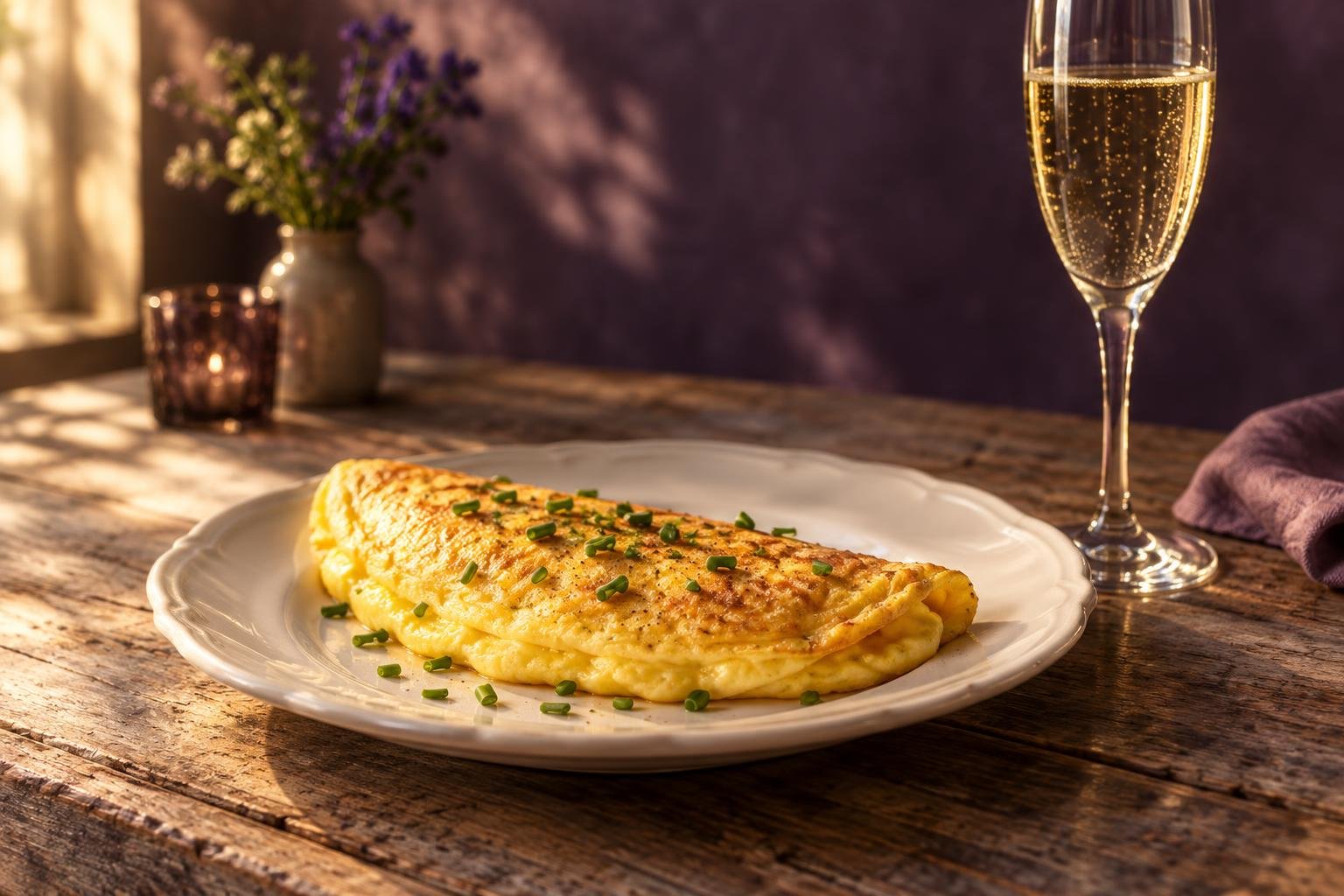
The best wine with an omelette is a dry sparkling wine, full stop. After that it depends entirely on what is folded inside: a lightly oaked Chardonnay for cheese, a Sauvignon Blanc for herbs and greens, a dry rosé for ham or chorizo, and a chilled light red for mushrooms. Big tannic reds and heavy oaky whites are the ones that go wrong.
Eggs are famous in the wine trade for being awkward, which is odd for a food that agrees with everything else. The trouble is not flavour. It is that egg yolk coats your whole mouth like a very tasty varnish, and once it does, most wines struggle to get a word in. The fix is to pick a wine that scrubs the varnish off, and then match the rest of the glass to the filling, not the egg.
Table of Contents
The Short Answer
- Dry sparkling wine. Prosecco, Cava, or an Australian traditional-method bubbly. The bubbles and acid clean the yolk off your palate between bites. Serve cold.
- Lightly oaked Chardonnay. For a cheese omelette. Creamy texture meets creamy filling, and the acid keeps it fresh. Serve cool, not icy.
- Sauvignon Blanc. For omelette fines herbes, spinach or asparagus fillings. The green, zesty flavours match the herbs. Serve cold.
What an Omelette Does to Wine
A plain omelette is eggs, butter, salt and not much else. Master Sommelier Ronan Sayburn, writing in Decanter, explains that egg yolk coats the mouth in a glutinous way and that hard-cooked egg has a sulphurous edge, so wines should be matched against the main flavour ingredient in the dish rather than the egg itself. That one sentence does most of the work in this guide.
- Coating texture from the yolk mutes the wine. You need acid or bubbles to cut through, or the glass tastes flat.
- Fat from the butter and any cheese wants acid too, and gives you room for a wine with some body.
- Sulphur and iron in the egg clash with tannin. This is why a big red next to an omelette can taste oddly metallic.
- Salt softens acid, so a wine that seems sharp on its own tastes rounder here.
- The filling decides everything else. Cheese wants creaminess, herbs want green wines, cured meat wants fruit, mushrooms want earth.
Best Wines for an Omelette
Sparkling wine, for any omelette
This is the safest pairing in the book. The bubbles physically scrub the yolk from your palate, the acid keeps things bright, and a dry sparkling has enough gentle fruit to sit beside cheese, ham or herbs without arguing. Prosecco is the easy weekend option; a traditional-method Australian sparkling from the Adelaide Hills or Tasmania has more toast and cream for a richer omelette. If you are choosing between the cheap bubbles, our Prosecco versus Cava explainer will settle it.
Chardonnay, for cheese omelettes
Cheese and egg together are rich and creamy, and a Chardonnay that has been through malolactic fermentation (the process that gives it that soft, buttery feel) matches that texture beautifully. Sayburn suggests an oak-aged, creamy Chardonnay for cheese-based egg dishes, and it works. Keep the oak light. A cool-climate style from the Yarra Valley or Margaret River has the acid to stop the whole thing feeling heavy.
Sauvignon Blanc, for herb and green omelettes
Chives, parsley, tarragon, spinach, asparagus: anything green in the pan wants a green wine. Sauvignon Blanc from Marlborough or the Adelaide Hills has the grassy, citrus edge that matches the herbs and the acid to deal with the egg. It is the wine we pour with asparagus for the same reason.
Dry rosé, for ham, bacon and chorizo
A salty, smoky filling wants fruit, and a dry rosé brings strawberry and a little pepper without any tannin to fight the egg. Provence-style Australian rosé from Grenache or Pinot Noir is ideal, served properly cold. Our bacon pairing goes deeper on why cured pork loves pink wine.
Light red, for mushroom omelettes
Mushrooms bring earth and umami, and a chilled Pinot Noir or Gamay meets them without much tannin. This is the only omelette where red is the first choice. Keep it light and a little cool; the rules in what wine goes with mushrooms apply.
What to Avoid
- Big tannic reds such as Cabernet or Shiraz. Tannin plus egg yolk tastes metallic, and there is no steak on the plate to soften it.
- Heavily oaked, buttery whites. Rich on rich, with nothing to cut through. Fine with cheese in small doses, tiring by the second glass.
- Sweet wines with a savoury omelette. A sweet Moscato next to a ham and cheese omelette tastes like breakfast dessert.
- Anything served warm. Eggs mute wine, and warm wine is already muted. Chill harder than you think.
Drink One Tonight
Croser is the Adelaide Hills sparkling that has been on Australian brunch tables for decades, made the traditional way with Chardonnay and Pinot Noir. It has the toast and cream for a cheese omelette and the acid to scrub the yolk away, and it costs less than most people expect.

Croser NV
Serve it cold in a proper glass with a bit of room, not a narrow flute, and pour the second glass before the omelette hits the plate. The bubbles do the hard work and you get the credit.
- Traditional-method bubbles with real toast and cream
- Enough acid to clean egg yolk off the palate
- Under thirty dollars at the time of writing
- Drier and more serious than Prosecco if you want simple fruit
- Non-vintage, so batches vary a little
If You Are Cooking It
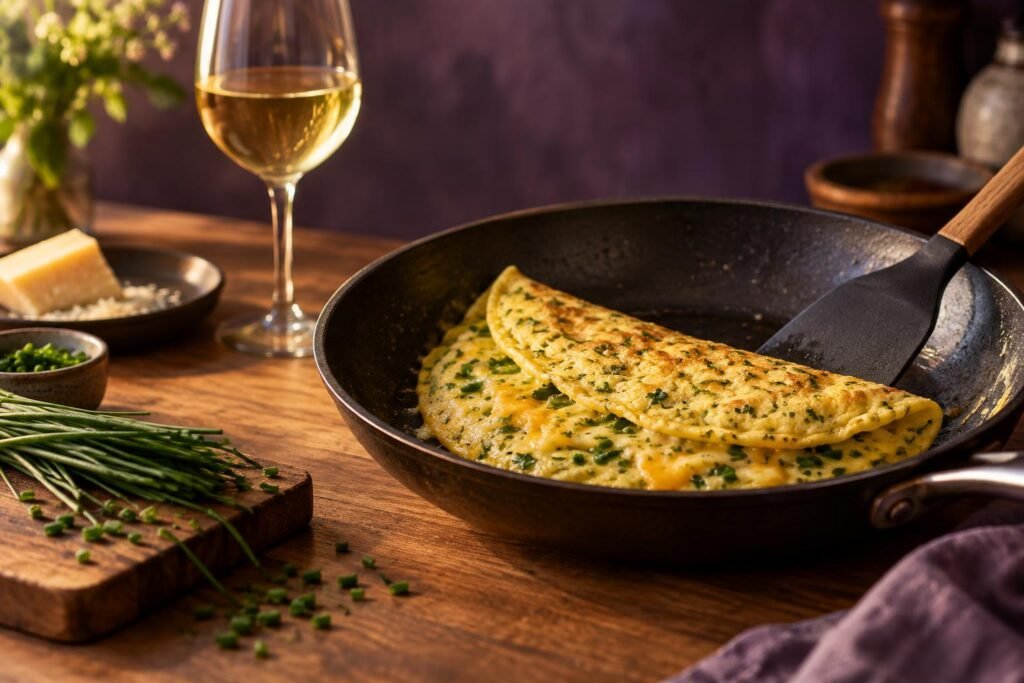
Cook the omelette softly. A pale, just-set omelette with a creamy centre is far kinder to wine than a browned, hard one, because the sulphurous edge that comes with overcooked egg is what clashes hardest. Salt the eggs, use plenty of butter, and keep the filling light so the wine has something to match. A pinch of chopped chives on top gives a Sauvignon Blanc a reason to be there. Pour the wine into a glass with some width, so the aromas have room to get past the egg; our glasses roundup has a couple that suit both sparkling and still. And if brunch turns into lunch, the calorie calculator will tell you what the second bottle added.
Frequently Asked Questions
Which type of white wine complements an omelette?
A dry sparkling wine is the best all-rounder. For still whites, a lightly oaked Chardonnay suits a cheese omelette and a Sauvignon Blanc suits herbs, spinach or asparagus. Both need good acid to cut through the egg.
Can you drink red wine with an omelette?
Only a light one. Chilled Pinot Noir or Gamay works with a mushroom omelette. Tannic reds such as Cabernet and Shiraz taste metallic against egg yolk.
Why are eggs hard to pair with wine?
Egg yolk coats the mouth and mutes flavour, and overcooked egg has a sulphurous edge that clashes with tannin. The fix is acid or bubbles to cut through, and matching the wine to the filling rather than the egg.
What wine goes with a cheese omelette?
A lightly oaked, creamy Chardonnay. The soft texture matches melted cheese and the acid keeps it fresh. A dry sparkling is the alternative if you want something lighter.
What wine goes with a ham or chorizo omelette?
A dry rosé. Cured pork wants fruit and salt wants acid; rosé brings both without tannin. A Prosecco does the job too.
Is Prosecco good with an omelette?
Yes. It is one of the best choices, especially at brunch. The bubbles clean the palate, the fruit is gentle, and it is dry enough for a savoury filling.
This post contains affiliate links. If you buy through them we earn a small commission at no extra cost to you. It keeps the wine flowing and the reviews honest.