Heads up: this guide contains an affiliate link. If you buy through it we earn a small commission at no extra cost to you.
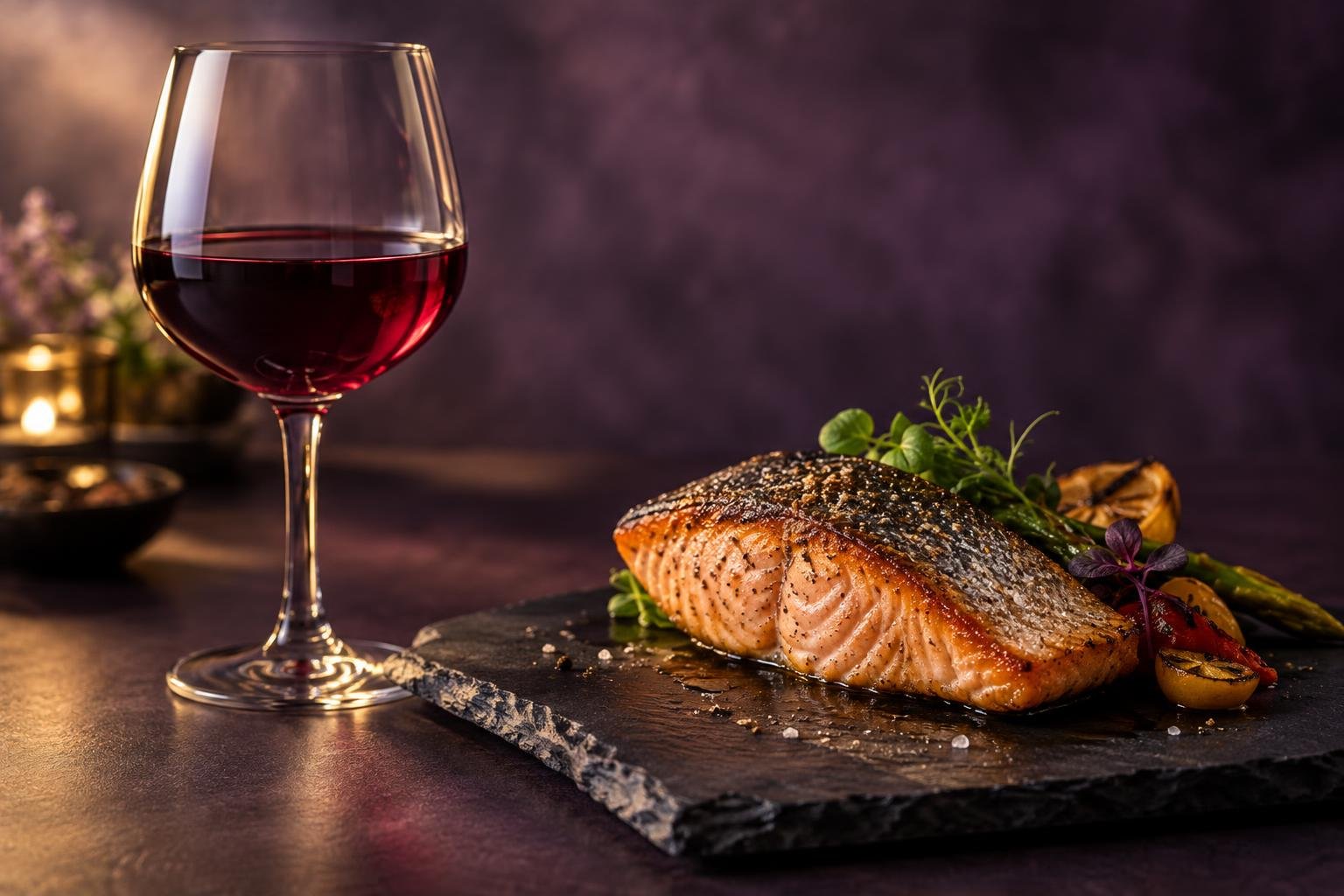
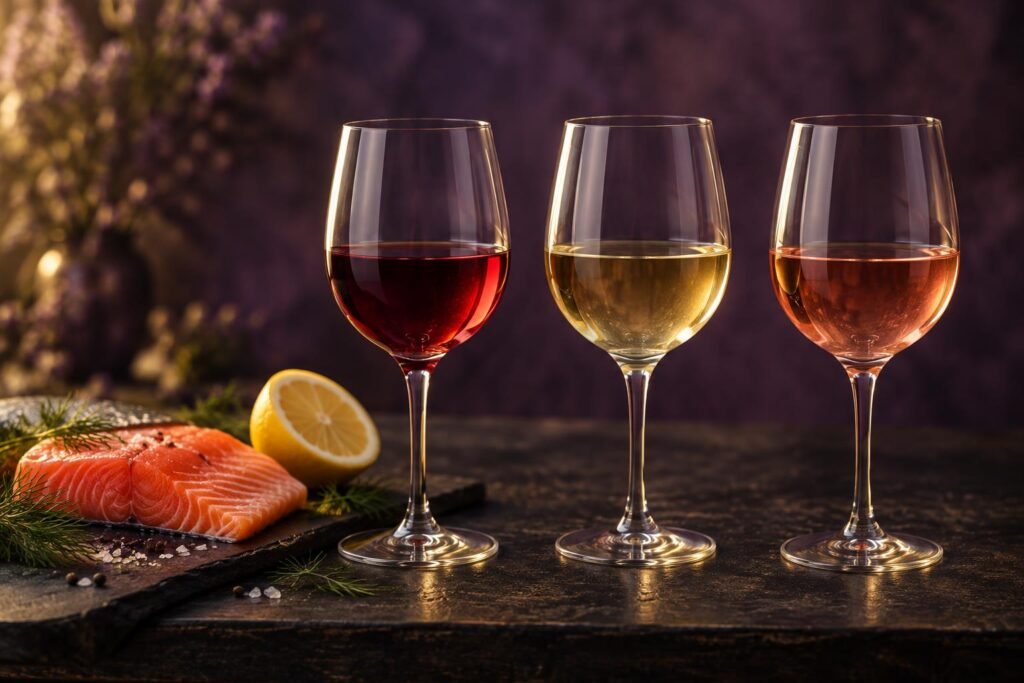
The best wine for salmon is a light red like Pinot Noir, an unoaked or lightly oaked Chardonnay, or a dry rose. Salmon is an oily fish that behaves more like chicken than like snapper, so it can take a red without falling apart.
The rule you were taught, white wine with fish, was written for lean white fish. Salmon did not get the memo. Here is how to match it properly, whether it comes off the barbecue, out of the oven or off a slab of smoked fillet at Christmas.
Table of Contents
The Short Answer
- Pinot Noir for grilled, roasted or barbecued salmon. Serve it lightly chilled, around 14 degrees.
- Unoaked or lightly oaked Chardonnay for baked salmon, creamy sauces and salmon pie.
- Dry rose for cold poached salmon, salmon salad and anything with lemon.
- Sparkling wine for smoked salmon, because the salt needs bubbles and acid more than it needs fruit.
What Salmon Does to Wine
Fat is the whole story. Figures from the United States Department of Agriculture put farmed Atlantic salmon at about 10.8 grams of fat per 100 grams and wild Atlantic salmon at about 6.34 grams. Anything over 5 grams counts as a high fat fish, so both are oily by any measure, and the farmed fillet most of us buy is the richer of the two.
Fat coats your tongue. To cut through it you need acid, and acid is the single thing that matters most here. A wine with bright acidity resets your palate between mouthfuls. A soft, low acid wine just sits on top of the oil and gives up.
The second factor is the cooking method, and it matters more than the fish. Poached salmon is delicate. Barbecued salmon is smoky and charred. Smoked salmon is a different food entirely: the same USDA figures show smoked salmon drops from about 70 grams of water per 100 grams down to 27, which concentrates everything, including the salt.
Best Wines for Salmon
Pinot Noir
Light body, high acid, soft tannin and a savoury edge. Pinot Noir is the one red that can sit next to fish without bullying it, and it is a proper match for grilled or roasted salmon rather than a brave experiment. Tasmania, the Yarra Valley and the Mornington Peninsula all do the cooler, brighter style you want.
Unoaked or Lightly Oaked Chardonnay
Wine Australia lists white fish, prawns and crab among Chardonnay’s natural partners, and salmon sits comfortably in that company when the wine is not swimming in oak. Cool climate Chardonnay from the Adelaide Hills, Margaret River or the Yarra Valley has the citrus and the texture to handle a rich fillet. Heavy, buttery versions do not.
Dry Rose
Rose is the easy answer for a warm night and cold salmon. It has the acid of a white and just enough red fruit to cope with the oil. Look for the pale, dry Provence style rather than anything sweet.
Sparkling Wine
For smoked salmon, blinis and anything cured, bubbles win. The acid and the carbonation lift the salt and the oil together. A dry sparkling or a Prosecco or Cava does the job without costing a fortune.
Dry Riesling
If you like a squeeze of lemon on your salmon, Riesling is the bottled version of that squeeze. It is especially good with salmon that has ginger, soy or chilli anywhere near it.
What to Avoid
- Big, tannic reds. Cabernet and young Shiraz against an oily fish gives you a metallic, tinny finish that ruins both.
- Heavily oaked Chardonnay. The oak and the fish oil pile on top of each other and the plate feels greasy.
- Sweet wines with plain salmon. Sugar with savoury oil is a strange place to spend a dinner.
- Anything served warm. A red at room temperature on a hot night tastes of alcohol and nothing else.
Drink One Tonight
Tasmania is the obvious place to look, partly because the island grows terrific cool climate Pinot Noir and partly because a good deal of Australia’s salmon comes from the same waters. Pleasing, if you enjoy that sort of symmetry.

42 Degrees South Pinot Noir
A properly cool climate Pinot with red cherry fruit and a savoury, earthy edge. Give it twenty minutes in the fridge before you pour, then treat it like a white wine with better manners.
- Light body and bright acid, exactly what oily fish wants
- Cool Tasmanian style, savoury rather than jammy
- Works with grilled, roasted and barbecued salmon
- Not the wine for smoked salmon, go sparkling there
- Needs twenty minutes in the fridge first
If You Are Cooking It
Two small things change the pairing more than the wine choice does. First, lemon. A squeeze of lemon over the fillet just before it hits the table raises the acid on the plate, which makes almost any crisp wine taste better next to it.
Second, watch the sauce. A dill and cream sauce pulls you towards Chardonnay. Soy and ginger pulls you towards Riesling. A honey or maple glaze pulls you towards an off-dry white. Match the sauce first and the fish second, which is the same lesson from our guide to wine with seafood.
Frequently Asked Questions
What red wine goes with salmon?
Pinot Noir first, every time. Light bodied, high in acid and low in tannin. A chilled Gamay or a very light Grenache will also work. Avoid Cabernet Sauvignon and big Shiraz, which clash badly with oily fish.
What white wine goes best with salmon?
An unoaked or lightly oaked Chardonnay for baked salmon, and a dry Riesling if there is lemon, ginger or chilli involved. Sauvignon Blanc works too, though it can be a touch sharp against the richest fillets.
What wine goes with smoked salmon?
Sparkling wine. Smoking removes most of the water and concentrates the salt, and bubbles plus acid handle salt better than anything else. A dry sparkling, Prosecco or Champagne all work.
Does baked salmon need a different wine to grilled?
A little. Baking keeps it soft and creamy, which suits Chardonnay. Grilling adds char and smoke, which suits Pinot Noir. It is a nudge rather than a rule, so do not throw out a good bottle over it.
Should I chill red wine for salmon?
Yes. Twenty minutes in the fridge takes a Pinot Noir to about 14 degrees, which keeps the fruit fresh and stops the alcohol from dominating. Warm light reds taste flat next to fish.
Is wild salmon a different pairing to farmed?
Slightly. Farmed Atlantic salmon carries noticeably more fat than wild, so it stands up to a fuller wine. Wild salmon is leaner and cleaner, which suits a lighter Pinot or a crisp white. Check the calories in your glass too with our wine calorie calculator.
For the Atlantic white that handles almost anything from cold water, see our Albariño pairing guide.
Batter the fish instead of grilling it and the wine changes completely, which is what our guide to the best wine with fish and chips sorts out.
Shellfish plays by slightly different rules, and our guide to which white wine to pour with mussels covers both the pot and the glass.
If the salmon is heading for a sushi rice bowl instead of the oven, our guide to what wine goes with sushi covers soy, wasabi and the whole raw-fish problem.
This post contains affiliate links. If you buy through them we earn a small commission at no extra cost to you. It keeps the wine flowing and the reviews honest.