Heads up: this guide contains an affiliate link. If you buy through it we earn a small commission at no extra cost to you.
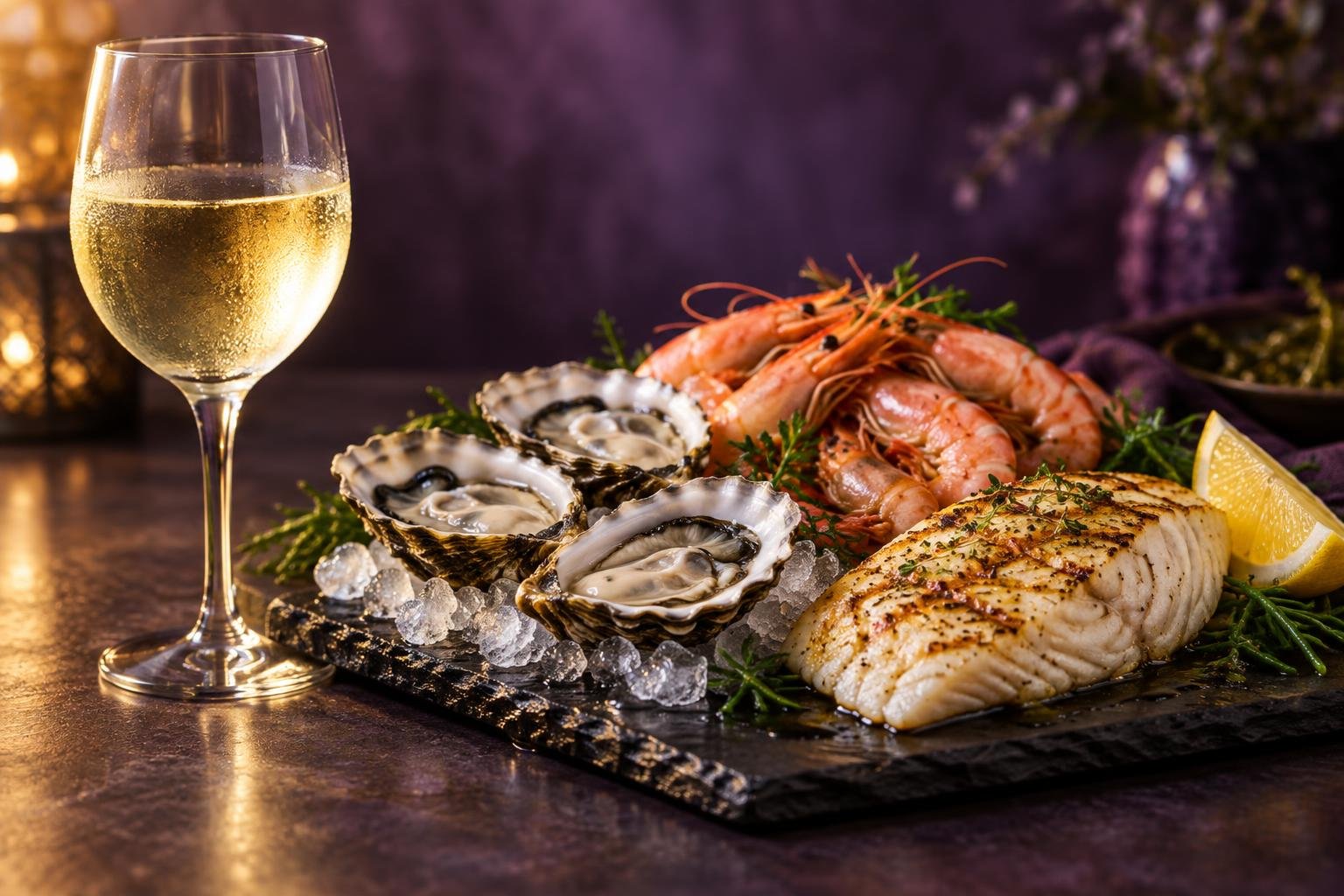
Pour a crisp dry white with plenty of acid and no oak. That one sentence covers about eighty per cent of seafood you are likely to cook this week, from grilled flathead to a kilo of prawns on ice. Riesling, Semillon Sauvignon Blanc and a bone dry sparkling will all do the job.
Here is the part most guides skip. The wine that wrecks a plate of fish is usually not a red at all. It is a big, buttery, oak-aged white that sits on the fish like a doona. Seafood is delicate, salty and often sweet, and it needs a wine that cuts through rather than piles on.
Table of Contents
The Short Answer
- Dry Riesling. Lime, green apple and a line of acid that acts like a squeeze of lemon. Serve it properly cold, about 6 to 8 degrees.
- Semillon Sauvignon Blanc. The classic Australian seafood white. Grassy, citrusy, light on its feet. Same serving temperature.
- Dry sparkling. Bubbles and acid scrub the fat off fried fish better than anything else. Serve it near fridge cold, no decanting.
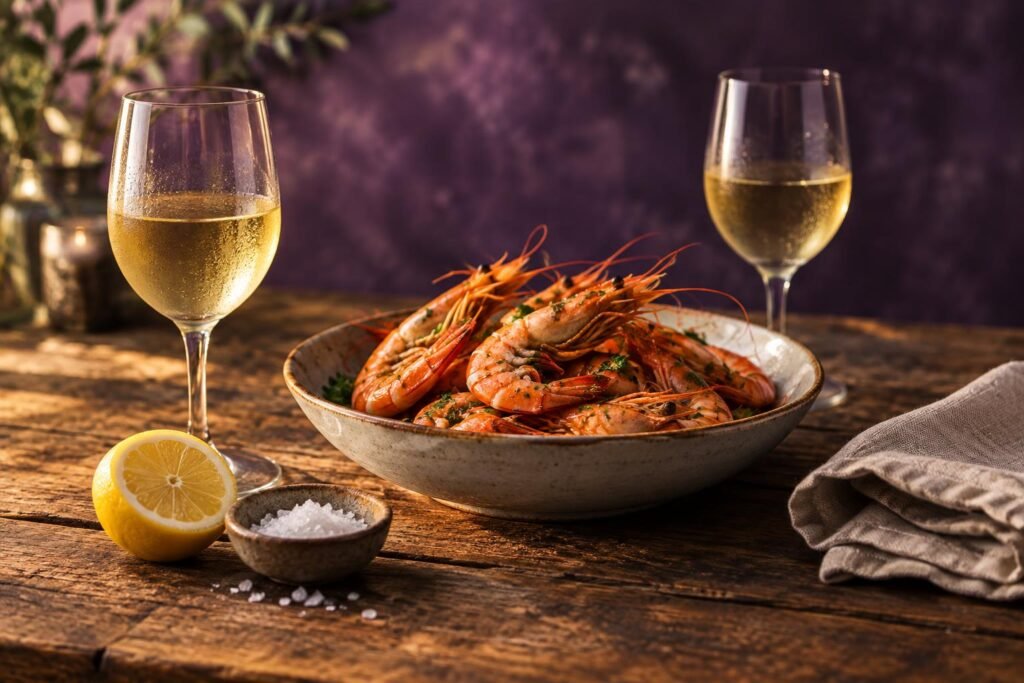
If you want one bottle for a mixed seafood platter, make it the Semillon Sauvignon Blanc. It handles raw, grilled and fried on the same plate without complaining.
What Seafood Does to Wine
Seafood is not one ingredient. A sardine and a scallop are as different as lamb and chicken, so it helps to think about what is actually on the plate.
Fat
Oily fish and lean fish are not in the same league. Cooked Atlantic salmon carries roughly 2,600 milligrams of omega-3 per 100 grams, and sardines sit around 1,600. Lean white fish such as snapper and flathead carry a small fraction of that. Oily fish needs a wine with real acid to cut through, and it can handle a light red. Lean fish does not, and it gets bullied by anything heavy.
Salt and brine
Salt is the friendliest thing on the plate. It makes a wine taste fruitier and softer, which is why oysters and a razor sharp white feel so right together. It also makes tannin taste harsher, which is the real reason big reds and seafood fall out.
Sweetness
Prawns, crab, scallops and lobster are genuinely sweet. A bone dry wine next to sweet shellfish can taste thin and a bit sour. A wine with just a touch of fruit sweetness, or a riper style, fills that gap. This is one of the few times an off-dry wine earns its place at dinner.
The iron problem
There is a real reason behind the old rule about red wine and fish. In 2009 Takayuki Tamura and colleagues, writing in the American Chemical Society journal Journal of Agricultural and Food Chemistry, had tasters work through 38 red wines and 26 whites while eating scallops. Wines with more iron in them produced a stronger fishy aftertaste, and the effect faded when the researchers added something that locked the iron up. So it is not the colour of the wine that causes the problem. It is the iron, and low-iron reds can sit beside seafood quite happily.
The sauce, not the fish
Nine times out of ten the sauce decides the wine. Fish in a lemon and butter sauce wants a different bottle from the same fish in a tomato and chilli one. Match the loudest thing on the plate and you will rarely go wrong.
Best Wines for Seafood
Dry Riesling
Light-bodied, high acid, all lime and green apple with no oak anywhere near it. The acid does the work a wedge of lemon would do, which means it lifts everything from oysters to salt and pepper squid. Australian benchmark: the Clare Valley and the Eden Valley. Read the full Riesling guide if you want the detail.
Semillon and Semillon Sauvignon Blanc
Young Hunter Valley Semillon is one of the lightest, most lemony white wines made anywhere, and it was practically built for prawns. Blend it with Sauvignon Blanc and you get a bit more herb and passionfruit on top. Margaret River does the blend beautifully.
Unoaked Chardonnay
Skip the oaky stuff and go for the lean, cool-climate version. It has more weight than Riesling, so it suits meatier fish like blue eye or a thick piece of barramundi. The Chardonnay guide explains how one grape ends up making two wines that taste nothing alike.
Dry sparkling
Fish and chips with a glass of dry sparkling is a small act of genius. The bubbles and the acid strip the oil off your palate between bites. Tasmania and the Adelaide Hills make the good local stuff.
A light red, if you insist
Grilled salmon, tuna steak and barbecued octopus can all take a chilled light red. Pinot Noir is the pick, served about 14 degrees, and the lighter and fresher the better. Big tannin is the enemy here, not the colour.
What to Avoid
- Heavily oaked whites. Vanilla and toast flatten delicate fish. The wine wins and the dinner loses.
- Big tannic reds. Cabernet and full-bodied Shiraz turn metallic against salt and oil. Save them for the lamb.
- Anything warm. A white served at room temperature tastes flabby, and flabby is the opposite of what seafood needs. The right glass helps too, and our glasses roundup covers that.
- Sweet wine with savoury seafood. Dessert wine and grilled fish is a genuinely strange evening.
Drink One Tonight
One bottle, stock-checked on the day this guide was updated, that covers the widest spread of seafood for the least money.

Farm Hand South Australia Organic Semillon Sauvignon Blanc 2025
South Australian Semillon Sauvignon Blanc, organically grown, and the classic Australian answer to a table full of seafood. Crisp, citrusy and dry, with enough grip to follow a prawn with a piece of battered whiting and not miss a beat. Serve it properly cold.
- Certified organic fruit
- Lemon, lime and cut grass with real acid
- Handles raw, grilled and fried on one platter
- Under fifteen dollars
- Light-bodied, so it will not stand up to a heavy cream sauce
- Drink it young, this is not one to cellar
If You Are Cooking It
Serve the wine colder than you think. Most fridges run at about 4 degrees, and a white straight out of one will warm to its best in the glass within ten minutes. A white poured at room temperature has lost the acid that made it work.
One more trick: whatever citrus you squeeze over the fish, echo it in the glass. Lemon on the fish and a lime-scented Riesling in the hand is a small thing that makes the whole meal feel considered. If you are keeping an eye on what you are drinking across a long lunch, the wine calorie calculator does the sums for you.
Cooking a cheese course afterwards? Our guide to wine that pairs with cheese picks up where this one stops.
Frequently Asked Questions
What is the best wine for seafood overall?
A dry, unoaked white with high acid. Riesling or a Semillon Sauvignon Blanc will cover almost anything you put on the table, from oysters to fried fish.
Can you drink red wine with fish?
Yes, with the right red and the right fish. Grilled salmon, tuna and octopus take a chilled light red such as Pinot Noir. Avoid big tannic reds, which turn metallic against salty, oily fish.
Why does red wine sometimes taste fishy with seafood?
Iron in the wine is the cause. A 2009 study published in the Journal of Agricultural and Food Chemistry found that wines with more iron produced a stronger fishy aftertaste with scallops, and the effect faded when the iron was bound up.
What wine goes with prawns?
Something crisp with a hint of fruit sweetness. Prawns are sweeter than they look, so a dry Riesling or a Semillon Sauvignon Blanc works better than a bone dry, austere white.
What should I pour with oysters?
Bone dry and very cold. A dry sparkling, a young Hunter Semillon or a lean unoaked white. The salt in the oyster makes the wine taste rounder and fruitier.
Does the sauce matter more than the fish?
Usually, yes. Match the wine to the loudest flavour on the plate. A creamy sauce wants more body, a tomato and chilli sauce wants acid and a little sweetness.
Salmon is oily enough to break the white wine rule, so we gave it its own guide to the best wine for salmon.
This post contains affiliate links. If you buy through them we earn a small commission at no extra cost to you. It keeps the wine flowing and the reviews honest.