Heads up: this guide contains an affiliate link. If you buy through it we earn a small commission at no extra cost to you.
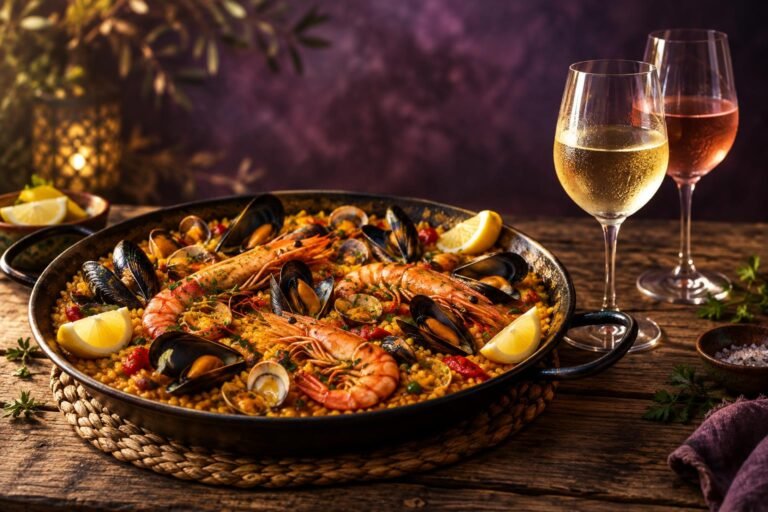
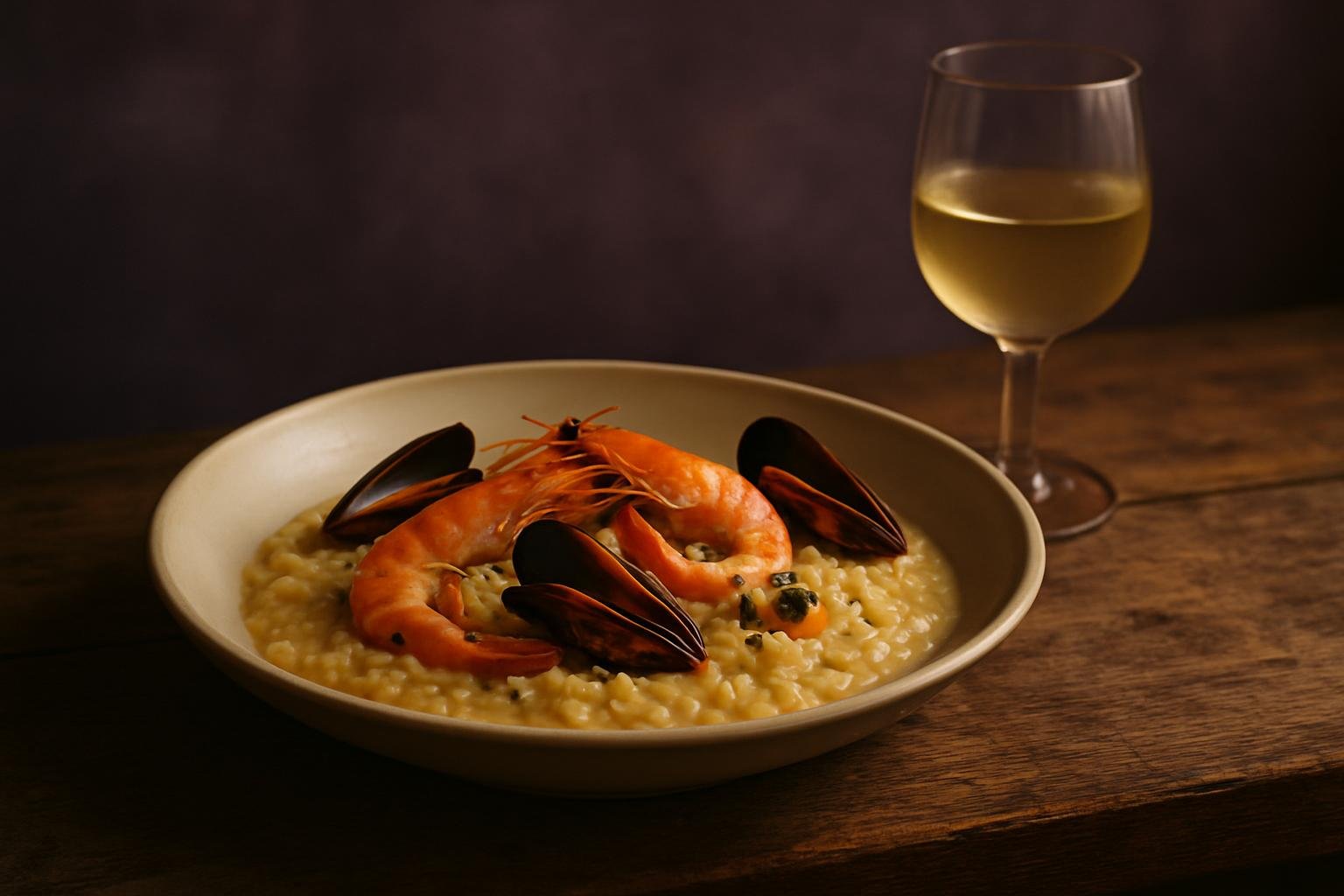
Seafood risotto is a soft, creamy, salty dish that hides a lot of butter. The wine has to cut through the cream without flattening the prawns. Crisp, dry Italian-style whites do it best, and you want one you can cook with as well as drink.
Get it wrong and one of two things happens. A big oaky white buries the seafood, or a sharp, grassy one turns metallic against the shellfish. The middle ground is wide and easy to find once you know what you are aiming at.
Table of Contents
The Short Answer
- Fiano or Vermentino: citrus, a slightly oily texture and an almond finish. Made for shellfish. Serve at 8°C to 10°C.
- Soave or another Garganega: gentle pear and white flowers, light and mineral. It supports the rice instead of shouting at it.
- Unoaked Chardonnay: soft stone fruit with enough body to match the butter. Serve a touch warmer, about 10°C to 12°C.
Whichever you pick, buy two bottles. One goes in the pan, one goes in the glass, and the dish tastes better for it.
What Seafood Risotto Does to Wine
- Butter and parmesan coat the palate. Wine needs bright acid or it tastes flat by the third mouthful.
- Salt from the stock and the seafood softens wine and makes fruit taste sweeter. That is help, not a problem.
- Prawns, scallops and squid are delicate and slightly sweet. Anything oaky or tannic steamrolls them.
- Iodine and brine from shellfish clash with high alcohol and with heavy oak. Keep both low.
- Starch from the rice makes everything feel richer than it is. A lean, mineral wine resets the palate.
- Lemon or white wine in the pan raises the acidity of the dish, so the wine needs at least as much acid to keep up.
Best Wines for Seafood Risotto
Fiano
Lemon, pear and a nutty, almost almond finish, with a texture that feels slightly waxy. That weight is the trick: it matches the creaminess without adding fat of its own. Fiano comes from southern Italy and grows well in the King Valley, the Adelaide Hills and McLaren Vale. There is a reason red wine and seafood go wrong. A study of 64 wines found that iron is the culprit behind that fishy aftertaste, and reds carry much more of it than whites. Wine Australia puts prawns, lobster and crab straight onto chardonnay’s pairing list, which is a handy shortcut.
Vermentino
Grapefruit, sea spray and a faintly bitter finish. It is a coastal grape from Sardinia and Liguria, so it was raised on seafood. Riverland and McLaren Vale plantings in Australia are getting very good, and it is one of the easiest wines to drink with prawns.
Soave and Other Italian Whites
Soave is made from Garganega in the Veneto. Think white peach, almond and a chalky finish. It is quiet, which is exactly what a delicate risotto wants. Verdicchio from the Marche does a similar job with a little more zip.
Unoaked or Lightly Oaked Chardonnay
If your risotto is heavy on butter and parmesan, this is the safest choice. Stone fruit and a creamy texture mirror the dish. Keep the oak restrained. See our Chardonnay guide for the styles, and look to the Yarra Valley or Margaret River.
Pinot Grigio
The easy one. Clean, dry, light and available in every bottle shop in the country. It will never be the most exciting glass on the table, but it never gets in the way either. Our Pinot Grigio guide has the detail.
What to Avoid
- Heavily oaked Chardonnay. Vanilla and toast flatten scallops and prawns completely.
- Red wine, in almost every case. Tannin plus shellfish tastes metallic. If you want red with risotto, make it a mushroom one; see our mushroom risotto pairing.
- Sharp, grassy Sauvignon Blanc. The herbal edge fights the sweetness of the seafood. A riper style is fine; the Sauvignon Blanc guide explains the difference.
- Sweet or off-dry whites. The dish is savoury and salty. Sugar makes it taste odd.
- Anything above about 14% alcohol. Heat plus brine is an unpleasant combination.
Which Wine to Cook It With
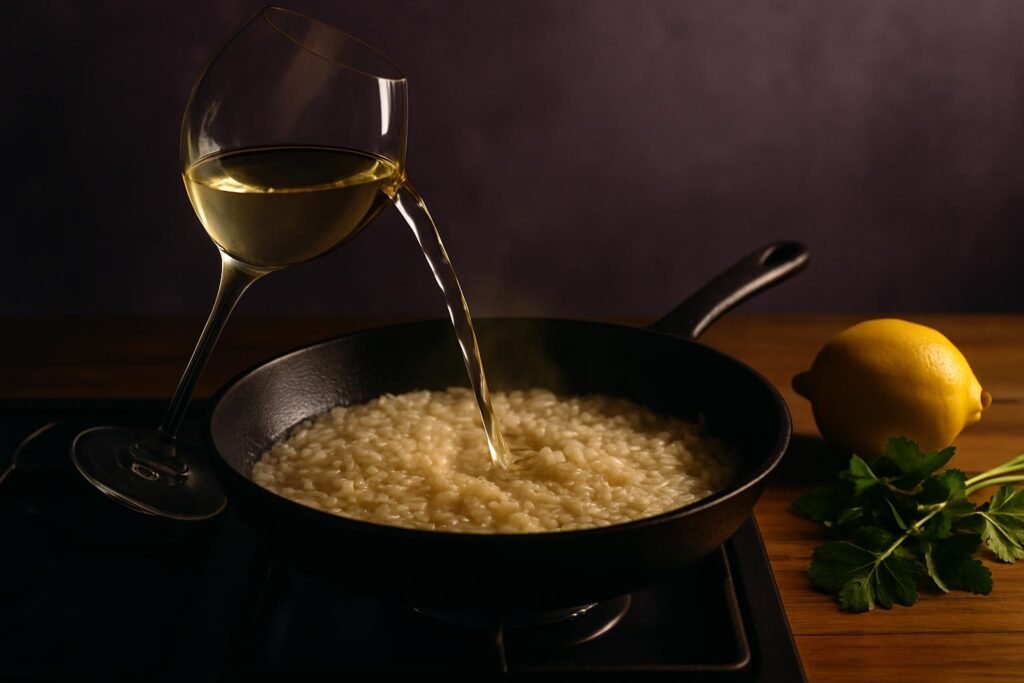
Use the same wine you plan to drink, and use a dry one. A cup of rice usually takes half a cup to a cup of wine, poured in after the rice has toasted and stirred until the pan looks dry again. That step lifts the browned bits off the base and adds the acidity that stops risotto tasting like porridge.
Do not use anything labelled cooking wine. It is salted, it is oxidised and it will make your risotto taste like a stock cube. If you have no wine open, our dry white wine substitute guide lists what actually works instead.
On the old myth: most of the alcohol does burn off during the long stir, but not all of it. If that matters for who is eating, leave the wine out and add a squeeze of lemon at the end instead.
Drink One Tonight

Gapsted Buffalo King Valley Fiano 2023
This is the rare bottle that earns its place twice: half a cup into the rice, the rest into the glass. Serve it at 8°C to 10°C in a normal white wine glass, not a tiny one.
- Fiano is an Italian seafood grape, and this one is grown in Victoria's King Valley
- Citrus and almond with a soft, textural feel that suits creamy rice
- Cool-climate acid cuts the butter and parmesan
- At this price you can pour some into the pan without wincing
- Limited release, so it disappears quickly when word gets out
If You Are Cooking It
Add the seafood at the very end, off the heat, and let the residual warmth finish it. Prawns and scallops need about two minutes and not a second more. Overcooked seafood turns rubbery and sweetens, and no wine on earth fixes that. A squeeze of lemon just before serving keeps the whole plate bright and makes the wine taste better too.
Frequently Asked Questions
What is the best wine for seafood risotto?
A crisp, dry Italian-style white. Fiano, Vermentino or Soave first, then an unoaked Chardonnay if the dish is heavy on butter and parmesan.
What is the best wine for cooking risotto?
Any dry white you would happily drink. Pinot Grigio, unoaked Chardonnay or Sauvignon Blanc all work. Avoid bottles labelled cooking wine, which are salted and dull.
Can you drink red wine with risotto?
With seafood risotto, no. Tannin and shellfish taste metallic together. With a mushroom or beef risotto, a light red is a fine idea.
How much wine goes into a risotto?
About half a cup to a cup for every cup of rice. Add it after the rice has toasted and stir until the pan looks dry before you start on the stock.
Does the alcohol cook off in risotto?
Most of it does over twenty minutes of simmering and stirring, but not all. Leave it out and use lemon if that matters to anyone at the table.
What glass should I use?
A standard white wine glass, not a flute or a tiny tasting glass. It gives the aromas room. There is more in our wine glasses guide.
Cooking with miso? Our miso wine pairing guide covers why umami is so hard on red wine, and what to pour instead.
Cooking a creamy chowder instead? Our guide to clam chowder and wine covers why cream, salt pork and clams all want the same thing from a glass, and why it is never oak.
Grilled shellfish shifts the balance again, which we cover in wine with octopus.
This post contains affiliate links. If you buy through them we earn a small commission at no extra cost to you. It keeps the wine flowing and the reviews honest.