Heads up: this guide contains an affiliate link. If you buy through it we earn a small commission at no extra cost to you.
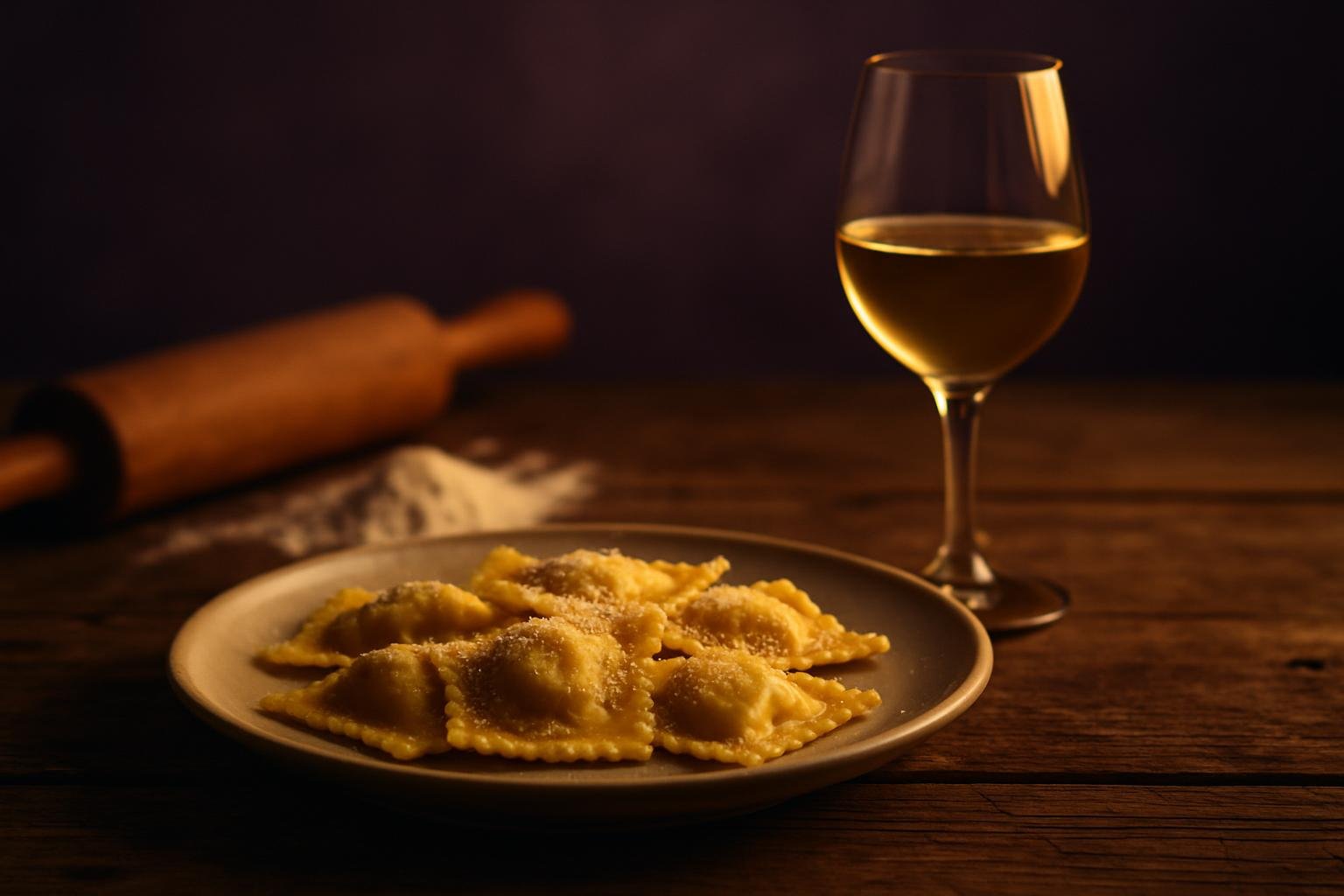
Ravioli is not one dish. It is a shape. Inside it could be ricotta and spinach, slow-cooked beef, prawn, pumpkin or mushroom, and each of those wants a different bottle. That is why most ravioli wine advice is useless: it recommends Chianti and walks away.
The good news is that you only need to answer two questions. What is in the parcel, and what is on top of it. Get those right and the wine picks itself.
Table of Contents
The Short Answer
- Cheese fillings (ricotta, spinach, four cheese): a crisp Italian-style white or a light red. Pinot Gris, Vermentino or Barbera.
- Meat fillings (beef, veal, sausage): Sangiovese or Barbera, and Chianti finally earns its place, and so does the logic we use for simpler pasta.
- Seafood fillings (prawn, lobster, crab): Chardonnay if there is cream, a dry sparkling if there is not. No reds.
Pour whites at 10 to 12 degrees and light reds at 14 to 16. If the bottle feels cold in your hand, the red is about right.
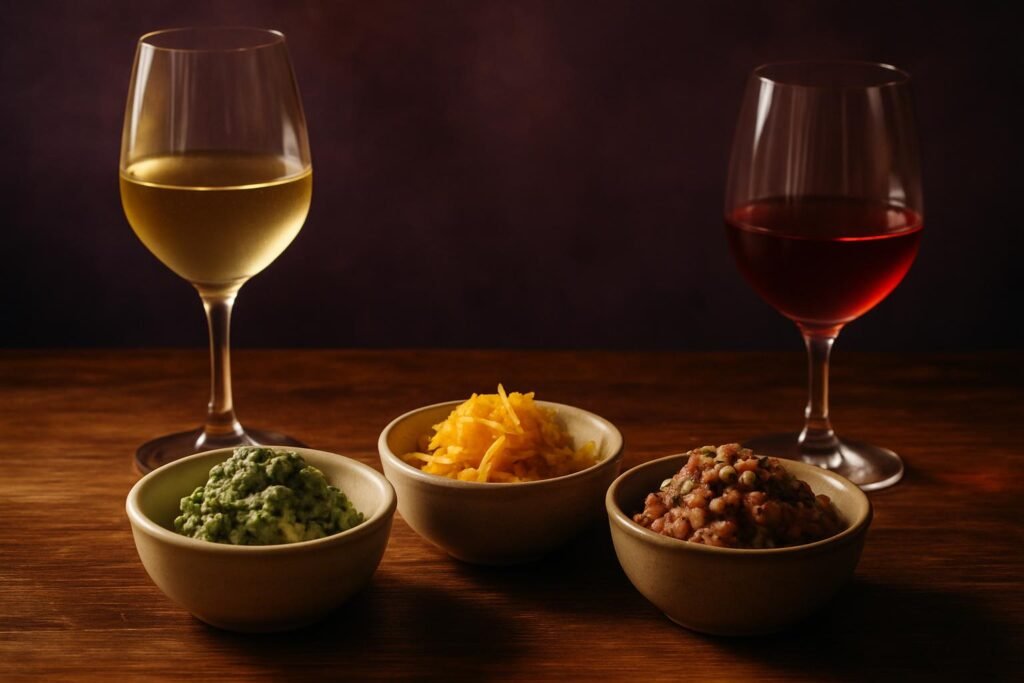
What Ravioli Does to Wine
The pasta itself is almost neutral. Flour, egg and water do not fight anything. Everything that matters comes from the filling and the sauce.
Fat and salt do most of the work. Ricotta, butter and parmesan coat your mouth, and acid in the wine is what clears it. This is the single reason low-acid, high-alcohol wines feel heavy with stuffed pasta.
Umami from mushrooms, aged cheese and slow-cooked meat makes tannin taste harder and drier. The more savoury the filling, the softer the tannin should be.
Sweetness is the one people miss. Pumpkin and butternut squash fillings are genuinely sweet, often with amaretti or nutmeg in them, and a bone-dry crisp white will taste sour beside them.
The sauce can outrank the filling. A tomato sauce brings sharp acid to the plate and needs a wine with acid to match. A brown butter sauce brings nutty richness and points at Chardonnay. When the sauce is loud, pair to the sauce.
Best Wine for Ravioli, Filling by Filling
| Filling | Best wine | Why |
|---|---|---|
| Ricotta and spinach | Pinot Gris, Vermentino, Soave | Gentle, milky and mildly bitter from the greens. Wants texture, not aggression. |
| Four cheese | Barbera or a fuller Pinot Gris | Salt and fat need acid. Barbera has plenty and very little tannin. |
| Mushroom | Pinot Noir or unoaked Chardonnay | Umami punishes tannin. Keep the red light and cool. Full detail in our mushroom ravioli pairing guide. |
| Beef, veal or ragu-stuffed | Sangiovese, Barbera, Montepulciano | Savoury and rich. Italian acid cuts it and the tannin has something to grip. |
| Pumpkin or butternut squash | Off-dry Riesling, richer Pinot Gris | The filling is sweet. Bone-dry wine tastes sour against it. |
| Prawn, crab or lobster | Chardonnay with cream, sparkling without | Delicate and sweet. Reds turn it metallic. |
| Cheese in a tomato sauce | Sangiovese or Chianti | The sauce is now in charge, and tomato needs matching acid. |
Three Bottles That Cover Most Ravioli Nights
Pinot Gris, the peacemaker
If you are cooking for a table and you do not know what everyone ordered, this is the one. Pear and baked apple, a broad soft feel, no tannin to fight anything. It handles cheese, mushroom and pumpkin fillings without complaint. The Pinot Gris and Pinot Grigio explainer covers why the two names taste different.
Sangiovese, when there is meat or tomato
Sour cherry, dried herbs, firm acid and moderate tannin. It was built alongside Italian food and it shows. Chianti is the famous version, but Australian Sangiovese from the King Valley and Heathcote is often better value. Our Sangiovese guide has the detail.
Chardonnay, when there is cream or seafood
Lobster ravioli in a cream sauce is one of the few pasta dishes that genuinely wants a fuller white. Choose something lightly oaked rather than heavily worked, so the wine has weight without tasting of vanilla. The Chardonnay guide explains how to spot the style on a label.
What to Avoid
- Big Cabernet and Shiraz. Almost no ravioli filling has the tannin-taming fat that a steak does. The wine ends up tasting dry and bitter.
- Heavily oaked whites with delicate fillings. Oak buries ricotta and prawn completely.
- Bone-dry wines with sweet pumpkin ravioli. The filling makes the wine taste sharp and thin. A hint of sweetness in the glass fixes it instantly.
Drink One Tonight

Innocent Bystander Pinot Gris
The bottle to open when the table has ordered four different fillings and you have one glass each. Chill it properly and it flatters almost everything on the plate.
- Handles cheese, mushroom and pumpkin fillings equally well
- Enough texture to sit beside butter and parmesan
- Yarra Valley fruit, so cool-climate freshness rather than flab
- Easy to find and easy to like
- Too polite for a heavy beef ragu, where you want Sangiovese
If You Are Cooking It
Salt the pasta water like you mean it and keep a cup of it back. A spoonful of that starchy water loosens a butter sauce and makes it cling to the pasta instead of pooling at the bottom of the bowl. A richer sauce that clings needs a little more acid in the glass, so lean towards the crisper end of whatever you have opened.
Ravioli have been made in Italy since at least the 14th century, when they show up in the letters of Francesco Datini, a merchant in Prato. In Rome and Lazio the classic filling is still ricotta, spinach, nutmeg and black pepper, which tells you the original dish was gentle rather than heavy. Modern restaurant ravioli is far richer, which is why the wine advice has to move too.
If you want the right shape of glass for all this, the glasses roundup is the short version, and the calorie calculator will tell you what a second glass costs you.
Frequently Asked Questions
What wine goes with ravioli?
It depends on the filling. Cheese and vegetable fillings suit a crisp white such as Pinot Gris or Vermentino. Meat fillings suit Sangiovese or Barbera. Seafood fillings suit Chardonnay or a dry sparkling.
What red wine goes best with ravioli?
Sangiovese for meat and tomato, Barbera for cheese, Pinot Noir for mushroom. All three are high in acid and light to moderate in tannin, which is exactly what stuffed pasta needs.
What wine goes with butternut squash ravioli?
Something with a touch of sweetness. An off-dry Riesling or a richer Pinot Gris meets the sweetness of the filling. A bone-dry crisp white will taste sour next to it.
What wine goes with lobster ravioli?
A lightly oaked Chardonnay if there is cream or a bisque sauce, or a dry sparkling if the sauce is light. Keep reds off the table, because tannin and shellfish taste metallic together.
Is Chianti good with ravioli?
With meat ravioli or anything in a tomato sauce, yes. With plain ricotta ravioli in butter it can feel firm and drying. Barbera is the gentler Italian alternative.
Does white wine really work with pasta?
Yes, more often than most people assume. The rule that pasta means red comes from tomato and meat sauces. Stuffed pasta is usually rich and mild, which is white wine territory.
This post contains affiliate links. If you buy through them we earn a small commission at no extra cost to you. It keeps the wine flowing and the reviews honest.