Heads up: this guide contains an affiliate link. If you buy through it we earn a small commission at no extra cost to you.
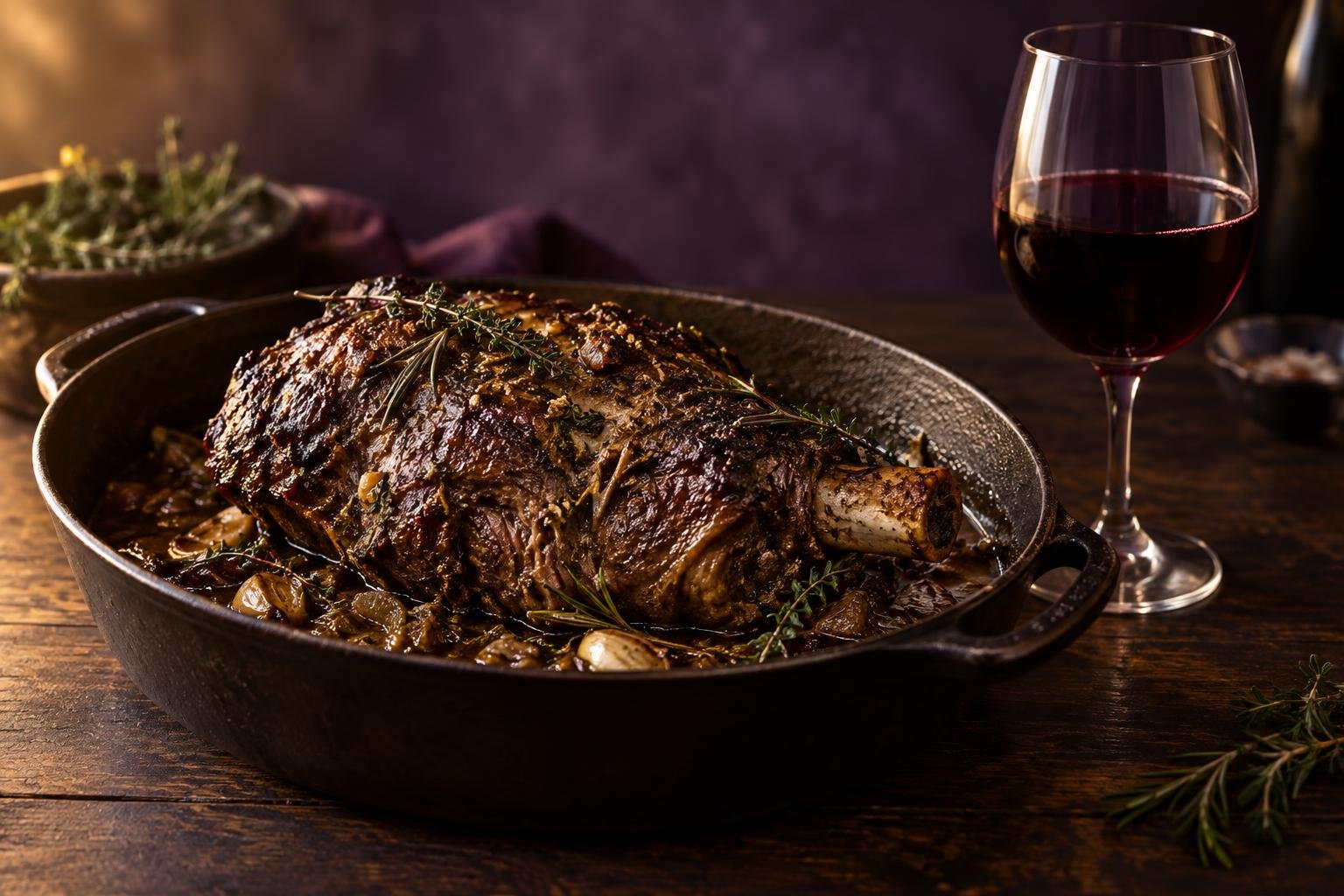
Goat needs a medium bodied red with soft tannin and good acidity. Grenache blends, Tempranillo and lighter Shiraz all work. The mistake most people make is reaching for a big structured red, because goat is one of the leanest meats you can buy and there is almost no fat in it to soften a wine.
Here is the more useful rule, though. Goat is almost never served plain. It arrives in a curry, a birria, a stew or a slow roast, and the sauce is louder than the meat. Pair the pot, not the goat.
Table of Contents
The Short Answer
- Grenache or a GSM blend for slow roasted or braised goat. Ripe fruit, gentle grip.
- Tempranillo for anything with tomato, smoke or paprika in it.
- Off dry Riesling for curry goat and anything with real chilli heat.
- Rose, served properly cold, for goat on the barbecue in summer.
Why Goat Is Not Just Small Lamb
The numbers explain the whole pairing. A 100 gram serve of cooked goat carries about 3 grams of fat, of which just under a gram is saturated, alongside 27 grams of protein and 143 calories, according to the United States Department of Agriculture figures. Cooked lamb shank has closer to 5.6 grams of saturated fat, and 80 per cent lean beef about 6.2 grams.
Fat is what tames tannin. It coats the tongue and blunts the grip, which is why a fatty lamb shoulder can handle a serious Cabernet. Goat gives the wine nothing to work with. Pour something big and tannic and it will taste dry, hard and slightly bitter, because there is no fat in the dish to meet it halfway. Our guide to tannins explains what is actually happening.
Goat is also stronger in flavour than lamb, with a mineral, faintly gamey edge. It needs a wine with enough fruit to stand up to that, which is why very light, delicate reds can vanish.
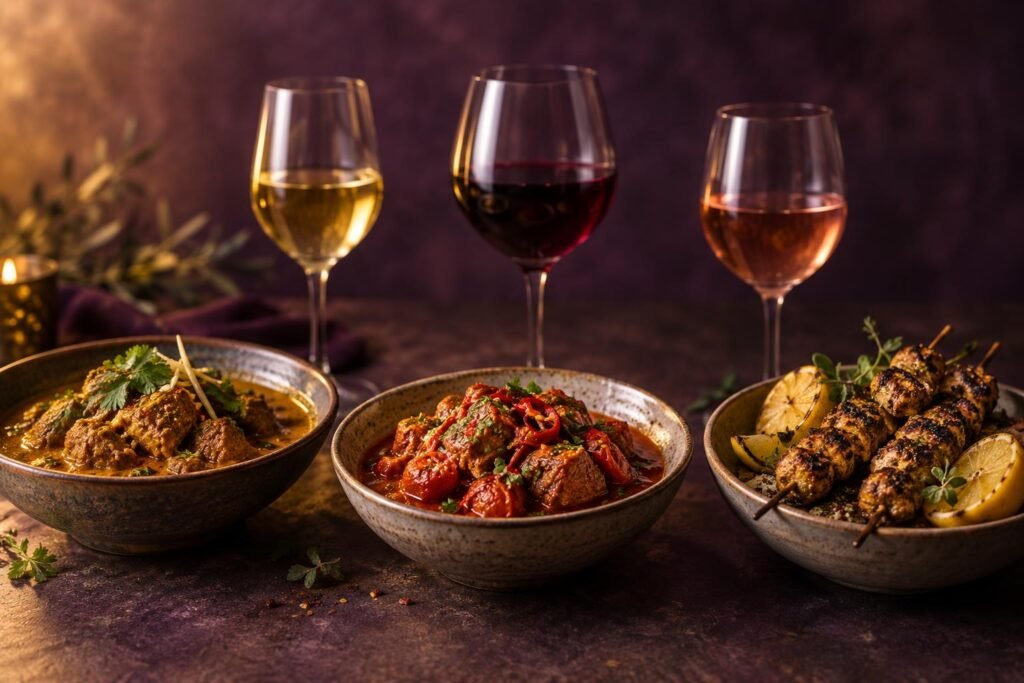
| How the goat is cooked | What dominates | What to pour |
|---|---|---|
| Slow roast or braise with herbs | Savoury depth, soft texture | Grenache, GSM, lighter Shiraz |
| Curry goat, Jamaican or Indian | Chilli heat, spice, coconut | Off dry Riesling, or a chilled Grenache |
| Birria or barbacoa with chilli and tomato | Smoke, mild heat, acidity | Tempranillo, Garnacha, Sangiovese |
| Greek style with lemon and oregano | Lemon acid, oregano, olive oil | Rose, Assyrtiko, a light unoaked red |
| Grilled chops or skewers | Char, salt, lean meat | Rose or a chilled medium red |
| Goat ragu with pasta | Tomato acid and long cooking | Sangiovese, Barbera, Montepulciano |
Best Wines for Goat Meat
Grenache and GSM blends
Raspberry and plum fruit, soft tannin, a warm spicy finish. This is the safest bottle for slow cooked goat, because the fruit fills the gap the missing fat leaves behind. McLaren Vale and the Barossa are the Australian heartland. More in our Grenache guide.
Tempranillo
Cherry, leather and a savoury dried herb note, with acidity that handles tomato and smoke. It is the natural match for Mexican and Spanish goat dishes, which is no accident, since the two grew up together. See our Tempranillo guide.
Off dry Riesling for curry goat
Chilli heat and alcohol are a bad combination, because alcohol makes capsaicin burn harder. A Riesling with a touch of sweetness cools the heat and its acidity keeps the coconut and spice from turning heavy. The same logic drives our tikka masala pairing and butter chicken pairing.
Lighter Shiraz
Not the 15 per cent barbecue monster. A cooler climate Shiraz from the Adelaide Hills, the Grampians or the Yarra Valley has pepper and freshness rather than sheer weight, and pepper suits goat well. Our Shiraz guide sorts the styles out.
Rose for summer goat
Grilled goat with lemon and oregano wants something cold and sharp. A dry Grenache rose does it, and so does a crisp Mediterranean white if nobody wants red. Serve it at fridge temperature, not cellar temperature.
What to Avoid
- Big tannic Cabernet Sauvignon. There is no fat in the meat to soften it, so it tastes hard.
- Heavy oak. Vanilla and toast fight the mineral edge in goat rather than flattering it.
- Very high alcohol reds with curry goat. Alcohol turns chilli heat up, not down.
- Delicate, pale reds. Goat has more flavour than lamb, and a wispy wine simply disappears.
Drink One Tonight

Fox Creek Postmaster McLaren Vale GSM 2021
Grenache brings the raspberry fruit, Shiraz adds the dark middle and Mourvedre puts a savoury edge on the finish. Together they give goat the generosity it needs without the tannin it cannot handle. Best with a slow roasted shoulder or a braise. Serve at about 16 degrees. Stock checked and available at the time of writing.
- Ripe fruit with soft tannin, which is exactly what lean meat wants
- GSM handles herbs, spice and slow cooking without a fight
- McLaren Vale Grenache is a genuine Australian strength
- Close to thirty dollars, so not an everyday bottle
- A little too fruity for a very lemony Greek preparation
Looking for Goat Cheese Instead?
Plenty of people land here wanting goat cheese, which is a completely different pairing. Fresh goat cheese is tangy, chalky and high in acid, and it wants a high acid white: Sauvignon Blanc above all, or a dry Loire style white. Aged goat cheese can take a light red. Our cheese and wine pairing guide covers it properly, and red wine with cheese handles the reds.
If You Are Cooking It
Goat punishes a hot, fast oven. Because it has so little fat, it goes from underdone to dry very quickly, and dry meat makes any wine taste harsher than it is. Cook it low and slow, in liquid, until it gives way under a fork.
Acid in the pot is your friend too. A squeeze of lemon, a splash of vinegar or tomatoes in the braise will lift the meat and meet the wine halfway. Season at the end rather than the start, because a long reduction concentrates the salt and salt is what turns tannin bitter.
Frequently Asked Questions
What wine goes best with goat meat?
A Grenache or GSM blend is the safest choice for slow cooked goat. It has ripe fruit and soft tannin, which suits a very lean meat. Tempranillo is better if the dish has tomato or smoked paprika, and an off dry Riesling is better with curry goat.
Can you drink red wine with goat curry?
You can, but choose carefully. Chilli heat and alcohol work against each other, so a lower alcohol, fruity red served cool is the way to go. A Riesling with a touch of sweetness is easier and usually tastes better.
Is goat meat like lamb for wine pairing?
Not really. Goat is far leaner, with roughly three grams of fat per hundred against lamb shank at more than five grams of saturated fat alone. Fat softens tannin, so goat needs a gentler red than lamb does.
What wine goes with goat cheese?
Sauvignon Blanc is the classic answer, because its sharp acidity matches the tang in fresh goat cheese. A dry Loire white or an unoaked Australian Sauvignon Blanc both work. This is a different pairing from goat meat, so do not use the same bottle for both.
What about white wine with goat meat?
It can work when the dish is lemony or herby rather than rich. Try a textured white with some weight, such as a Fiano or a Marsanne. For a heavy braise, a red is still the better answer.
Should the wine be chilled?
Lightly, yes. Medium reds are better at about 15 to 16 degrees, and rose should come straight from the fridge. A warm red next to a spicy braise tastes alcoholic.
Lean spiced meat off a spit is a different job again, and our guide to chicken shawarma wine pairing covers it.
This post contains affiliate links. If you buy through them we earn a small commission at no extra cost to you. It keeps the wine flowing and the reviews honest.