Heads up: this guide contains an affiliate link. If you buy through it we earn a small commission at no extra cost to you.
Lamb is the easiest red meat to match, because almost every classic red works. Cabernet Sauvignon for a roast, Pinot Noir for pink lamb, Tempranillo for anything grilled, Grenache or Shiraz for slow-cooked shoulder and shanks.
The reason lamb is so friendly is fat. Fat softens tannin, so a red that tastes firm on its own turns silky next to the meat. The only real question is which cut you are cooking, because a rack of lamb and a seven-hour shoulder want different things in the glass.
Table of Contents
The Short Answer
- Roast leg, cooked medium. Cabernet Sauvignon or a Cabernet blend. Cassis fruit, firm structure, enough acid to keep up.
- Rack or chops. Something with real tannin and bright fruit. Barolo, a Bordeaux blend, or a good Coonawarra Cabernet.
- Slow-cooked shoulder or shanks. Grenache, a GSM blend or a ripe Pinot Noir. Acidity to cut the sauce, sweet fruit to match the richness.
- Grilled lamb, skewers and kebabs. Tempranillo, every time. Rioja and grilled lamb is a thousand-year-old habit for a reason.
Serve reds at about sixteen degrees. Most Australian rooms run warmer, so give the bottle twenty minutes in the fridge before dinner.
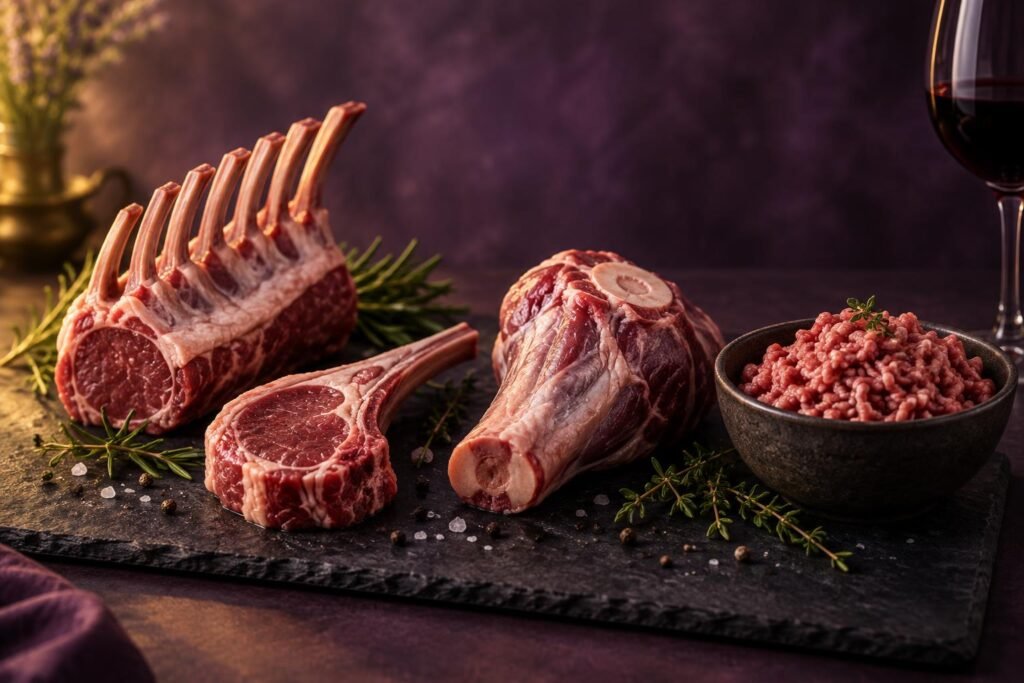
What Lamb Does to Wine
Lamb is rich and fatty, but its texture is more delicate than beef. Kathrine Larsen-Robert MS, head of wine for Europe at 67 Pall Mall, told Decanter that this combination makes acid structure the important thing, and that the body of the wine should follow the fullness of the cut: light to medium for gentler cuts, fuller for the big-flavoured ones.
There is also a chemical reason the pairing works so well. A study published in the Journal of Agricultural and Food Chemistry in 2021 found that lipids, the fatty molecules in meat and cheese, interact with tannins and reduce the drying, astringent feeling on the palate. In plain terms, a tannic red genuinely does taste smoother with lamb than it does on its own.
Then there is the gaminess. Older lamb and slow-cooked cuts taste more savoury, which suits earthy old-world wines. Young spring lamb is milder and sweeter, which suits lighter, fruitier reds. And whatever you put on the plate matters as much as the meat. Mint sauce, rosemary and garlic all point towards wines with a herbal streak. Redcurrant jelly adds sweetness. A yoghurt or feta sauce adds salt, which makes hard tannin taste harder.
Match the Cut, Not Just the Meat
Roast leg of lamb
The classic Sunday cut, usually served medium, with plenty of browned surface and a savoury depth. Cabernet Sauvignon is the standard answer: cassis fruit, tannic backbone, acidity to reset your palate between slices. Australian Cabernet often carries a minty note that echoes mint sauce, which is a happy accident. Look to Coonawarra and Margaret River at home, or Bordeaux, Hawke’s Bay and Stellenbosch abroad. Our Cabernet Sauvignon guide has the styles.
Rack of lamb and lamb chops
Meat close to the bone tastes stronger, and both cuts are firm and fatty. Larsen-Robert suggests a fuller structure here, a Pauillac for the rack, and for individual chops a juicy wine with strong tannin and fresh fruit, such as Barolo or Barbaresco. If Piedmont is out of budget, a young Coonawarra Cabernet or a firm Sangiovese does a similar job for a third of the price.
Slow-cooked shoulder and shanks
Hours in the oven make the meat sweet, sticky and rich, usually swimming in a reduced sauce. You need acidity to cut through it and fruit sweetness to keep up with it. A ripe New Zealand Pinot Noir does both. So does a Grenache blend from the southern Rhone or the Barossa, where the dried-herb character sits neatly beside rosemary and thyme. Start with the Grenache guide or the Pinot Noir guide.
Grilled lamb, skewers and kofta
Rioja built its reputation on lamb grilled over vine cuttings, and Tempranillo remains the safest bet for anything that has met a flame. Cherry fruit, a leathery savoury edge and enough acid to handle charred bits and salt. See the Tempranillo guide. For spiced lamb wraps, our shawarma pairing guide goes further.
Lamb mince, burgers and meatballs
Ground lamb that has been grilled is less gamey than a chop, and the bun, herbs and toppings soften everything further. Go a step lighter and fruitier: a GSM blend, a juicy Shiraz or a young Zinfandel. Full details in our guide to wine with lamb burgers.
Lamb curry and heavily spiced lamb
Chilli heat and tannin do not get along, and alcohol makes the burn worse. Drop the tannin and the alcohol: a soft Grenache served cool, a Crianza Rioja, or a properly off-dry white if the heat is serious.
What to Avoid
- Big oaky reds with mint sauce or redcurrant jelly. Sweet, sharp condiments strip the fruit out and leave the oak standing there on its own.
- Light, delicate whites and rosés with roast lamb. They vanish. Save them for the leftovers in a salad.
- Very tannic young reds with salty toppings. Feta, olives and anchovy make firm tannin taste bitter. Choose something softer.
- Anything overly sweet. Lamb is savoury, and sweetness next to savoury meat reads as strange unless there is real chilli heat to justify it.
Drink One Tonight

Murray Street Wines Greenock Estate Barossa Valley Cabernet Sauvignon 2020
undefined
- Estate fruit from two selected sections of the Greenock vineyard
- Cassis and cedar with the tannin a roast leg needs
- Six years old, so the edges have softened
- Too firm for a delicate spring lamb served rare
Around twenty-five dollars, and squarely aimed at a Sunday roast. The Barossa gives it ripe blackcurrant fruit, the Cabernet gives it the structure, and a few years in bottle have taken the sharp corners off. Decant it for half an hour if you can be bothered, or just open it before you put the lamb in. Stock checked and available on the day this was written.
If You Are Cooking It
Rest the meat. A leg of lamb needs fifteen to twenty minutes under foil before carving, and a rack needs about ten, because resting lets the juices settle back into the meat instead of running onto the board. Wine cannot rescue dry lamb.
If you are cooking with wine, use the same bottle you plan to drink, or at least something in the same family. And open the red early. Half an hour of air does more for a young Cabernet than any gadget, though the right glass still helps you smell it properly.
Frequently Asked Questions
Which wine pairs with lamb best overall?
Cabernet Sauvignon for a roast, Tempranillo for grilled lamb, Grenache or Pinot Noir for slow-cooked shoulder and shanks. If you want one bottle that covers most lamb dinners, a good Cabernet or a Rioja Reserva will not let you down.
Can you drink white wine with lamb?
With grilled or marinated lamb, yes. A full-bodied, textural white such as Greek Assyrtiko or an oaked Chardonnay stands up to garlic, herbs and char. With a rich roast or slow-cooked shoulder, white wine gets steamrolled.
Does red wine really taste smoother with lamb?
It does, and there is research behind it. Fatty molecules in meat bind with tannins and reduce the drying sensation on your palate, so a firm red feels softer with a mouthful of lamb than it does on its own.
What wine goes with mint sauce?
Mint sauce is sharp and sweet, which is hard on oaky reds. Choose something with fresh fruit and moderate oak: Australian Cabernet, which often has a minty note of its own, or a lighter Grenache. Keep the very oaky bottles for lamb without the sauce.
Does rosé work with lamb?
A full-bodied dry rosé, especially from Grenache or Shiraz, works nicely with grilled lamb, kebabs and Mediterranean-style dishes. Pale, delicate rosé is too light for anything roasted.
What temperature should red wine be with lamb?
Around sixteen degrees. Warmer than that and the alcohol dominates, which makes a big red taste heavy next to fatty meat. Twenty minutes in the fridge is usually enough.
This post contains affiliate links. If you buy through them we earn a small commission at no extra cost to you. It keeps the wine flowing and the reviews honest.