Heads up: this guide contains an affiliate link. If you buy through it we earn a small commission at no extra cost to you.
Chardonnay food pairing is easier than people make it sound, as long as you know which Chardonnay you are holding. A crisp, unoaked one wants seafood, salads and anything with lemon. A rich, buttery, oaked one wants roast chicken, creamy pasta and a lump of good cheese. Get that one question right and almost everything else falls into place.
That is the whole trick. Chardonnay is two wines wearing the same name badge, and the label rarely tells you which one is inside. This guide shows you how to tell, what to cook for each, and what to avoid, with a bottle at the end you can actually buy.
Table of Contents
The Short Answer
- Unoaked or lightly oaked Chardonnay (Chablis style, most Australian “cool climate” or “unwooded” bottles): grilled fish, prawns, oysters, sushi, chicken salad, goat’s cheese. Serve cold.
- Oaked, buttery Chardonnay (Margaret River, Yarra Valley, California style): roast chicken, creamy pasta, lobster with butter, pork with apples, brie and cheddar. Serve cool, not icy.
- Either style: corn on the cob, mushroom risotto, roast pumpkin, mild curries, popcorn. Chardonnay is the white that likes a bit of richness.
Which Chardonnay Do You Have?
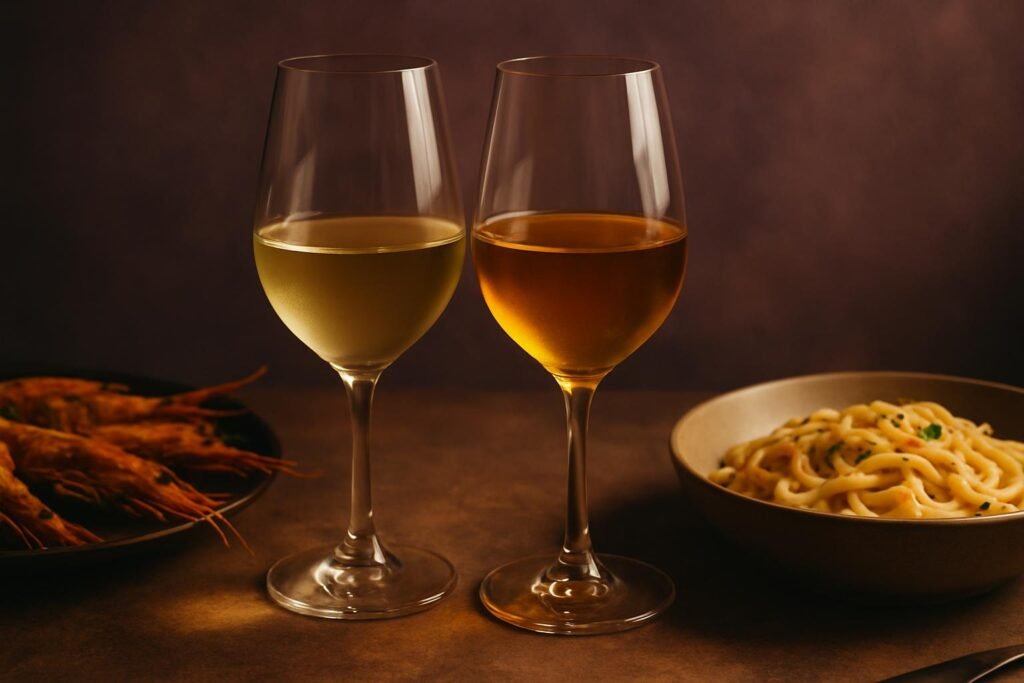
Look for three clues. The label: words like “unwooded”, “unoaked”, “cool climate”, “Chablis” or “steel fermented” mean the crisp style; “barrel fermented”, “reserve”, “buttery” or “rich” mean the oaked style. The region: Margaret River, the Yarra Valley and Napa lean rich and creamy; Tasmania, the Adelaide Hills and Chablis lean tight and citrusy. The colour: pale straw with a green tinge is usually unoaked; deeper gold usually means oak and a bit of age.
If you still cannot tell, taste it. Lemon, green apple and a zip of acid means crisp. Peach, vanilla, toast and a round, creamy feel means oaked. Our Chardonnay grape guide goes deeper on why the same grape can taste so different.
What Chardonnay Needs From Food
Chardonnay has moderate acidity, medium to full body and very little aromatic perfume, which makes it the most food-flexible white there is. What it wants is fat and texture to match its weight: butter, cream, olive oil, roasted flavours, and proteins with some richness. What it does not want is heat. Chilli flattens Chardonnay and turns the oak bitter, so keep the spice mild. Wine Australia puts chicken, pork, white fish, prawns, lobster and crab on chardonnay’s list of natural partners, and there is science underneath that. When researchers tested 64 wines against scallops they found that iron is what makes a wine taste fishy with seafood, and whites carry far less of it than reds.
Acid in the food is your friend with the crisp style (lemon on fish, a vinaigrette) and your enemy with the oaked style, where a sharp dressing makes the wine taste flabby. Sweetness is the other thing to watch: anything sweeter than the wine, from teriyaki glaze to a fruit salsa, makes a dry Chardonnay taste sour.
Best Food Pairings for Chardonnay
Roast chicken
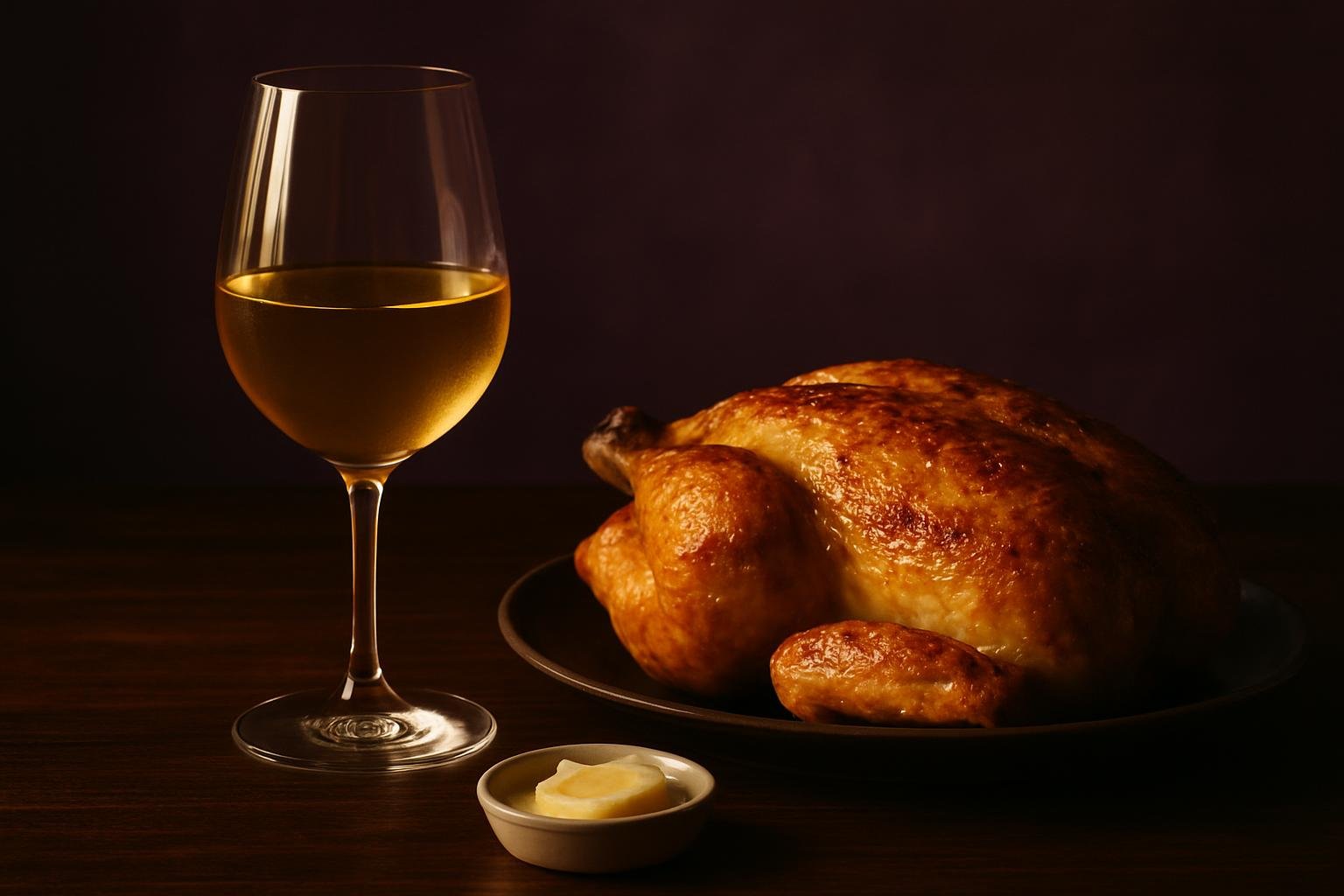
The classic, and for good reason. Crisp skin, buttery juices and herbs meet oaked Chardonnay’s toast and creaminess head on. With an unoaked bottle, add lemon and thyme to the bird and it works just as well. Our roast chicken pairing guide has the full run-down.
Seafood: prawns, lobster, scallops and white fish
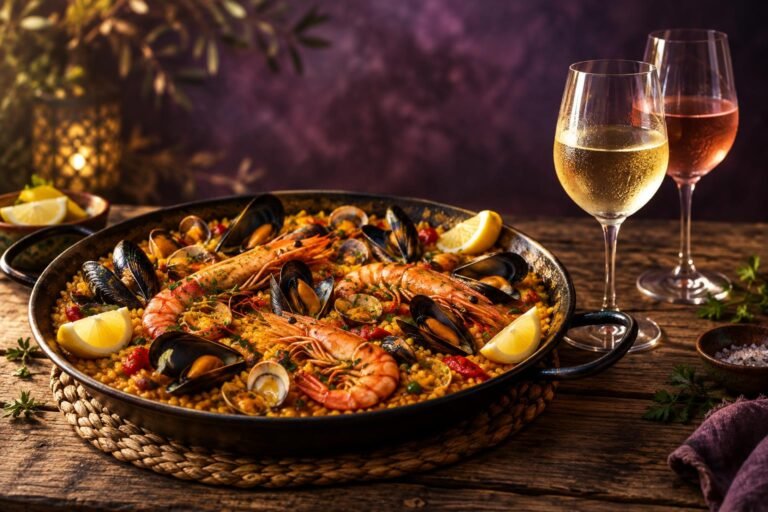
Butter-poached lobster and oaked Chardonnay is one of the great pairings in wine. Grilled prawns, barbecued snapper and scallops with a little brown butter all work. Keep it simple: crisp Chardonnay with lemon and herbs, oaked Chardonnay with butter and cream. Our guide to wine with salmon covers the richest fish of all.
Creamy pasta and risotto
Fettuccine alfredo, chicken alfredo, carbonara and mushroom risotto are made for oaked Chardonnay: cream meets cream, and the wine’s acid keeps the plate from feeling heavy. Avoid tomato-based sauces, which want a red.
Pork and veal
Pork chops with apple, a roast pork loin, veal in a cream sauce or a schnitzel with lemon. The apple and butter notes in the wine echo the plate. Our pork chop pairing guide has the details.
Cheese
Brie, camembert, triple cream, young cheddar, gruyère and a mild blue all suit Chardonnay. The softer and creamier the cheese, the more an oaked wine shines. Skip the sharp goat’s cheese with oaked bottles and pair it with the crisp style instead. See wine that pairs with cheese for the whole board.
Vegetarian dishes
Corn, pumpkin, cauliflower, mushrooms and sweet potato all have the natural sweetness and roasted flavour that Chardonnay loves. Try a roast pumpkin and sage pasta, a corn chowder, a mushroom pie or a cauliflower cheese. Mushrooms and wine is worth its own read.
Snacks
Popcorn with butter is the cheapest great Chardonnay pairing on Earth. Roasted almonds, cashews, potato crisps, a cheese and cracker plate, or a prawn cocktail all work for a Friday evening glass.
What to Avoid With Chardonnay
- Hot chilli: curry, Sichuan or hot wings. The heat makes oak taste bitter. Try a Riesling or an off-dry white instead.
- Sharp vinaigrettes and pickles with oaked bottles; the wine goes flat. Fine with crisp Chardonnay.
- Sweet sauces: teriyaki, honey glazes, sweet chilli. They make a dry Chardonnay taste sour.
- Tomato-heavy dishes: bolognese, pizza, ratatouille. Tomato acid fights the oak; pour a Sangiovese or a rosé.
- Red meat: a steak wants tannin. Save the Chardonnay for the chicken course.
Drink One Tonight

Voyager Coastal Margaret River Organic Chardonnay 2025
The bottle we would open for roast chicken, creamy pasta or a plate of prawns with garlic butter. Serve at 10 to 12 degrees, not fridge-cold.
- Margaret River, the Australian home of rich, food-friendly Chardonnay
- Certified organic from a family estate
- Oak in the background, not the foreground: works for both roast chicken and prawns
- Fair price for the region and the name
- If you only like the bone-dry, unoaked style, look to Tasmania or the Adelaide Hills instead
Serving Tips That Change the Pairing
Temperature matters more with Chardonnay than with any other white. Crisp styles like 8 to 10 degrees; oaked styles open up at 10 to 12, so take them out of the fridge twenty minutes before dinner. A wider glass helps the richer styles breathe; our wine glasses roundup has options. And a 150 ml glass of 13% Chardonnay is about 115 calories, if you are counting; the wine calorie calculator will do the sums for any pour.
Frequently Asked Questions
What food goes best with Chardonnay?
Roast chicken, buttery seafood like lobster and prawns, creamy pasta, pork with apples and soft cheeses. Unoaked Chardonnay leans towards lighter seafood and salads; oaked Chardonnay towards richer, creamier dishes.
Does Chardonnay go with cheese?
Very well. Brie, camembert, triple cream, young cheddar and gruyère are the best matches. Sharp goat’s cheese suits the crisp style; creamy cheeses suit the oaked style.
What dessert pairs with Chardonnay?
Dry Chardonnay struggles with sweet desserts because the sugar makes it taste sour. Cheese instead of dessert works, as does a fruit tart with very little sugar. For proper dessert, switch to a late-harvest wine.
Does Chardonnay pair with spicy food?
Only mild spice. Chilli heat clashes with oak and alcohol. A mild butter chicken or a coconut curry can work with unoaked Chardonnay; anything hotter wants an off-dry Riesling or Gewürztraminer.
What is the difference between oaked and unoaked Chardonnay for pairing?
Oaked Chardonnay is richer, creamier and toastier, so it pairs with butter, cream and roasted flavours. Unoaked is crisper and more citrusy, so it pairs with grilled seafood, salads and lemon. Same grape, two different dinners.
Should Chardonnay be served cold?
Cool, not icy. Around 8 to 10 degrees for unoaked, 10 to 12 for oaked. Straight from a cold fridge mutes the flavours that make the pairing work.
Saving room for dessert? Our cheesecake wine pairing guide covers which sweet sparkling or late-harvest wine to pour once the plates are cleared.
Chardonnay also handles a creamy curry better than most reds, which is why it turns up in our butter chicken wine pairing guide.
This post contains affiliate links. If you buy through them we earn a small commission at no extra cost to you. It keeps the wine flowing and the reviews honest.