Heads up: this guide contains an affiliate link. If you buy through it we earn a small commission at no extra cost to you.
Cedar plank salmon wants a wine that can handle smoke as well as fish. A light, cool-climate Pinot Noir is the best all-round answer, with a lightly oaked Chardonnay or a dry rosé close behind. Save the razor-sharp Sauvignon Blanc for plain poached salmon.
Here is the thing most pairing guides miss. You are not really matching salmon. You are matching a smoked, slightly resinous, gently steamed piece of fish, and the plank is doing at least half the cooking. That changes the wine.
Table of Contents
The Short Answer
- Pinot Noir, served cool. Red cherry fruit, low tannin, enough savoury edge to meet the smoke. Chill it for twenty minutes and it will not bully the fish.
- Lightly oaked Chardonnay. The oak echoes the cedar, and the texture stands up to salmon fat. Heavy, buttery styles are too much.
- Dry rosé with real flavour. Grenache or Pinot Noir rosé, properly cold. The summer choice when the barbecue is already going.
- Traditional method sparkling. Bubbles scrub the oil away and the toasty note sits happily beside the char.

What Cedar Planking Does to the Fish
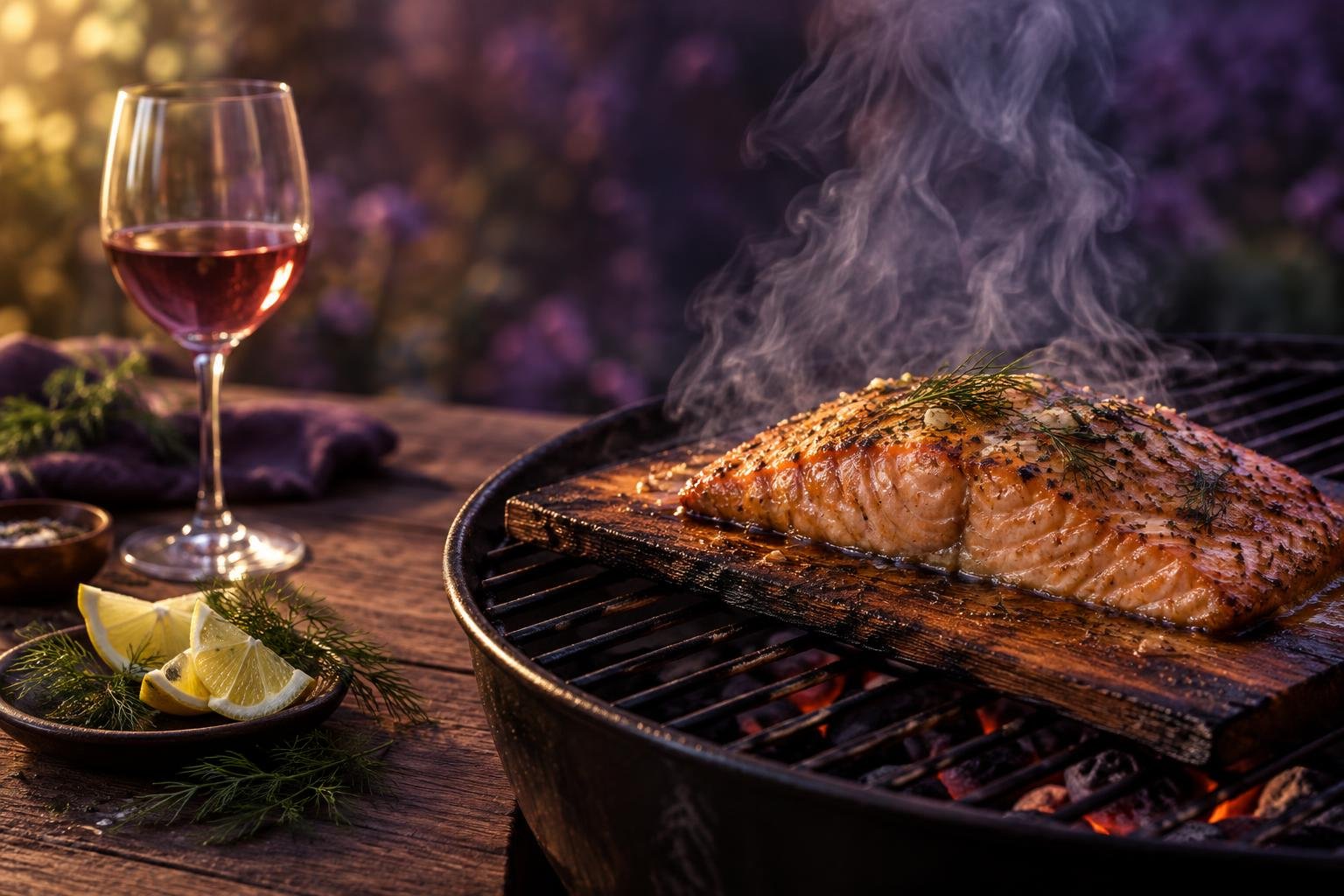
Planking is a wet cooking method pretending to be a dry one. The plank is soaked for one to two hours first, in water or, as The Kitchn suggests, in wine, sake or cider. It then sits over medium indirect heat, around one hundred and seventy-five degrees, and the fish steams gently while the wood chars underneath.
So you get three things at once. Smoke and toasty char from the burning cedar. A soft, woody, faintly sweet resin note that plain grilling never gives you. And salmon that stays moist rather than drying out, because it is essentially steaming the whole time.
Salmon is also an oily fish, which is why it can take a red wine at all. That oil coats the palate, so the wine needs either acid or bubbles to clear it. What the wine must not have is heavy tannin, because tannin plus oily fish is the pairing that gives people the metallic taste they complain about.
Add smoke and the picture sharpens further. Smoke amplifies oak and bitterness. A big oaky white next to a smoky fish tastes like licking the barbecue lid.
Best Wines for Cedar Plank Salmon
1. Pinot Noir (the safest and the best)
This is the pairing that makes people say wine and food matching is real. Pinot Noir has red cherry and berry fruit, bright acid and almost no tannin, plus a savoury, earthy undertone that meets the smoke rather than fighting it. Cool-climate examples from Tasmania, the Yarra Valley, Mornington or New Zealand suit best, because they keep their acid. Serve it cool, about fourteen degrees. Our Pinot Noir guide has the regions.
2. Lightly oaked Chardonnay
Chardonnay has the weight to sit beside salmon fat, and a touch of oak lines up neatly with the cedar. The trick is restraint. A modern Australian Chardonnay with subtle oak and taut acid works beautifully; an old-fashioned buttery blockbuster turns the whole plate into a woodpile. The Chardonnay guide explains the styles.
3. Dry rosé
A rosé with actual flavour, made from Grenache, Shiraz or Pinot Noir, gives you red fruit and acid without a scrap of tannin. It is the easiest bottle to hand around at a barbecue, and it is very good with a lemon and dill treatment on the fish.
4. Traditional method sparkling
Bubbles clear oil better than anything. A dry sparkling with some bottle age also brings a toasty, bready note that sits well with char. Australian traditional method or a good Cava both work, and the Prosecco and Cava guide explains why Prosecco is the weaker choice here.
5. Gamay or a chilled light red
If Pinot Noir is not on the shelf, Gamay does the same job for less money: red fruit, crunchy acid, no grip. Serve it properly cold. Any light red you would happily chill is worth a try.
What to Avoid
- Big tannic reds. Cabernet or Shiraz with oily fish is the classic mistake, and it is the one that leaves a metallic taste.
- Heavily oaked, buttery Chardonnay. Smoke plus heavy oak equals bitterness. Keep the oak light.
- Lean, aggressive Sauvignon Blanc. Lovely with plain salmon and asparagus, out of its depth against smoke. If you love it, choose a riper, textured style rather than a screeching one. See the Sauvignon Blanc guide.
- Sweet wines. The cedar already brings a soft sweetness. Adding more makes the fish taste flat.
- Anything served too warm. Warm red wine and smoky fish is a rough evening.
Drink One Tonight

42 Degrees South Pinot Noir
The name is Tasmania’s central latitude, which is a neat way of saying cool climate. Expect red cherry and blackcurrant aromas, mixed red berry fruit and gentle tannins, which is exactly the shape of wine cedar plank salmon needs. The label also took the Tasmania Trophy for its 2024 Pinot at the 2025 Australian Pinot Noir Challenge, so this is not a random shelf pick. Twenty minutes in the fridge before you pour. Stock checked and available on the day this was written.
- Cool-climate Tasmanian Pinot, the natural partner for smoky salmon
- Red cherry and berry fruit with soft acid and delicate tannins
- From Frogmore Creek in the Coal River Valley, a proper Pinot address
- Around thirty-two dollars, so not the cheapest bottle on this list
If You Are Cooking It
Soak the plank properly. One to two hours, fully submerged, or it will burn instead of smoulder and you will get bitterness instead of smoke. Soaking it in a splash of white wine or cider adds a layer of flavour, and the heat is low enough that the alcohol will not catch.
Cook over medium indirect heat with the lid down and start checking at about twelve minutes. The salmon is done when it is evenly pink through the middle. When you lift it off, the skin usually stays stuck to the plank, which saves you a job. Keep a spray bottle of water nearby in case an edge of the plank flares.
One last tip: pour the wine before the fish goes on. Twelve minutes is not long enough to chill a bottle, and temperature matters more here than the glass you use.
Frequently Asked Questions
What is the best wine for cedar plank salmon?
A cool-climate Pinot Noir served slightly chilled. It has the red fruit and savoury depth to meet the smoke, and almost no tannin, so it will not clash with the oily fish. A lightly oaked Chardonnay is the best white alternative.
Can you drink red wine with salmon?
Yes, as long as the red is light and low in tannin. Salmon is oily and full-flavoured enough to handle Pinot Noir, Gamay or a chilled light red. Big tannic reds are the ones to skip, because tannin and fish oil together taste metallic.
Does the cedar plank change the wine pairing?
It does, and it is the main reason this dish is different from plain grilled salmon. The plank adds smoke and a soft, resinous, slightly sweet woodiness. That pushes you towards wines with savoury depth or gentle oak and away from very crisp, lean whites.
What if the salmon has a sweet glaze?
Maple, honey or teriyaki glazes add sugar, and sugar makes a dry wine taste sharper. Go a step riper and rounder: a fruity Pinot Noir, a dry rosé with weight, or a Chardonnay with a little more flesh. Our guide to wine with miso covers the same savoury-sweet problem.
Does Sauvignon Blanc work with cedar plank salmon?
It is not the first choice. Lean, herbaceous Sauvignon Blanc gets swamped by smoke. If it is what you have, pick a riper, more textured example and add lemon to the fish so the two meet in the middle.
What temperature should the wine be?
About fourteen degrees for the Pinot Noir and around ten for the whites and rosé. In practice that means the red gets twenty minutes in the fridge and the white comes out of the fridge ten minutes before you pour.
This post contains affiliate links. If you buy through them we earn a small commission at no extra cost to you. It keeps the wine flowing and the reviews honest.