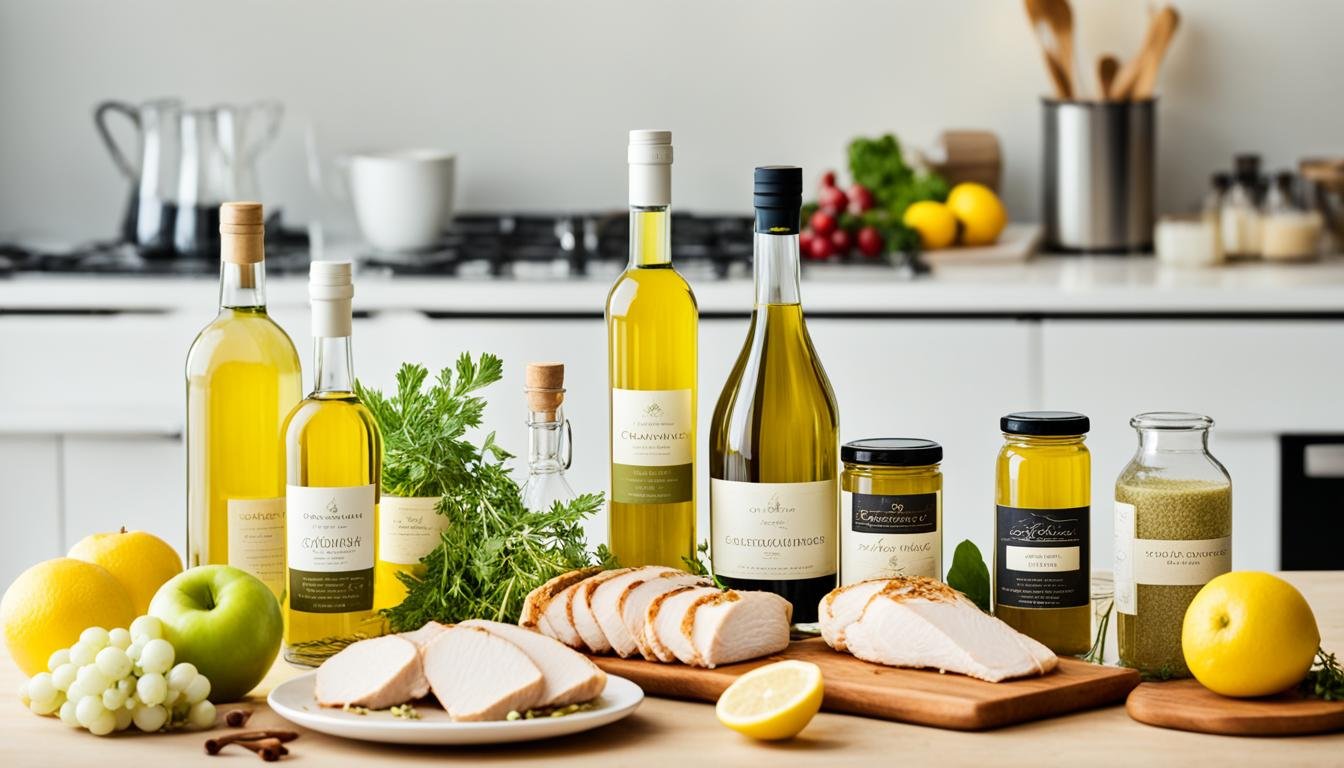
The best dry white wine substitute for cooking is dry vermouth, used one for one. If you do not have that, use chicken or vegetable stock with a squeeze of lemon. Both give you the acidity and savoury depth that white wine brings to a pan, and neither needs a trip to the bottle shop.
Here is the whole answer in one table, then the detail on each option.
| Substitute | How much for 1 cup (250 ml) of wine | Best for |
|---|---|---|
| Dry vermouth | 1 cup, no changes | Everything: risotto, pan sauces, seafood, chicken |
| Chicken or vegetable stock + lemon | 1 cup stock + 1 tablespoon lemon juice | Braises, soups, deglazing |
| White wine vinegar + water | 2 tablespoons vinegar + the rest water | Deglazing, sharp sauces |
| Lemon juice + water | ¼ cup lemon juice + ¾ cup water | Fish, light sauces |
| Non-alcoholic white wine | 1 cup, no changes | Anywhere you would use wine |
| White grape or apple juice + vinegar | ¾ cup juice + 2 tablespoons vinegar | Sweeter dishes, glazes |
Table of Contents
- What dry white wine actually does in a recipe
- 1. Dry vermouth: the substitute that is actually better
- 2. Stock and lemon: the one you already have
- 3. Vinegar and water: for deglazing
- 4. Lemon juice and water: for fish
- 5. Non-alcoholic wine: the closest flavour
- 6. Juice and vinegar: last resort
- Which substitute for which dish
- Two mistakes to avoid
- Frequently asked questions
What dry white wine actually does in a recipe
Three things. It adds acidity, which brightens rich food the way lemon does. It adds a savoury, slightly fruity background flavour that stock alone does not have. And it deglazes: when you pour it into a hot pan, it lifts the browned bits off the bottom and turns them into sauce.

Any substitute has to cover at least the first and third of those. That is why plain water fails (no acid, no flavour) and why the options below are ranked the way they are.
1. Dry vermouth: the substitute that is actually better
Dry vermouth is white wine that has been fortified to about 18% alcohol and flavoured with herbs. In a pan it behaves exactly like dry white wine, and America’s Test Kitchen’s tasters found sauces made with it were only “a little sweeter and more herbal” than the wine versions. The real win is that an open bottle keeps in the fridge for months, where an open white wine is dead within a week.
Use it one for one. It is a touch sweeter than most dry whites, so if the dish is delicate, hold back a tablespoon and add a squeeze of lemon. Keep a bottle of Noilly Prat or Dolin in the fridge door and you will never be caught out again. Our vermouth guide covers which one to buy.
2. Stock and lemon: the one you already have
Chicken or vegetable stock gives you the savoury depth; lemon gives you the acid. Use a cup of stock for a cup of wine and add a tablespoon of lemon juice. Salt-reduced stock is safer because the wine you are replacing had no salt in it, and you will be reducing the sauce.

This works in braises, soups, stews and anything with a long cook. It is a bit flat in a quick pan sauce for fish, where the wine’s fruit would normally show; add a second squeeze of lemon at the end.
3. Vinegar and water: for deglazing
White wine vinegar or apple cider vinegar diluted with water gives you the acid and the deglazing power. The old rule of half vinegar, half water is too sharp; two tablespoons of vinegar topped up to a cup with water is closer to the acidity of wine. Taste before you add more.
Best for deglazing a pan after searing chicken or pork. Not great in risotto, where you will taste the vinegar.
4. Lemon juice and water: for fish
A quarter cup of lemon juice with three quarters of a cup of water. It is the brightest option and suits fish, prawns and anything Mediterranean. Too much and the dish tastes of lemon rather than dinner, so start with less and add.

5. Non-alcoholic wine: the closest flavour
If you are avoiding alcohol altogether, a non-alcoholic dry white does the same job as the real thing. Use it one for one. It will be slightly sweeter and a little less complex, so a squeeze of lemon helps. We have tasted our way through the local options in our guide to the best non-alcoholic wines in Australia.
6. Juice and vinegar: last resort
White grape juice or apple juice with two tablespoons of vinegar per three quarters of a cup of juice. It covers the acid and adds fruit, but it is sweet, so it only suits dishes that can handle it: glazed pork, a sweet and sour sauce, some Asian dishes. Skip it for risotto or seafood.
Which substitute for which dish
| Dish | Use | Avoid |
|---|---|---|
| Risotto | Dry vermouth, or stock and lemon | Vinegar, juice |
| Pan sauce for chicken or pork | Dry vermouth, or vinegar and water | Juice |
| Fish, prawns, mussels | Dry vermouth, or lemon and water | Stock alone |
| Braises, stews, soups | Stock and lemon | Lemon and water (too thin) |
| Cream sauces | Dry vermouth, or non-alcoholic wine | Vinegar (can split the cream) |
| Steamed clams or mussels | Dry vermouth, or non-alcoholic wine | Juice |
Two mistakes to avoid
Do not use “cooking wine” from the supermarket. It is loaded with salt and tastes like it. Any drinkable dry white at $10 is better, and dry vermouth is better still.
Do not use a sweet wine. Moscato, a sweet Riesling or a cask “fruity white” will make the dish taste like dessert. If sweet is all you have, add a tablespoon of vinegar to a cup of it. And if you want to understand why some whites are sweet and others are not, that is residual sugar, and we have a short guide to it.
Frequently asked questions
Can I just leave the wine out?
You can, but replace the liquid with stock and add a squeeze of lemon, otherwise the dish will be flat and the sauce will be thin.
Can I use red wine instead of white?
In a dark braise, yes. In a cream sauce, risotto or anything with fish, no; it turns the dish purple and tastes heavier.
Does the alcohol cook off?
Most of it, but not all. A sauce simmered for a few minutes keeps a fair share of its alcohol; a stew cooked for two hours keeps very little. If you need zero alcohol, use stock, lemon or a non-alcoholic wine.
Is dry vermouth the same as dry white wine?
No, but it is close enough to cook with. It is white wine that has been fortified and flavoured with herbs, which is why it lasts so much longer once open.
What if the recipe says “dry white wine or vermouth”?
Use the vermouth. The recipe writer already knows it works, and you will have some left for the next time.