Heads up: this guide contains an affiliate link. If you buy through it we earn a small commission at no extra cost to you.
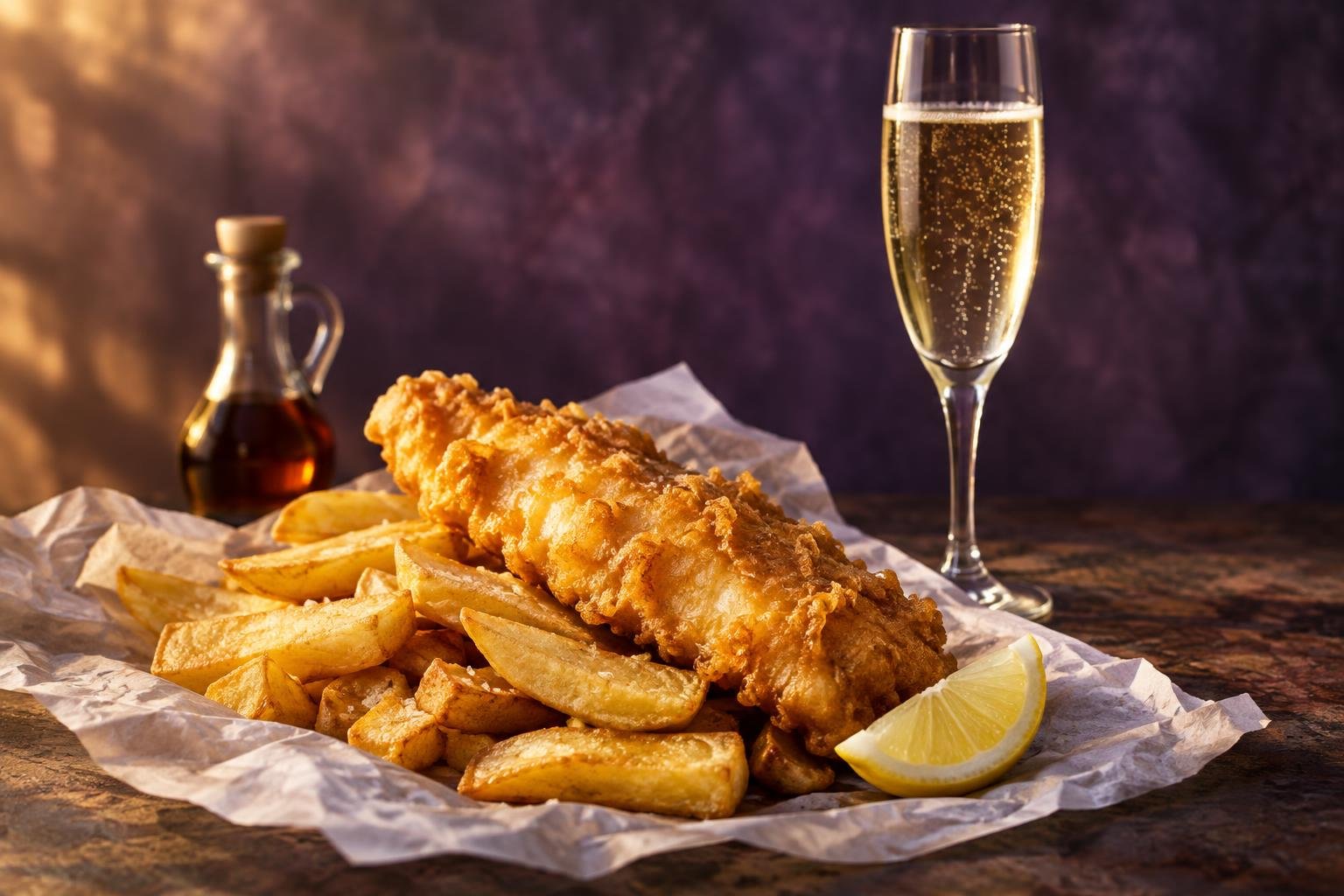
Sparkling wine first, then a bone-dry Riesling, then an unoaked coastal white. If you want one bottle for a Friday night parcel of fish and chips, make it a proper traditional-method sparkling and pour it cold.
Here is the thing nearly every fish and chips pairing guide gets wrong. You are not pairing wine with fish. You are pairing it with hot oily batter, a fistful of salt and a slug of malt vinegar, and the fish is a passenger. Once you look at the plate that way the answer stops being a guess.
Table of Contents
The Short Answer
- Traditional-method sparkling. Bubbles and high acidity scrub the oil off your tongue between bites. Serve it properly cold, about 6 to 8 degrees.
- Dry Riesling. The only white with enough acidity to stand next to vinegar without going limp. Clare Valley or Eden Valley. Serve at about 8 degrees.
- Unoaked coastal white. Albarino, Vermentino or a crisp Picpoul. Built for fried seafood, light enough to stay out of the way.
What Fish and Chips Does to Wine
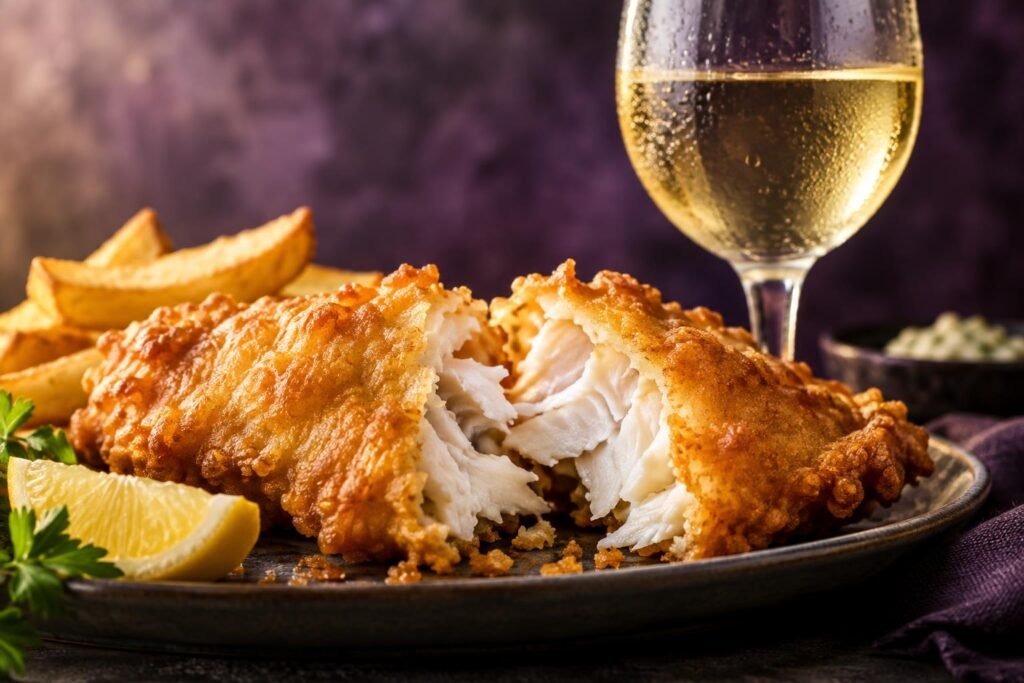
The crust is the problem and the crust is the opportunity. Food scientists who have measured oil uptake in battered, crumbed fish found the total fat sitting somewhere between eleven and fourteen per cent of the finished piece depending on the frying oil, and that most of the oil goes in on the way out of the fryer, not in it. As the food cools the pressure inside drops and it pulls surface oil inwards, an effect the researchers describe as a vacuum effect that accounts for about two thirds of the final fat. Nearly all of it stays in the crust rather than the fish. So the wine is working on a salty, oily shell.
| On the plate | What it does | What the wine needs |
|---|---|---|
| Fried batter | Coats the mouth with oil that mostly sits in the crust | High acidity or bubbles to reset the palate |
| Salt | Sharpens tannin into bitterness, dulls sweetness | A white or a sparkling, almost never a big red |
| Malt vinegar | Out-acids most wine and makes it taste flat | A wine with acidity of its own, the higher the better |
| Hot chips | More oil, more salt, more starch | Something cold and refreshing, not warm and rich |
| Mild white fish | Delicate, easily bullied | Low oak, low alcohol, no heavy fruit |
| Tartare sauce | Adds egg fat, capers and more acid | Crisp and dry, nothing sweet |
Best Wines for Fish and Chips
Sparkling wine, the one that never misses
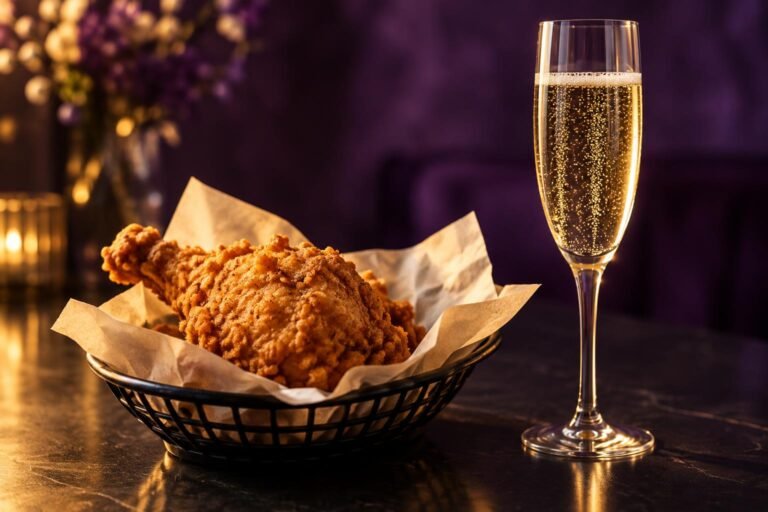
Bubbles do two jobs at once. They physically lift oil off your tongue, and the acidity in a traditional-method sparkling is high enough to survive the vinegar. This is the pairing that turns a paper parcel on a beach into an occasion, for about the price of a bottle of anything else. Note that Prosecco is softer and a bit fruitier here. Our Prosecco and Cava explainer covers why the method changes the texture.
Dry Riesling, for the vinegar drinkers
If you drown your chips in vinegar, most wines are finished before they start. Dry Australian Riesling is the exception, because it carries so much natural acidity that the vinegar stops being a threat and starts being a friend. Clare Valley gives you lime and steel, Eden Valley is a little more floral. Both are bone dry despite what people assume. The Riesling guide has the full picture.
Albarino and other Atlantic whites
Spain and Portugal have been drinking these with fried seafood for a very long time, and it shows. High acidity, a saline edge, no oak and modest alcohol. Albarino is the obvious one, Vermentino from the Adelaide Hills does the same job, and Portuguese Vinho Verde is the cheap cheerful version with a faint prickle of gas.
Chablis-style Chardonnay, if you want something serious
Unoaked or barely oaked Chardonnay with real acidity works nicely with grilled or crumbed fish and stands up to tartare sauce. Skip anything buttery and golden. The oak that makes a Chardonnay feel luxurious with roast chicken makes it feel heavy and tired next to hot chips.
Rosé, for the mixed table
A properly dry rosé is the peacemaker when half the table wants red. It has enough acidity for the batter and enough body for the potato scallops, and nobody has to compromise. Keep it pale and dry. A sweet pink wine plus salt is a rough night.
What to Avoid
- Big reds. Salt makes tannin taste bitter and metallic, and oily batter makes it worse. Save the Shiraz.
- Oaked Chardonnay. Butter on butter. It goes flabby within two bites.
- Anything sweet. Sugar plus salt plus vinegar is a confusing mouthful.
- Warm wine. This is hot fried food. Your wine needs to be genuinely cold or it will taste heavy.
- High alcohol. Anything over about fourteen per cent starts to feel hot and tiring next to fried food. If you want to know what that costs you, the wine calorie calculator will tell you.
Drink One Tonight
Australian traditional-method sparkling made from Pinot Noir and Chardonnay is the sweet spot: real bubbles, real acidity, and it costs less than the Champagne you were not going to buy for a takeaway anyway.

Grant Burge Pinot Noir Chardonnay Sparkling
A dry Australian sparkling from the two classic sparkling grapes. Serve it at about 6 to 8 degrees, straight out of an ice bucket if you can. Stock checked on the day this guide went live.
- Fine bubbles lift the oil straight off the palate
- Dry and crisp enough to handle vinegar
- Barossa producer with a long track record
- Needs to be genuinely cold, not fridge-door cold
- Not the wine if you have drenched everything in vinegar
If You Are Buying It
One thing worth knowing at the counter. If your shop sells flake, that is shark, usually gummy shark. Under the Australian Fish Names Standard only gummy shark and a related New Zealand species should be sold under that name, but as researchers writing in The Conversation explain, the standard is voluntary and country of origin labelling does not cover cooked meals, so what is in the batter varies. It does not change the wine, but it is worth asking. And for the wine itself: ask for the fish grilled if you want to drink something more delicate, because take the batter away and you are suddenly pairing with the fish after all. Our guides to salmon and cod cover that version. A decent glass helps too, and the glasses roundup has cheap ones that work.
Frequently Asked Questions
What is the best wine with fish and chips?
A dry traditional-method sparkling wine. The bubbles and acidity cut through fried batter better than anything else, and it suits both the fish and the chips.
Can you drink red wine with fish and chips?
You can, but it is the hard road. Salt makes tannin taste bitter, so if you must have red, pick a light, low-tannin one like Gamay or a chilled Pinot Noir and serve it cool.
Does vinegar ruin wine pairing?
It makes it harder. Vinegar is more acidic than most wine, so a soft low-acid white tastes flat straight after a mouthful. Dry Riesling or sparkling wine survives it best.
What wine goes with battered fish but no chips?
Same answer, slightly lighter. The batter is still doing the work, so an unoaked coastal white like Albarino or Vermentino is ideal.
Is Prosecco good with fish and chips?
It works and it is cheap and cold, which counts for a lot. It is softer and fruitier than a traditional-method sparkling, so it fades a bit faster against vinegar.
What about beer-battered fish?
No change. The beer in the batter mostly leaves as steam. You are still pairing to oil and salt, so keep the wine crisp and cold.
This post contains affiliate links. If you buy through them we earn a small commission at no extra cost to you. It keeps the wine flowing and the reviews honest.