Heads up: this guide contains an affiliate link. If you buy through it we earn a small commission at no extra cost to you.
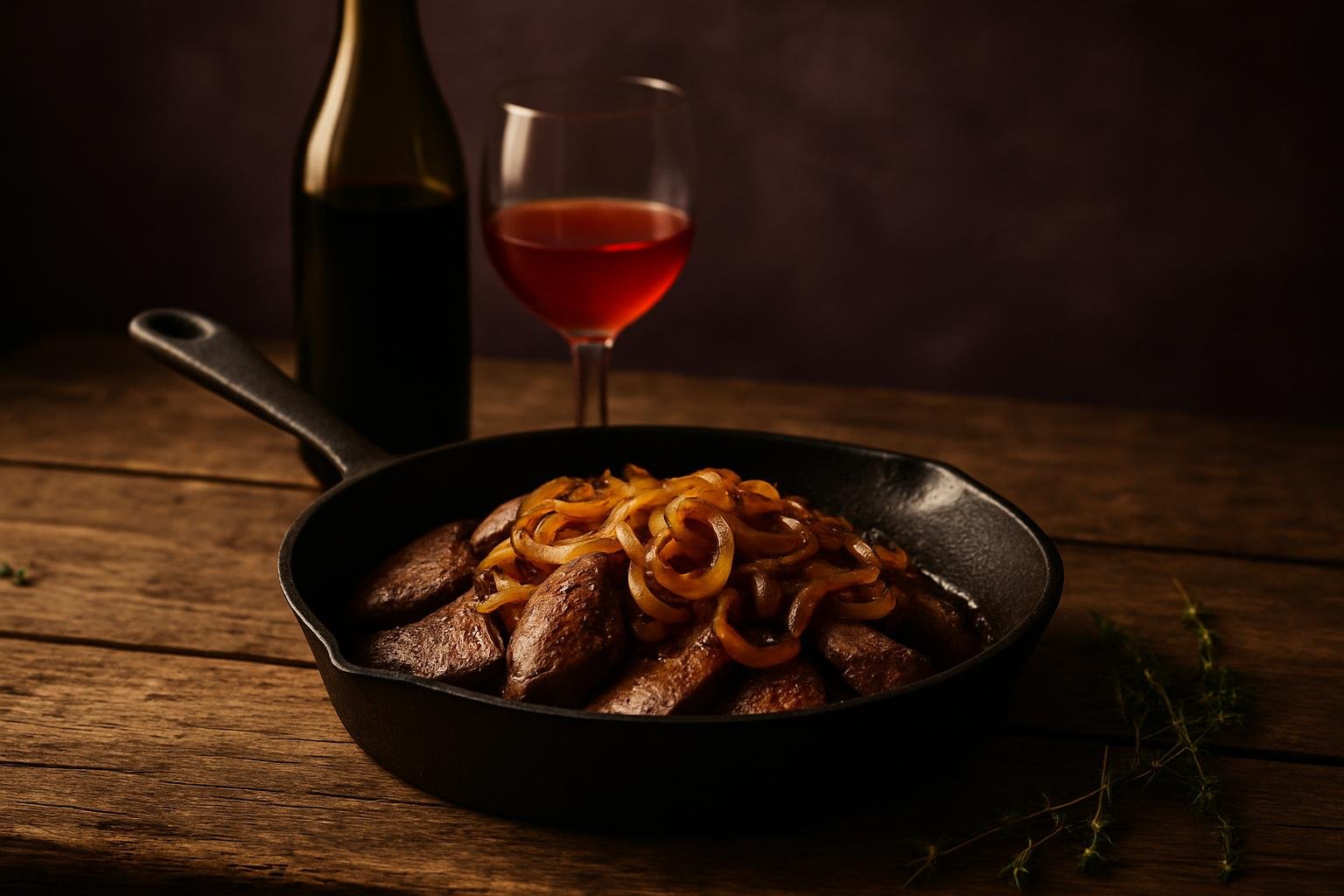
Liver and onions wants a light, juicy red with high acidity and almost no tannin. Gamay is the best answer, with Pinot Noir and Loire Cabernet Franc just behind. Serve it cool, around 14 to 15 degrees, and leave the big Shiraz in the rack.
The reason is iron. Liver is one of the most iron-dense things you can put on a plate, and iron is the single mineral that makes wine turn metallic in your mouth. Get that one thing right and the rest of the pairing more or less takes care of itself.
Table of Contents
The Short Answer
- Gamay (Beaujolais, or Orange and the Adelaide Hills at home). Bright red fruit, sharp acidity, barely any tannin. It slides past the iron instead of arguing with it.
- Pinot Noir. Earthy and light-framed, and the savoury note sits nicely beside offal.
- Cabernet Franc from the Loire. Chinon or Bourgueil. Leafy, peppery and high in acid, the traditional French answer to organ meat.
Serve all three at about 14 to 15 degrees, so half an hour in the fridge. This is one of the few red pairings where a proper chill genuinely improves things, because cold keeps the fruit tight and stops the alcohol pushing forward.
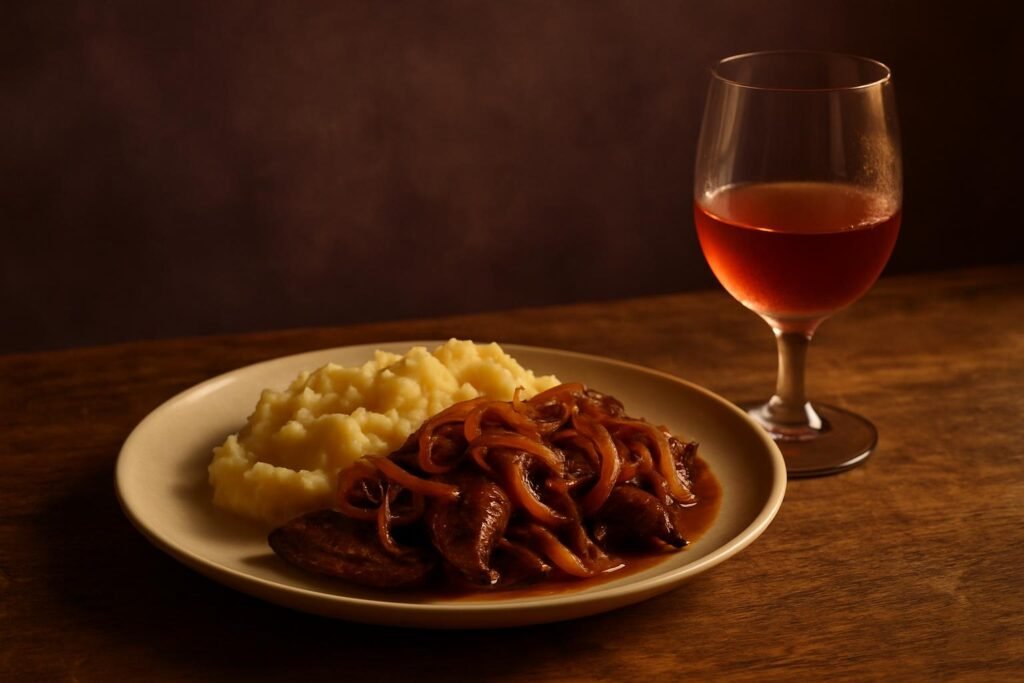
What Liver and Onions Does to Wine
- Iron, in large amounts. Liver carries roughly 23 milligrams of iron per 100 grams, well over a full day’s worth. Iron is what turns a mouthful of wine faintly metallic, so the wine needs to be gentle enough not to add to the problem.
- A mineral, faintly bitter edge. That is the taste people either love or refuse. Tannin makes it worse, because tannin reads as bitterness too.
- Sweetness from the onions. Properly caramelised onions are genuinely sweet, and that sweetness is your friend. It gives a fruity red something to hold on to.
- Fat and salt. Usually bacon, butter or a pan gravy. Both need acidity to cut through, which is the same job acidity does beside bacon.
- Softness all the way through. Nothing on the plate has any bite, so the wine has to supply the lift.
The Iron Problem, and What We Actually Know
Most pairing advice waves at “minerality” and moves on. There is real research underneath it, though it was done on scallops rather than liver, so we will be straight about what it does and does not show.
In 2009, Takayuki Tamura and colleagues published a study in the Journal of Agricultural and Food Chemistry in which tasters worked through 38 red wines and 26 whites while eating scallops. The wines with more iron in them produced a stronger fishy, metallic aftertaste, and when the researchers bound up that iron, the aftertaste faded. Iron content varied by country, grape and vintage.
So the study is about iron in the wine meeting fats in the food, not about iron in the food. The transferable lesson still holds up: iron and wine are a bad-tempered pair, and heavy, extracted reds are the ones most likely to bring iron of their own to a plate that already has plenty. Light, high-acid reds are the safer bet, and that matches what cooks have done with offal for a very long time.
Best Wines for Liver and Onions
Gamay
The best all-round answer. Gamay gives you red cherry and raspberry, sharp acidity and tannin so soft you barely notice it, which is exactly the shape this dish wants. Beaujolais is the home of it, and Australia now makes very good versions in cooler spots like Orange and the Adelaide Hills. Chill it properly and it will handle both the iron and the sweet onions without breaking a sweat.
Pinot Noir
A slightly more serious version of the same idea. Look for a lighter, earthier style rather than a big oaky one, because the savoury forest-floor character is what meets the offal. Yarra Valley, Mornington Peninsula and Tasmania all deliver at sensible money.
Cabernet Franc from the Loire
The traditional French pick, and the one that will surprise your guests. Chinon and Bourgueil give leafy, peppery, graphite-edged reds with high acid and fine tannin, and that green herbal streak sits beautifully against liver. If you cannot find one, a cool-climate Australian Cabernet Franc does much the same job.
Barbera
Very high acidity, very little tannin, dark cherry fruit. Barbera was bred by circumstance for rich, fatty northern Italian food, and it does the same trick here. It is also usually cheap, which never hurts on a Tuesday.
And for chicken liver pâté
Different dish, different rules. Pâté is much fattier and often a little sweet, so the classic match is an off-dry white: a Vouvray, a German Riesling with some sugar left in, or a small glass of Sauternes if you are feeling grand. Sweet against rich is one of the oldest tricks in the book, and it works far better than a red here. The same logic runs through our guide to wine and cheese.
What to Avoid
- Big, tannic Cabernet Sauvignon or Shiraz. Tannin reads as bitterness, liver already has a bitter mineral edge, and the two together taste like licking a spanner.
- Heavily oaked reds. Vanilla and coconut against offal is a strange combination, and not a happy one.
- Anything over about 14.5 per cent. High alcohol plus a salty pan gravy makes the wine taste hot.
- Crisp, bone-dry whites. Sauvignon Blanc has nothing to hold onto here. If you want white, it needs some weight or some sweetness.
- Serving the red warm. This is the most common mistake with the dish, and the easiest one to fix.
Drink One Tonight

See Saw Incubator Orange Organic Gamay 2024
Half an hour in the fridge before you serve it. The fruit stays bright against the iron, the acidity handles the bacon fat, and the low tannin keeps well out of the way of the liver.
- Gamay, the single best grape for this dish
- Organic fruit from Orange, one of the coolest sites in New South Wales
- Lively acidity and soft tannin, which is exactly the brief
- Under thirty dollars and made to drink now, not to keep
- Light-bodied, so anyone expecting a heavy red will feel short-changed
If You Are Cooking It
Soak the liver in milk for twenty minutes and pat it dry before it hits the pan. It softens the mineral edge noticeably, which makes the whole pairing easier. Then cook it fast and hard, two minutes a side at most, because overcooked liver goes grainy and bitter and no wine on earth fixes that.
Take the onions further than you think you should, right into deep gold. That extra sweetness is the bridge between a fruity red and the iron, and it is doing more work than the wine is. A splash of red wine vinegar or a squeeze of lemon in the pan at the end lifts the whole plate towards the glass. Worth knowing: liver is so rich in vitamin A that a single 68 gram slice of beef liver goes past the tolerable upper intake for the day, which is why it is a weekly dish rather than a nightly one.
Frequently Asked Questions
What wine goes with liver and onions?
A light, high-acid red with very little tannin. Gamay first, then Pinot Noir or a Loire Cabernet Franc. Serve it at about 14 to 15 degrees, which means half an hour in the fridge.
Can you drink white wine with liver?
You can, but it needs body. A richer Chardonnay or an off-dry Riesling copes; a lean, bone-dry Sauvignon Blanc has nothing to hold onto beside the iron and the onions.
Why does red wine taste metallic with liver?
Iron. Liver carries around 23 milligrams per 100 grams, and iron and wine interact badly, which is what produces that metallic edge. Heavier reds tend to carry more iron themselves, so they compound it.
What wine pairs with chicken liver pâté?
Something off-dry or sweet. Vouvray, a German Riesling with sugar left in, or a glass of Sauternes. Pâté is far fattier than a plate of liver and onions, and sweetness cuts fat better than tannin does.
Should I chill the red wine?
Yes, about half an hour in the fridge. Cold keeps the fruit tight and stops the alcohol pushing forward, and this dish suits a cool red better than almost any other.
Does soaking liver in milk change the wine pairing?
It makes it easier. Soaking softens the mineral, bitter edge, which widens the range of reds that work. You still want low tannin, but a medium-bodied savoury red becomes a fair option.
This post contains affiliate links. If you buy through them we earn a small commission at no extra cost to you. It keeps the wine flowing and the reviews honest.