Heads up: this guide contains an affiliate link. If you buy through it we earn a small commission at no extra cost to you.
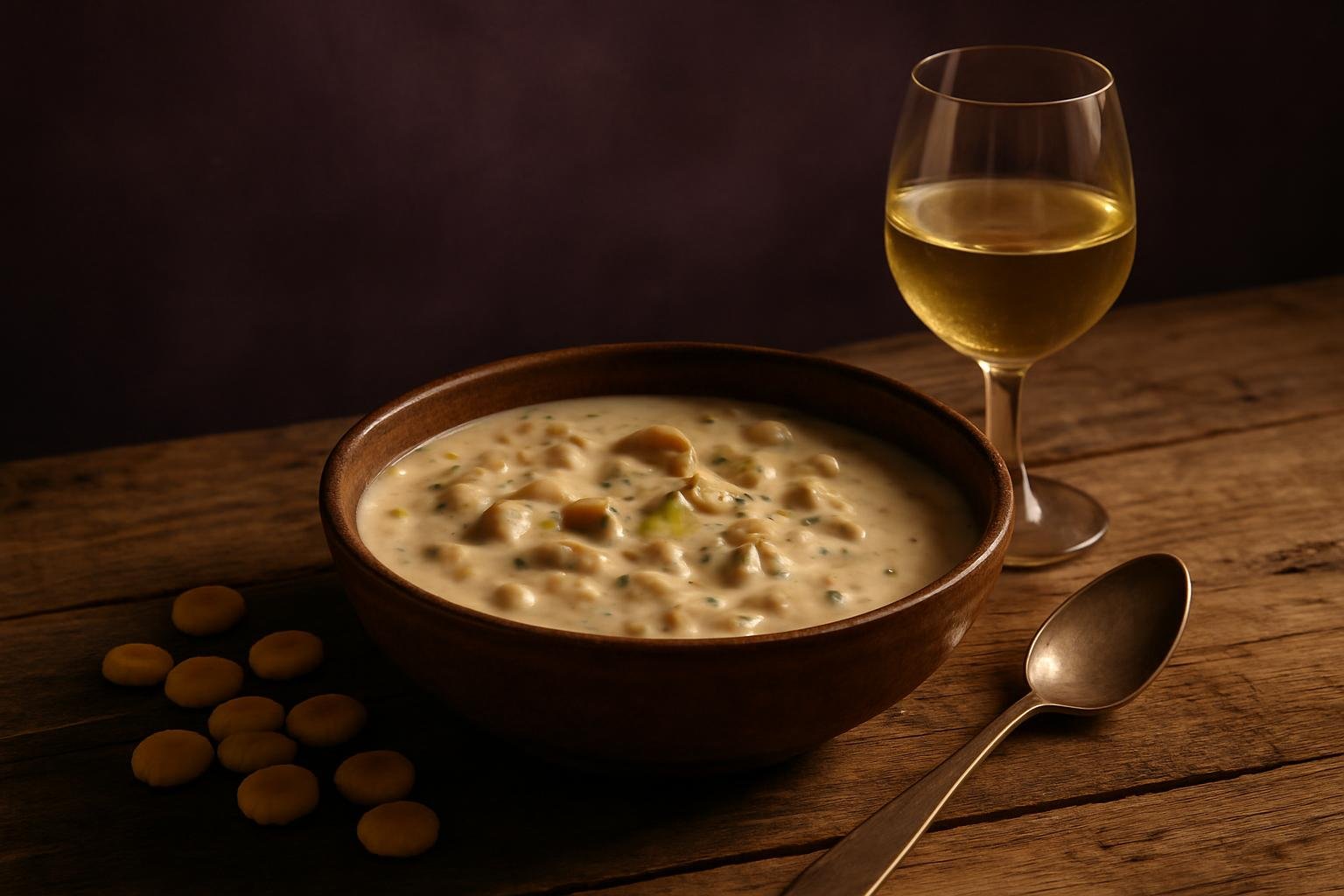
Pour a crisp, unoaked white with high acidity: a dry Semillon Sauvignon Blanc, a Chablis-style Chardonnay or a traditional-method sparkling. Cream, salt pork and clams all need acid to cut through, and none of them want oak anywhere near them.
That covers the creamy New England bowl most people mean. If yours is the red, tomato-based Manhattan version, the answer changes completely, and we will get to that. Chowder is not one dish, and pretending it is one is why so many pairing lists are useless.
Table of Contents
The Short Answer
- Semillon Sauvignon Blanc. Australia’s own answer. Citrus, grass and no oak, with enough acid to slice straight through the cream. Serve cold, about 8 degrees.
- Unoaked Chardonnay, Chablis in style. Enough weight to sit next to a thick soup, enough acid to reset your palate. Serve at 10 degrees.
- Traditional-method sparkling. The bubbles scrub fat off the tongue better than anything else in the glass. Serve at 6 to 8 degrees.
For a Manhattan chowder, skip all three and go to a Vermentino, a dry rosé or a light chilled red. Tomato needs a wine with acid of its own, and a soft creamy white will taste hollow next to it.
Which Chowder Are You Actually Eating?
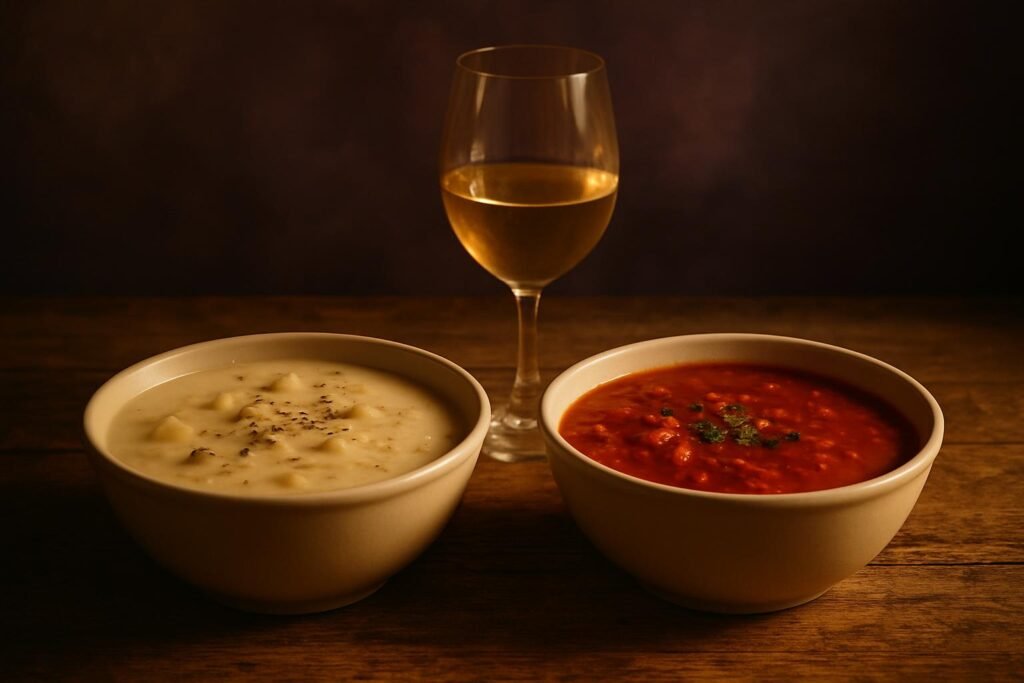
There are three main styles and they want three different things from a wine. Get this right and the rest is easy.
| Style | What is in it | What the wine needs |
|---|---|---|
| New England, the white one | Milk or cream, butter, potatoes, salt pork, onion, clams. Thickened with flour, or historically with crushed hard tack | High acid, no oak, medium weight |
| Manhattan, the red one | Tomato broth, no milk or cream, celery and carrots, thyme, clams | Acid to match the tomato, light body, can be a red |
| Rhode Island, the clear one | Clear broth, no milk, no butter, no tomato | Something lean and saline, low on fruit |
Two more you may meet. Hatteras style, from North Carolina’s Outer Banks, is clear with bacon, potatoes and a lot of black pepper. Minorcan, from St Augustine in Florida, is tomato-based and built on the datil pepper, which sits near habanero on the heat scale. Treat that one as a curry: low alcohol, off-dry, no tannin.
What Chowder Does to Wine
Fat. Cream and butter coat your tongue and mute everything after them. Acid is the only thing that cuts through, which is why a soft, round white disappears next to a New England chowder while a sharp one tastes brighter with every spoonful.
Salt. There is a lot of it here, from salt pork or bacon and from the clam liquor itself. Salt is generous to wine: it softens tannin and makes fruit taste riper. It also makes alcohol more obvious, so a 14.5 per cent white will taste hot next to a salty bowl.
Starch. Potato, flour and the crackers people crumble in all dull the palate. A wine with clear definition survives this. A vague one does not.
The clams. This is the part that catches people out. Shellfish and firm tannin produce a metallic, tinny taste, which is why a big red is a genuinely bad idea here rather than just a dull one. Oak does something similar, adding a woody edge that fights the brine.
Tomato, if it is Manhattan. Tomato is sharply acidic, and a wine with less acid than the food always tastes flat and slightly sweet. Match the acid or lose.
Smoke and pepper. Bacon brings smoke, and Hatteras style brings serious black pepper. Both are handled better by a wine with some texture than by something purely lean, which is a fair reason to look at the bacon pairing rules as well.
Best Wines for Clam Chowder
Semillon Sauvignon Blanc
Tastes like grapefruit, cut grass and lemon pith, with acid that keeps going after you swallow. It works because it is the opposite of the bowl: lean where the chowder is rich, sharp where it is soft. Margaret River and South Australia both do this blend well, and it is usually the cheapest good answer on the shelf. Our Sauvignon Blanc guide covers the grape in more detail.
Unoaked Chardonnay
Tastes like green apple, lemon curd and wet stone when it has not been near a barrel. It works because it has more body than a Sauvignon Blanc, so it can stand up to a thick soup without being flattened, while the acid still does the cutting. Look for Adelaide Hills, Tasmania or Yarra Valley, and read the back label for the word unoaked. The Chardonnay guide explains why the same grape can be so different.
Dry Riesling
Tastes like lime, green apple and something faintly floral, with very high acid and usually low alcohol. It works because low alcohol is a real advantage against salt, and the acid is the highest of any common white. Clare Valley and Eden Valley are the Australian homes for it. Worth knowing: our retailer currently stocks none at all, so this is a recommendation for your local bottle shop rather than a link.
Traditional-Method Sparkling
Tastes like green apple, bread and lemon, with fine, persistent bubbles. It works on pure mechanics: carbon dioxide and acid together scrub fat off the palate faster than a still wine can. Tasmanian sparkling is the Australian benchmark, and a dry Prosecco does a lighter version of the same trick for less money.
Hunter Valley Semillon
Tastes like lemon juice and lanolin when young, and like toast and honey after ten years, without ever seeing oak. It works because it is often only 10 to 11 per cent alcohol with searing acidity, which is close to a perfect brief for a salty, creamy bowl. It is also the most distinctly Australian answer on this list.
What to Avoid
- Big oaked Chardonnay. Butter with butter. The oak also picks a fight with the clam brine and wins nothing.
- Any tannic red. Shellfish plus tannin equals a metallic, tinny finish. This is chemistry, not snobbery.
- High alcohol anything. Salt makes alcohol taste hotter, so a 14.5 per cent wine will burn.
- Off-dry or sweet whites. A creamy chowder is already rich. Sugar on top makes it cloying by the third spoonful.
- Soft, low-acid whites. Pleasant on their own, invisible next to cream.
Drink One Tonight
One bottle covers the creamy version, costs less than the clams did, and does the acid job properly.

Farm Hand South Australia Organic Semillon Sauvignon Blanc 2025
This is the blend Australia does better than almost anyone, and it is exactly what a creamy chowder wants: sharp, citrusy and completely unoaked. Serve it properly cold and it will reset your palate between every spoonful.
- Semillon for the acid, Sauvignon Blanc for the citrus lift
- No oak anywhere, so nothing fights the clams
- Certified organic fruit, which is rare at this price
- Under fourteen dollars, so the bowl stays the expensive part
- Built for freshness, so drink it this year rather than cellaring it
Honesty corner. If you are eating the red Manhattan version, this is not your bottle. Go for a dry rosé or a light red served cool instead, and if you are eating the peppery Hatteras style, something off-dry will handle the heat better.
If You Are Making It
Two small things change the pairing more than the wine choice does. Finish the bowl with a squeeze of lemon, which lifts the whole thing and meets the wine halfway. And go easy on the salt while cooking, because between the salt pork and the clam liquor there is already plenty, and every extra pinch makes your wine taste hotter.
Serve the wine properly cold, around 8 degrees, and use a normal white wine glass rather than a tiny one, because you want the aromas to have somewhere to go. Our glasses roundup covers the shapes that actually matter. If you are counting drinks across a long lunch, the calorie calculator will tell you where you are.
Frequently Asked Questions
What is the best wine with clam chowder?
For the creamy New England style, a dry unoaked white with high acidity. A Semillon Sauvignon Blanc, a Chablis-style Chardonnay or a traditional-method sparkling all work, because each one has the acid to cut through cream and none of them bring oak to fight the clams.
Can you drink red wine with clam chowder?
With the creamy version, no. Shellfish and tannin together taste metallic, which is a real chemical clash rather than a matter of taste. With the tomato-based Manhattan style you can, as long as it is light, low in tannin and served cool. A chilled Barbera or a light Sangiovese would do it.
What wine goes with Manhattan clam chowder?
Something with acid of its own to match the tomato. A Vermentino, a dry rosé or a light red served cool all work. Avoid rich creamy-style whites, because they taste flat and faintly sweet next to a tomato broth.
Should the wine be oaked or unoaked?
Unoaked, almost always. Oak adds a woody, vanilla edge that clashes with clam brine, and if the chowder is creamy an oaked Chardonnay simply stacks butter on butter. Save the barrel-fermented bottle for roast chicken.
Does sparkling wine really work with soup?
Yes, and better than most people expect. The bubbles and the acid together lift fat off the palate, which is exactly the problem a cream-based chowder creates. A dry traditional-method sparkling is one of the safest choices on the whole list.
What about chowder made with fish or prawns instead of clams?
The same logic holds, because the cream and the salt are doing most of the work. A smoked fish chowder can take a slightly richer white, and a prawn chowder suits the crisper end. Our guides to salmon and cod go further into the fish side of it.
This post contains affiliate links. If you buy through them we earn a small commission at no extra cost to you. It keeps the wine flowing and the reviews honest.