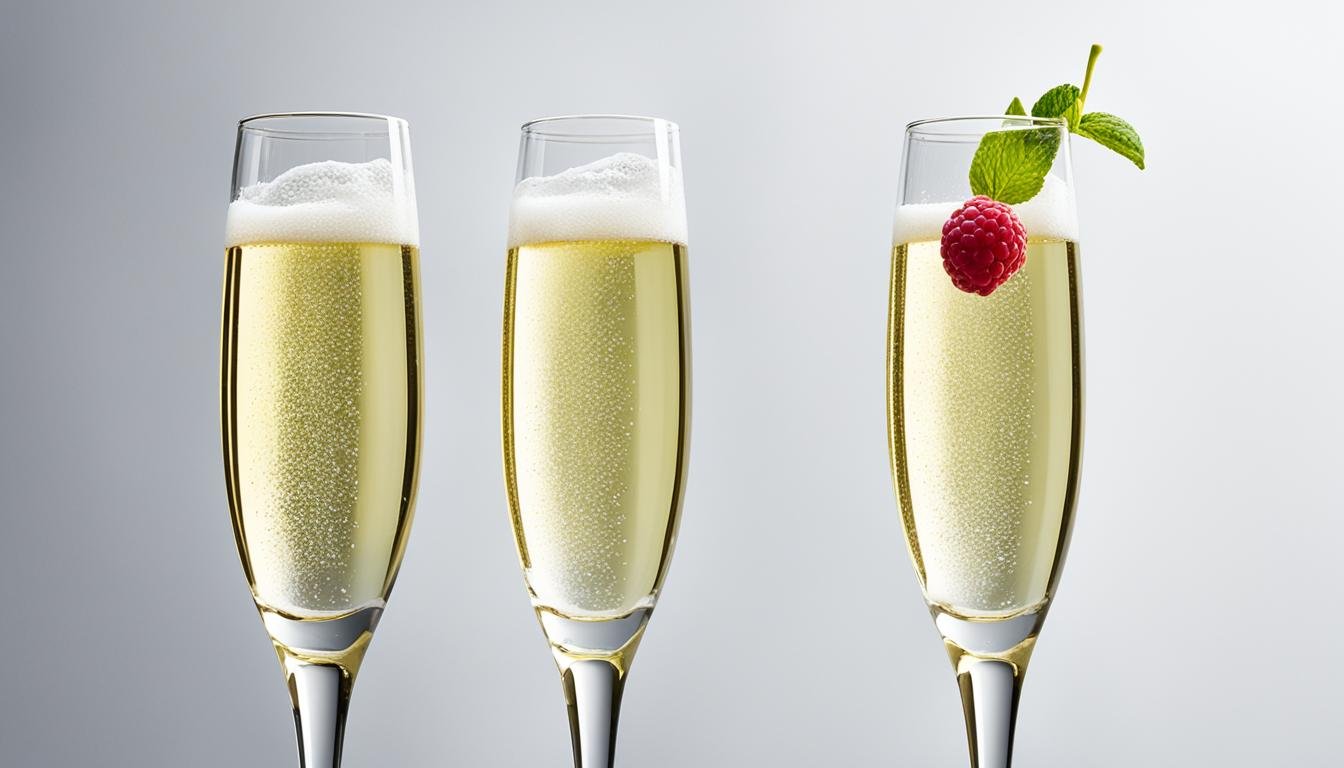
Brut and demi-sec are two points on the Champagne sweetness scale. Brut is dry: less than 12 grams of sugar per litre, which is what nearly all Champagne, Prosecco and Australian sparkling is. Demi-sec is sweet: 32 to 50 grams per litre, about the sweetness of a Moscato. Everything else you need to know follows from those two numbers.
Table of Contents
The full scale
Sparkling wine sweetness is set by law across the EU and used by most producers elsewhere, including Australia. It runs from bone dry to dessert wine in seven steps.

| Label says | Sugar (grams per litre) | Tastes |
|---|---|---|
| Brut Nature (also Brut Zero, Zero Dosage) | 0 to 3, no sugar added | Bone dry, sharp |
| Extra Brut | 0 to 6 | Very dry |
| Brut | 0 to 12 | Dry. The standard style |
| Extra Dry (Extra Sec) | 12 to 17 | Off-dry, a touch of softness |
| Sec (Dry) | 17 to 32 | Noticeably sweet |
| Demi-Sec | 32 to 50 | Sweet, dessert territory |
| Doux | More than 50 | Very sweet, rare |
The trap is in the middle. “Extra Dry” is sweeter than “Brut”, and “Sec”, which means dry in French, is sweeter still. The names date from the 1800s, when Champagne was much sweeter and “dry” was relative. Nobody has fixed them since.
Where the sugar comes from
Sparkling wine made the traditional way gets its bubbles from a second fermentation in the bottle, which leaves the wine completely dry. Just before the cork goes in, the winemaker tops the bottle up with a small amount of wine mixed with sugar, called the dosage. That dosage sets the category. A brut gets a little, a demi-sec gets a lot, a brut nature gets none.
Dosage is not only about sweetness. A few grams of sugar round off the sharp acidity of a young sparkling wine, which is why even a brut usually has 6 to 10 grams and does not taste sweet at all. Acidity hides sugar. A demi-sec at 40 grams tastes sweet because there is too much for the acid to hide.
Brut: what you are usually drinking
Brut is the default. Champagne, Cava, Franciacorta, Tasmanian sparkling and almost every bottle on an Australian shelf is brut, and a lot of Australian labels do not even print the word because it is assumed. It tastes of green apple, citrus, bread and toast, with a clean dry finish.
Drink it with salty and fried things (oysters, fish and chips, fried chicken, potato crisps), with sushi, with soft cheese, and on its own as an aperitif. Brut is the sparkling wine that goes with dinner.
Demi-sec: the one for dessert
Demi-sec is sweet enough to serve with cake and not taste sour beside it, which is the point. It shows riper fruit (peach, honey, brioche) and a softer texture. It is much less common than it was a century ago, and in Australia you are more likely to find the style in a Moscato or a demi-sec Prosecco than in Champagne, though the big houses all make one.
Drink it with fruit tarts, pavlova, wedding cake, blue cheese, or with spicy Thai and Indian food, where the sugar calms the chilli. Do not drink it with dinner; it makes savoury food taste odd.
What to buy in Australia
For brut, the Tasmanian houses (Jansz, Arras, Clover Hill) are the local benchmark and sit between 25 and 60 dollars. Below that, most supermarket sparkling is brut whether it says so or not. At the top, any non-vintage Champagne (Moët, Veuve Clicquot, Piper-Heidsieck) is brut at around 12 grams; our guide to the difference between Moët and Veuve Clicquot covers the two you see most.
For demi-sec, look for the word on a Prosecco label, or for Moët Nectar Impérial or Veuve Clicquot Rich, which are the demi-sec versions of those houses. Brown Brothers Moscato is not technically a demi-sec but sits in the same sweetness range and costs a fraction of the price.
If you want to understand the sugar side properly, our short guide to residual sugar in wine explains why the same number tastes different in different wines.
Frequently asked questions
Is brut sweeter than demi-sec?
No, the other way round. Brut is dry (under 12 grams of sugar per litre); demi-sec is sweet (32 to 50 grams). Demi-sec has roughly four times the sugar.
Is extra dry drier than brut?
No. Extra dry is sweeter than brut. It is the most confusing label in wine. Brut nature and extra brut are the drier ones.
Which one is Prosecco?
Most Prosecco is extra dry or brut, which is why it tastes a little softer and fruitier than Champagne. Demi-sec Prosecco exists but you have to look for it.
What does dosage mean?
The small amount of sugar and wine added to a bottle of sparkling wine just before it is corked. It sets the sweetness level.
Can I tell the sweetness from the bottle?
Only from the word on the label. Colour and price tell you nothing. If the label says nothing, assume brut.