Heads up: this guide contains an affiliate link. If you buy through it we earn a small commission at no extra cost to you.
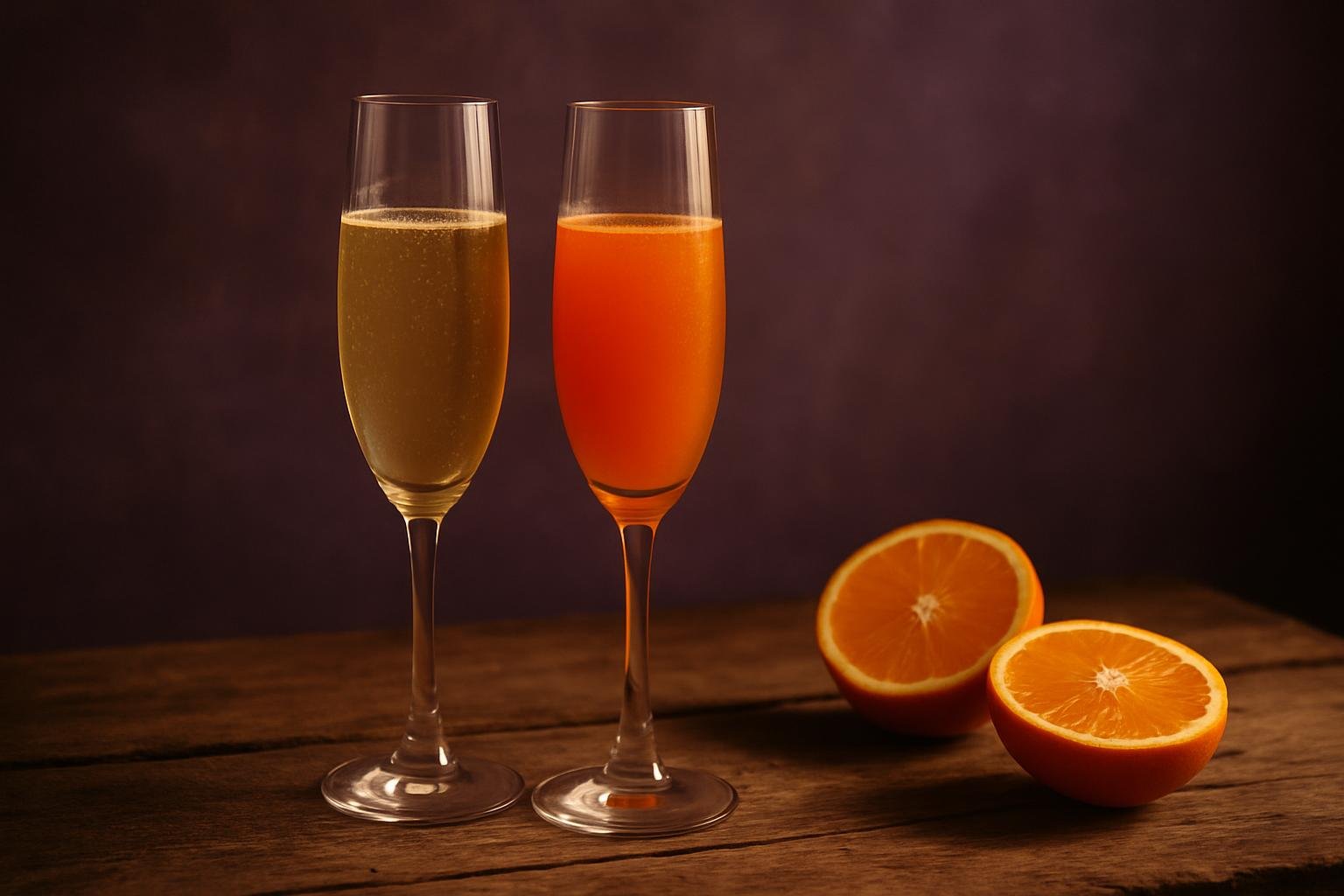
Both drinks are sparkling wine and orange juice. The difference is the ratio. A Buck’s Fizz is mostly wine with a splash of juice, and a Mimosa is equal parts of each. That is the whole answer, and everything below is the interesting part.
They were also born four years and one Channel apart, which explains why one sounds like a London club and the other sounds like a Paris hotel. Both are true.
Table of Contents
The Difference in One Paragraph
The Buck’s Fizz came first, in London in 1921, and it is champagne-forward: the juice is there to soften the wine, not to share the glass with it. The Mimosa arrived in Paris in 1925 as a lighter, juicier take on the same idea, at equal parts. Pour a Buck’s Fizz and you are drinking sparkling wine. Pour a Mimosa and you are drinking a proper mixed drink. Same two bottles, two quite different mornings.
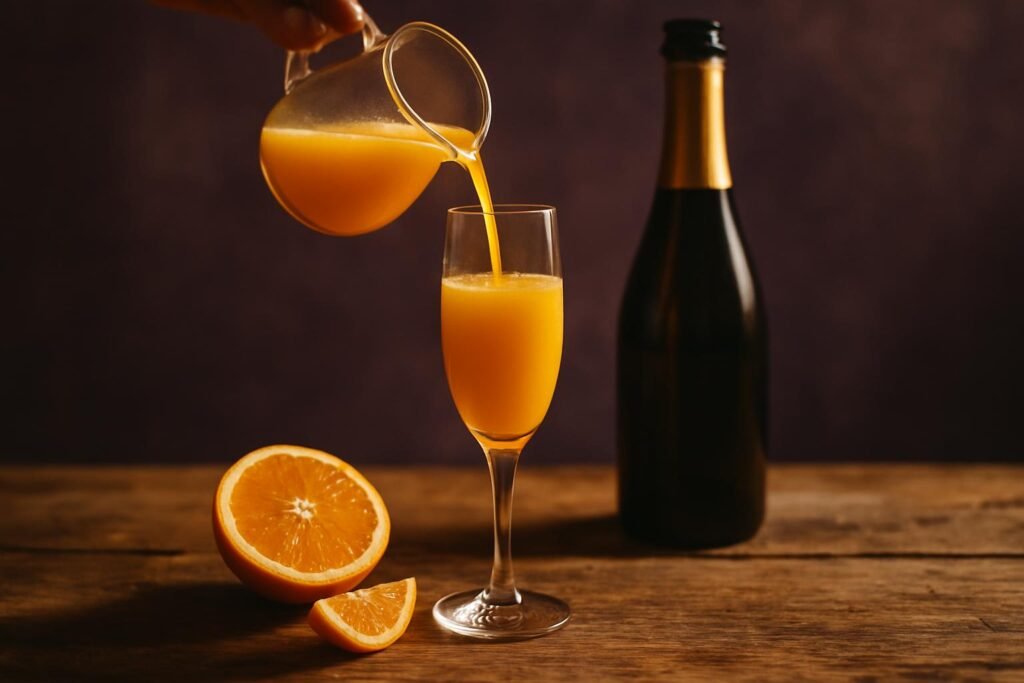
The Ratios, Side by Side
| Buck’s Fizz | Mimosa | |
|---|---|---|
| Born | London, 1921 | Paris, 1925 |
| Where | Buck’s Club, Mayfair | Ritz Hotel |
| Who | Malachi “Pat” McGarry | Frank Meier |
| Common ratio | 2 parts wine to 1 part juice | 1 part wine to 1 part juice |
| Original recipe | 100 ml bubbly to 7 ml juice | Equal parts |
| Tastes like | Sparkling wine with a citrus lift | Orange juice with bubbles and backbone |
| Alcohol per glass | Higher | Lower |
That fifth row is the one that surprises people. The ratio everyone quotes for a Buck’s Fizz is two parts wine to one part juice, and that is how the drink is made in practice. The recipe published in Amanda Schuster’s Signature Cocktails is far more extreme: fill the glass with about 100 ml of dry bubbly and top it with roughly 7 ml of orange juice. That is barely a teaspoon and a half. The original Buck’s Fizz was a glass of champagne wearing a citrus hat.
Where Each One Came From
The Buck’s Fizz was invented in 1921 by Malachi “Pat” McGarry, the bartender at the gentlemen-only Buck’s Club in Mayfair. McGarry was the personal bartender to Captain Herbert John Buckmaster, who ran the club, and he is also credited with popularising the Sidecar. A member had heard about a peach and champagne drink from the continent and asked for something like it. McGarry swapped the peach for orange juice, added a couple of ingredients the club still will not name, and the thing stuck.
The club itself has a decent claim to fame beyond the drink: it was the model for the Drones Club in P.G. Wodehouse’s Jeeves and Wooster books. Somewhere in there is a joke about Bertie Wooster ordering a second one, and we will let you make it.
The Mimosa followed in 1925, credited to Frank Meier at the Ritz in Paris. Meier wanted a lighter, juicier version of what London was drinking. The oldest printed recipe anyone has found is in Meier’s own 1936 book, The Artistry of Mixing Drinks, where he lists it as a Mimosa or a Champagne Orange, at equal parts. The earliest printed Buck’s Fizz recipe turns up a year later, in the 1937 Cafe Royal Cocktail Book.
The name is just the flower. Mimosa blossom is a soft yellow, and so is the drink.
Why the Mimosa Won
If the Buck’s Fizz came first and had the better club, why does every brunch menu in Australia say Mimosa? Partly Hollywood. Cocktail historian Tomas Curras points to a 1966 London Express interview in which Alfred Hitchcock was found “in fine form, drinking mimosas”, and notes that the drink barely appears in cocktail books before the 1970s while the Buck’s Fizz shows up steadily. Once American brunch culture picked it up, the equal-parts version became the default everywhere outside Britain.
In Britain the Buck’s Fizz never went away, which is why a British supermarket sells it ready-made in a can and an Australian one mostly does not.
Do They Actually Taste Different?
Yes, and more than the ratio suggests. Orange juice is sweet, thick and acidic, and it flattens bubbles. At equal parts it takes over, so a Mimosa tastes of orange first and wine second. The wine underneath mostly contributes fizz and a bit of dryness to stop the juice cloying.
A Buck’s Fizz keeps the wine in charge. You still taste the toast, the apple, the yeasty bits, and the juice reads as a citrus note rather than as juice. It is also stronger, because there is more wine in the glass.
There is a practical consequence. In a Mimosa, cheap sparkling hides behind the juice. In a Buck’s Fizz it has nowhere to hide, so buy better bubbles for the Buck’s Fizz and save your money on the Mimosa.
Which One Should You Make?
- Making it for a crowd before lunch? Mimosa. Less alcohol per glass, and the juice makes an ordinary bottle taste fine.
- Celebrating something? Buck’s Fizz. It respects the wine and it hits harder.
- Using a bottle you actually like? Buck’s Fizz, or honestly just drink the wine.
- Christmas morning? Buck’s Fizz, if only for the name.
- Counting standard drinks? Mimosa, and our wine calorie calculator will tell you where you stand.
What Sparkling Wine to Use
Do not open Champagne for either of these. Real Champagne is built on fine bubbles and years of lees ageing, and orange juice erases both in about a second. Save it, and buy something local made in the same style instead.
For a Mimosa, Prosecco is ideal. It is fruity, gentle and inexpensive, and it does not fight the juice. For a Buck’s Fizz you want a bit more structure, which means a dry Australian sparkling made from Pinot Noir and Chardonnay, the same two grapes Champagne is built on. Our guide to the difference between Prosecco and Cava covers why the method changes the taste so much.

Grant Burge Pinot Noir Chardonnay Sparkling NV
For a Buck’s Fizz the wine is most of the drink, so it has to be worth tasting. This is the classic two-grape blend at a price that does not sting when you top it with juice. For a Mimosa, save four dollars and buy a Prosecco instead.
- The Champagne blend of Pinot Noir and Chardonnay, made in Australia
- Dry enough to stay in charge under the orange juice
- Good enough to drink on its own if the juice runs out
- Under thirty dollars, so no guilt about mixing it
- Too good to waste on a heavy-handed equal-parts pour
Five Ways People Ruin Both Drinks
- Warm wine. Chill the bottle properly, to about 6 to 8 degrees. Warm sparkling foams over the glass and tastes flabby.
- Cold juice poured into wine. Pour the juice first, then add the wine gently on top. It mixes itself and you lose far fewer bubbles.
- Juice from concentrate. This is the big one. Fresh squeezed or a good chilled juice with no added sugar makes a startling difference, because there is nowhere for a stale orange to hide.
- Pulp. Strain it if your juice is thick. Pulp kills bubbles faster than anything else in the glass.
- Stirring. There is no need, and every stir costs you fizz. If it looks streaky, it will sort itself out.
A flute is traditional, though a small wine glass actually shows the aromas better. Our glasses roundup goes into that argument in more detail than anyone needs on a Sunday morning.
Frequently Asked Questions
Are a Buck’s Fizz and a Mimosa the same drink?
No, though they use the same two ingredients. A Buck’s Fizz is champagne-forward, usually two parts sparkling wine to one part orange juice. A Mimosa is equal parts. The Mimosa was created as a lighter version of the Buck’s Fizz four years after it.
Which is stronger, a Buck’s Fizz or a Mimosa?
The Buck’s Fizz, because more of the glass is wine. At a typical two to one ratio you are drinking noticeably more alcohol per glass than an equal-parts Mimosa, which is worth knowing if you are pouring rounds before lunch.
What is another name for a Buck’s Fizz?
There is no single alternative name in common use, but the drinks are so close that people often use Mimosa for both. Frank Meier listed his own version as a Mimosa or a Champagne Orange, and a 1948 book by David Embury calls the Mimosa a Bismark, a name that never caught on.
Do you have to use Champagne?
No, and we would rather you did not. Any dry sparkling wine works, and orange juice flattens the fine detail you pay for in Champagne. Prosecco suits a Mimosa and a dry Australian Pinot Noir Chardonnay sparkling suits a Buck’s Fizz.
Is either drink served over ice?
Neither. Ice waters the drink down and kills the bubbles. Chill the wine and the juice separately in the fridge and pour into a cold glass instead.
Can you make them ahead for a party?
Only just. Mix them a few minutes before serving, not the night before, because the fizz starts leaving the moment the juice goes in. Chill everything in advance and pour to order, which takes about ten seconds a glass.
This post contains affiliate links. If you buy through them we earn a small commission at no extra cost to you. It keeps the wine flowing and the reviews honest.