Heads up: this guide contains an affiliate link. If you buy through it we earn a small commission at no extra cost to you.
No. Prosecco and Champagne are both sparkling white wines and that is where the similarity stops. Different country, different grapes, different way of making the bubbles, and a price gap big enough to notice. One is not a cheap copy of the other. They are two separate drinks that happen to fizz.
Knowing the difference is worth about twenty dollars a bottle, because half the time Prosecco is the better choice anyway and nobody at the table will think less of you.
Table of Contents
The Difference in One Paragraph
Champagne comes from one cold region in northern France, uses Chardonnay, Pinot Noir and Meunier, and gets its bubbles from a second fermentation inside the bottle followed by at least fifteen months resting on the spent yeast. Prosecco comes from north-eastern Italy, is made mostly from a grape called Glera, and gets its bubbles from a second fermentation in a big pressurised steel tank that takes about a month. Bottle time makes bread and pastry flavours. Tank time keeps pear and apple.
| Champagne | Prosecco | |
|---|---|---|
| Where | Champagne, northern France | Veneto and Friuli-Venezia Giulia, north-east Italy |
| Grapes | Chardonnay, Pinot Noir, Meunier | At least 85 per cent Glera |
| Bubbles made | In the bottle, traditional method | In a pressurised tank, Charmat method |
| Ageing | At least 15 months on the lees | About 30 days in tank, and it is bottled young |
| Pressure | Around six atmospheres | Around three atmospheres |
| Tastes like | Green apple, citrus, bread, toasted nuts | Pear, green apple, honeydew, honeysuckle |
| Price | From about fifty dollars up | From about ten dollars up |
Grapes: What Is Actually In the Bottle
Champagne is a blend. The Comite Champagne lists three main grapes: Pinot Noir at 38 per cent of the vineyard area for body and structure, Chardonnay at 31 per cent for freshness and citrus, and Meunier at 31 per cent for roundness and soft yellow fruit. Two of the three are black grapes, which surprises people, but the juice of a black grape is white.
Prosecco is essentially one grape. Glera has to make up at least 85 per cent of the blend, and it brings pear, green apple, honeydew and honeysuckle. Those floral, fruity aromas are so strong that a technically dry Prosecco often tastes sweeter than its sugar number suggests. Since 2020 there has also been a Prosecco Rose, made from Glera with 10 to 15 per cent Pinot Noir and given at least 60 days of second fermentation.
Method: Bottle Against Tank
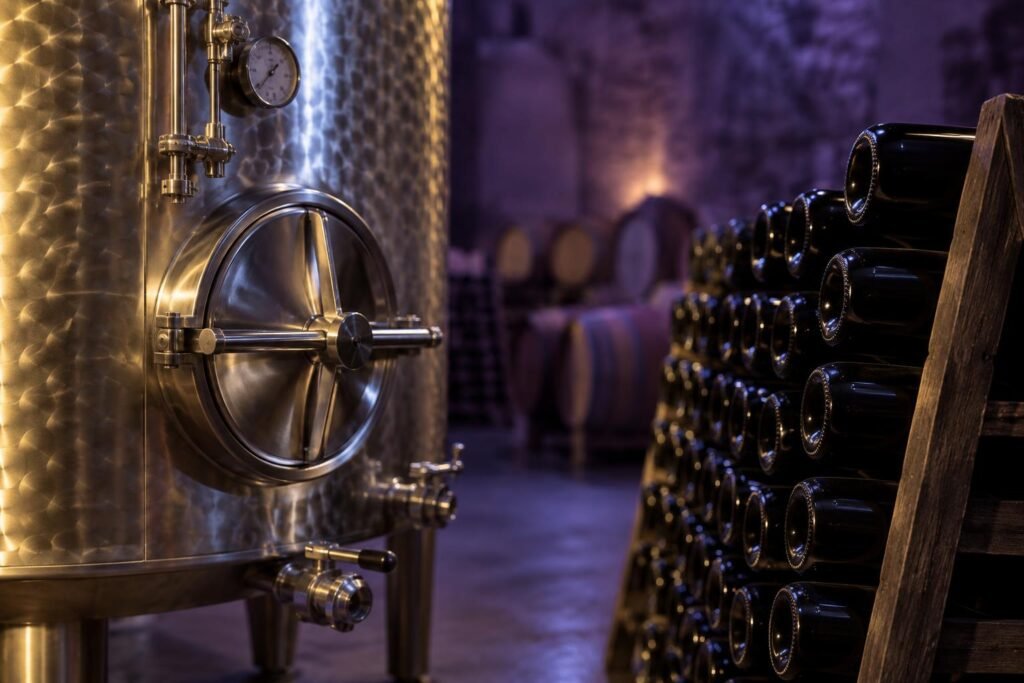
This is the part that changes the flavour most. In Champagne the second fermentation happens inside the bottle you buy, and the wine then sits on the dead yeast cells for a minimum of fifteen months and often years. That contact is where bread, brioche and toasted hazelnut come from.
Prosecco uses the Charmat method, sometimes called the tank method. The second fermentation happens in a large sealed steel tank, usually for around thirty days, and the wine is bottled under pressure soon after. Nothing sits on yeast for years, so nothing tastes of pastry. What you keep instead is the fresh fruit of the grape, which is the point.
The pressure differs too. Prosecco comes out at roughly three atmospheres against about six for Champagne, so the bubbles feel softer and frothier rather than fine and needling. If you have ever found Champagne a bit sharp on the tongue, that is why.
Sweetness: Both Labels Have the Same Trap
Prosecco uses three main sweetness terms, and the middle one catches everybody. Brut runs from nought to 12 grams of sugar a litre. Extra Dry runs 12 to 17, which makes it sweeter than brut despite the name. Dry runs 17 to 32 and is sweeter again. Champagne uses the same ladder and then keeps going, with sec, demi-sec and doux beyond it.
Extra Dry is the most common Prosecco style in Italy and it is genuinely good, with the fruit and the acidity in balance. Just know what you are buying. More on how sugar is measured and labelled in our guide to residual sugar in wine.
Quality Tiers: Not All Prosecco Is the Same Either
The word on the neck label tells you a lot. Prosecco DOC is the broad zone across nine provinces of Veneto and Friuli-Venezia Giulia, and it is most of what you see on a supermarket shelf. Conegliano Valdobbiadene Prosecco Superiore DOCG comes from fifteen hillside communes and tends to have more character, and Asolo Prosecco Superiore DOCG is the smaller hillside zone across the river.
Above those, Rive wines come from 43 named steep sites with lower yields, hand picking and a vintage on the label. At the very top sits Cartizze, a subzone of only 107 hectares. The Conegliano Valdobbiadene hills were made a UNESCO World Heritage cultural landscape in 2019, and Prosecco has been written about there since 1772, so the idea that this is a modern factory drink does not really hold.
What About Australian Prosecco
Australia makes plenty of it, mostly in the King Valley in north-east Victoria, where Italian families planted the grape decades ago. It is usually made the same way, in tank, and it is very good value. There is a long-running argument about the name, because Europe treats Prosecco as a place and Australian growers treat it as the old name of the grape. That fight is not settled, so for now the word stays on our labels.
Which One Should You Buy
- A toast for a big group: Prosecco, every time. Three bottles of good Prosecco beat one bottle of mediocre Champagne.
- Something to sip slowly and think about: Champagne, and ideally one with some age on it.
- Mimosas or a spritz: Prosecco. Two parts wine to one part juice, and do not waste the good stuff.
- With fried food, salty snacks or Thai and Vietnamese dishes: Prosecco, because the fruit handles heat and the bubbles clean up the oil.
- With oysters, roast chicken or anything creamy: Champagne, or a Cava if you want the same method for half the money. We compare those two in Prosecco against Cava.
Serve Prosecco properly cold, about three to seven degrees, and Champagne slightly less cold at six to eight. Use a tulip or a white wine glass rather than a narrow flute for anything you actually want to smell. Our glasses roundup has the shapes.
Try One
If you want to taste the tank method at its most honest, this is about as cheap as decent Prosecco gets, and it comes from the Australian home of the grape.

Gapsted Buffalo King Valley Prosecco 2025
Stock-checked live on 12 September 2026 and available at about eleven dollars, well down from its listed price. Drink it very cold on its own, or pour two parts wine to one part juice for a mimosa that costs less than the orange juice.
- From the King Valley, where Australian Prosecco started
- Fresh pear and apple, made in tank the same way as the Italian original
- Cheap enough to use in a spritz without guilt
- Simple and fruit-driven, not a wine to think hard about
- No bread or pastry flavours, because that is not what tank method does
Frequently Asked Questions
Is Prosecco the same as Champagne?
No. Champagne comes from northern France and gets its bubbles in the bottle, while Prosecco comes from north-east Italy and gets its bubbles in a pressurised tank. They use different grapes and taste different.
Which is better, Prosecco or Champagne?
Neither. Champagne is more complex and costs far more. Prosecco is fresher, fruitier and better value, and it is the better choice for cocktails and big groups.
Why is Prosecco so much cheaper?
Tank fermentation handles large volumes at once and takes about a month, while Champagne ferments bottle by bottle and then rests on the lees for at least fifteen months. Time and handling cost money.
What grape is Prosecco made from?
Glera, which must make up at least 85 per cent of the blend. Prosecco Rose adds 10 to 15 per cent Pinot Noir.
Is Prosecco sweeter than Champagne?
Often it tastes that way, even at the same sugar level, because Glera smells of pear and honeysuckle. Check the label: Brut is the driest of the common styles and Extra Dry is sweeter than it sounds.
Can Australian sparkling be called Prosecco?
It is on the label here, mostly from the King Valley in Victoria. Europe disputes the right to use the name, because it treats Prosecco as a place rather than a grape, and the argument is still going.
The Prosecco rules, tiers and sugar bands above come from Wine Folly, and the Champagne grape percentages and lees minimum from the Comite Champagne. For more on why two Champagnes can taste nothing alike, see our guide to Champagne styles.
This post contains affiliate links. If you buy through them we earn a small commission at no extra cost to you. It keeps the wine flowing and the reviews honest.