Heads up: this guide contains an affiliate link. If you buy through it we earn a small commission at no extra cost to you.
No. Two bottles both labelled Champagne can taste so different that you would not guess they came from the same place. Grapes, sugar, age and the person blending it all pull the wine in different directions, and once you know which four things to look for you can read a label instead of guessing.
That is good news if you have ever spent real money on a bottle and found it sharp, or bought one for a party and found it oddly sweet. Nothing went wrong. You just got a style that was not the one you wanted.
Table of Contents
The Short Answer
Four things decide how a Champagne tastes: which grapes went in, how much sugar was added at the end, how long it sat on its yeast, and whether the maker was chasing a house style or a single patch of chalk. Change any one of them and the wine in the glass changes with it.
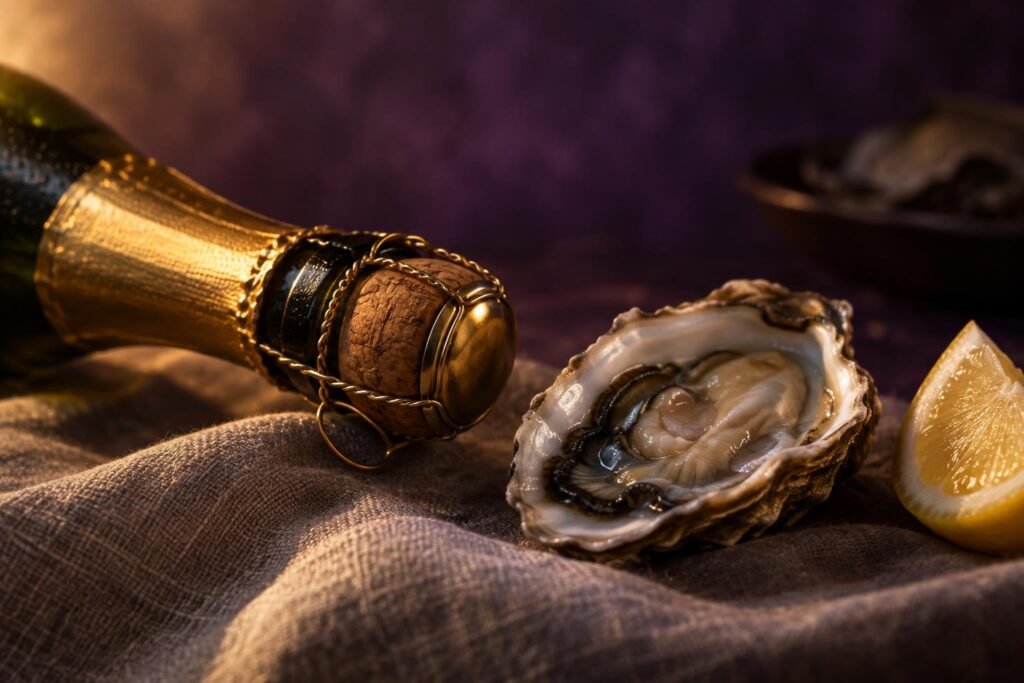
Change One: What Actually Goes In the Bottle
Champagne is a blended wine, and the Comite Champagne lists three main grapes. Pinot Noir covers 38 per cent of the vineyard area and brings body, punch and structure, with red fruit and floral notes. Chardonnay covers 31 per cent, loves the chalk of the Cote des Blancs, and brings freshness, citrus and the ability to age. Meunier covers the other 31 per cent, buds later so it dodges frost, and adds roundness and soft yellow fruit.
Five more grapes are legal in the appellation and make up about 0.3 per cent of plantings between them: Arbane, Petit Meslier, Pinot Blanc, Pinot Gris and Chardonnay Rose, which was only added to the list in 2025. You will almost never meet them, but a few growers make a fuss of them and those bottles taste like nothing else.
Two words on the label tell you the blend. Blanc de blancs means white grapes only, so in practice all Chardonnay: lean, citrusy, chalky, the one to drink with oysters. Blanc de noirs means black grapes only, so Pinot Noir and Meunier: fuller, rounder, more red apple and pastry, the one to drink with roast chicken. And yes, the juice of a black grape is white, which is how you get a white wine from red fruit.
Change Two: How Much Sugar Went In at the End
Just before corking, most Champagne gets a small top-up of sugar dissolved in wine. It is called the dosage, it is about one centilitre in a 75 centilitre bottle for a brut, and it is the single biggest reason two Champagnes taste different to a normal drinker. Low dosage shows off the wine own character. Higher dosage softens the acid and makes the wine feel rounder.
| Label | Sugar per litre | What it tastes like |
|---|---|---|
| Brut nature | Under 3 grams, nothing added | Bone dry, sharp, all wine and no cushion |
| Extra brut | Up to about 6 grams | Very dry, still a little softened |
| Brut | Under 12 grams | Dry to most people, the standard style |
| Extra dry | 12 to 17 grams | Confusingly, sweeter than brut |
| Sec | 17 to 32 grams | Noticeably off-dry |
| Demi-sec | 32 to 50 grams | Sweet, the dessert one |
| Doux | Over 50 grams | Very sweet, now rare |
Read that table again and note the trap in the middle. Extra dry is sweeter than brut, even though the name sounds drier. If you found a bottle oddly sugary at a wedding, this is usually why. For more on how sugar reads on a wine label generally, see our guide to residual sugar and the one on off-dry wine.
Change Three: How Long It Sat on the Yeast
After the bubbles are made in the bottle, the wine rests on the spent yeast cells. The Comite Champagne puts the minimum maturation on lees at fifteen months, and plenty of bottles get three, five or ten years. That time is where the bread, brioche and toasted nut flavours come from.
A young, briefly aged Champagne tastes of green apple and lemon and feels tight. An older one tastes of pastry, hazelnut and honey and feels soft and wide. Same region, same grapes, completely different drink. If you have ever been told you do not like Champagne, there is a fair chance you met a young one on an empty stomach.
Non-vintage bottles blend several years so the house style stays the same from one year to the next, which is the whole point of them. Vintage bottles come from a single year and are only made when the year is good enough. We go into the difference in detail in our guide to vintage and non-vintage Champagne.
Change Four: Who Made It, and Where From
The big houses buy fruit from across the region and blend for consistency. Their job is to make this year taste like last year. Grower Champagnes come from families who farm their own vines, often in one village, and they let the year and the site show. Look for the small letters near the bottom of the label: NM is a house that buys grapes, RM is a grower making wine from their own fruit.
Site matters too. Pinot Noir dominates the Montagne de Reims and the Cote des Bar, Chardonnay rules the Cote des Blancs, and Meunier does the hard work in the clay of the Marne Valley. A grower in one village is making a very different wine from a house blending forty.
What About Rose Champagne
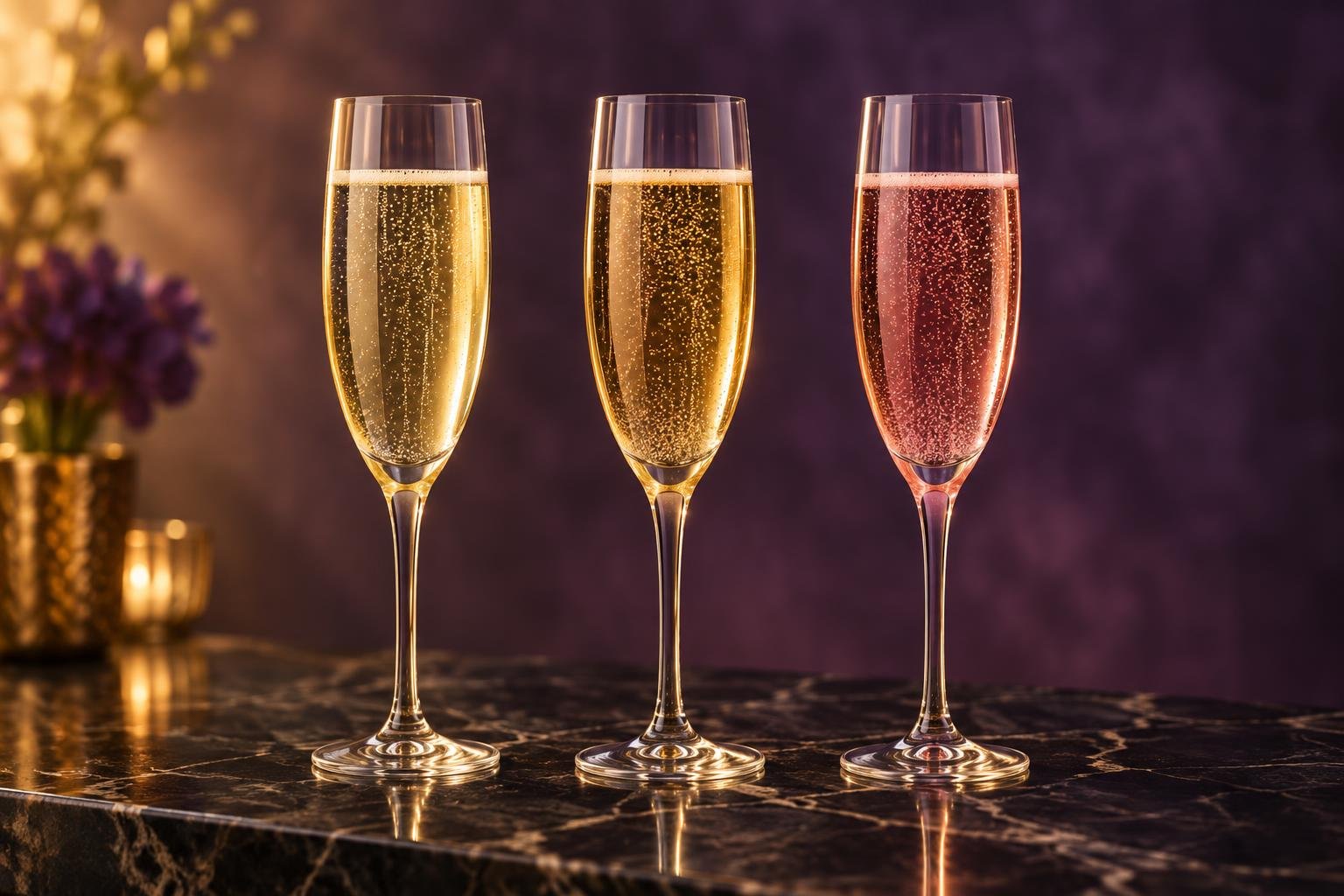
Rose Champagne uses the same three grapes and gets its colour one of two ways. Macerated rose takes its colour from time on the grape skins. Blended rose, which is more common, adds a little still red Champagne wine to the white base before the bubbles are made. Blending red into white is banned for most rose wine in Europe, and Champagne is the famous exception.
In the glass a rose is usually a little fuller and fruitier than the same house white, with strawberry and red cherry in place of lemon. It is a better food wine than people expect, especially with salmon, duck or a plate of charcuterie.
How to Pick the Right Bottle
- Want it as dry as possible: look for brut nature or extra brut.
- Want the safe middle: brut, which is about 95 per cent of what is sold.
- Want it with dessert: demi-sec, and do not let anyone tell you off.
- Want crisp and mineral: blanc de blancs.
- Want rich and savoury with food: blanc de noirs or a vintage bottle.
- Want the best value fizz on the shelf: consider Prosecco or Cava instead, which are made differently and cost far less.
One last thing that costs nothing. Serve it at about six to eight degrees in a white wine glass rather than a narrow flute. A flute looks the part and hides half the smell. Our glasses roundup has the shapes that actually help.
Try One
If you want to taste how much rose Champagne differs from the standard brut, this is a good bottle to do it with, and it is currently well under its usual price.

Henriot Brut Champagne Rose NV
Stock-checked live on 12 September 2026 and available at about seventy nine dollars, down from a listed price of about one hundred and twenty. Serve it cold with something salty or with salmon, and pour it into a white wine glass rather than a flute.
- Proper Champagne from a long-established house
- Rose style, so fuller and fruitier than a plain brut
- Currently discounted from its usual listed price
- Still a special-occasion price
- Rose is not the place to start if you want the classic style
Frequently Asked Questions
Does all Champagne taste the same?
No. The grape blend, the dosage, the time on lees and the maker all change the flavour, and the range runs from bone dry and sharp to sweet and toasty.
What is the difference between brut and extra dry?
Brut has under 12 grams of sugar per litre and extra dry has 12 to 17, so extra dry is actually the sweeter of the two despite the name.
Which Champagne is the driest?
Brut nature, sometimes labelled zero dosage. It has under 3 grams of sugar per litre and no sugar added at the end.
Is vintage Champagne better than non-vintage?
Not automatically. Vintage comes from one good year and usually tastes more distinctive, while non-vintage is blended for consistency. Which one is better depends on whether you want a surprise or a sure thing.
What does blanc de blancs mean?
White from whites. It means the wine was made only from white grapes, which in Champagne means Chardonnay, and it is usually the leanest and most citrusy style.
Why does my Champagne taste sweet?
Check the label for extra dry, sec or demi-sec. Those three carry noticeably more sugar than brut, and demi-sec is made to go with dessert.
The grape percentages, the sugar bands and the rose rules above all come from the Comite Champagne, which publishes them at champagne.fr.
This post contains affiliate links. If you buy through them we earn a small commission at no extra cost to you. It keeps the wine flowing and the reviews honest.