Heads up: this guide contains an affiliate link. If you buy through it we earn a small commission at no extra cost to you.
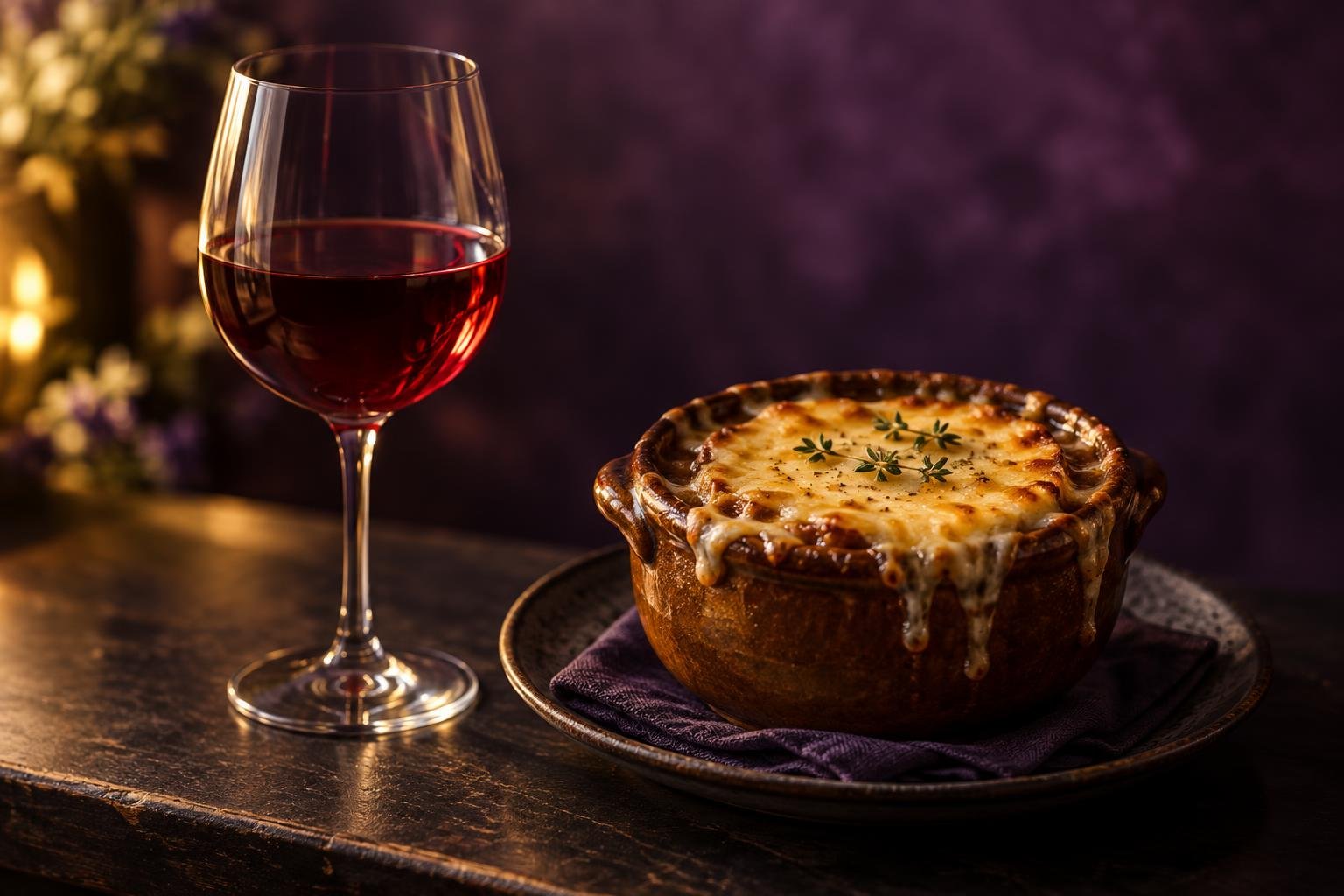
The best wine for French onion soup is a light, high acid red such as Gamay or Pinot Noir, with a crisp unoaked Chardonnay the best white and dry Sherry the sleeper choice. The thing that trips people up is not the beef stock. It is the sugar.
French onion soup looks savoury and tastes savoury, but it is built on a pile of caramelised onions, and caramelised onions are sweet. Once you match the wine to the sweetness instead of to the stock, the pairing stops being difficult.
Table of Contents
The Short Answer
- Gamay, the grape behind Beaujolais. Red fruit, almost no tannin, plenty of acid. Serve it cool, around 14 degrees.
- Unoaked or lightly oaked Chardonnay. Acid for the cheese, a nutty edge that meets the browned onion. Around 10 degrees.
- Dry Sherry, either fino or amontillado. Nobody orders it and everybody who tries it is converted. Straight from the fridge in a small glass.
What French Onion Soup Does to Wine
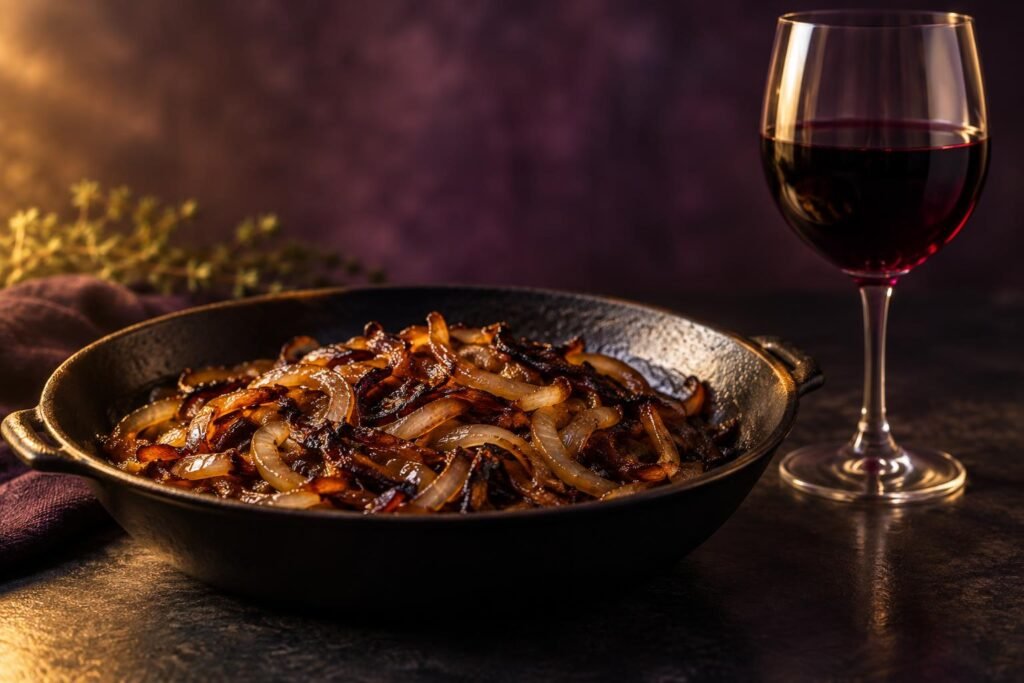
Start with the onions. Raw onion is about 4 grams of sugar per 100 grams and just under 90 per cent water. So a kilo of onions, which is roughly what a pot of soup for four takes, carries something like 43 grams of sugar. Cooking them for an hour boils off the water and leaves the sugar behind, concentrated into four bowls. The classic answer is a light red with good acid. Wine Australia describes pinot noir as a perfumed, lower tannin red, which is exactly what you want against sweet onion and salty cheese.
Two separate reactions are doing the work in that pan. The Maillard reaction browns the onions and builds savoury, roasted, almost meaty flavours. Caramelisation is the sweeter one, where the sugars break down and turn syrupy. You need both, and both need patience, because most of the first twenty minutes is just water leaving.
Then the soup adds salt from the stock, more salt and fat from the Gruyere, and a lid of bread. Sweet plus salty plus fatty is a hard trio for wine. Sweetness in food makes a dry wine taste thinner and more sour than it is, and salt pushes tannin towards bitter. That is the whole reason a serious Cabernet falls apart in front of this bowl.
| What is in the bowl | What it does to the wine | What the wine needs |
|---|---|---|
| Caramelised onion sugars | Makes a dry wine taste sour and thin | Ripe fruit, or a touch of sweetness of its own |
| Salty beef stock | Sharpens tannin into bitterness | Low tannin, or none at all |
| Melted Gruyere and butter | Coats the palate and dulls flavour | High acid to cut through |
| Deep roasted, savoury browning | Overpowers delicate, floral wines | Something with a nutty or earthy note |
| A bowl served very hot | Flattens aromatics and makes alcohol stand out | Moderate alcohol, served cool rather than cold |
Best Wines for French Onion Soup
Gamay, the one to buy
Tastes of red cherry, cranberry and violets, with lively acid and tannin so light you barely notice it. It works because there is nothing in it for the salt to turn bitter, and the bright fruit sits happily next to the sweetness rather than arguing with it. Beaujolais is the French home of the grape. In Australia, the King Valley and Orange in New South Wales both grow it well.
Unoaked Chardonnay, the white that works
Tastes of green apple, citrus and wet stone, with a lean, mineral finish. It works because the acid slices through melted cheese, which is the job the red cannot always do. Chablis is the classic. In Australia, look at the cooler corners of the Adelaide Hills or Tasmania, and keep the oak dialled down.
Dry Sherry, the one nobody expects
Fino tastes of almonds, green olive and sea air. Amontillado is deeper, with hazelnut and dried orange. It works because Sherry is deliberately aged in a way that makes it taste of roasted nuts, which is exactly the note that hours of browning puts into the onions. Many recipes already ask for a splash of Sherry in the pot, so pouring it into the glass as well is hardly a leap.
Dry Riesling, if you like a sharp edge
Riesling brings lime, green apple and a mineral bite, with acid to spare. It works for the same reason the Chardonnay does, and it handles the salt better than almost anything. Clare Valley and Eden Valley are the Australian names to look for.
Pinot Noir, for a bigger occasion
Pinot Noir gives you red cherry, mushroom and forest floor with soft tannin. It works because that savoury, earthy side meets the browned onion halfway. Spend a little more here than you would on the Gamay, because a thin cheap Pinot has nothing to offer this bowl.
What to Avoid
- Big tannic reds. Cabernet, full bodied Shiraz and young Barolo all turn bitter against the salt and taste hollow against the sweetness.
- Heavily oaked, buttery whites. There is already melted cheese and butter in the bowl. Adding more is not a plan.
- Sweet wines. It seems logical, but two kinds of sweetness cancel each other out and leave you with something cloying.
- Serving anything ice cold. A hot bowl and a freezing glass is an unpleasant combination, and the cold shuts the wine down.
Drink One Tonight
Gamay is still rare in Australia, which is a shame, because it is one of the friendliest reds going. This one comes from Orange in New South Wales, from a small experimental range, and it does exactly what a Beaujolais does for about the same money.

See Saw Incubator Orange Organic Gamay 2024
Fifteen minutes in the fridge, then pour. If you want to be clever, keep a small glass of dry Sherry alongside it and let everyone try both with the first spoonful. The Sherry usually wins and nobody expects it to.
- Bright cherry and cranberry fruit with barely any tannin
- Cool climate Orange fruit, certified organic
- Serve it cool and it works with the whole meal, not just the soup
- Around twenty seven dollars, so not the cheapest weeknight bottle
- Gamay is unfamiliar to most people, so you may need to explain it at the table
If You Are Cooking It
The single biggest mistake is rushing the onions. Nearly ninety per cent of an onion is water, and none of the browning starts until that water has gone. Forty five minutes over medium low heat is a fair minimum, and an hour is better. Turn the heat up to hurry it and you get burnt edges and raw sweetness instead of the deep, even flavour you are after.
Deglaze with the wine you plan to drink. It costs you half a glass and it ties the bowl and the glass together better than any clever matching. Add a splash of dry Sherry or brandy at the very end for the nutty lift. And season last, not first, because an hour of reduction concentrates whatever salt you put in early.
Frequently Asked Questions
Red or white wine with French onion soup?
Either, as long as it has acid and not much tannin. A light red like Gamay is the classic answer. A crisp unoaked white handles the melted cheese slightly better. The bottle that fails is the big tannic red, which the salt turns bitter and the sweetness leaves hollow.
What wine should I put in the soup itself?
A dry white for a lighter, brighter soup, or a dry red for a deeper one. Many traditional recipes use a splash of dry Sherry, brandy or Madeira at the end instead. Use something you would happily drink; cooking wine is just bad wine with salt in it.
Can I cook with the same bottle I drink?
Yes, and you should. It is the easiest way to make the pairing work, because the flavours in the pot and the flavours in the glass already agree with each other.
What wine goes with Gruyere on its own?
Gruyere is nutty, salty and firm, so it wants acid. A dry Riesling, a Chardonnay with restraint or a dry Sherry all work. Our cheese and wine guide goes through the rules properly.
Is Sherry really a good match, or is that just tradition?
It is a genuinely good match. The aged, oxidative style gives Sherry a roasted nut character that lines up with what hours of browning does to the onions. Buy a fino or an amontillado, keep it in the fridge and drink it within a few weeks of opening.
What if all I have is a Cabernet Sauvignon?
Then pour a small glass, take a mouthful of soup first and the wine second rather than the other way round, and accept it will taste firmer than usual. A splash of water in the wine is not a crime. Next time, buy the Gamay.
Onion sugar and water figures are from the United States Department of Agriculture entry for raw onions, which lists 6.8 grams of total sugars per 160 gram cup and a water content of 89.4 per cent.
This post contains affiliate links. If you buy through them we earn a small commission at no extra cost to you. It keeps the wine flowing and the reviews honest.