Heads up: this guide contains an affiliate link. If you buy through it we earn a small commission at no extra cost to you.
Vermentino is the beach bum of the wine world, and we mean that as the highest compliment. It grows on sun-baked Mediterranean coastlines, it tastes of lemon, sea spray and wild herbs, and it has never once asked to be taken seriously. Pour it cold, point it at a plate of seafood, and it does the rest.
Sardinia and Liguria are the homeland, but Australia has adopted Vermentino with real enthusiasm, because a grape that loves heat, shrugs off drought and makes a crisp white in a hot summer is exactly what a lot of our regions were waiting for.
Table of Contents
What Does Vermentino Taste Like?
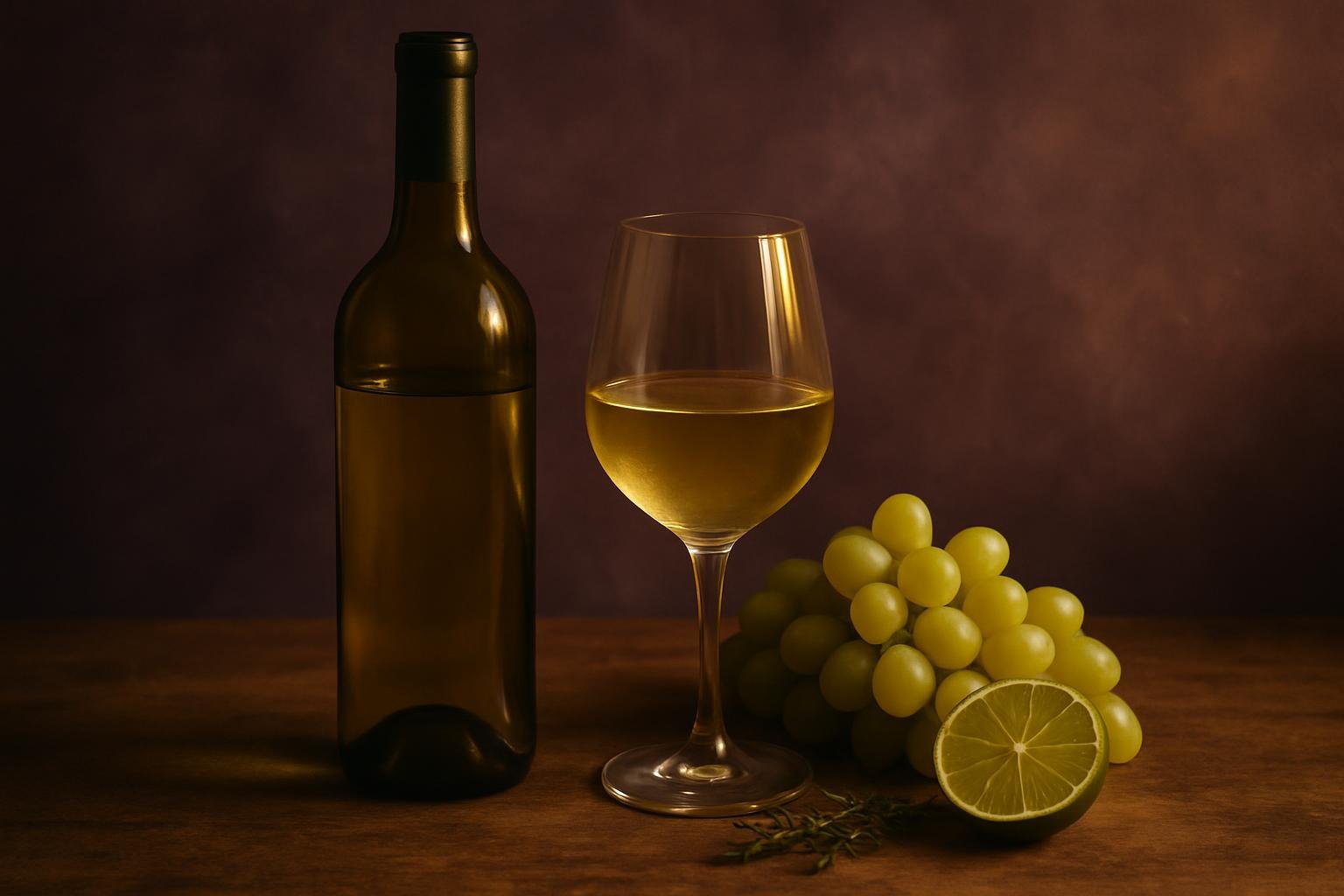
Lime, grapefruit, green apple and white peach, with a savoury twist of dried thyme and a saline, sea-breeze finish. Some versions carry a faint bitter-almond note like Soave; others lean tropical in warmer years. It is dry, light to medium in body and bright with acid, and it is at its best young.
| Aspect | Rating out of 5 | Characteristic |
|---|---|---|
| Sweetness | 🍷 | Bone dry, like sun-bleached sand |
| Body | 🍷🍷 | Light to medium, a beach towel rather than a doona |
| Tannins | – | None; nothing to catch on the way down |
| Acidity | 🍷🍷🍷🍷 | Zesty and refreshing, a squeeze of lime on a hot day |
| Alcohol by Volume | 🍷🍷🍷 | Moderate, usually 12.5–13.5% |
Each wine glass icon is one point on a 5-point scale: one glass is low, five is high, based on the grape’s typical style.
Where It Grows
Sardinia is the heartland, where Vermentino di Gallura is the island’s only DOCG. Liguria and coastal Tuscany grow it too, and across the border in Corsica and Provence the same grape goes by Rolle. Wherever it grows, it is within sight of the sea more often than not.
Australia has quietly become one of the world’s biggest Vermentino growers outside Italy. The Chalmers family brought it in through their Mildura nursery, and it now thrives in McLaren Vale, the Riverland, the Barossa, Heathcote and the Hunter, where growers love it for handling heat without losing freshness. It is arguably the most successful “alternative” white variety in the country.
How to Serve It
Temperature: 7–9°C. Cold, straight from the esky.
Glass: a narrower white wine bowl keeps the citrus focused; the Winewings Sauvignon Blanc glass suits it, or see the glasses roundup.
Decanting: no. The whole point is freshness.
Ageing: drink within two years. A few serious Sardinian bottles gain texture with three to five years, but most Vermentino is happiest as a young wine.
What to Eat With It
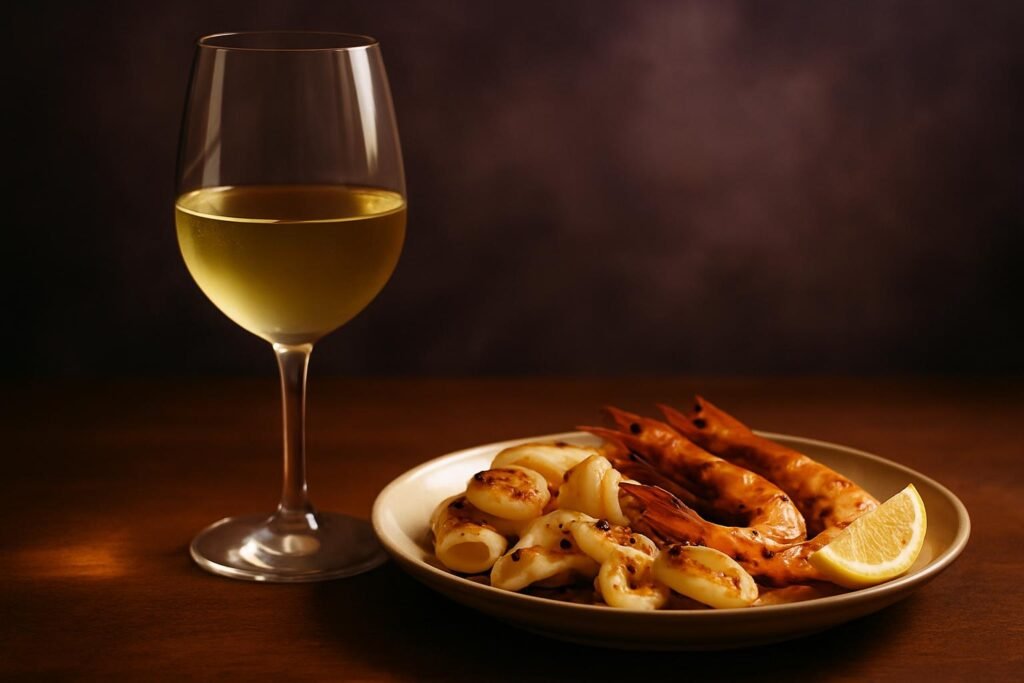
Seafood in every form: grilled prawns, barbecued fish, cod, calamari, mussels and fish and chips. It also loves pesto, pasta aglio e olio, goat’s cheese and anything with lemon and herbs. More in the pairing guides.
Celebrated Wine Labels
| Wine Label | Country | Style |
|---|---|---|
| Cantina di Gallura | Italy | Sardinian benchmark, Vermentino di Gallura DOCG |
| Piero Mancini | Italy | Crisp, coastal Sardinian style |
| Château de Saint-Martin | France | Provençal Rolle with polish |
| Poggio al Tesoro | Italy | Bolgheri, Tuscany, textural and ripe |
| Chalmers | Australia | The family that brought Vermentino to Australia |
Drink One Tonight

Mediterranean-Style Hillside Mystery Vermentino 2024
The grape this whole page is about has finally turned up on the shelf, and it costs about the same as the prawns you will drink it with.
- A real Vermentino at last, no stand-in required
- Citrus blossom, green apple and a light mineral edge
- Light, silky and built for prawns and salty snacks
- Ten dollars a bottle, which looks like a typo
- The producer is kept secret, so you are buying on taste rather than a famous name
New to Just Wines? The code FIRST20 takes $20 off a first order over $99, so it is worth building a mixed six rather than buying the one bottle. New customers only, and the offer can change without notice.
Frequently Asked Questions
What are some interesting facts about Vermentino?
It is one of the most drought-tolerant white grapes in the world, which is why Australian growers love it. Sardinia’s Vermentino di Gallura was the island’s first DOCG. And DNA testing showed that Vermentino, Rolle, Favorita from Piedmont and Pigato from Liguria are all the same grape wearing different hats.
Where does the name Vermentino originate from?
Nobody is certain. One theory links it to “vermiglio”, meaning vermilion, for the golden tint of ripe berries; another points to the Ligurian dialect. What we do know is that it arrived in Sardinia and Liguria several centuries ago, probably from Spain or Corsica.
To which wines is Vermentino similar?
Sauvignon Blanc for zip, Pinot Grigio for weight, and Albariño for that salty seaside finish. Fiano and Soave are its nearest Italian cousins in texture. Read our Sauvignon Blanc guide if you want the comparison.
Is Vermentino known by any other names?
Yes: Rolle in Provence and Corsica, Favorita in Piedmont, and Pigato in Liguria. If you see any of those on a label, you are drinking Vermentino.
Which Australian regions make the best Vermentino?
McLaren Vale and the Riverland lead on volume and quality, with the Barossa, Heathcote, the Hunter and the King Valley close behind. Look for producers who specialise in Italian varieties; they tend to pick it early and keep the acid bright.
Its southern Italian cousin has its own page: see our Fiano guide.
This post contains affiliate links. If you buy through them we earn a small commission at no extra cost to you. It keeps the wine flowing and the reviews honest.