Heads up: this guide contains an affiliate link. If you buy through it we earn a small commission at no extra cost to you.
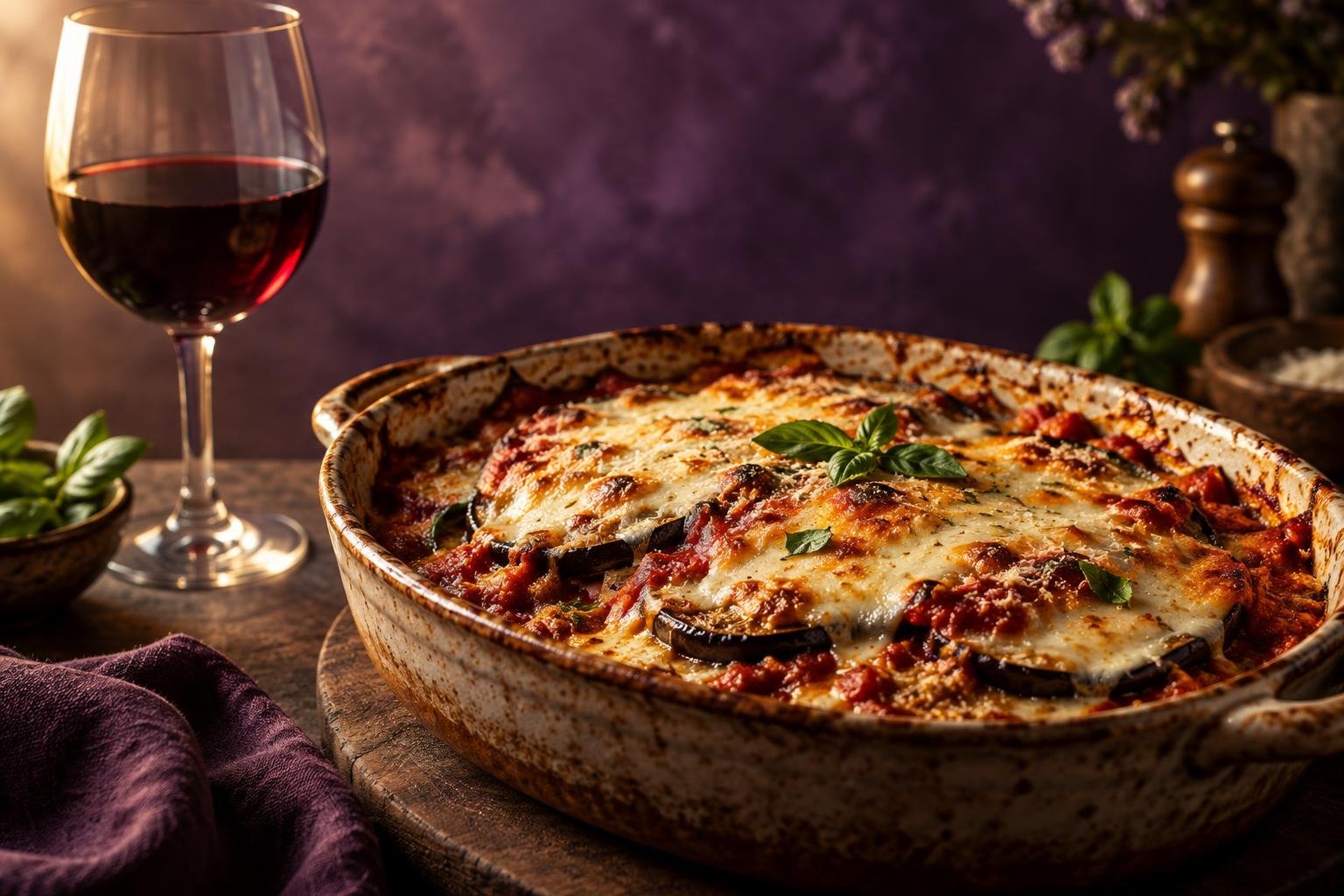
The best wine for eggplant parmigiana is a medium bodied Italian red with real acidity: Sangiovese first, then Barbera, Montepulciano or Nero d’Avola. The same answer covers eggplant lasagna, because in both dishes the tomato sauce is doing the talking.
People get stuck on the eggplant. Eggplant is soft, mild and a bit smoky, and on its own it barely registers. What you are actually pairing is baked tomato, melted cheese and a lot of olive oil.
Table of Contents
The Short Answer
- Sangiovese, and ideally a Chianti Classico. Sour cherry fruit, firm acid, savoury finish.
- Barbera if you want the same acidity with softer tannin.
- Montepulciano or Nero d’Avola for a rounder, riper version of the same idea.
- A dry Italian white such as Vermentino if you would rather drink white. Skip the oak.
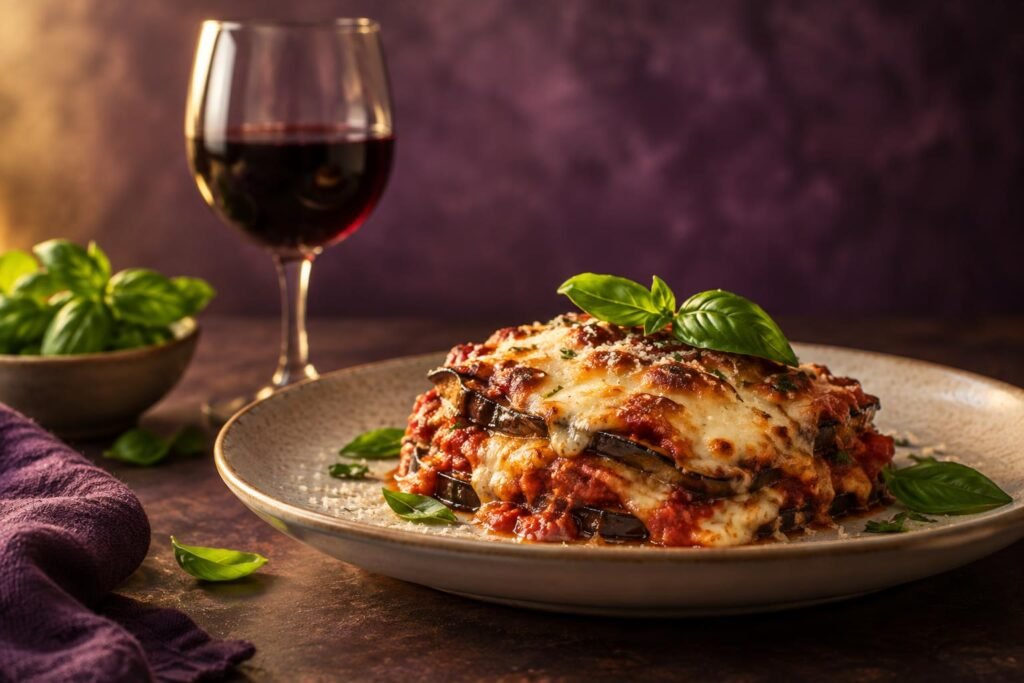
What Eggplant Parmigiana Does to Wine
Acid is the first problem, and it is a bigger one than most guides admit. The University of California points out that tomatoes are only marginally acidic, with a natural pH of roughly 4.5 to 4.8, but cooked down into a thick sauce that acidity becomes very noticeable on the plate.
Here is the rule that follows. A wine tasted next to an acidic dish will always seem softer than it did on its own. So a low acid wine ends up tasting flat and slightly sweet, like warm cordial. The wine has to bring its own acidity or the tomato will strip it.
Fat is the second problem. Eggplant soaks up oil like a sponge, then you add mozzarella and parmesan on top. Fat needs acid to cut it, which is the same answer again, only louder.
Salt is the third. Parmesan is a salty cheese, and salt makes tannin feel harsher. That is why a young Cabernet tastes bitter here while a Sangiovese does not.
Why Chianti Classico Is the Textbook Answer
This is not tradition for its own sake. It is written into the rulebook. the Consorzio Vino Chianti Classico requires Chianti Classico to be at least 80 per cent Sangiovese, with a minimum total acidity of 4.5 grams per litre and at least twelve months of maturation before release.
An appellation that sets a legal floor for acidity is telling you exactly what the wine is for. Riserva has to age for 24 months, and Gran Selezione, introduced in 2014, must be at least 90 per cent Sangiovese and age for 30 months. For a Tuesday night parmigiana, the basic Annata is all you need.
Best Wines for Eggplant Parmigiana
Sangiovese
Sangiovese tastes of sour cherry, dried herbs and tomato leaf, which is uncannily close to the dish itself. Tuscany is the home, but the King Valley, the Adelaide Hills and Heathcote all make good Australian versions now.
Barbera
High acid, low tannin, dark cherry fruit. Barbera is the friendliest wine on this list because it has all the freshness of Sangiovese with none of the grip, which suits a dish where the cheese is doing a lot of the work.
Montepulciano and Nero d’Avola
Both are riper and rounder, with soft plummy fruit and a savoury edge. If you find Chianti too lean or too sharp, this is where to go next. Nero d’Avola in particular is generous without being heavy.
A Dry Italian White
Vermentino, Fiano or a crisp Pinot Grigio all work, especially in summer when the dish is served warm rather than hot. Keep it dry and unoaked, and serve it at about 10 degrees.
Eggplant Lasagna and Eggplant Parmigiana Are Not Quite the Same
Parmigiana is layered eggplant, tomato, mozzarella and parmesan. Lasagna adds pasta sheets and often a bechamel, which means more dairy, more starch and a softer, creamier plate.
That extra cream pulls the pairing very slightly towards a rounder red. Barbera or Montepulciano suit lasagna a touch better than a lean Chianti does. If there is meat in the lasagna as well, go straight to Sangiovese and stop worrying.
What to Avoid
- Big, oaky Cabernet or Shiraz. Salt and tannin turn each other bitter, and the oak fights the tomato.
- Anything low in acid. A soft, ripe, jammy red will taste flat and sugary next to baked tomato.
- Oaked Chardonnay. Vanilla plus tomato is an odd plate to sit through.
- Sweet wines. There is already sweetness in slow-cooked tomato, and adding more makes the dish taste like dessert.
Drink One Tonight
If you want to taste why this pairing became a classic, buy the real thing once. A proper Chianti Classico next to a parmigiana is one of those matches that makes the point without anybody explaining it.

Antinori Peppoli Chianti Classico
A classic Tuscan red with sour cherry fruit, dried herbs and a firm savoury finish. Open it half an hour before dinner, serve it at about 17 degrees, and let the tomato and the wine argue politely with each other.
- At least 80 per cent Sangiovese, as the rules demand
- Sour cherry and herb notes that echo the tomato
- Acidity to cut through cheese and olive oil
- Pricier than a midweek red needs to be
- Too lean for anyone who likes big ripe fruit
If You Are Cooking It
Salt the eggplant slices and let them sit for twenty minutes before you fry them. They release water, then soak up far less oil, and a less greasy parmigiana is a much easier match for wine.
Finish with fresh basil off the heat rather than cooked into the sauce. That green, peppery note lines up beautifully with Sangiovese, and it is the same trick we use in our guide to wine with pizza.
Frequently Asked Questions
What wine goes with eggplant parmesan?
A medium bodied Italian red with high acidity. Sangiovese is the classic, and a Chianti Classico is the easiest version to find. Barbera, Montepulciano and Nero d’Avola all work well too.
Can you drink white wine with eggplant parmigiana?
Yes. A dry, unoaked Italian white such as Vermentino or Fiano holds up nicely, especially in warm weather. Just keep the acidity high, because the cheese and the oil need cutting through.
Why does tomato sauce make wine taste bad?
It does not, as long as the wine has enough acid of its own. Tasted next to an acidic dish, a wine seems softer than it really is, so a low acid red ends up tasting flat and sweet. Pick something fresh and the problem disappears.
Is Chianti the same as Chianti Classico?
They are different appellations. Chianti Classico comes from the original zone between Florence and Siena and carries the black rooster on the neck of the bottle, with stricter rules including at least 80 per cent Sangiovese.
What about eggplant lasagna with bechamel?
The cream softens everything, so a rounder red suits it better. Barbera or Montepulciano are ideal. A lean, high acid Chianti can feel a little sharp against all that dairy.
Does the wine change if the parmigiana has meat in it?
Only slightly. Meat adds savoury depth and a bit more fat, which suits Sangiovese even better. Keep the acidity and do not reach for anything heavier just because there is mince involved.
Lean meat changes the rules, and our guide to wine with goat meat explains why a big tannic red goes hard against it.
If soup is more your weather, our guide to wine pairing with minestrone soup works through the same tomato problem in a bowl.
Eggplant turns up in another southern French classic too, and our guide to wine to pair with ratatouille explains why the tomato changes the pour.
This post contains affiliate links. If you buy through them we earn a small commission at no extra cost to you. It keeps the wine flowing and the reviews honest.