Orange wine is made from white grapes fermented with their skins, which gives it colour, texture and a gentle tannic grip. That makes it much more food-friendly than many people expect.
So, what food goes with orange wine? Start with dishes that have some richness, salt, spice or savoury depth: charcuterie, firm cheese, roast chicken, grilled vegetables, mushrooms, miso and Middle Eastern-style sharing plates are all excellent places to begin.
The golden rule is simple: match the weight of the dish to the weight of the wine. A pale, zippy orange wine can work beautifully with seafood and fresh salads. A deeper amber bottle with more tannin can handle pork, smoky flavours and earthy vegetarian dishes.
Table of Contents
- First, what orange wine actually is
- The quick answer: the best foods to pair with orange wine
- Why orange wine works so well with food
- 15 foods that pair brilliantly with orange wine
- Pair orange wine by style
- Pairings to approach carefully
- Does orange wine go with cheese?
- Does orange wine go with seafood?
- Is orange wine sweet?
- What temperature should orange wine be served?
- Final sip
First, what orange wine actually is
Orange wine has nothing to do with oranges. It is white wine made the way red wine is made. Instead of pressing the juice off the skins straight away, the winemaker leaves the crushed white grapes sitting on their skins while they ferment. A few days gives a light gold tint. A few weeks or months turns it deep amber, which is where the name comes from. You will also see it called skin-contact wine or amber wine, and all three mean the same thing.
That skin time is what makes orange wine taste so different from the white wine you are used to. The skins hand over tannin, so it has the same drying grip on your gums that a red does. The flavours lean towards bruised apple, dried apricot, walnut and tea, with a gentle bitterness at the end. Think of it as a white wine wearing a red wine’s jacket.
Where it comes from
Georgia has been making wine this way for thousands of years, fermenting the grapes in big clay pots called kvevri buried in the ground. The modern revival started in Friuli in north-east Italy and just over the border in Slovenia, where producers like Radikon put skin-contact whites back on restaurant lists. Australian winemakers picked it up from there, and the Adelaide Hills in particular now has a solid crop of orange wines, with Lucy Margaux being one of the better known names.
How to serve it
Serve it cooler than a red and warmer than a white, around 12 to 14 degrees. Straight out of the fridge it tastes flat and bitter; after twenty minutes on the bench it opens up. A normal white wine glass is fine. Most orange wines are made with very little added sulphur, so once open, keep the bottle in the fridge and finish it within two or three days.
The tannin and the savoury edge are exactly why it pairs with food that would flatten a normal white, which is what the rest of this guide is about.
The quick answer: the best foods to pair with orange wine
- Charcuterie, olives and salty snacks
- Firm cheeses, goat’s cheese and washed-rind cheeses
- Roast chicken, turkey and pork
- Grilled salmon, octopus and richer seafood dishes
- Roast pumpkin, eggplant and mushrooms
- Miso, tahini, soy and sesame-based dishes
- Middle Eastern, North African and gently spiced Indian food
- Pizza, pasta and rustic Mediterranean cooking
Orange wine is not one fixed style. Before choosing your meal, take a quick sip. Is it light and citrusy, savoury and medium-bodied, or bold, grippy and almost red-wine-like? That will point you in the right direction.
Why orange wine works so well with food
Most white wines have little tannin because the skins are removed before fermentation. Orange wine keeps the skins in contact with the juice, so it picks up texture, a little grip and often savoury flavours.
That gives it a useful middle ground. It has the freshness of white wine, but enough structure to stand up to foods that might flatten a delicate Pinot Grigio or Sauvignon Blanc.
- Acidity refreshes rich or oily dishes.
- Tannin and texture work well with protein, fat and fried food.
- Savoury, herbal flavours suit mushrooms, roasted vegetables, olives and spice.
- Aromatic styles can be brilliant with fragrant cuisines, particularly where there is ginger, cumin, coriander, sesame or preserved lemon.
15 foods that pair brilliantly with orange wine
1. Charcuterie and cured meats
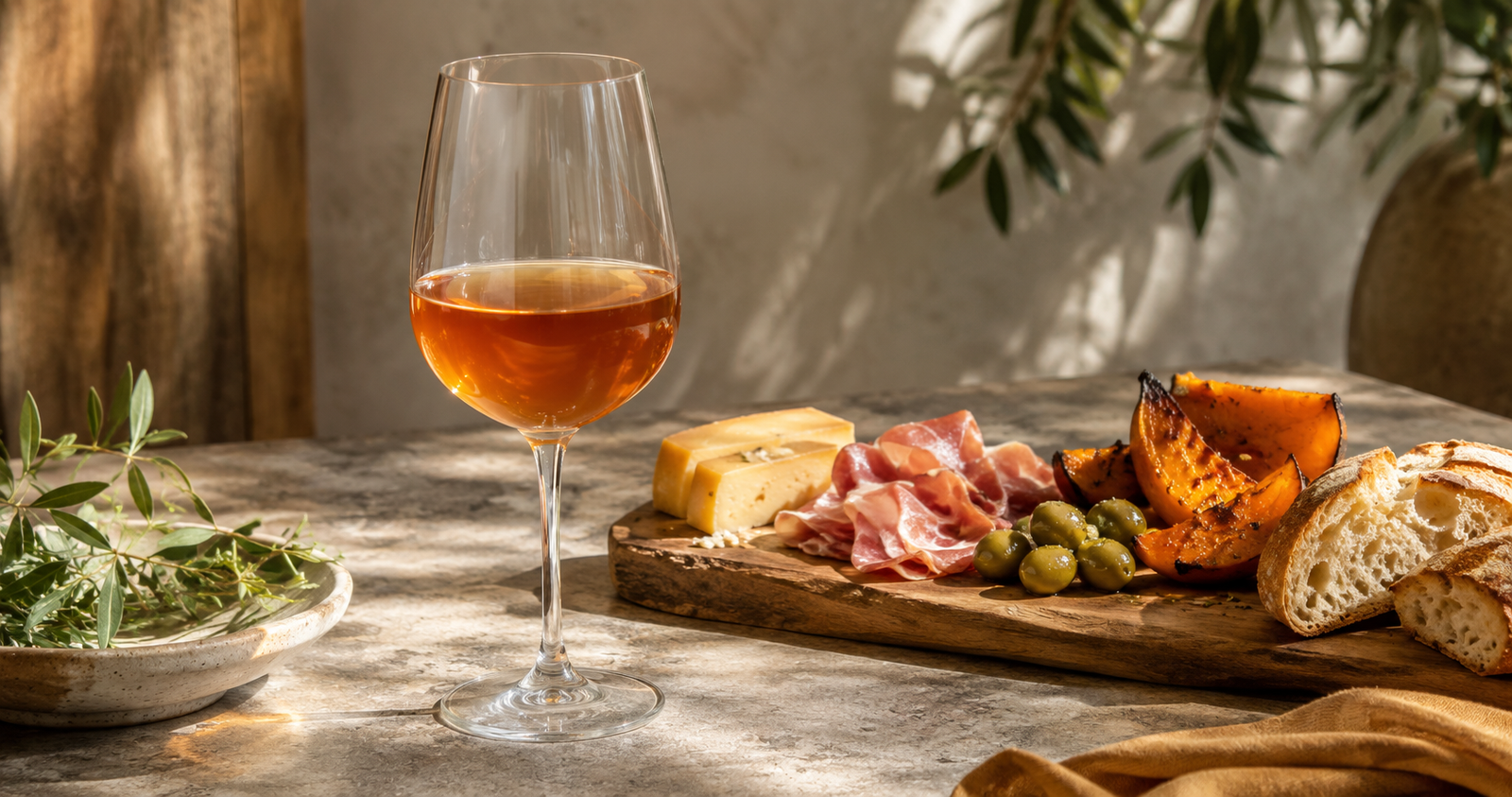
Salami, prosciutto, mortadella and chorizo are some of orange wine’s easiest wins. The salt and fat soften the wine’s tannic grip, while its acidity keeps the plate feeling fresh.
For a casual first pairing, pour a lightly chilled bottle with cured meat, olives, marinated artichokes and good bread.
2. Firm, nutty cheeses
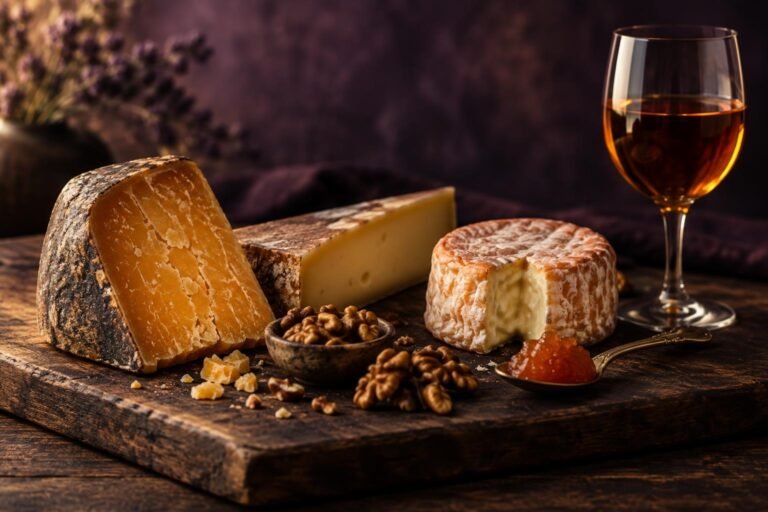
Comté, Manchego, Gruyère and aged cheddar all work well with orange wine’s savoury character. The wine has enough structure to cope with richer cheese, without needing the full weight of a red.
For more ideas, see our guide to the best cheese with orange wine.
3. Goat’s cheese and feta
Fresh, tangy cheeses are particularly good with lighter orange wines. Try goat’s cheese with grilled peaches or beetroot, or feta with tomatoes, herbs and olive oil.
The salty, creamy cheese gives the wine a softer edge, while the wine’s brightness stops the dish becoming too heavy.
4. Roast chicken with herbs
Roast chicken is a brilliant match for a medium-bodied orange wine, especially when it is cooked with lemon, garlic, thyme or oregano.
Skip a very delicate bottle if the dish is heavily spiced. Choose something with a little more colour and texture instead.
5. Pork belly or grilled pork
The combination of crisp fat, smoky flavour and a touch of sweetness makes pork a natural partner for a more structured orange wine. Pork belly, grilled pork chops and slow-roasted shoulder all work nicely.
Serve the wine cool rather than ice-cold, around 10 to 12°C, so its texture can show properly.
6. Grilled salmon
Orange wine can be a much better choice than a light white wine when salmon is grilled, smoked or served with a punchy sauce.
Try salmon with miso glaze, sesame, fennel, herbs or a charred lemon. A pale orange wine works for simply grilled fish, while a deeper style can take the richer flavours.
7. Octopus and shellfish with smoke or spice
Plain oysters can be too delicate for some orange wines, but chargrilled octopus, barbecued prawns and scallops with browned butter are another story.
The key is preparation. Give seafood char, spice, garlic, saffron, chorizo or a richer sauce and orange wine becomes much more convincing.
8. Roast pumpkin and squash
Roast pumpkin, butternut squash and sweet potato bring caramelised sweetness and texture that orange wine loves. Add tahini, hazelnuts, chilli, sage or feta and you have an even better match.
This is one of the easiest vegetarian pairings for a dinner party.
9. Eggplant with miso or tahini
Smoky eggplant and orange wine are a very good pairing. The wine’s bitterness and acidity work with the savoury depth of miso, soy, tahini and sesame.
Try miso-glazed eggplant, baba ganoush or grilled eggplant with yoghurt and pomegranate.
10. Mushroom dishes
Mushrooms bring the earthy, umami-rich flavours that make orange wine shine. Go for mushroom risotto, grilled mushrooms on toast, a creamy pasta or a wild mushroom tart.
A fuller-bodied orange wine is especially good here, because it has enough structure to stand up to the dish without overpowering it.
11. Fried chicken and crispy snacks
Fried food needs acidity. Orange wine has it, plus enough body to avoid disappearing behind a crunchy coating.
Try it with fried chicken, arancini, tempura vegetables or crisp cauliflower fritters. Keep the bottle properly chilled and it will feel bright rather than heavy.
12. Middle Eastern sharing plates
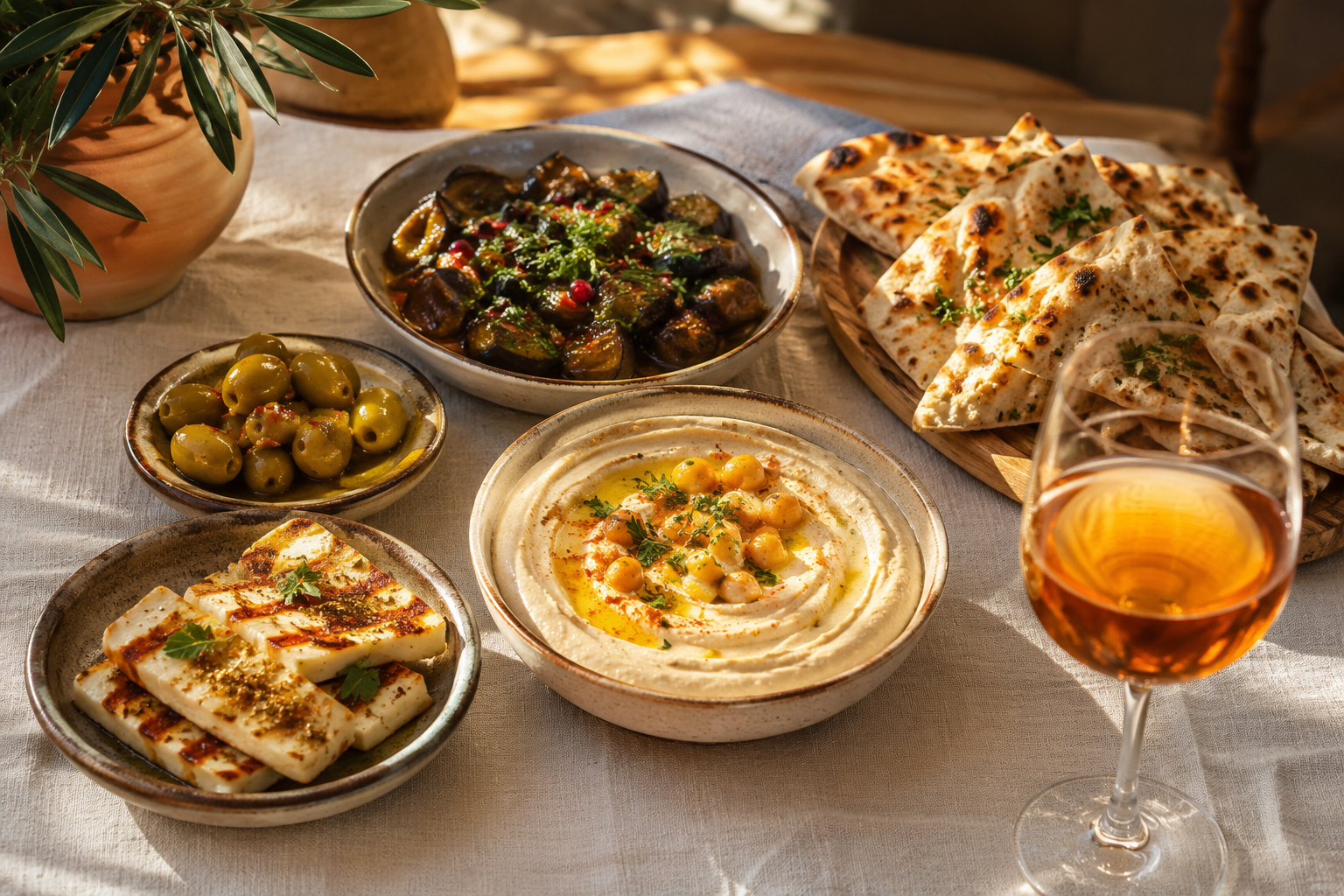
Orange wine is made for a table full of houmous, labneh, falafel, grilled halloumi, olives, flatbreads and roasted vegetables.
The spices and herbs are aromatic rather than aggressively hot, which lets the wine’s savoury side do its thing. It is also a genuinely useful bottle when the table has both meat-eaters and vegetarians.
13. North African-inspired chicken or lamb
Chicken with preserved lemon, cumin, coriander and olives is a natural match. A richer orange wine can also work with lamb tagine, particularly when the dish leans savoury rather than very sweet.
If there is lots of dried fruit or sugar in the sauce, choose a softer, fruitier orange wine rather than a fiercely tannic one.
14. Pasta and pizza
Orange wine is often better with pasta than people expect. Creamy mushroom pasta, pumpkin ravioli, pesto pasta and pizza with sausage, mushrooms or roasted vegetables all work well.
For tomato-heavy pasta, choose a fuller orange wine. For creamy or herb-driven dishes, choose a fresher style.
15. Mildly spiced Indian and Thai dishes
Aromatic spice and orange wine can be a lovely match, especially with dishes based on coconut, ginger, turmeric, cardamom or coriander.
Avoid pairing a high-alcohol, tannic orange wine with extremely hot chilli. Heat makes alcohol feel hotter. For spicy food, look for a fresher, lower-alcohol bottle with some fruit.
Pair orange wine by style
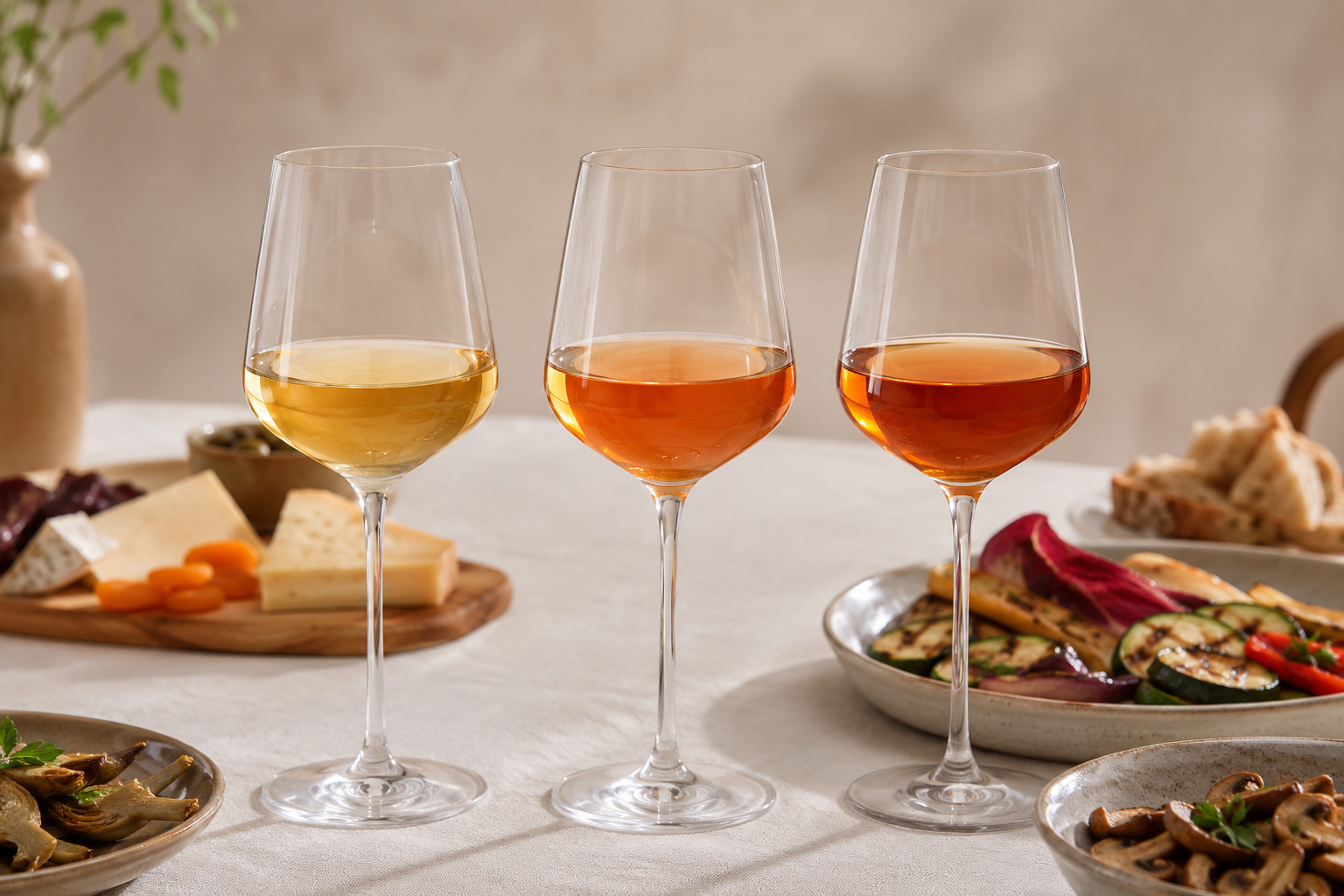
Pale and fresh orange wines
These tend to be lighter, brighter and more citrus-led.
- Grilled fish
- Goat’s cheese
- Fresh salads with herbs
- Prawns and scallops
- Light chicken dishes
- Vegetable fritters
Medium-bodied, savoury orange wines
These are often the most versatile bottles at the table.
- Charcuterie
- Roast chicken
- Mushroom dishes
- Pumpkin and squash
- Halloumi
- Pasta and pizza
Deep, grippy orange wines
These are the bottles with real tannic structure. Treat them almost like a light red wine.
- Pork belly
- Lamb with herbs and spice
- Rich mushroom dishes
- Aged cheese
- Chorizo
- Smoky barbecue food
Pairings to approach carefully
Orange wine is versatile, but it is not magic.
Be cautious with very delicate dishes, such as plain steamed white fish or a subtle sashimi platter. A light orange wine may work, but a deeply tannic bottle can overpower the food.
Very sweet desserts are also tricky unless the wine itself has noticeable sweetness. And with seriously fiery chilli, choose a fresher, lower-alcohol style or switch to an off-dry white wine.
Does orange wine go with cheese?
Absolutely. Firm, nutty cheeses are the safest bet, but goat’s cheese, feta and washed-rind cheeses can also work beautifully.
If you are building a cheese board, include salty snacks, olives and fruit rather than leaning too heavily on sweet chutney.
Does orange wine go with seafood?
Yes, particularly when the seafood is grilled, smoked, spiced or served with a richer sauce. Salmon, octopus, prawns and scallops are better starting points than very delicate raw fish.
Is orange wine sweet?
Most orange wines are dry. Their rich texture and aromas can make them seem fuller or fruitier than they really are, so taste the bottle before choosing your dish.
What temperature should orange wine be served?
Serve lighter orange wines at about 8 to 10°C. Fuller, more structured bottles are better around 10 to 12°C.
If it feels too tannic straight from the fridge, let it sit for ten minutes before pouring another glass.
Final sip
Orange wine is one of the most flexible bottles to bring to the table because it sits somewhere between white and red. It can refresh a salty cheese board, handle a smoky roast, and make vegetarian food feel properly considered.
If you are new to it, start with charcuterie, cheese, roast chicken or a tray of roast vegetables. Once you get a feel for the wine’s texture, the rest gets deliciously easy.
Want the full background first? Read our guide to what orange wine is.