Heads up: this guide contains an affiliate link. If you buy through it we earn a small commission at no extra cost to you.
The Vintorio Wine Aerator Pourer is the one people mean when they say “the good aerator”. It has been on the market for years, it turns up in almost every roundup, and it costs about thirty-eight dollars in Australia, which is roughly double the no-name plastic ones.
We wanted to know two things. Is it better than the cheap ones, and is being better actually worth twice the money? The answers are yes and it depends, which sounds like a cop-out until you see what the extra money buys.
Table of Contents
What It Is
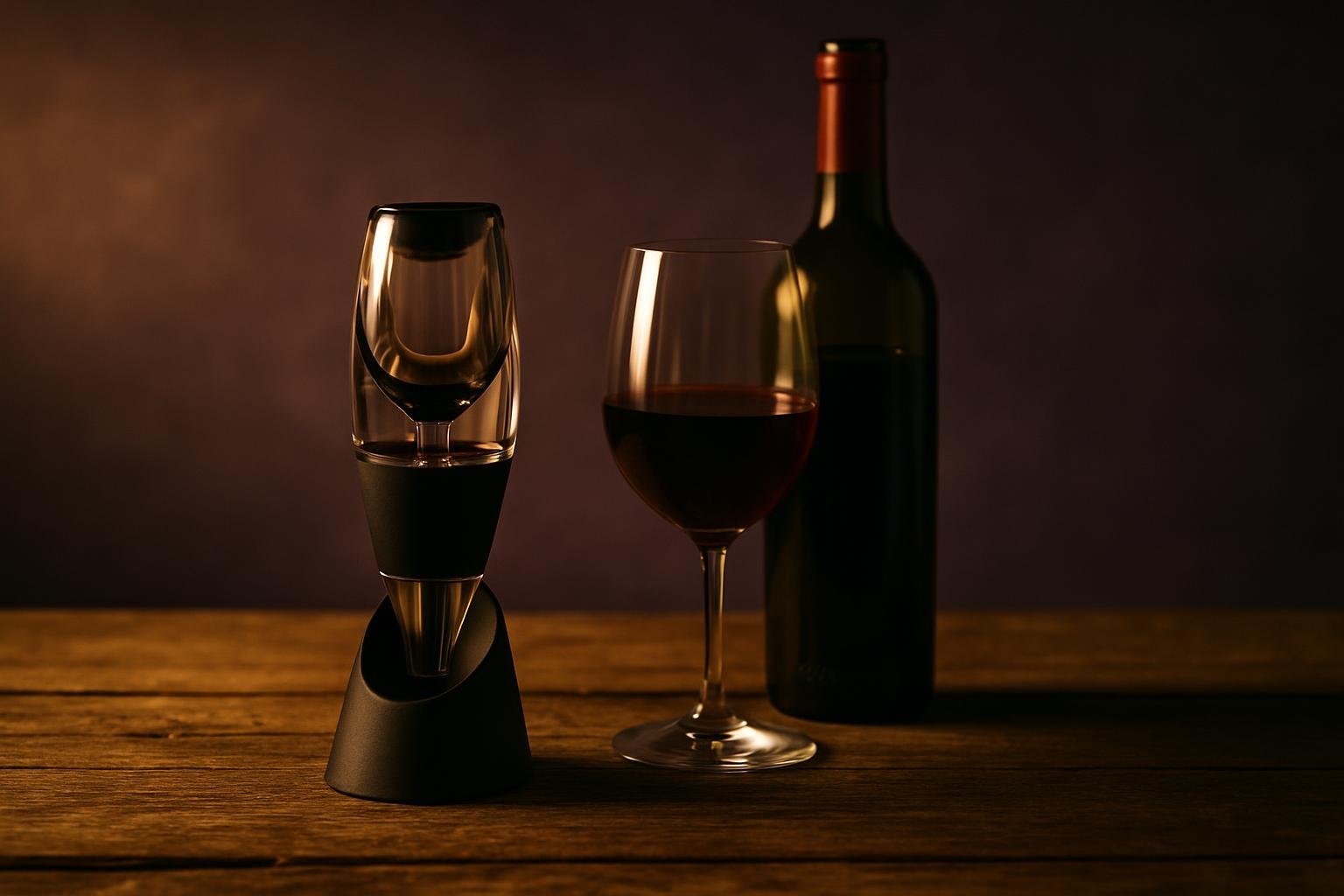
A pour-through aerator in acrylic and food-grade rubber, with a fitted stand and a small velvet pouch. It pushes into the bottle neck and stays there, so the wine sprays through a set of internal vents on its way into the glass. There is no filter, no electronics and nothing to charge.
The build is the difference. The rubber gasket grips a wider range of bottle necks without wobbling, the vents are cleanly moulded rather than rough, and the stand means you have somewhere to put it down that is not the bench. Small things, but they are what you notice on the tenth use rather than the first.
How We Tested It
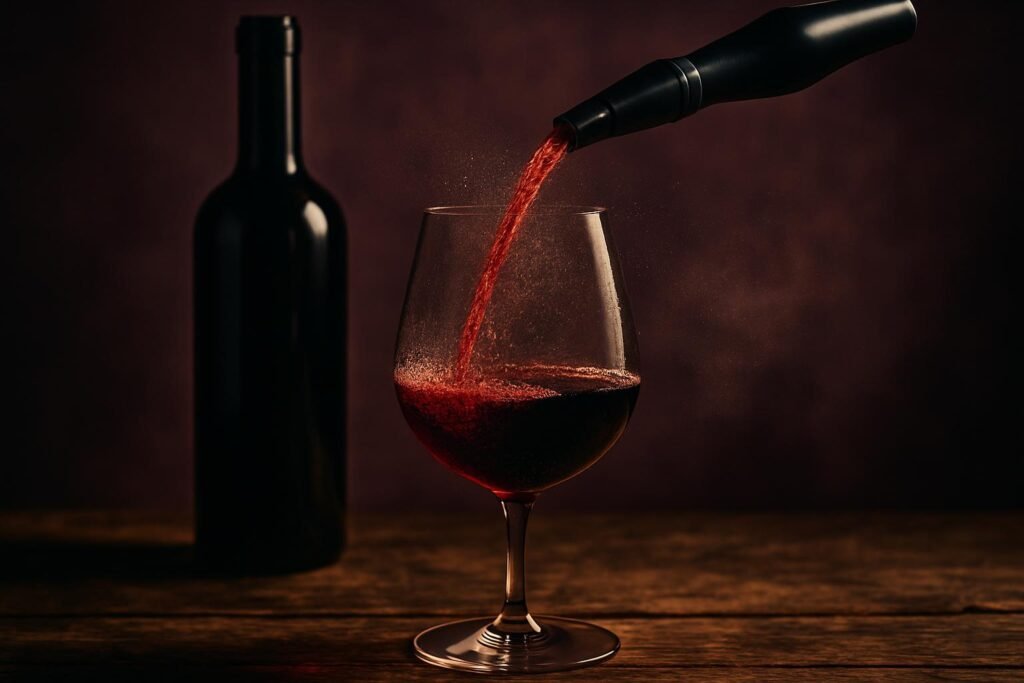
Same method as the rest of our gadget reviews: one bottle split into two glasses, one poured normally and one through the aerator, smelled and tasted side by side immediately and again after twenty minutes. We ran a young Malbec and a young Shiraz Cabernet through it, then repeated with the cheaper Luxury 2018 pourer to compare the two directly.
This is a kitchen bench comparison rather than a blind panel, and we would rather say that than pretend otherwise.
What the Extra Money Buys
Not better chemistry. This is the part reviews get wrong. Both aerators do the same physical thing: they spray the wine so the lightest, smelliest compounds evaporate on the way to the glass. On the young Malbec, both stripped the closed, slightly struck note equally well, and we could not reliably tell the two aerated glasses apart.
What the Vintorio buys you is a better object. It does not wobble in the neck of a Riesling bottle or a heavy Shiraz bottle, it does not dribble down the label, and the stand keeps a red-stained gadget off your bench. Over a few years of regular use, that is a real difference. Over one dinner party, it is not.
It is also worth being clear about the ceiling. Aeration works by evaporation, which is instant, and by oxidation, which is not. Oxygen needs hours to change tannin, so no pour-through device softens a firm young red no matter how well it is made. If that is what you want, you want a decanter and an hour of patience. Our review of the cheaper Luxury 2018 goes through that chemistry in full.
What We Liked
- It grips properly. The rubber seal held firm in every bottle we tried, including a heavy Barossa punt and a slim Riesling neck.
- A clean pour. Almost no dribble, which is the single most annoying flaw in cheap aerators.
- The stand. Sounds trivial until you have put a wine-covered funnel on a clean bench.
- It genuinely opens up a closed red. On the young Malbec the difference in aroma was immediate and not subtle.
What We Did Not
- The price gap is hard to justify on chemistry alone. You are paying for build quality, not for a better result in the glass.
- Still fiddly to clean. Rinse it straight away or red wine dries in the vents.
- It cannot do what most buyers hope. Tannin needs hours. No aerator changes that, and this one is no exception.
- Pointless on delicate or older bottles. Aeration can strip fragile aromas as easily as it lifts closed ones.
Alternatives
The Luxury 2018 pourer costs about half as much and produces the same effect in the glass, so it is the sensible first purchase if you are not sure you will use one. The full aerator roundup covers hand-held and electric styles, and the decanter guide is where to go if you want the slow version that actually softens a wine.
What to Pour Through It

Alamos Malbec
This is the bottle we ran through the Vintorio, and it is a fair test of what an aerator is for. Young Malbec has plenty of aroma sitting just below the surface, so the spray brings it up straight away. Pour one glass normally and one through the aerator, smell them side by side, and you will know within ten seconds whether the gadget is worth a place in your drawer.
- Young and juicy, with plenty of aroma to lift
- Mendoza Malbec at an everyday price
- Works with steak, burgers and barbecued lamb
- Enough grip to make the comparison obvious
- Not complex enough to reward a long decant, which is rather the point
The Verdict
Buy it if you already know you like aerators and expect to use one weekly for years. The build quality is real, the pour is clean, and it will outlast three cheap ones. Buy the cheaper pourer first if you are still deciding, because the wine in the glass will taste the same.
Either way, buy it for the right job. An aerator rescues a young red that smells closed on opening. It is not a decanter in miniature, and no amount of moulded acrylic will make it one.
Frequently Asked Questions
Is the Vintorio wine aerator worth it?
Worth it if you will use one often, because the build quality and clean pour genuinely last. Not worth double the money if you only want to know whether aerators do anything, since a cheaper pourer produces the same effect in the glass.
Does the Vintorio aerator fit all bottles?
It fitted every standard bottle we tried, including a heavy Barossa punt and a narrower Riesling neck. Very old bottles with irregular necks can be a looser fit.
How long does wine need in an aerator?
About a second, which is all the contact you get. That is enough for the evaporation that removes closed or eggy smells, and nowhere near enough for the slow oxidation that softens tannin.
Can you leave the Vintorio in the bottle?
Yes, that is the design. It stays in the neck between pours, which is one of the reasons it is easier to live with than a hand-held funnel.
How do you clean a Vintorio aerator?
Rinse it under hot running water immediately after use and stand it upside down to drain. Do not let red wine dry inside the vents, because that stain is difficult to remove afterwards.
Should I use it on white wine?
Usually not. The freshness in most whites is the thing you paid for, and aeration can blow some of it away. Use it on a white only if the wine smells struck or closed when you open it.
If you like the theatre of aeration more than the effect, our Wine Savant bulb aerator review covers the prettiest one we have used, and what it can and cannot do.
This post contains affiliate links. If you buy through them we earn a small commission at no extra cost to you. It keeps the wine flowing and the reviews honest.