Heads up: this guide contains an affiliate link. If you buy through it we earn a small commission at no extra cost to you.
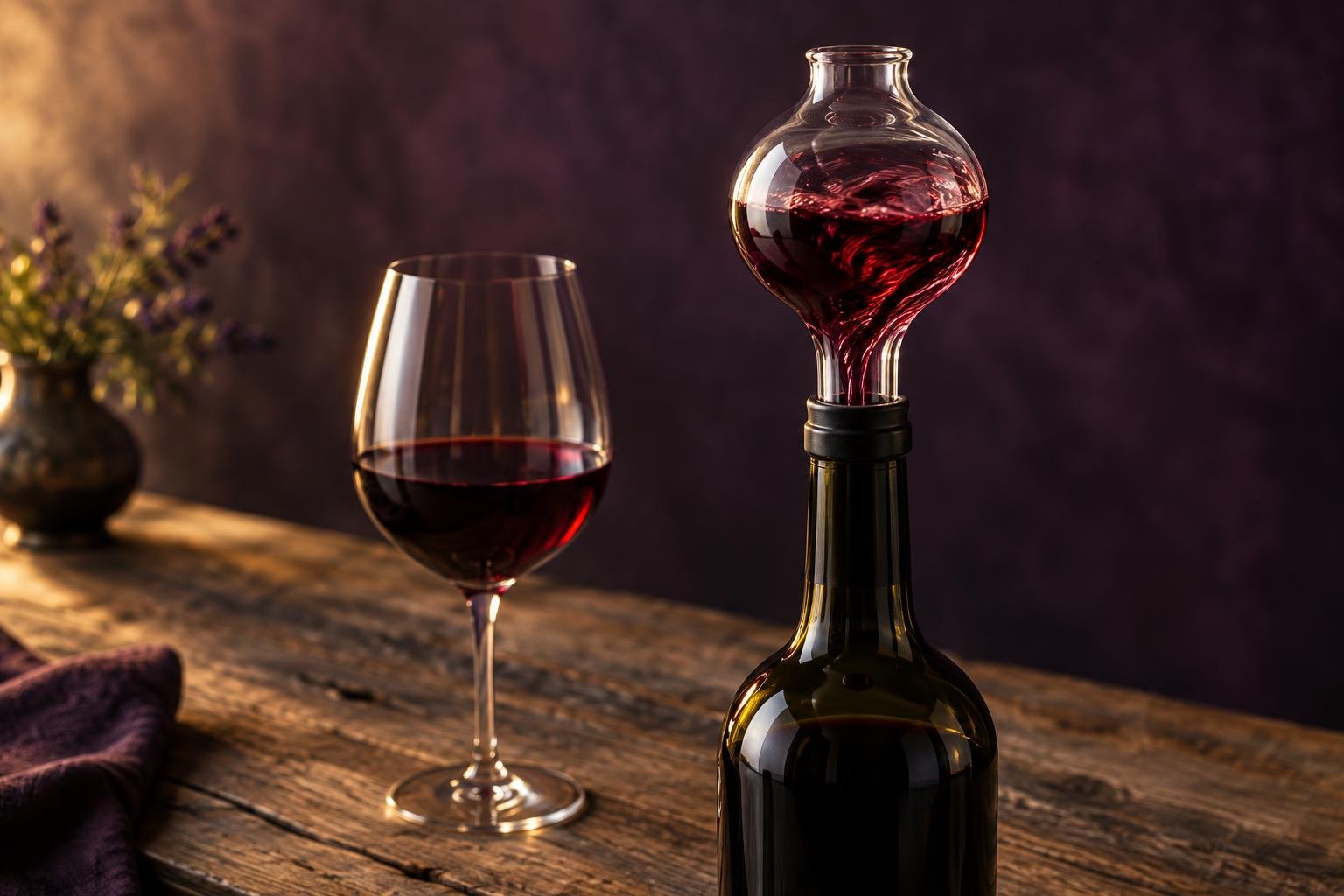
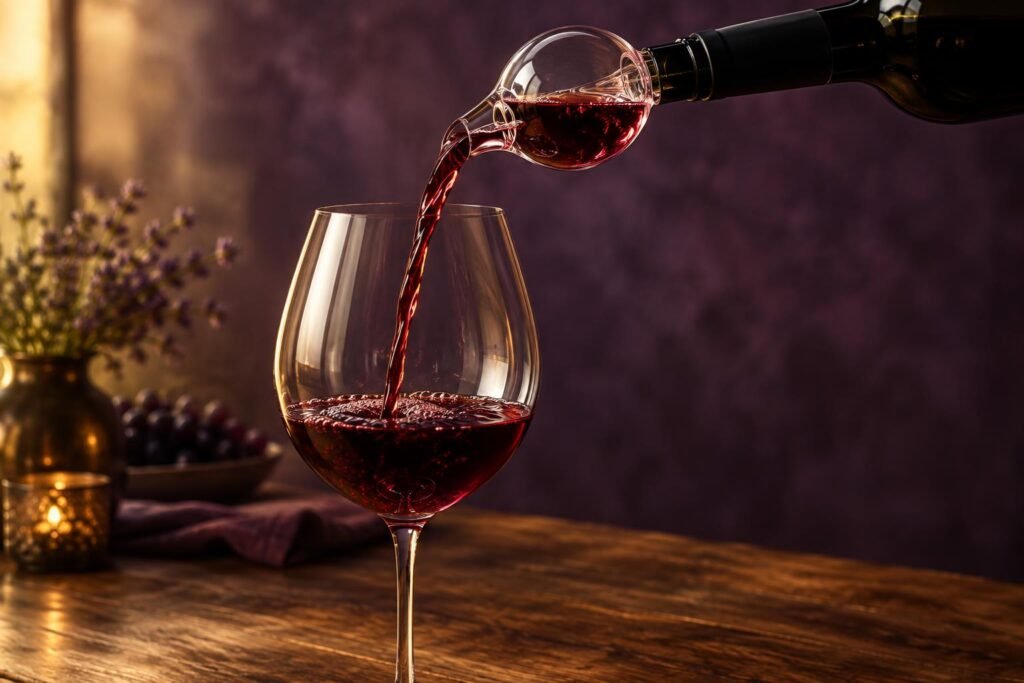
The Wine Savant Wine Bottle Aerator is a hand-blown glass bulb that sits in the neck of the bottle. You swirl, the wine sloshes around inside the bulb, and then you pour. It is the best-looking aerator we have used, and it is also the one that does the least to the wine. Both of those things are true at once, which is why this review is longer than the box.
Short version: buy it because it looks lovely on the table and pours cleanly. Do not buy it expecting a hard young Shiraz to turn soft, because no aerator can do that in the time it takes to fill a glass. If you want the science behind that claim, it is further down, with a source.
Table of Contents
What It Is
The Wine Savant is an American barware brand, and this is its “Italian Bulb Aerator” style. It is a single piece of clear borosilicate glass, blown by hand, with a stopper that fits into the bottle and a round bulb above it. There are no moving parts, no filters and no batteries. It comes boxed, which is part of why it turns up on so many gift lists.
At the time of writing the Amazon Australia listing shows it in stock at about seventy-five dollars, with a rating of 4.4 stars from nearly 700 reviews. That is a lot of money for a piece of glass, so it needs to earn it.
Who It Is For
This is for the person who likes the ritual of wine as much as the wine. It looks like a small science experiment on the dinner table, and guests always ask about it. It is also a good fit for anyone who finds a full-size decanter a pain to store and wash, since the bulb sits in the bottle and rinses in seconds.
It is not for someone who wants the biggest possible change in the glass. A pour-through venturi aerator mixes far more air into the wine per second, and a proper decanter gives it hours. This one sits between the two, closer to the decanter in spirit and closer to nothing in effect.
How We Tested It
We used it over several evenings and a couple of tastings with friends, mostly on young Australian reds. We looked at four things: how easily it fits and pours, how it changes the smell and taste of the wine compared with the same wine straight from the bottle, how easy it is to clean, and how it holds up to being knocked about a bit. We did not measure anything with lab equipment, so treat the taste notes as one household’s honest opinion.
What We Liked
- The look. Hand-blown glass has small flaws and a slight wobble to it, and that is the charm. It is a conversation starter before the first glass is poured.
- The pour. The stopper fits snugly, the spout pours cleanly and we never had a drip run down the label. That is more than we can say for some plastic pourers.
- The nose. On a young Shiraz that smelled a little closed and eggy straight from the bottle, a swirl in the bulb blew that off within a few seconds. This is the one job aerators do well.
- Cleaning. Rinse under the hot tap, stand it upside down, done. No filters, no tubes, no batteries.
What We Did Not
- The stopper. It is the weak point. It needs gentle handling, and a fair number of Amazon reviewers say the same thing.
- The price. Around seventy-five dollars is decanter money. A basic glass decanter does more for the wine and costs less.
- The tannin. The wine did not get softer. It smelled nicer, and it looked marvellous going in, but a firm young red came out just as firm. That is not a fault of this product; it is how oxygen and wine work.
- The swirl. Swirl too hard and the wine climbs the bulb. Swirl a full bottle over a white tablecloth at your own risk.
Does Aerating Actually Do Anything?
Yes, but not the thing the marketing says. Splashing wine through air does two quick things. It lets the smelliest, most volatile compounds escape, which is why a wine that smells of struck match or old egg cleans up fast. And it lets a little oxygen in, which starts a slow reaction with the tannin.
The key word is slow. A study on Chianti in the journal Molecules measured how long tannins took to use up the oxygen dissolved in the wine, and the answer was seven to fourteen days for the first dose. An aerator gives the wine a second or two of air. It cannot soften tannin on that timescale, and neither can a decanter in an hour. What a decanter does have is time, which is why a big Cabernet still tastes better after two hours in one.
So the honest job description for this bulb is: fixes a smelly nose, looks beautiful, pours cleanly. The maker says it opens your wine faster than any other aerator; we could not tell the difference in the glass between this and a cheap pourer, except that the cheap pourer mixed in more air.
Alternatives
If you want the biggest change for the least money, the Vintorio pourer or the Luxury 2018 pourer both mix more air in and cost a fraction of this. If you want gadgetry, the JOQINEER electric aerator has a pump and a button. If you want the wine to actually change, buy a decanter and give it an hour. Our aerator roundup puts all of them side by side.
What to Pour in It
Something young, red and a bit closed on the nose, so you can see the one trick the bulb does properly. A McLaren Vale Shiraz is ideal: plenty of fruit, a bit of grip, and it looks spectacular swirling around inside the glass.

Hardys Tintara Shiraz
Tintara is one of the old names of McLaren Vale, and this is the honest, generous style of Shiraz the region does best. Swirl it in the bulb, give it a sniff, then pour the rest into a decanter and taste it again in an hour. You will learn more about aeration in one evening than any product page will tell you.
- Classic ripe McLaren Vale style with a soft chocolate finish
- Plenty of colour and fruit to show off in the bulb
- Under thirty dollars at the time of writing
- Young and firm enough that no aerator will fully tame it
- Drink within a few years rather than cellaring
Verdict
The Wine Savant Wine Bottle Aerator is a table ornament that also pours wine, and we mean that kindly. It is the prettiest aerator we own, it pours cleanly and it clears a smelly nose in seconds. It does not soften tannin, because nothing that fast can, and the stopper is fragile for the money. Buy it as a gift for someone who loves the theatre of wine, and buy them a decanter if they want the wine to change. The Amazon Australia listing was in stock when we checked.
Frequently Asked Questions
Is the Wine Savant aerator worth the money?
For the look and the clean pour, yes, if that is what you want from it. For the effect on the wine, a cheaper pour-through aerator does more and a decanter does far more. It is a gift-first product.
Does a bulb aerator replace a decanter?
No. A decanter works because the wine sits in air for an hour or more. The bulb gives it a few seconds. It will fix a closed or eggy smell, but it will not soften tannin.
What is the difference between this and a venturi pourer?
A venturi pourer forces the wine through a narrow throat with air holes, so a lot of air mixes in as you pour. The bulb just lets the wine slosh around in a glass chamber. The pourer changes the wine more; the bulb looks nicer doing less.
Can I use it with white wine?
You can, but there is little point. Whites and sparkling wines rarely need air, and bubbles will go flat. Keep it for reds.
How do I clean it?
Rinse it with hot water straight after use and stand it upside down to dry. Avoid the dishwasher; hand-blown glass and the stopper do not like it.
Is it fragile?
The glass bulb is thicker than it looks and survived our kitchen. The stopper is the part to baby; it loosens with rough handling.
This post contains affiliate links. If you buy through them we earn a small commission at no extra cost to you. It keeps the wine flowing and the reviews honest.