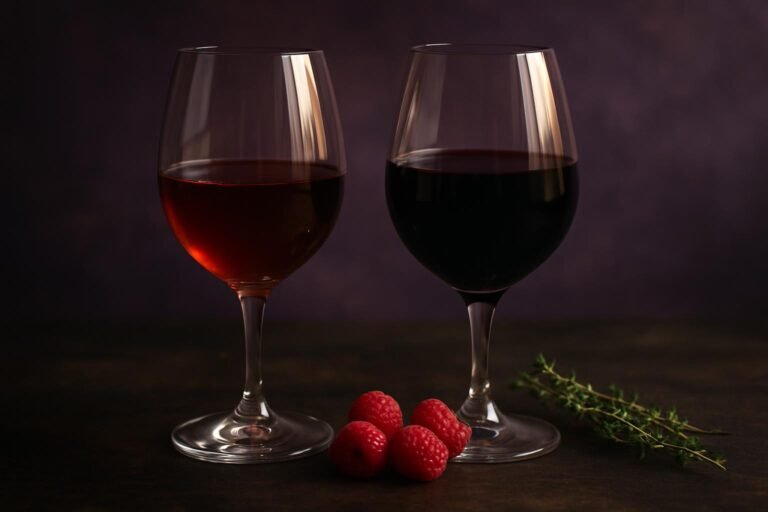
Cabernet Franc is Cabernet Sauvignon’s parent. In 1997 DNA testing showed that the world’s most famous red grape is simply a cross of Cabernet Franc and Sauvignon Blanc that happened in a Bordeaux vineyard a few hundred years ago. The parent is lighter, earlier to ripen, leafier and cheaper, and for most of history it was the blending grape behind its more famous child. It is now having a moment of its own. Here is how the two compare and when to reach for each.
Table of Contents
The short version
| Cabernet Franc | Cabernet Sauvignon | |
|---|---|---|
| Relationship | The parent | The child (with Sauvignon Blanc) |
| Colour | Bright, paler red | Deep, dark red |
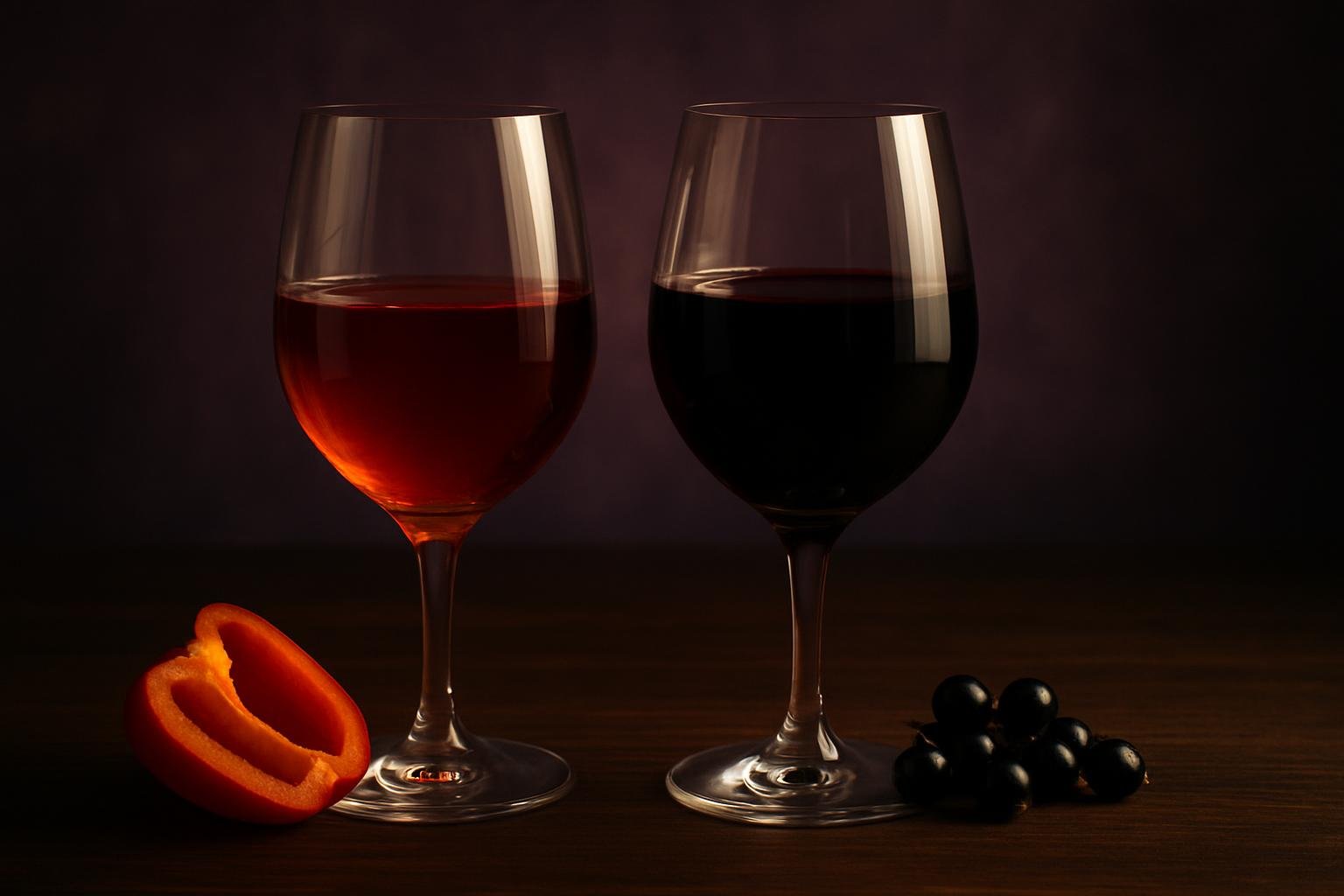
| Smells of | Raspberry, violets, graphite, leaves, green capsicum | Blackcurrant, cedar, mint, tobacco |
| Body and tannin | Medium body, softer tannin | Full body, firm tannin |
| Ripens | At least a week earlier | Late; needs a warm site |
| Home ground | Loire Valley (Chinon, Bourgueil, Saumur-Champigny); Right Bank Bordeaux | Left Bank Bordeaux; Napa; Coonawarra; Margaret River |
| Usual job | Blending partner, or a light, food-friendly red on its own | The star of the blend, or a big varietal wine |
| Ready to drink | Young; three to eight years for the best | Needs time; ten to twenty for the best |
| Serve at | 14 to 16°C; can take a light chill | 16 to 18°C |
Why they taste different
Cabernet Franc has thinner skins than its child, so it gives less colour and less tannin, and it ripens at least a week earlier, so it can be grown in cooler places where Cabernet Sauvignon would never get there. Both grapes carry the same family of compounds that smell of green capsicum when the fruit is underripe. In Cabernet Sauvignon that note is a fault to be avoided; in Cabernet Franc a little of it is part of the charm, a leafy, herbal edge over raspberry and violet fruit that makes the wine smell like a garden after rain. The best descriptions of Cabernet Franc also mention graphite, the smell of a freshly sharpened pencil, which is as good a way as any to tell it from its child in a blind tasting.
Cabernet Sauvignon, being thick-skinned and late, is darker, more tannic and more structured, with blackcurrant instead of raspberry and cedar instead of leaves. It needs warmth to ripen and time to soften, and rewards both. That is why it took over the world: in the right place it makes the biggest, longest-lived, most collectable reds there are.
Where each one is at its best
Cabernet Franc’s home is the Loire Valley, where Chinon, Bourgueil and Saumur-Champigny make it as a light, bright, savoury red that is often served cool and goes with almost anything. In Bordeaux it is usually the third grape in the blend, but on the Right Bank it can lead: Château Cheval Blanc, one of the most expensive wines in the world, is mostly Cabernet Franc. It is one of the twenty most planted grapes globally and has serious followings in the Loire, north-east Italy, Hungary and the eastern United States.
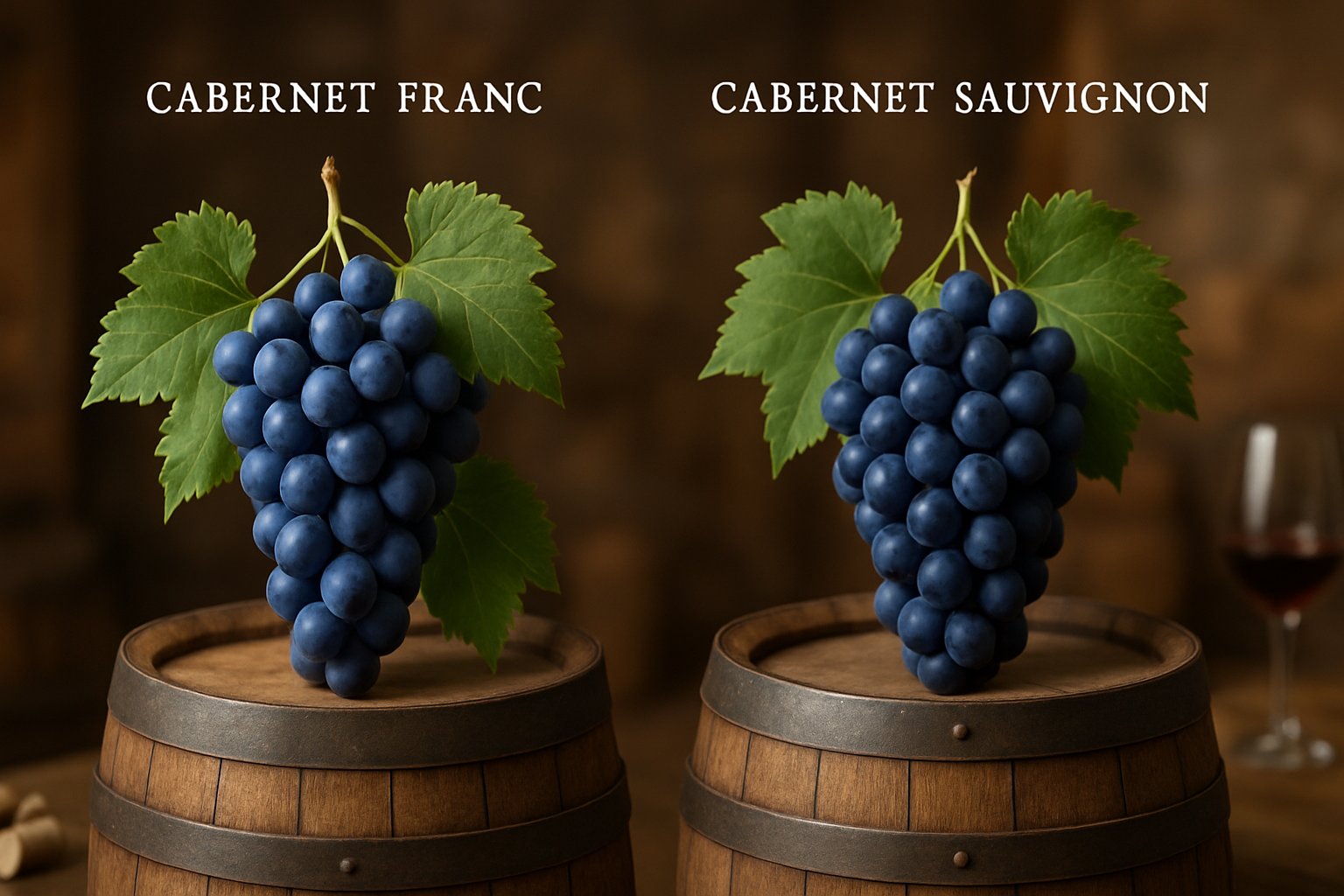
Cabernet Sauvignon’s home is the Left Bank of Bordeaux, and from there it has gone everywhere warm enough: Napa, Chile, Coonawarra and Margaret River above all. Our Coonawarra guide covers the Australian benchmark and our Cabernet Sauvignon guide the grape itself.
The Australian angle
Australia grows a fraction as much Cabernet Franc as Cabernet Sauvignon, and most of it goes into Bordeaux-style blends in Margaret River and Coonawarra where it adds perfume and lift. As a varietal it grows in north-east Victoria, McLaren Vale, the Adelaide Hills and the Clare Valley, and a new wave of small producers is making it in the Loire style: pale, fresh, herbal, and served a little cool. Look for it at independents rather than the chains. Our Cabernet Franc guide has the producers.
What to buy
Cabernet Sauvignon prices are Dan Murphy’s shelf prices on 9 September 2026 and will move about; BWS stocks many of the same names. Cabernet Franc is named without prices because most of it comes through independents.
| Wine | Price band | Why |
|---|---|---|
| Wynns The Siding Cabernet Sauvignon | About $14 to $21 | Coonawarra at an entry price; blackcurrant and mint |
| Wynns Black Label Cabernet Sauvignon | About $27 to $49 | The Australian Cabernet benchmark |
| A Chinon or Bourgueil (Charles Joguet, Bernard Baudry, Domaine de la Chevalerie) | Dan Murphy’s or an independent | The Loire style: light, leafy, raspberry, made for food |
| An Australian Cabernet Franc (Adelaide Hills, McLaren Vale, King Valley) | Dan Murphy’s or an independent | Small producers, often a little riper than the Loire |
| A Margaret River Cabernet blend (Cape Mentelle, Vasse Felix, Cullen) | $30 to $100 | Both grapes in one bottle, the Bordeaux formula done well |
Heads up: the boxes below link to Just Wines, our partner shop. If you buy through them we earn a small commission at no extra cost to you. Prices were checked when this was written and move about.
Honesty corner: the partner shop had no straight Cabernet Franc when we checked. Here is the Cabernet Sauvignon side:

Voyager Coastal Margaret River Organic Cabernet Sauvignon 2024
- Margaret River Cabernet from Voyager Estate, certified organic
- Gravel soils and sea air: Australia's Bordeaux comparison
- About twenty-six dollars
- Entry-level Voyager; the estate wine is the big one
For Cabernet Franc on its own, try the Loire shelf at Dan Murphy’s for a Chinon, or ask BWS for an Australian one from the Adelaide Hills or McLaren Vale.
What to eat with them
Cabernet Franc is the more useful dinner wine. Its lighter body and herbal edge suit roast chicken, pork, lamb with herbs, charcuterie, goat’s cheese, green vegetables and dishes with a bit of bitterness. Serve it at 14 to 16°C, or lightly chilled in summer. Cabernet Sauvignon wants fat and protein: steak, roast lamb, a beef pie, hard cheese. Our Cabernet snack pairings handle the small plates, and if the table is mixed, the Franc will please more people.
Frequently asked questions
Is Cabernet Franc the same as Cabernet Sauvignon?
No. They are parent and child. Cabernet Franc crossed with Sauvignon Blanc to produce Cabernet Sauvignon, which was proven by DNA in 1997.
Which is lighter?
Cabernet Franc. It has thinner skins, so paler colour, less tannin and a medium body. Cabernet Sauvignon is full-bodied and firmly tannic.
Why does Cabernet Franc smell of green capsicum?
Both Cabernets contain compounds called methoxypyrazines, which smell of capsicum and leaves. Cabernet Franc shows them more openly, and a little of that greenness is part of its style.
Is Cabernet Franc cheaper?
Usually, because it has less prestige. Loire Cabernet Franc is some of the best-value red in France. The exception is Cheval Blanc, which is mostly Cabernet Franc and costs a fortune.
Which should I try first?
A Chinon from the Loire, served slightly cool with roast chicken. If you like it, try an Australian Cabernet Franc from the Adelaide Hills or McLaren Vale, then compare it with a Coonawarra Cabernet Sauvignon to taste the family resemblance.
Is Merlot related to them too?
Yes. Cabernet Franc is also a parent of Merlot and Carmenere, so Cabernet Sauvignon, Merlot and Carmenere are all half-siblings.