Heads up: this guide contains an affiliate link. If you buy through it we earn a small commission at no extra cost to you.
Cabernet Franc is the parent that got outshone by its own child. Cross it with Sauvignon Blanc and you get Cabernet Sauvignon, the most famous red grape on Earth. Cross it with Magdeleine Noire and you get Merlot. Franc itself, the older, leaner, more perfumed original, spent centuries as the quiet third grape in Bordeaux blends while its offspring took the bows.
Then the Loire Valley showed what it could do alone, sommeliers fell for its violets-and-pencil-shavings charm, and Cabernet Franc became the red that people who know a lot about wine quietly order for themselves. It is lighter than Cabernet Sauvignon, brighter, more herbal, and it goes with far more dinners.
Table of Contents
What Does Cabernet Franc Taste Like?
Raspberry, red plum and blackcurrant, with violets, graphite, green capsicum, tobacco leaf and a dusting of dried herbs. It is medium in body, with fine, chalky tannins and lively acidity. Cool-climate Loire versions lean red-fruited and leafy; warm-climate Australian bottles are riper and darker but keep that floral, savoury signature.
| Aspect | Rating out of 5 | Characteristic |
|---|---|---|
| Sweetness | 🍷 | Dry, with a sprig of something green |
| Body | 🍷🍷🍷 | Medium, the elegant one in the Cabernet family |
| Tannins | 🍷🍷🍷 | Fine and chalky, a firm but friendly grip |
| Acidity | 🍷🍷🍷🍷 | Bright, the reason it loves food |
| Alcohol by Volume | 🍷🍷🍷 | Moderate, usually 12.5–13.5% |
Each wine glass icon is one point on a 5-point scale: one glass is low, five is high, based on the grape’s typical style.
Where It Grows
The Loire Valley is home to the purest versions, in Chinon, Bourgueil and Saumur-Champigny, where it has grown since at least the 1600s. Bordeaux uses it as a blending grape, most famously at Château Cheval Blanc in Saint-Émilion, which is mostly Cabernet Franc. Italy’s Friuli, Hungary’s Villány, Argentina and New York’s Finger Lakes all make serious versions.
In Australia, Cabernet Franc has long been a splash in Margaret River and Coonawarra Cabernet blends, but a new wave of growers is bottling it solo. Margaret River, the Yarra Valley, the Clare Valley, Orange and the Canberra district all make good ones, and it suits our cooler sites where Cabernet Sauvignon struggles to ripen.
How to Serve It
Temperature: 15–17°C. It likes a slight chill, especially lighter Loire styles.
Glass: a Bordeaux bowl or a large Pinot glass both work; see the glasses roundup.
Decanting: half an hour in a decanter softens young tannin and lifts the violets.
Ageing: most bottles are best within five to eight years. Top Chinon and Saint-Émilion age for decades.
What to Eat With It
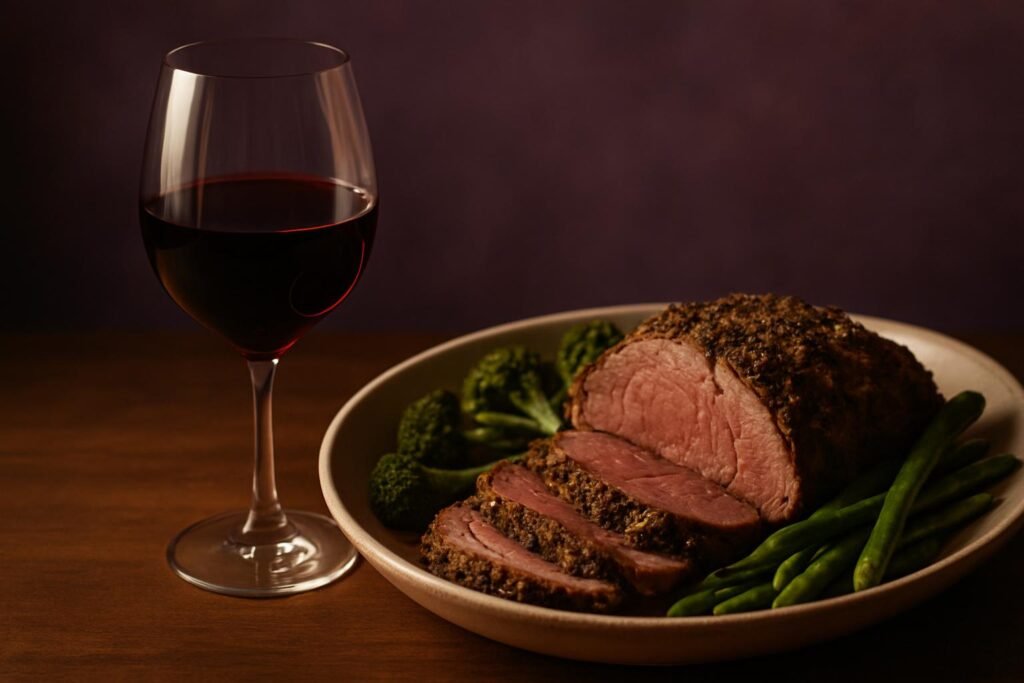
Roast lamb with herbs, duck, roast chicken, meatloaf, grilled vegetables and goat’s cheese. Its green edge makes it a rare red that suits asparagus and ratatouille. More in the pairing guides.
Celebrated Wine Labels
| Wine Label | Country | Style |
|---|---|---|
| Château Cheval Blanc | France | Saint-Émilion legend, Cabernet Franc-led |
| Charles Joguet | France | Chinon benchmark, pure Loire style |
| Domaine Guiberteau | France | Saumur, precise and mineral |
| Ravenswood Lane | Australia | Adelaide Hills, textbook Australian Franc |
| Bodega Chacra | Argentina | Patagonia, elegant and cool-climate |
Drink One Tonight
No straight Cabernet Franc was on the shelf at our partner shop when we checked, but this organic Margaret River blend is the classic way to meet it: Cabernet Franc adding perfume and lift alongside its famous children.

Voyager Estate Margaret River Organic Cabernets 2023
Cabernet Franc the way Bordeaux uses it, from Margaret River organic fruit. When a straight Australian Franc lands in stock, it joins this one.
- A true Bordeaux-style blend with Cabernet Franc in the mix
- Certified organic, single estate, family-owned since 1978
- Taste what Franc brings: violets, lift and fine tannin
- Built for lamb, duck and a decanter
- Cabernet Franc is a supporting player here
- A splurge at just over forty dollars
New to Just Wines? The code FIRST20 takes $20 off a first order over $99, so it is worth building a mixed six rather than buying the one bottle. New customers only, and the offer can change without notice.
Frequently Asked Questions
What is the difference between Cabernet Franc and Cabernet Sauvignon?
Franc is the parent, Sauvignon the child. Franc is lighter, more perfumed and more herbal, with softer tannin and brighter acid. Sauvignon is darker, fuller and more tannic. Read our Cabernet Sauvignon guide for the full comparison.
Is Cabernet Franc a red or white wine?
Red, though a lighter-coloured one than its offspring. It also makes excellent rosé in the Loire.
What does Cabernet Franc pair with?
Herb-roasted lamb, duck, chicken, goat’s cheese and green vegetables. It is one of the most food-friendly reds because its acidity and moderate weight do not bully the plate.
Where does Cabernet Franc grow in Australia?
Margaret River, the Yarra Valley, the Clare Valley, Orange, the Adelaide Hills and Canberra all make good straight versions, and it is in most premium Cabernet blends from Margaret River and Coonawarra.
Is Cabernet Franc similar to Merlot?
They are half-siblings, both from the same mother grape, and they share soft plum fruit. Merlot is rounder and fleshier; Franc is leaner, more floral and more savoury. Read our Merlot guide for the comparison.
This post contains affiliate links. If you buy through them we earn a small commission at no extra cost to you. It keeps the wine flowing and the reviews honest.